Understanding Reciprocity Challenges in Children with Autism
“`html
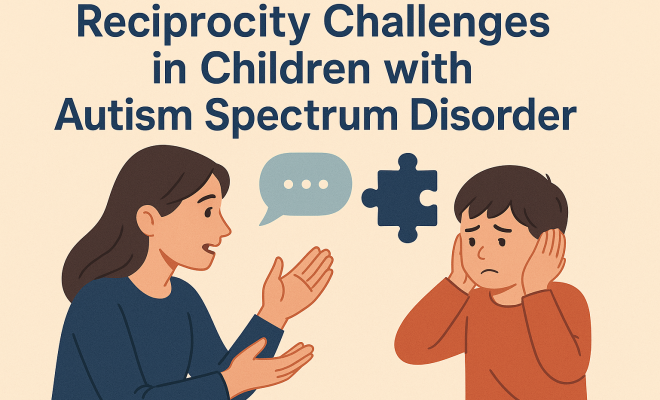
When it comes to Autism Spectrum Disorder (ASD), one of the key areas that researchers and practitioners focus on is the concept of reciprocity. This term refers to the mutual exchange of social interactions; essentially, it’s how we communicate and respond to each other in conversation or play. For children with autism, these reciprocity challenges can manifest in a variety of ways, impacting their ability to socialize effectively. Understanding these challenges is crucial for parents, educators, and therapists alike.
What is Reciprocity in Social Interaction?
Reciprocity in social interactions involves a back-and-forth exchange, which is a fundamental aspect of human communication. It’s not just about talking; it includes responding appropriately to others, taking turns, and understanding non-verbal cues like facial expressions and body language. Effective reciprocity helps build relationships and fosters a sense of belonging.
In typical development, children learn to engage in reciprocal interactions from a young age. They might smile back at a caregiver’s smile, share toys, or ask questions. However, for children with autism, these reciprocal exchanges can be less intuitive. This leads to isolation and difficulty forming connections with peers.
The Spectrum of Reciprocity Challenges
Reciprocity challenges in children with autism can vary widely from one individual to another. Some children may struggle with initiating interactions, while others might find it difficult to maintain a conversation or read social cues. Here are some of the most common aspects of reciprocity challenges:
- Initiation: Many children with autism have trouble starting conversations or engaging in play, often waiting for others to approach them.
- Response: Responding appropriately to others can be a challenge. For instance, a child may not know how to answer a question or may respond in a way that seems unrelated.
- Non-verbal communication: Many children with autism struggle to interpret and use body language, eye contact, and facial expressions, which are critical for reciprocal interaction.
- Turn-taking: Engaging in back-and-forth exchanges requires an understanding of timing and space, which can be difficult for some children on the spectrum.
Understanding the Causes: Why Do These Challenges Occur?
The reasons behind reciprocity challenges in children with autism are complex and multifaceted. Research indicates that differences in brain connectivity and processing contribute significantly to these difficulties. Various studies have shown that children with autism often have altered connectivity in regions of the brain that are crucial for social communication.
For example, the amygdala, which plays a key role in processing emotions, can function differently in children with autism. This difference might lead to challenges in understanding social cues, resulting in misinterpretations of others’ feelings and intentions. Furthermore, sensory sensitivities often experienced by children with autism can make social situations overwhelming, leading to withdrawal and decreased engagement.
Practical Insights for Parents and Educators
Understanding autism reciprocity challenges is the first step toward supporting children in developing better social skills. Both parents and educators can play a pivotal role in fostering these skills. Here are some practical strategies:
1. Encourage Play-Based Learning
Play is a natural way for children to engage with one another. Structured play activities can help children practice turn-taking and sharing, essential components of reciprocal interaction. For instance, board games or partnered activities that require sharing roles can create opportunities for children to engage socially.
2. Model Social Interactions
Adults can demonstrate proper social interactions by modeling effective communication. This includes using clear language, maintaining eye contact, and showing emotional responses. Engaging in role-playing scenarios can also help children observe and practice reciprocal exchanges in a safe environment.
3. Use Visual Supports
Visual aids, such as charts and social stories, can help children understand expectations in social situations. These tools can serve as reminders of how to initiate conversations, respond to peers, and interpret non-verbal cues.
4. Create Structured Social Opportunities
Setting up structured social interactions, such as small group activities or playdates, can provide a safe space for children to practice reciprocal communication. These settings can be less overwhelming than larger groups, allowing children to focus on engaging with peers. (See: CDC Autism Spectrum Disorder facts.)
The Role of Speech and Language Therapy
For many children with autism, speech and language therapy can be a game-changer. These therapists are trained to help children enhance their communication skills, specifically targeting areas where reciprocity challenges exist. They utilize various techniques to promote social skills, including:
- Social Skills Training: This involves teaching children how to engage appropriately in conversations, understand body language, and develop empathy.
- Pragmatic Language Skills: Therapists help children learn context-appropriate communication, which is essential for effective reciprocity.
- Interactive Activities: Engaging in games and role-play scenarios can help children practice typical social exchanges in a controlled environment.
Current Research and Developments
Recent research continues to shed light on autism reciprocity challenges. Studies are exploring the effectiveness of various interventions and therapies aimed at improving social reciprocity in children with ASD. For example, programs incorporating cognitive-behavioral therapy have shown promise in helping children better understand social cues and improve their conversational skills.
Additionally, technology plays a growing role in these efforts. Applications designed to teach social skills through interactive scenarios are gaining popularity and have been reported to increase engagement among children with autism. These tools offer a modern approach to practicing reciprocity in a fun and engaging way.
Community and Peer Support
Community support is vital for children facing reciprocity challenges. Parents, educators, and therapists can create a network that fosters understanding and provides resources for families. Peer support programs, where neurotypical children engage with children on the spectrum, can also promote positive social interactions.
Furthermore, advocacy organizations often provide workshops and resources that help families navigate the complexities of autism. Creating an inclusive environment where children can practice reciprocal interactions will not only aid their development but also create a more understanding community.
Personal Stories: Hearing from Families
Real-life experiences from families can provide invaluable insights into the challenges and successes in navigating autism reciprocity challenges. Many parents share stories of growth and resilience, highlighting the importance of patience and support.
For example, one mother recounts how her son, who has autism, struggled to initiate play with peers. After implementing structured playdates, she noticed a significant change. Over time, he became more confident in engaging with other children, taking turns, and responding to their interactions. This transformation underscores the potential for development with the right support and environment.
Understanding the Impact of Reciprocity Challenges on Daily Life
Reciprocity challenges can have far-reaching effects on the daily lives of children with autism. These challenges can affect not only their social interactions but also their emotional well-being and academic performance. For instance, children who struggle with initiating conversations may feel isolated during recess or group activities in school. This isolation can lead to feelings of loneliness and frustration, which may manifest in behavioral issues or anxiety.
Moreover, these challenges can impact the way children are perceived by their peers and adults. Children with autism might be unjustly labeled as shy or unfriendly, which can further hinder their social opportunities. Such misunderstandings can lead to a cycle where the child’s lack of engagement results in fewer social invitations, reinforcing feelings of exclusion.
In a classroom setting, reciprocity challenges can also affect learning. If a child struggles to participate in group discussions or collaborative projects, they might miss out on valuable learning experiences that come from engaging with peers. Teachers who recognize these challenges can adapt their teaching methods to include more inclusive practices that cater to all students.
Strategies for Supporting Reciprocity in the Classroom
Educators play a critical role in addressing the reciprocity challenges faced by children with autism. Here are some strategies that can be implemented in the classroom to support these children:
1. Foster an Inclusive Classroom Environment
Creating an inclusive classroom involves setting a tone of acceptance and understanding. Educators can encourage all students to appreciate differences and support one another in developing social skills. This can include discussions about empathy and the importance of kindness.
2. Implement Social Skills Groups
Social skills groups within schools can help children with autism practice reciprocity in a structured environment. These groups provide a safe space for students to learn and rehearse social norms with guidance from a teacher or counselor. (See: NIH on reciprocity in autism.)
3. Encourage Peer Mentoring
Peer mentoring programs can be particularly effective. Pairing children with autism with neurotypical peers allows for natural social interaction. These mentorships should be structured to encourage positive exchanges and focus on shared interests.
4. Use Technology to Enhance Engagement
Interactive apps and software that promote social skills can be integrated into classroom activities. These tools can make learning about reciprocity fun and engaging while also providing immediate feedback to the child.
Exploring Common Myths about Autism and Reciprocity
Misconceptions about autism often lead to misunderstandings about reciprocity challenges. It’s important to dispel these myths to foster better awareness and support for children with autism. Here are a few common myths:
- Myth 1: Children with autism don’t want to interact with others.
Reality: Many children with autism desire social connections but might struggle with the skills needed to engage effectively. - Myth 2: Reciprocity challenges only occur in verbal communication.
Reality: Many children with autism have difficulty with non-verbal communication as well, making it hard to express interest or respond appropriately. - Myth 3: All children with autism are the same.
Reality: Autism is a spectrum disorder, meaning each child experiences it differently. Their reciprocity challenges will vary greatly based on individual strengths and weaknesses.
Frequently Asked Questions (FAQ)
1. What are the signs of reciprocity challenges in children with autism?
Signs can include difficulty starting or maintaining conversations, responding inappropriately to social cues, challenges with turn-taking, and a lack of eye contact.
2. Can reciprocity challenges improve over time?
Yes, many children with autism can improve their reciprocal communication skills with appropriate interventions, support, and practice.
3. How can I help my child with reciprocity challenges at home?
Engage your child in structured play, model social interactions, use visual supports, and encourage open communication about feelings and experiences.
4. Are there specific therapies that focus on reciprocity?
Yes, speech and language therapy, social skills groups, and cognitive-behavioral therapy can all focus on improving reciprocity and social communication skills.
5. How can educators support peers of children with reciprocity challenges?
Educators can promote understanding and acceptance within the classroom, encouraging students to be supportive and inclusive of their classmates with autism.
The Importance of Family Involvement
Families play an essential role in helping children with autism navigate reciprocity challenges. Engaging in family activities that promote communication and interaction can strengthen these skills. For instance, family game nights can provide opportunities for turn-taking and sharing. Regularly discussing social situations can also help children process their experiences and learn from them.
Furthermore, family members can benefit from training and resources to better understand how to support a child with autism. Workshops that focus on communication strategies and social skills development can empower families to implement effective approaches at home.
Long-Term Outcomes of Improved Reciprocity Skills
Addressing reciprocity challenges is not just about immediate social skills; it has long-term benefits for children with autism. Improved reciprocal communication can lead to better relationships with peers, which can enhance emotional well-being and reduce feelings of loneliness. As children become more adept at initiating and responding to social interactions, they often gain confidence, which can positively affect other areas of their lives.
Research has shown that children who develop better social skills tend to have higher academic achievements. This is likely due to their increased participation in group work and discussions, allowing for a richer learning experience. As these children grow, the ability to connect with others can open doors in their personal and professional lives, enabling them to form meaningful relationships and navigate social situations more effectively.
The Role of Technology in Supporting Social Reciprocity
In recent years, technology has emerged as a vital tool for assisting children with autism in overcoming reciprocity challenges. Various apps and online platforms are designed to enhance social skills in engaging, interactive ways. For example, apps that include virtual role-playing scenarios can simulate social situations where children can practice responses without the pressures of real-life interactions.
Some programs also incorporate gamification, making learning about reciprocity fun and rewarding. These technological solutions can supplement traditional therapies and provide additional opportunities for practice in a low-stress environment. Moreover, as children become more comfortable with technology, it can serve as a bridge for them to engage with their peers in more traditional settings.
Collaboration Between Schools and Families
Collaboration between families and schools is crucial in addressing the reciprocal challenges faced by children with autism. Open communication about a child’s needs, strengths, and challenges can lead to a more tailored approach that benefits the child both at home and at school. Regular meetings, progress reports, and collaborative goal-setting can ensure that all parties are aligned in their support efforts.
Additionally, schools can help facilitate workshops for parents, teaching them effective strategies and insights into their child’s learning and social engagement. By fostering a partnership, families and schools can create a united front, emphasizing the importance of social reciprocity and ensuring that children have consistent support across environments.
Conclusion: The Path Forward
Addressing autism reciprocity challenges requires a multifaceted approach that includes understanding, support, and intervention. By fostering environments that encourage social interactions, utilizing effective strategies, and continuing research, we can help children with autism navigate the complexities of social reciprocity.
As our understanding of autism evolves, so too will our approaches to supporting children on the spectrum. With ongoing commitment from parents, educators, and communities, it’s possible to empower these children to thrive socially and build meaningful connections.
“`
Trending Now
Frequently Asked Questions
What are reciprocity challenges in children with autism?
Reciprocity challenges in children with autism refer to difficulties in engaging in mutual social interactions. This can include struggles with initiating conversations, responding appropriately, and understanding non-verbal cues, which can lead to isolation and hinder relationship-building.
How does reciprocity affect social interactions in children with autism?
Reciprocity is essential for effective social interactions, as it involves back-and-forth communication. In children with autism, challenges in reciprocity can disrupt their ability to engage with peers, making it hard for them to form connections and develop friendships.
What are common symptoms of reciprocity challenges in autism?
Common symptoms include difficulty initiating conversations, responding inappropriately to questions, and misinterpreting non-verbal communication cues like facial expressions. These challenges can vary significantly among individuals with autism.
Why is understanding reciprocity important for parents of children with autism?
Understanding reciprocity is crucial for parents as it enables them to support their child's social development. Recognizing the specific challenges their child faces can help in creating targeted strategies to improve communication and social skills.
How can therapists help children with reciprocity challenges?
Therapists can help children with reciprocity challenges by using targeted interventions that focus on social skills training, role-playing, and enhancing non-verbal communication. These strategies can improve their ability to initiate and maintain social interactions.
What’s your take on this? Share your thoughts in the comments below — we read every one.