Social Learning Theory & Positive Behavior Support
“`html
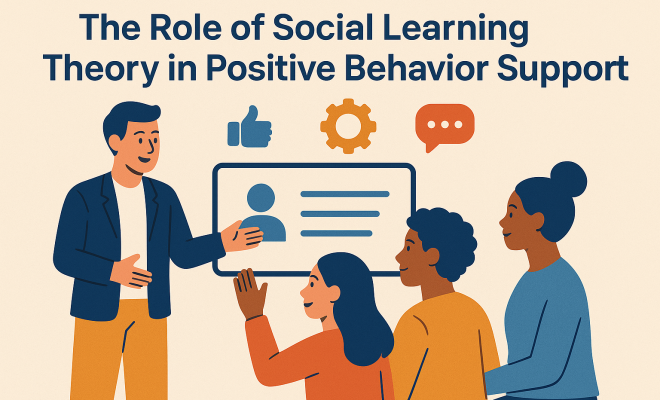
Understanding Social Learning Theory
Social Learning Theory (SLT), pioneered by psychologist Albert Bandura in the 1960s, emphasizes the importance of observing and modeling the behaviors, attitudes, and emotional reactions of others. The core principle is straightforward: much of what we learn comes not just from direct experience but from watching others. In an educational context, SLT posits that students can acquire new behaviors by observing their peers and educators. This model has profound implications for how we approach behavior management in schools.
Key Principles of Social Learning Theory
To effectively apply SLT in educational settings, it’s crucial to grasp its foundational elements. Here are some key principles:
- Observational Learning: This principle suggests that individuals can learn new behaviors simply by watching others. For instance, a student may learn to raise their hand by observing classmates doing so.
- Attention: For observation to lead to learning, the observer must pay attention. Factors such as the model’s attractiveness and the observer’s interest level play significant roles.
- Retention: After observing a behavior, the individual must remember it to replicate it later. Activities like role-playing can enhance retention.
- Reproduction: This principle involves the ability to reproduce the observed behavior in real life, necessitating practice and feedback.
- Motivation: The observer’s motivation to imitate the behavior is crucial. Incentives or positive reinforcement can enhance this motivation.
The Connection Between Social Learning Theory and Behavior Support
Positive Behavior Support (PBS) is a proactive approach to behavior management in educational settings. It focuses on teaching and reinforcing positive behaviors rather than merely responding to negative ones. Integrating SLT into PBS provides a comprehensive framework for encouraging and maintaining positive behavior among students.
Incorporating Social Learning Theory in Positive Behavior Support
Utilizing SLT within the PBS framework can be immensely beneficial. Here’s how educators can weave these concepts together:
- Modeling Positive Behavior: Teachers and staff should consistently model the behaviors they wish to see in students. For example, demonstrating respectful communication sets a standard for students to follow.
- Peer Mentoring Programs: Implementing peer mentoring allows students to learn from each other. Older students can model desirable behaviors for younger ones, creating a supportive community.
- Creating a Positive Environment: Schools need to foster an environment where positive behaviors are recognized and rewarded. This can be achieved through public acknowledgment, rewards, or incentives for both individuals and groups.
- Role-Playing Situations: Engaging students in role-playing can help them practice new behaviors in a safe setting, solidifying their understanding and ability to replicate those behaviors.
Real-World Applications of Social Learning Theory in Positive Behavior Support
Several schools and educational programs have successfully integrated SLT into their PBS strategies. One notable example is a middle school that adopted a peer mentoring program, where students were trained to model positive behaviors for their classmates. This initiative led to a marked decrease in disciplinary incidents and an increase in overall student engagement.
Another instance is a high school that incorporated role-playing scenarios related to conflict resolution. By allowing students to act out different situations, they learned to navigate social interactions positively, thereby reducing instances of bullying and aggression.
The Impact of Social Learning Theory on Student Outcomes
Research consistently shows that environments that embrace SLT principles yield improved outcomes for students. For example, schools that effectively model and reinforce positive behavior report higher academic achievement, lower dropout rates, and enhanced social skills. The collaborative nature of SLT encourages students to support one another, fostering a sense of community and belonging.
Challenges in Implementing Social Learning Theory
Despite its advantages, integrating SLT into a school’s PBS framework is not without challenges. Here are some common hurdles educators face: (See: Wikipedia on Social Learning Theory.)
- Resistance to Change: Some staff may resist shifting from traditional discipline methods to a more holistic approach emphasizing positive reinforcement.
- Lack of Training: Teachers may not be adequately trained in SLT principles, limiting their ability to implement effective modeling strategies.
- Inconsistent Implementation: For SLT to be effective, it requires a consistent approach across all staff members. Inconsistencies can send mixed messages to students.
Strategies for Overcoming Challenges
To successfully implement SLT within a PBS framework, educational leaders can adopt several strategies:
- Professional Development: Regular training sessions on SLT principles can equip teachers with the skills needed to model positive behavior effectively.
- Collaborative Planning: Facilitating collaboration among staff to develop a unified approach to behavior support can enhance consistency and effectiveness.
- Monitoring and Feedback: Establishing systems for monitoring behavior and providing feedback can help identify areas for improvement and celebrate successes.
Current Relevance of Social Learning Theory in Education
In today’s educational landscape, where mental health and emotional well-being are at the forefront, the relevance of Social Learning Theory in education cannot be overstated. Schools are increasingly recognizing the impact of social dynamics on student behavior and learning. By embracing SLT within Positive Behavior Support frameworks, educators can cultivate environments that promote not just academic success, but also social and emotional growth.
The Future of Social Learning Theory in Education
Looking ahead, the integration of Social Learning Theory into educational practices seems promising. With the rise of technology and online learning platforms, there are new avenues for observational learning. Virtual classrooms, social media, and online communities all provide innovative spaces for students to learn from one another. Educators can harness these tools to create engaging and interactive learning experiences that emphasize social learning.
The ongoing research into the effects of SLT on behavioral interventions will likely yield new insights, enhancing our understanding of how to create effective educational environments. As we continue to explore these avenues, the role of social learning theory in education will remain crucial in shaping positive behavior support strategies that meet the diverse needs of students.
Deeper Understanding of Social Learning Theory in Education
To further appreciate the impact of Social Learning Theory within educational contexts, it’s helpful to explore deeper applications of its principles. For instance, the practice of cooperative learning aligns well with SLT. In cooperative learning settings, students work together in small groups, which not only allows them to observe one another’s problem-solving strategies but also reinforces interpersonal skills crucial for future collaboration in the workplace.
Statistics show that students who participate in cooperative learning environments tend to perform better academically. A study published in the Journal of Educational Psychology found that students in cooperative learning settings achieved 12% higher on standardized tests than those in traditional classrooms. This demonstrates how SLT can substantially enhance learning outcomes through peer interactions.
Expert Perspectives on Social Learning Theory
Experts in the field of education often highlight the importance of modeling as a critical element in the learning process. Dr. John Hattie, a prominent educational researcher, emphasizes that “teacher-student relationships are the hinge of learning.” His meta-analyses suggest that when teachers actively demonstrate behaviors, such as persistence and resilience, students are more likely to internalize these traits.
Another expert, Dr. Linda Darling-Hammond, advocates for training educators to utilize SLT effectively. She suggests that professional development should not only focus on pedagogical techniques but also on modeling positive interactions and behaviors that students can observe and replicate.
Comparisons with Other Learning Theories
When discussing Social Learning Theory, it’s beneficial to compare it with other educational theories. For example, behaviorism focuses on reinforcement and punishment as primary tools for learning, while SLT incorporates social elements like observation and imitation. Unlike behaviorism, which can often neglect the cognitive processes involved in learning, SLT acknowledges that individuals actively interpret and engage with the behaviors they observe.
Constructivist theories, on the other hand, suggest that learners build knowledge through experiences. SLT complements constructivism by asserting that social interactions play a pivotal role in how individuals construct knowledge. Both theories can be harmoniously integrated to create rich, interactive learning environments that cater to diverse student needs. (See: NIH article on observational learning.)
Frequently Asked Questions About Social Learning Theory in Education
What is Social Learning Theory?
Social Learning Theory is a psychological framework that suggests people learn from one another through observation, imitation, and modeling. It highlights the significance of social context in the learning process, particularly in educational settings.
How can educators apply Social Learning Theory in the classroom?
Educators can apply SLT by modeling positive behaviors, facilitating peer-to-peer learning, using role-playing activities, and reinforcing desired behaviors through positive feedback and rewards.
What role does motivation play in Social Learning Theory?
Motivation is critical in SLT; students are more likely to imitate behaviors they see modeled when they are motivated by rewards or positive reinforcement. This can come in the form of praise, recognition, or tangible rewards.
Are there specific strategies for integrating Social Learning Theory into online learning environments?
Yes! In online learning settings, educators can incorporate discussion forums, collaborative projects, and video demonstrations to allow students to observe and learn from each other. Utilizing breakout rooms for peer discussions can also foster a social learning atmosphere.
Can Social Learning Theory be used to address behavioral issues in schools?
Absolutely. SLT provides a framework for understanding and improving student behavior by promoting positive modeling and peer influence, which can lead to a more supportive and respectful school culture.
What are some challenges schools face when implementing Social Learning Theory?
Challenges include resistance from staff accustomed to traditional techniques, a lack of training in SLT principles, and the need for consistent implementation across all staff members to avoid mixed messages to students.
How does Social Learning Theory support social-emotional learning?
SLT supports social-emotional learning by encouraging students to observe and model emotional regulation, empathy, and conflict resolution strategies. This creates a more emotionally intelligent and socially aware classroom environment.
Practical Tips for Educators to Apply Social Learning Theory
Educators can take several practical steps to effectively implement Social Learning Theory in their classrooms and foster an environment where positive behaviors are modeled and learned:
- Use Multimedia Resources: Incorporate videos and presentations that showcase positive behaviors and scenarios. This not only captures students’ attention but also provides clear examples of behaviors to emulate.
- Establish Clear Expectations: Clearly outline expectations for behavior in the classroom, and ensure that these are modeled consistently. When students know what’s expected, they’re more likely to engage in positive behaviors.
- Encourage Reflection: After group activities or peer interactions, have students reflect on what they witnessed and learned. This can be done through journaling or group discussions, reinforcing the social learning process.
- Leverage Technology: Use educational apps and platforms that promote collaboration and interaction among students. Tools that encourage group work or collective problem-solving can enhance the observational learning experience.
Case Studies: Successful Implementation of SLT in Schools
Many schools have adopted SLT principles with noteworthy success. Here are two impactful case studies:
Case Study 1: A Comprehensive Peer Mentoring Program
A high school in California implemented a comprehensive peer mentoring program aimed at fostering a culture of support and positive behavior. By pairing upperclassmen with freshmen, the school created a structured environment where students could model positive behaviors, share experiences, and develop important social skills. Over the course of the year, the school reported a decrease in disciplinary incidents and a dramatic improvement in overall student morale and academic performance.
Case Study 2: Collaborative Learning Structures
A middle school in New York adopted collaborative learning structures in its classrooms. Teachers facilitated group projects where students were encouraged to work together, observe each other’s strengths, and provide peer feedback. The results were promising: not only did students score higher on assessments, but they also reported feeling more connected to their peers. This case underscores the idea that social learning enhances not just academic performance but also social cohesion among students.
Future Research Directions in Social Learning Theory
As educational practices continue to evolve, so too will the research surrounding Social Learning Theory. Here are some potential future directions for study:
- Impact of Technology: How do digital platforms and online learning environments influence social learning dynamics? Future research could explore the effectiveness of synchronous vs. asynchronous interactions on observational learning.
- Longitudinal Studies: Long-term studies examining the effects of SLT in educational settings could provide valuable insights into how these principles impact student development over time.
- Diverse Educational Contexts: Investigating how SLT applies across different cultural and socio-economic contexts will be crucial for developing universally applicable strategies for educators.
Conclusion: The Lasting Impact of Social Learning Theory
As education continues to evolve, the importance of Social Learning Theory remains significant. Its integration into teaching practices not only fosters academic success but also cultivates essential social and emotional skills. By leveraging the powerful dynamics of observation and modeling, educators can create classrooms that are not just centers of learning but thriving communities that prepare students for the complexities of the modern world.
“`
Trending Now
Frequently Asked Questions
What is Social Learning Theory?
Social Learning Theory (SLT), developed by Albert Bandura, emphasizes that learning occurs through observing others. It highlights the importance of modeling behaviors, attitudes, and emotional reactions, suggesting that much of what we learn comes from watching peers and educators rather than just direct experience.
How does Social Learning Theory apply to education?
In educational settings, Social Learning Theory posits that students can learn new behaviors by observing their peers and teachers. This framework allows educators to implement strategies that encourage positive behavior through modeling and reinforcement, significantly impacting behavior management.
What are the key principles of Social Learning Theory?
The key principles of Social Learning Theory include observational learning, attention, retention, reproduction, and motivation. These principles explain how individuals learn behaviors by observing others, paying attention, remembering the actions, reproducing them, and being motivated to imitate.
What is Positive Behavior Support?
Positive Behavior Support (PBS) is a proactive approach to behavior management that emphasizes teaching and reinforcing positive behaviors instead of merely reacting to negative ones. It aims to create supportive environments where positive behaviors are encouraged and maintained.
How can Social Learning Theory enhance Positive Behavior Support?
Integrating Social Learning Theory into Positive Behavior Support provides a comprehensive framework for encouraging positive behavior. By utilizing observational learning and reinforcement strategies, educators can effectively teach and maintain desired behaviors within school settings.
What did we miss? Let us know in the comments and join the conversation.