Boost Kindergarten Literacy: Phonemic Awareness Strategies
“`html
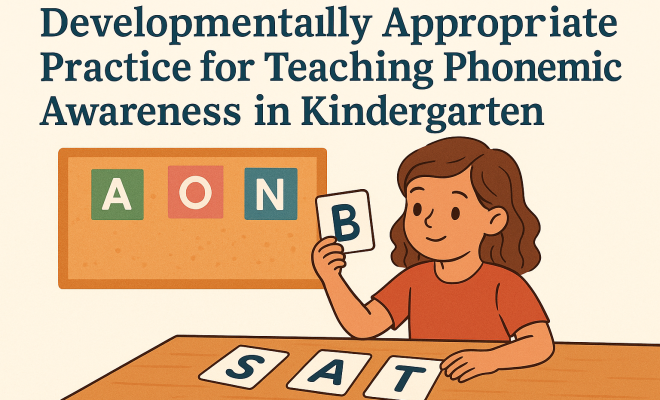
Phonemic awareness is a crucial foundational skill in early literacy development, particularly for young learners in kindergarten. As educators strive to create environments that foster literacy, understanding how to effectively teach phonemic awareness becomes essential. This article delves into developmentally appropriate practices for teaching phonemic awareness in kindergarten, offering insights, strategies, and the significance of this skill in a child’s educational journey.
Understanding Phonemic Awareness
Phonemic awareness refers specifically to the ability to hear, identify, and manipulate individual sounds—called phonemes—in spoken words. This skill is critical because it is directly linked to reading success. Research suggests that children with strong phonemic awareness are more likely to become proficient readers. For instance, a study by the National Institute for Literacy found that phonemic awareness predicts a child’s ability to read and spell.
It’s important to differentiate phonemic awareness from phonological awareness, which includes a broader range of skills, such as recognizing larger units of sounds like syllables. While phonemic awareness is a subset of phonological awareness, it is particularly vital for young learners as they begin their reading journey.
The Importance of Developmentally Appropriate Practices
When it comes to teaching phonemic awareness in kindergarten, developmentally appropriate practices (DAP) are essential. These practices align with children’s developmental stages, ensuring that learning experiences are suitable for their cognitive, social, and emotional levels. The National Association for the Education of Young Children (NAEYC) emphasizes that effective early education should consider the whole child.
Implementing DAP means recognizing that children learn through play and exploration. For instance, engaging activities that promote phonemic awareness should be interactive and enjoyable. This could include games where children must identify sounds in their names, songs, or rhyming games that make learning feel less like a chore and more like a fun adventure.
Key Strategies for Teaching Phonemic Awareness
There are numerous strategies educators can employ to effectively teach phonemic awareness in kindergarten classrooms. Here are some of the most effective practices:
- Sound Identification: Incorporate activities where children identify the first, middle, or last sounds in words. For example, asking children what sound they hear at the beginning of the word “cat” helps them focus on individual phonemes.
- Sound Manipulation: Engage children in games where they can blend sounds to form words or segment words into sounds. Activities like clapping for each sound in a word can reinforce this skill.
- Rhyming Activities: Rhymes are a fun way to build phonemic awareness. Use nursery rhymes and songs that emphasize rhyme and rhythm to capture children’s interest.
- Phoneme Substitution: Help children learn how to change sounds in words to create new words. For example, changing the /c/ in “cat” to /h/ to make “hat” helps them understand sound manipulation.
- Interactive Read-Alouds: Choose books that play with sounds and encourage children to listen for phonemes. Asking questions related to sounds during read-alouds can enhance their awareness.
Creating a Language-Rich Environment
To effectively foster phonemic awareness, kindergarten classrooms should be rich in language. This involves not only providing access to books but also encouraging conversations and interactions among children. Educators can create an environment that promotes phonemic awareness through:
- Labeling Items: Label different classroom objects with their names to encourage children to recognize and decode words.
- Story Time: Regularly scheduled story times expose children to vocabulary and phonemic sounds within the context of engaging narratives.
- Interactive Word Walls: Create a word wall that highlights phonemes and blends that children are currently learning, allowing them to reference it during activities.
- Play-Based Learning: Incorporate play-based activities that involve words and sounds, such as puppet shows or dramatic play that incorporates phonemic elements.
Utilizing Technology for Phonemic Awareness
In today’s digital age, technology can play a significant role in enhancing phonemic awareness in kindergarten. Various educational apps and online resources can support phonemic awareness in engaging and interactive ways. Here are some ways technology can be integrated: (See: Teaching children to read.)
- Interactive Apps: Applications designed for early literacy often focus on phonemic awareness through games that require children to identify, blend, and manipulate sounds.
- Online Storybooks: Many platforms offer interactive storybooks that emphasize phonemic elements, allowing children to listen and engage with the text.
- Video Resources: Educational videos that focus on sound recognition and phoneme manipulation can be used during circle time or as supplementary activities.
Assessment and Progress Monitoring
Assessing phonemic awareness is crucial to understanding each child’s progress and tailoring instruction to meet their needs. Teachers can utilize informal assessments, such as observing children during phonemic activities, to gauge their understanding. Standardized assessments may also be used at the beginning, middle, and end of the school year to measure growth.
Some effective assessment strategies include:
- Phoneme Segmentation Tasks: Have students break words into their individual sounds orally. This can help assess their understanding of how sounds form words.
- Sound Matching Games: Use games where children match words that start with the same sounds or have similar phonemic features.
- One-on-One Assessments: Conduct brief one-on-one sessions with students to assess their phonemic awareness skills through interactive activities, ensuring a personalized approach.
Parent Involvement and Home Learning
Engaging parents in their child’s literacy journey is essential. When parents are informed about phonemic awareness and its importance, they can reinforce what children learn in the classroom at home. Educators can provide resources and strategies for families to support phonemic awareness development, such as:
- Reading Together: Encourage parents to read aloud with their children daily, emphasizing rhymes and phonemic sounds.
- Sound Games: Suggest simple sound games that families can play at home, such as identifying sounds in everyday words.
- Regular Communication: Maintain communication with parents about their child’s progress and suggest activities they can do at home to support phonemic awareness.
The Role of Educators in Supporting Phonemic Awareness
Educators play a pivotal role in fostering phonemic awareness in kindergarten. It requires a deep understanding of each child’s unique learning style and developmental stage. Professional development opportunities focused on phonemic awareness can equip educators with the latest strategies and resources to enhance their teaching. Continuous learning allows teachers to:
- Stay Informed: Keep up-to-date with the latest research and strategies related to phonemic awareness and early literacy.
- Reflect on Practice: Regularly assess and reflect on their teaching methods to ensure they are engaging and effective.
- Collaborate: Work with colleagues to share ideas and strategies for teaching phonemic awareness and other literacy skills.
Current Relevance and Future Directions
The emphasis on phonemic awareness in kindergarten is more relevant now than ever. As literacy rates fluctuate and the demand for early reading skills increases, ensuring that children develop strong phonemic awareness is critical. Educational policies have increasingly recognized the need for early literacy interventions, which include a focus on phonemic awareness as a primary component of early reading instruction.
Looking ahead, it will be crucial for educators to continue adapting and evolving their approaches to phonemic awareness. This includes integrating new research findings, employing diverse instructional strategies, and considering children’s diverse backgrounds and experiences. By doing so, we can help ensure that all children have a solid foundation for literacy.
Practical Activities to Foster Phonemic Awareness
Hands-on activities can significantly enhance children’s phonemic awareness. Here are some fun, engaging activities that can be easily implemented in the classroom or at home:
- Sound Scavenger Hunt: Create a scavenger hunt where children find objects around the classroom or home that start with a specific sound. For example, if the target sound is /b/, they might find a ball or a book.
- Sound Sorting: Provide children with a mix of pictures or objects and ask them to sort them based on their beginning sounds. This activity reinforces sound identification and encourages critical thinking.
- Phoneme Bingo: Create bingo cards with pictures representing various phonemes. Call out the sounds, and children can mark the corresponding pictures on their cards.
- Interactive Sound Stories: Use stories where children can participate by making the sounds of animals or objects as they are mentioned in the story, reinforcing their listening and sound recognition skills.
- Phonemic Awareness Songs: Create and sing songs that emphasize phonemes. Incorporate actions or dance to make it more engaging and memorable.
Understanding the Research Behind Phonemic Awareness
Research has consistently shown that phonemic awareness is a strong predictor of later reading success. A meta-analysis by the National Reading Panel revealed that children who receive explicit phonemic awareness instruction perform better in reading than those who do not. In fact, children who struggle with reading often have deficits in their phonemic awareness skills. (See: Phonemic awareness resources from the U.S. Department of Education.)
One pivotal study demonstrated that phonemic awareness instruction can have lasting effects. Students who participated in phonemic awareness training not only improved their decoding skills but also showed better spelling abilities. This suggests that phonemic awareness is foundational not just for reading but for writing as well.
Addressing Diverse Learning Needs
Every child is unique, and this diversity is especially evident in a kindergarten classroom. Some children may grasp phonemic awareness quickly, while others may require more time and varied approaches. Adapting instruction to meet diverse learning needs is crucial. Here are some strategies to consider:
- Differentiated Instruction: Tailor your instruction based on individual assessments. Provide targeted activities for small groups or one-on-one sessions to support struggling learners.
- Multisensory Approaches: Incorporate visual, auditory, and kinesthetic activities. For instance, use letter tiles for hands-on manipulation while saying the sounds out loud.
- Support for English Language Learners: Offer additional support for children learning English. Use visuals, translations, and culturally relevant examples to make phonemic awareness more accessible.
- Encouragement and Positive Reinforcement: Celebrate small successes to build confidence. Recognizing progress can motivate children to engage more deeply with phonemic awareness activities.
FAQs About Phonemic Awareness in Kindergarten
What is the difference between phonemic awareness and phonics?
Phonemic awareness is the ability to hear and manipulate sounds in spoken words, while phonics involves the relationship between sounds and their corresponding letters. Phonemic awareness is a precursor to phonics, as it lays the groundwork for understanding how written language works.
How can I support my child’s phonemic awareness at home?
You can support phonemic awareness at home by engaging in activities like reading rhyming books, playing sound games, and encouraging your child to listen for and identify sounds in their daily environment. Simple activities like singing songs and clapping out syllables can also be effective.
At what age should phonemic awareness instruction begin?
Phonemic awareness instruction typically begins in preschool and continues into kindergarten. Introducing children to sounds and rhymes early can help them develop this skill before formal reading instruction starts.
How do I know if my child has strong phonemic awareness?
Indicators of strong phonemic awareness include the ability to rhyme, segment sounds in words, and blend sounds to form words. You can observe your child during phonemic awareness activities to gauge their comfort and skill level.
Can phonemic awareness be taught to older children struggling with reading?
Yes, phonemic awareness can be taught to older children who are struggling with reading. Tailoring instruction to their specific needs and using engaging, age-appropriate activities can aid in developing these skills.
Enhancing Phonemic Awareness through Storytelling
Storytelling is a powerful tool to enhance phonemic awareness. When children listen to stories, they not only engage their imagination but also become attuned to the sounds of language. Utilizing interactive storytelling can deepen their phonemic understanding. Consider using these strategies:
- Sound Effects: As you read a story, encourage children to make sound effects that correspond with the actions or events in the story. This reinforces their ability to connect sounds with words.
- Pause for Participation: Stop periodically during the story to ask children to predict or recall words based on initial sounds or rhyming patterns. This encourages active participation and reinforces phonemic awareness.
- Character Voices: Use different voices for different characters. This not only makes the story more engaging but also helps children hear the sounds of the language in a dynamic way.
Exploring the Connection Between Phonemic Awareness and Other Literacy Skills
Phonemic awareness does not exist in isolation; it is connected to other literacy skills. Understanding these relationships can help educators enhance their teaching strategies. Here are a few connections to consider:
- Vocabulary Development: A strong phonemic awareness can support vocabulary growth. When children can isolate and manipulate sounds, they are better equipped to learn new words and their meanings.
- Reading Comprehension: There is a correlation between phonemic awareness and reading comprehension, as children who can identify sounds are more likely to decode words effectively, leading to better understanding of the text.
- Writing Skills: Phonemic awareness also plays a vital role in writing. Children who can hear sounds are more likely to spell words correctly, as they can break down words into phonemes when writing.
Effective Phonemic Awareness Programs and Curricula
Various phonemic awareness programs and curricula are designed to provide structured approaches to teaching this essential skill. Here are a few recognized programs:
- Heggerty Phonemic Awareness: This program provides daily lessons focusing on phonemic awareness through a variety of activities, including rhyming, segmentation, and blending.
- Phonemic Awareness in Young Children (PAYC): A resource that focuses on games and activities to enhance phonemic awareness, particularly for kindergarten and preschool children.
- Read Well: A comprehensive program that emphasizes phonemic awareness as part of a broader literacy curriculum, integrating it with phonics and comprehension strategies.
Building a Community of Literacy Support
Creating a community that values literacy and phonemic awareness can significantly impact children’s learning experiences. Engaging various stakeholders, such as parents, educators, and community members, can foster a supportive environment. Here are some ways to build this community:
- Literacy Events: Organize events focused on literacy, such as family reading nights, where children can showcase their phonemic awareness skills and parents can learn strategies to support their children at home.
- Local Partnerships: Collaborate with local libraries or literacy organizations to provide resources, workshops, and events focused on phonemic awareness and early literacy development.
- Parent Workshops: Host workshops where parents can learn about phonemic awareness and how to support their children’s literacy skills at home. These sessions can also provide resources and materials for at-home activities.
In summary, teaching phonemic awareness in kindergarten is a vital part of early literacy education. Through developmentally appropriate practices, engaging activities, parent involvement, and ongoing professional development, educators can create an environment that nurtures young learners’ phonemic awareness. With strong phonemic awareness skills, children can develop the confidence and competence they need to become successful readers and lifelong learners.
“`
Trending Now
Frequently Asked Questions
What is phonemic awareness in early literacy?
Phonemic awareness is the ability to hear, identify, and manipulate individual sounds, known as phonemes, in spoken words. It is a critical skill linked to reading success, as children with strong phonemic awareness are more likely to become proficient readers.
Why is phonemic awareness important for kindergarteners?
Phonemic awareness is essential for kindergarteners as it lays the foundation for reading and spelling. Research indicates that children who develop this skill early are more likely to excel in literacy as they progress through their educational journey.
What are developmentally appropriate practices for teaching phonemic awareness?
Developmentally appropriate practices (DAP) for teaching phonemic awareness include engaging, interactive activities that align with children's cognitive, social, and emotional levels. These practices focus on play and exploration, making learning enjoyable and effective for young learners.
How can teachers promote phonemic awareness in the classroom?
Teachers can promote phonemic awareness through fun and interactive activities, such as rhyming games, sound matching, and playful phoneme manipulation exercises. These strategies encourage children to explore sounds in a developmentally appropriate manner.
What is the difference between phonemic awareness and phonological awareness?
Phonemic awareness is a subset of phonological awareness that specifically focuses on individual sounds (phonemes) in words. Phonological awareness encompasses a broader range of skills, including recognizing larger sound units like syllables and rhymes.
What did we miss? Let us know in the comments and join the conversation.