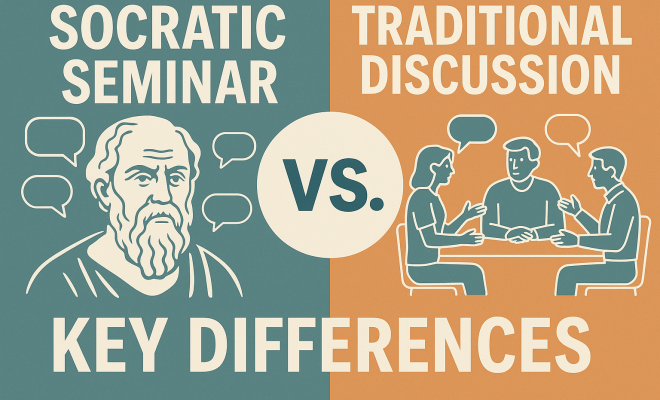
Socratic Seminar vs. Traditional Discussion: Key Differences
“`html
The debate surrounding educational methodologies often centers around how best to foster critical thinking and engagement among students. Two prominent methods in this regard are the Socratic seminar and traditional discussion. Each approach offers unique benefits and challenges, shaping the way students interact with content and each other. In this article, we’ll explore the key differences between Socratic seminars and traditional discussions, providing insights into their methodologies, advantages, and practical applications in contemporary education.
1. Defining the Concepts
To understand the differences between a Socratic seminar and a traditional discussion, we first need to define what each term means. A Socratic seminar is an educational approach grounded in the philosophies of Socrates, emphasizing dialogue over debate. The primary goal is to foster deep understanding through inquiry, where students explore complex ideas by asking questions and considering multiple perspectives.
On the other hand, traditional discussion is often structured around a teacher-led format, where the instructor guides the conversation and students respond to questions or prompts. This method tends to focus more on content delivery and knowledge retention rather than collaborative inquiry. Understanding these definitions is vital to grasp why educators may choose one method over the other.
2. Objectives of Each Method
The objectives of Socratic seminars and traditional discussions differ significantly, reflecting their underlying philosophies. The main aim of a Socratic seminar is to develop critical thinking skills and encourage students to engage deeply with the material. Students are encouraged to ask questions and challenge each other’s ideas, promoting a sense of ownership over their learning.
Conversely, traditional discussions often aim to assess student comprehension and ensure that key concepts are communicated clearly. Teachers may use this method to review material, clarify misunderstandings, and guide students toward the correct answers. While both formats seek to enhance learning, their end goals can lead to different classroom dynamics and student engagement levels.
3. Participant Roles
In a Socratic seminar, the roles of participants are significantly different compared to those in traditional discussions. In a Socratic seminar, students take on the role of active participants, engaging in a dialogue where they listen, question, and respond to one another. The teacher serves more as a facilitator than a lecturer, encouraging students to drive the conversation.
In traditional discussions, however, the teacher often dominates the conversation, posing questions and steering the dialogue. Students tend to take on more passive roles, responding to the teacher’s inquiries rather than initiating their ideas. This fundamental difference in participant roles impacts the overall learning experience, with Socratic seminars fostering a more collaborative environment.
4. Structure and Format
The structure of Socratic seminars and traditional discussions also showcases their distinct approaches to classroom dialogue. Socratic seminars are typically less formal and can vary in structure, but they generally focus on a central text or question. Students are encouraged to prepare in advance, familiarizing themselves with the material and considering various viewpoints to share during the seminar.
Traditional discussions, in contrast, often follow a more rigid structure, with the teacher leading the conversation through a series of predetermined questions. This can create a more predictable environment where students are less likely to deviate from the set agenda. While structure can provide clarity, it may limit spontaneous exploration of ideas, which is a hallmark of the Socratic method.
5. Critical Thinking and Engagement
One of the most significant differences between Socratic seminars and traditional discussions lies in their impact on critical thinking and student engagement. Socratic seminars are designed to promote higher-order thinking, encouraging students to analyze, evaluate, and synthesize information. This method requires them to articulate their thoughts clearly and respond thoughtfully to their peers, leading to a richer understanding of the material.
In traditional discussions, while critical thinking can still occur, the emphasis often leans more toward recall and comprehension. Students may engage with the content at a surface level, focusing on answering teacher-led questions rather than exploring deeper implications. This nuanced difference can significantly affect how well students grasp complex concepts and retain information.
6. Assessment Techniques
Assessment in Socratic seminars and traditional discussions also reflects their differing approaches to learning. In Socratic seminars, assessment tends to be more formative and holistic. Teachers observe student participation, listening for evidence of critical thinking and engagement. Feedback is often given in a way that encourages further inquiry rather than simply grading students based on correct answers. (See: Socratic method overview.)
In contrast, traditional discussions often rely on summative assessments, such as quizzes or tests that measure students’ knowledge retention. While these assessments can provide valuable insights into student comprehension, they may not capture the full range of skills demonstrated in a Socratic seminar, such as collaborative dialogue and critical questioning.
7. Current Relevance in Education
As educational paradigms continue to evolve, the relevance of the Socratic seminar versus traditional discussion remains significant. With a growing emphasis on 21st-century skills, educators are increasingly recognizing the importance of fostering critical thinking, collaboration, and communication among students. This has led to a resurgence in the use of Socratic seminars in classrooms across various educational levels.
However, traditional discussion methods still hold value, especially for certain subjects or learning objectives that require a clear transmission of information. Teachers may find that blending both approaches can create a more well-rounded educational experience, catering to diverse learning styles and objectives.
8. Practical Insights for Educators
For educators considering how to implement either method, it’s crucial to understand the practical implications of each approach. To successfully facilitate a Socratic seminar, teachers should focus on creating a safe environment where students feel comfortable sharing their ideas. This can involve establishing ground rules for respectful dialogue, modeling questioning techniques, and providing scaffolding for students who may be new to this method.
In contrast, when utilizing traditional discussion methods, teachers should aim to create engaging prompts and questions that stimulate thoughtful responses. Ensuring that all students have the opportunity to participate can help foster a more inclusive environment. Ultimately, the choice between Socratic seminar and traditional discussion may depend on the specific learning objectives and the dynamics of the classroom.
9. Strategies for Effective Socratic Seminars
Implementing a successful Socratic seminar requires careful planning and execution. Here are some strategies that educators can utilize to enhance the effectiveness of this method:
- Select Engaging Texts: Choose texts that are open to interpretation and present multiple viewpoints. Literary works, philosophical texts, and current events can all serve as excellent starting points for discussion.
- Prepare Thought-Provoking Questions: Develop open-ended questions that encourage exploration and dialogue. Questions should prompt students to think critically and connect ideas rather than seek simple answers.
- Encourage Active Listening: Teach students the importance of listening to their peers. Active listening fosters a respectful environment where students feel valued and understood, which in turn encourages deeper engagement.
- Utilize Small Groups: Divide the class into smaller groups to facilitate more intimate discussions. This can help students feel more comfortable sharing their thoughts, and it allows for more diverse perspectives to emerge.
- Model Participation: As a facilitator, model the behaviors you want to see in students. Demonstrate how to ask questions, respond to others, and build on ideas, setting a standard for participation.
10. Challenges of Socratic Seminars
While Socratic seminars promote critical thinking and engagement, they also come with their challenges. Some common obstacles educators may face include:
- Student Anxiety: Some students may feel anxious about speaking in front of their peers. It’s essential for teachers to create a supportive atmosphere and reassure students that their contributions are valuable.
- Varied Participation Levels: Not all students may be equally comfortable participating. Some may dominate the discussion, while others may remain silent. Teachers should monitor participation and find ways to draw out quieter students.
- Time Management: Socratic seminars can sometimes take longer than expected. Educators need to balance depth of discussion with time constraints, ensuring that all essential topics are covered.
- Lack of Preparation: If students are not adequately prepared, the quality of discussion can suffer. Teachers should emphasize the importance of preparation and provide resources to help students engage with the material.
11. Integrating Technology in Discussions
With advancements in technology, educators can enhance both Socratic seminars and traditional discussions through various digital tools. Here are a few ways to integrate technology:
- Online Discussion Forums: Platforms like Google Classroom or discussion boards can facilitate ongoing dialogue outside of the classroom. Students can post reflections and respond to their peers, enriching the conversation.
- Video Conferencing Tools: For remote or hybrid learning environments, applications like Zoom or Microsoft Teams can replicate the Socratic seminar format, allowing students to engage in meaningful dialogue even from a distance.
- Interactive Polling Tools: Using tools like Mentimeter or Kahoot can help gauge student understanding and prompt discussion. Teachers can pose questions in real-time and encourage students to share their opinions anonymously.
- Digital Collaborative Spaces: Tools such as Padlet or Google Docs allow students to collaborate on ideas and questions in real time, creating a shared space for reflection and dialogue.
12. Expert Perspectives
Educators and researchers have weighed in on the effectiveness of both Socratic seminars and traditional discussions. Dr. Linda Darling-Hammond, an education expert, emphasizes the importance of critical thinking in today’s classrooms. She states, “The ability to think critically and engage with diverse perspectives is essential for students to succeed in a complex world.” This sentiment supports the case for Socratic seminars as they inherently promote these skills.
On the other hand, Dr. Robert Marzano, a leading educational researcher, points out the value of structured discussions in ensuring that foundational knowledge is acquired. He writes, “While inquiry-based learning is crucial, students also need direct instruction to understand complex concepts fully.” This highlights that traditional discussions can play a vital role in the learning process, especially in content-heavy subjects.
13. Comparative Outcomes: Socratic Seminars vs Traditional Discussions
When evaluating the outcomes of Socratic seminars versus traditional discussions, it’s essential to consider various dimensions of student development. Research indicates that students participating in Socratic seminars tend to develop stronger analytical skills and a greater appreciation for diverse viewpoints. A study published in the Journal of Educational Psychology found that students engaged in Socratic discussions scored significantly higher on assessments measuring critical thinking skills compared to those in traditional discussion settings.
However, traditional discussions can lead to higher levels of content retention, especially when students are exposed to a significant amount of new information. A report from the National Center for Learning Outcomes Assessment suggests that structured discussions can enhance memory recall and understanding of core concepts, making them effective for subjects like math and science.
Ultimately, the effectiveness of each method may depend on factors such as student demographics, subject matter, and learning objectives. Educators may find that a mixed approach yields the best results, allowing them to tailor their strategies to meet the needs of their classrooms. (See: Education and youth engagement.)
14. FAQ: Socratic Seminar vs Traditional Discussion
What is the main difference between Socratic seminars and traditional discussions?
The main difference lies in the approach: Socratic seminars emphasize student-led inquiry and dialogue while traditional discussions are typically teacher-directed, focusing on content delivery and understanding.
Can Socratic seminars be used in all subjects?
Yes, Socratic seminars can be applied across various subjects, including literature, history, science, and philosophy. However, the effectiveness may vary depending on the curriculum and the specific learning objectives.
How can teachers assess student participation in Socratic seminars?
Teachers can assess student participation by observing interactions, noting the quality of responses, and providing feedback on contributions. Rubrics focused on critical thinking and engagement can also be useful.
What skills do students develop through Socratic seminars?
Students develop critical thinking, active listening, collaboration, and communication skills. They learn to articulate their thoughts clearly and consider diverse viewpoints, enhancing their overall understanding of complex topics.
Are traditional discussions still relevant in the current educational landscape?
Absolutely. While Socratic seminars have gained popularity, traditional discussions remain relevant for delivering foundational knowledge and ensuring comprehension of key concepts. They can effectively complement inquiry-based learning.
How can teachers prepare students for a Socratic seminar?
Teachers can prepare students by providing clear expectations, teaching them how to formulate questions, and encouraging them to engage with the material beforehand. Practice sessions can also help build confidence.
What is the role of the teacher in a Socratic seminar?
The teacher acts as a facilitator, guiding the discussion while allowing students to take the lead. They encourage participation, model questioning techniques, and ensure that the dialogue remains respectful and productive.
Can Socratic seminars be adapted for younger students?
Yes, Socratic seminars can be adapted for younger students by simplifying texts, using relatable topics, and providing more structured guidance. Teachers can start with small group discussions to build comfort and confidence.
How can technology enhance Socratic seminars?
Technology can enhance Socratic seminars by providing platforms for online discussions, facilitating collaborative work, and allowing for real-time feedback through digital polling tools. These resources can increase student engagement and participation.
15. Additional Considerations for Implementing Both Methods
When deciding between Socratic seminars and traditional discussions, educators should consider their specific teaching context, including the subject matter and student demographics. For instance, in subjects where higher-order thinking is crucial, like philosophy or literature, Socratic seminars might be more beneficial. In contrast, for subjects that require foundational knowledge, like mathematics or grammar, traditional discussions may serve better.
Moreover, cultural factors can influence how students engage with these methods. In some cultures, students may be more accustomed to hierarchical forms of learning where the teacher is the primary source of knowledge. In such cases, introducing Socratic seminars might require additional scaffolding and preparation to ease students into a more participatory role.
16. Comparative Statistics of Engagement
Numerous studies have been conducted to compare the engagement levels in Socratic seminars versus traditional discussions. For example, a study published by the Education Researcher found that students participating in Socratic seminars reported a 25% increase in engagement compared to their peers in traditional discussions. This increase can be attributed to the interactive nature of Socratic seminars that allows students to express their thoughts freely and learn from one another.
Another study by the Institute of Education Sciences indicated that students in Socratic seminars scored an average of 15 points higher on standardized critical thinking assessments than those in traditional discussion formats. These statistics illustrate the potential impact of teaching methods on learning outcomes and emphasize the need to consider not just content delivery but the quality of student interactions as well.
17. Case Studies: Successful Implementation
Several schools have successfully integrated Socratic seminars into their curriculum, showcasing its effectiveness. For example, at East High School in Denver, teachers reported improved student outcomes in critical thinking skills and engagement after implementing regular Socratic seminars in their classrooms. They noted that students were not only more willing to participate but also more adept at supporting their arguments with textual evidence.
Another example comes from Lincoln Middle School, where educators adopted a blended approach, using traditional discussions to introduce concepts followed by Socratic seminars for deeper exploration. This two-step process allowed students to build a solid foundation and then engage in critical dialogue, leading to a noticeable improvement in both understanding and retention of the material.
18. Future of Discussions in Education
As the landscape of education continues to evolve, the future of discussions may see a blend of traditional methods and innovative approaches. The integration of social-emotional learning (SEL) into discussions, including both Socratic seminars and traditional formats, is gaining traction. Educators are beginning to recognize the importance of fostering environments where students not only engage intellectually but also develop empathy and interpersonal skills.
Additionally, as technology continues to advance, there may be further opportunities to enhance both methods through virtual reality, gamification, and AI-driven educational tools. These innovations could provide even more engaging platforms for discussion, allowing students to connect with content and their peers in unprecedented ways.
19. Conclusion: Finding the Right Balance
In the debate over Socratic seminar vs traditional discussion, both methods have their merits, and the best educators often find a way to integrate elements of each approach. Socratic seminars encourage critical thinking and active engagement, while traditional discussions can provide clarity and structure. By carefully considering the learning objectives and the needs of their students, teachers can create an enriching educational experience that promotes thoughtful dialogue and deeper understanding.
Ultimately, the choice between these two discussion methods should not be viewed as a strict dichotomy. Instead, educators can use the strengths of each to tailor their teaching strategies to foster a stimulating and effective learning environment.
“`
Trending Now
Frequently Asked Questions
What is a Socratic seminar?
A Socratic seminar is an educational approach that emphasizes dialogue over debate, encouraging students to explore complex ideas through inquiry and questioning. It focuses on fostering deep understanding and critical thinking skills by allowing students to engage collaboratively with the material and each other's perspectives.
How does a traditional discussion differ from a Socratic seminar?
Traditional discussions are typically teacher-led, focusing on content delivery and knowledge retention. In contrast, Socratic seminars prioritize student-led inquiry, where participants ask questions and challenge each other's ideas, promoting deeper engagement with the subject matter.
What are the benefits of a Socratic seminar?
The benefits of a Socratic seminar include enhanced critical thinking skills, increased student engagement, and the promotion of ownership in learning. This method encourages students to articulate their thoughts, consider multiple perspectives, and develop a deeper understanding of complex topics.
What are the objectives of traditional discussions?
The primary objectives of traditional discussions include assessing student comprehension and ensuring clear communication of key concepts. This method often involves structured prompts from the teacher to guide the conversation and focus on content delivery rather than collaborative inquiry.
When should educators choose a Socratic seminar over a traditional discussion?
Educators should choose a Socratic seminar when the goal is to foster critical thinking and deep engagement with material. If the focus is on assessing knowledge and ensuring understanding of core concepts, a traditional discussion may be more appropriate.
Have you experienced this yourself? We’d love to hear your story in the comments.