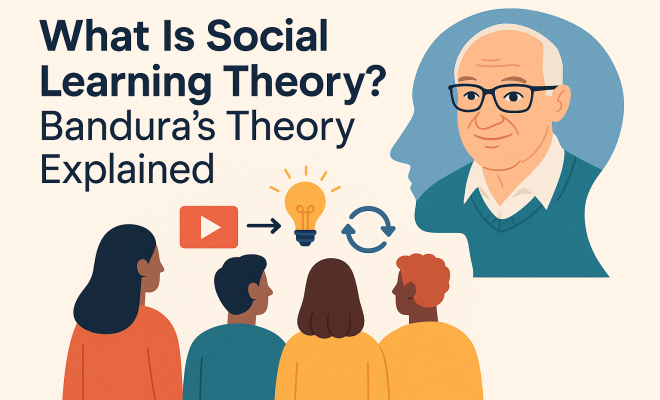
What Is Social Learning Theory? Bandura’s Theory Explained
“`html
Introduction to Social Learning Theory
Have you ever wondered how we learn from each other? Why some behaviors seem to spread like wildfire through social groups while others fade away? That’s where social learning theory comes into play. Developed by psychologist Albert Bandura in the 1960s, this theory emphasizes the role of observation, imitation, and modeling in the learning process. Unlike traditional learning theories that focus solely on direct reinforcement and punishment, Bandura’s approach underscores the importance of social context in shaping our behaviors and beliefs. In this article, we will explore the intricacies of social learning theory, its foundational concepts, and its applications in various fields, particularly education.
Historical Background of Social Learning Theory
To fully appreciate the significance of social learning theory, it is crucial to understand its historical context. In the early 20th century, behaviorism dominated psychology, advocating that all behaviors result from external stimuli. This perspective largely ignored the inner cognitive processes involved in learning. Albert Bandura, however, believed that learning is not a mere product of environmental factors. His groundbreaking work, particularly the famous Bobo doll experiment, demonstrated that children could learn aggressive behaviors merely by observing adults acting aggressively towards a doll.
In this experiment, children who witnessed an adult behaving violently toward the Bobo doll were more likely to mimic that behavior themselves compared to those who observed non-aggressive interactions. This pivotal moment in psychology highlighted that learning could occur vicariously, without direct reinforcement or punishment. Bandura’s findings encouraged a shift from the purely behavioral paradigm to one that incorporates cognitive processes, thus laying the groundwork for social learning theory.
Key Concepts of Social Learning Theory
At the heart of social learning theory lie several key concepts that offer valuable insights into human behavior. Understanding these concepts can help us apply the theory effectively in educational settings as well as in everyday social interactions.
- Observational Learning: This is the cornerstone of social learning theory. It refers to learning that occurs by watching others and imitating their behavior. Bandura identified four essential processes involved in observational learning: attention, retention, reproduction, and motivation.
- Attention: For observational learning to take place, one must first pay attention to the model. Factors such as the model’s attractiveness, status, or similarity to the observer can influence this attentiveness.
- Retention: After observing a behavior, individuals must retain the information in their memory. This step often involves cognitive rehearsal where the observed behavior is mentally practiced.
- Reproduction: This is the process of converting retained information into actual behavior. It requires physical and cognitive capabilities to replicate the observed action.
- Motivation: Even if someone has learned a behavior, they may not perform it unless they are motivated. This motivation can stem from external rewards, internal gratification, or the expectation of positive outcomes from the behavior.
The Role of Reinforcement
Bandura also acknowledged the role of reinforcement in social learning theory, but he presented it as a more nuanced concept than simply operant conditioning. Reinforcement can be direct (personal rewards) or vicarious (observing others being rewarded). For instance, if a child sees a peer receiving praise for drawing, that child may feel motivated to draw as well, expecting similar rewards.
This understanding shifts the focus from the individual learner to their social environment, reinforcing the idea that behaviors can be influenced not just by personal experiences but also by the experiences of others. This aspect makes social learning theory highly relevant in collaborative learning environments, where peers can reinforce and model positive behaviors.
Applications of Social Learning Theory in Education (See: Wikipedia on Social Learning Theory.)
One of the most significant implications of social learning theory is its application within educational settings. Teachers can leverage this theory to enhance student learning and engagement in several ways:
- Modeling Positive Behavior: Educators can serve as role models, demonstrating desirable behaviors and skills. By modeling empathy, problem-solving, and critical thinking, teachers can instill these values in their students.
- Encouraging Peer Learning: Group work and collaborative projects allow students to observe and learn from one another. When students work together, they can reinforce positive behaviors and share diverse perspectives, enriching the learning experience.
- Utilizing Multimedia: In today’s digital age, multimedia resources can serve as powerful modeling tools. Videos, podcasts, and interactive simulations provide students with various opportunities to observe behaviors and outcomes.
- Creating a Safe Learning Environment: For students to feel comfortable engaging in observational learning, a supportive environment is needed. Teachers should foster a classroom culture where mistakes are seen as learning opportunities, encouraging students to take risks and explore new ideas.
Social Learning Theory and Technology
The advent of technology has dramatically transformed the landscape of social learning. Online platforms like social media, forums, and educational websites facilitate observational learning on an unprecedented scale. For instance, platforms like YouTube provide endless resources where individuals can learn new skills by watching instructional videos.
Furthermore, social learning theory is crucial in understanding how online communities influence behavior. Users often imitate the actions and attitudes of those they admire or follow, making it essential to curate positive and constructive content. Educators can harness this potential by integrating technology into their teaching strategies, allowing students to learn from both peers and expert models.
Current Relevance and Critiques of Social Learning Theory
While Bandura’s social learning theory has proven to be a valuable framework for understanding human behavior, it has not been without critiques. Some psychologists argue that it may overlook the complexities of individual cognition and the intrinsic motivations that drive behavior. Others contend that it does not adequately consider biological factors that may influence learning.
Despite these critiques, the relevance of social learning theory remains strong, particularly in fields such as psychology, education, and sociology. Its principles continue to inform contemporary practices in classrooms, therapeutic settings, and even corporate training programs. Understanding how social contexts impact learning can lead to more effective strategies for knowledge acquisition and behavior modification.
Case Studies Illustrating Social Learning Theory
To further illustrate social learning theory in action, let’s explore a few case studies that demonstrate its principles and applications:
- Bullying Interventions: In schools, social learning theory has been applied to combat bullying. Programs that model positive behaviors and foster empathy among students have shown success. By observing peers standing up against bullying, students are more likely to imitate this behavior.
- Parenting Programs: Social learning theory has guided parenting interventions aimed at improving parent-child relationships. By modeling effective communication and positive reinforcement, parents can significantly influence their children’s behavior.
- Workplace Training: Many organizations harness the power of social learning in employee training programs. By encouraging mentorship and peer feedback, companies can create a culture of continuous learning where employees observe and replicate successful practices.
Practical Insights for Implementing Social Learning Theory
If you’re looking to apply social learning theory in your educational or professional environment, here are some practical insights to consider:
- Identify Role Models: Determine who can serve as effective models in your context. This could be teachers, peers, or even external experts.
- Encourage Reflection: After observing a behavior, encourage learners to reflect on what they’ve seen. This can deepen their understanding and increase retention.
- Foster a Growth Mindset: Emphasize the importance of effort, resilience, and learning from mistakes. This mindset encourages learners to engage more actively in social learning.
- Utilize Diverse Learning Modalities: Cater to different learning styles by incorporating various methods of demonstration, such as verbal explanations, visual aids, and hands-on activities.
The Future of Social Learning Theory (See: NIH article on Bandura's work.)
As we look ahead, the principles of social learning theory are likely to continue evolving alongside advancements in technology and cognitive science. The rise of artificial intelligence and virtual reality presents exciting opportunities to create immersive learning experiences. Imagine being able to witness a medical procedure in real-time or participating in a virtual classroom where you can observe and interact with peers from around the globe.
Furthermore, as our understanding of social dynamics deepens, we may uncover new insights into how various factors like culture, socio-economic status, and access to resources shape the learning environment. These advancements will undoubtedly enrich our understanding of social learning theory and its applications.
Exploring Social Learning in Different Cultures
Social learning theory isn’t just a product of Western psychology; it has implications across different cultures. Different societies may emphasize various aspects of learning through observation. For example, collectivist cultures, such as those found in many Asian countries, often prioritize group harmony and community learning over individual success. In these contexts, the modeling of behaviors may focus on group norms and shared values, illustrating the adaptability of social learning theory.
In contrast, individualistic societies, like those in the United States, may emphasize personal achievement and self-expression in the learning process. Observational learning in these cultures could focus more on personal traits, creativity, and individual successes. Understanding these cultural differences can help educators apply social learning theory more effectively, tailoring approaches to fit the diverse backgrounds of their students.
Social Learning in the Digital Age
The impact of social learning theory has been amplified in the digital age, where online communities and resources are abundant. Social media platforms and forums not only facilitate the sharing of knowledge but also create environments where observational learning can flourish. The phenomenon of influencers, for instance, showcases how individuals can learn new behaviors, trends, and skills by observing others in their digital networks.
Moreover, the emergence of online learning environments offers unique opportunities for observational learning. Platforms like Coursera and Khan Academy allow users to learn from experts through video demonstrations, fostering a new kind of social learning based on virtual interactions. These platforms illustrate how social learning theory can be integrated into modern education, making learning accessible and collaborative beyond traditional classroom settings.
Statistics Supporting Social Learning Theory
Research indicates that social learning theory has substantial backing in empirical studies. For instance, a study published in the Journal of Educational Psychology found that students who engaged in collaborative learning environments showed a 25% increase in retention rates compared to those who learned in isolation. Another study in the field of workplace training found that organizations that utilized social learning techniques reported 20% higher employee engagement and productivity than those that relied solely on traditional training methods.
These statistics underscore the practical benefits of applying social learning theory in educational and professional contexts, demonstrating its relevance in improving learning outcomes and enhancing team dynamics.
FAQs about Social Learning Theory
- What is social learning theory?
Social learning theory is a psychological framework that explains how people learn through observation, imitation, and modeling. It emphasizes the role of social context in shaping behavior and beliefs. - Who developed social learning theory?
Social learning theory was developed by psychologist Albert Bandura in the 1960s, further evolving the understanding of learning beyond behaviorism. - What are the four processes of observational learning?
The four key processes are attention, retention, reproduction, and motivation. All are essential for effective observational learning to occur. - How can social learning theory be applied in education?
Educators can apply the theory by modeling positive behaviors, encouraging peer learning, utilizing multimedia resources, and creating a supportive learning environment. - What role does technology play in social learning theory?
Technology enhances social learning by providing vast platforms where observational learning can occur, such as videos, online forums, and educational websites. - Are there critiques of social learning theory?
Yes, some critiques focus on its potential neglect of individual cognition and biological factors in learning. However, it remains relevant and widely used across various fields. - How does culture influence social learning?
Culture shapes the norms and values that influence what behaviors are modeled and reinforced within social environments, affecting how social learning occurs in different societies.
Case Studies in Various Fields
To show the versatility of social learning theory, let’s consider its application across various fields beyond education:
- Healthcare: In medical training, social learning is critical. Medical students often learn procedures by observing experienced doctors. Studies have shown that when students participate in observational learning during clinical rotations, they retain procedural knowledge better, which is crucial for their future practice.
- Marketing: Influencer marketing capitalizes on social learning theory. Brands utilize individuals who have already established credibility to demonstrate products. Observers who see a trusted influencer using a product are more likely to imitate that behavior, driving sales through modeled behavior.
- Sports: In sports, coaches frequently use social learning principles to train athletes. By having players watch footage of successful plays or by having experienced athletes demonstrate techniques, teams can improve their overall performance through observational learning.
- Behavioral Therapy: In therapeutic settings, social learning theory is often used in cognitive-behavioral therapy. Therapists model coping mechanisms, and clients observe and practice these skills, reinforcing positive behavior change.
Building Effective Learning Communities
Creating effective learning communities is a practical way to harness the principles of social learning theory. Here are some strategies to build such communities:
- Encouraging Open Communication: Establishing channels for open dialogue allows individuals to share their experiences and insights, fostering a community of learning.
- Providing Collaborative Opportunities: Organizing activities that require teamwork encourages members to learn from each other, strengthening their understanding of different perspectives and skills.
- Celebrating Successes: Highlighting and rewarding collective achievements can motivate community members to engage more actively and reinforce desired behaviors.
- Creating Mentorship Programs: Pairing experienced individuals with novices facilitates observational learning and helps build supportive relationships within the community.
Conclusion
Social learning theory has fundamentally changed our understanding of how learning occurs within social contexts. By emphasizing the role of observation, imitation, and social reinforcement, Bandura’s theory provides a comprehensive framework to understand human behavior. Its applications in education, technology, and various fields underscore its ongoing relevance. As we continue to explore its implications, educators and learners alike can harness the power of social learning to foster deeper understanding and collaboration. So, the next time you witness someone learning from another, remember — it’s more than just watching; it’s a powerful exchange shaping our very existence.
“`
Trending Now
Frequently Asked Questions
What is Bandura's social learning theory?
Bandura's social learning theory posits that people learn behaviors through observation, imitation, and modeling rather than through direct reinforcement alone. It emphasizes the importance of social context and cognitive processes in shaping how individuals acquire new behaviors.
How does social learning theory explain behavior?
Social learning theory explains behavior by suggesting that individuals can learn by observing others, particularly in social settings. This includes mimicking actions seen in others, which is influenced by factors such as attention, retention, reproduction, and motivation.
What are the key concepts of social learning theory?
Key concepts of social learning theory include observational learning, imitation, modeling, attention, retention, and motivation. These elements highlight how individuals can acquire new behaviors by watching others and the importance of social interactions in the learning process.
What was the Bobo doll experiment?
The Bobo doll experiment, conducted by Albert Bandura, demonstrated that children could learn aggressive behaviors by observing adults. In the study, children who watched adults act violently towards a Bobo doll were more likely to imitate that behavior, illustrating the principles of social learning theory.
How is social learning theory applied in education?
In education, social learning theory is applied by encouraging collaborative learning environments where students can observe and imitate positive behaviors. Teachers often model desired behaviors and use group activities to foster social interactions that enhance the learning experience.
What’s your take on this? Share your thoughts in the comments below — we read every one.