Piaget’s Theory: Object Permanence & Cognitive Development
“`html
Cognitive development is a fascinating area of study that explores how children acquire, process, and utilize knowledge. One of the pioneering figures in this field is Swiss psychologist Jean Piaget, who extensively researched the cognitive development stages of children. Among his many contributions, the concept of object permanence Piaget proposed stands out as a key milestone in understanding how young minds perceive the world around them. This article will delve into the intricacies of object permanence, its significance in cognitive development, and its lasting impact on modern psychology and education.
What is Object Permanence?
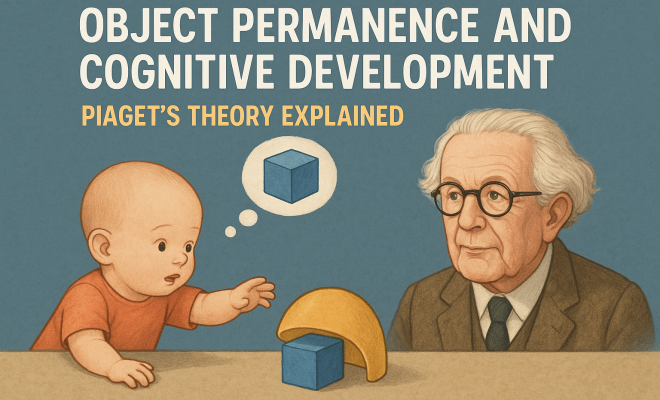
Object permanence refers to the understanding that objects continue to exist even when they are not visible. Infants typically do not grasp this concept in their early months; when a toy is hidden, they believe it has vanished entirely. This realization evolves over time, marking a crucial cognitive leap. Piaget suggested that this understanding develops around 8 to 12 months of age, during the sensorimotor stage of a child’s development.
The Stages of Cognitive Development According to Piaget
Piaget identified four primary stages of cognitive development:
- Sensorimotor Stage (0-2 years): This is when infants learn about the world through their senses and actions. Object permanence begins to develop during this stage.
- Preoperational Stage (2-7 years): Children start to use language and think symbolically but lack logical reasoning. They may struggle with understanding other perspectives.
- Concrete Operational Stage (7-11 years): Logical thinking develops, and children begin to understand the concept of conservation — the idea that quantity doesn’t change even if its shape does.
- Formal Operational Stage (12 years and up): Abstract thinking emerges, allowing for hypothesis testing and systematic planning.
Each stage builds upon the previous, showcasing a child’s growing cognitive abilities. Object permanence is critical in the sensorimotor phase, as it lays the groundwork for further cognitive advancements.
The Importance of Object Permanence in Cognitive Development
Understanding object permanence is essential for several reasons:
- Foundation for Future Learning: Mastering this concept allows children to engage more deeply with their environment and other people. Once they know that items exist even when out of view, they can learn through exploration and experimentation.
- Social Development: Object permanence is linked to social skills. Children who grasp this concept better are generally more adept at understanding and interacting with others, marking the beginnings of empathy.
- Cognitive Skills: This understanding enhances cognitive skills such as memory and problem-solving. Children begin to remember locations of toys and can strategize to retrieve them.
Overall, object permanence is not just a developmental milestone but an essential building block for complex cognitive functions.
Piaget’s Experiments on Object Permanence
Piaget conducted a series of experiments to test his hypotheses on object permanence. One famous experiment involved hiding a toy under a blanket while a child observed. Initially, children younger than eight months would not search for the toy, indicating a lack of understanding that it still existed. However, by around 12 months, the majority would attempt to uncover the toy, demonstrating their grasp of object permanence.
These experiments laid the research groundwork for understanding how children think and represent the world. Piaget’s methods were groundbreaking, focusing on observation and interaction rather than standardized tests. This approach allowed for a more natural exploration of children’s cognitive processes.
Critiques of Piaget’s Theory
While Piaget’s work has significantly influenced the field of developmental psychology, it hasn’t escaped criticism. Some researchers argue that his timelines for developmental stages may be oversimplified. For instance, more recent studies suggest that infants may have some understanding of object permanence even earlier than Piaget indicated. Research led by researchers like Karen Wynn demonstrated that infants as young as three months could show signs of understanding object permanence through their reactions when a hidden object reappeared. (See: Understanding object permanence.)
Moreover, critics argue that Piaget did not sufficiently account for cultural differences in cognitive development. Children may develop cognitive skills at varying rates depending on their environment and experiences, which Piaget’s rigid stages do not address adequately.
Current Relevance of Object Permanence in Education
Understanding the concept of object permanence is still relevant in educational settings today. Educators can apply Piaget’s insights to tailor learning experiences for young children:
- Hands-on Learning: Activities that involve hiding and revealing objects can serve as practical exercises to reinforce the concept of object permanence.
- Use of Technology: With the rise of educational apps, developers can create games that challenge children to find hidden objects, fostering their understanding of permanence in a fun, interactive way.
- Parental Involvement: Parents can play a part by engaging in games like peek-a-boo, which not only entertain but reinforce the idea that people and things continue to exist even when they cannot be seen.
By applying the principles of object permanence, educators and parents can help children progress through Piaget’s stages of cognitive development more effectively.
Real-World Applications of Object Permanence
Beyond educational settings, the notion of object permanence has implications in various fields:
- Child Psychology: Understanding where a child is in their grasp of object permanence can help psychologists provide targeted interventions for developmental delays.
- Parenting Strategies: Parents can use this knowledge to gauge their child’s cognitive growth and engage them in activities that promote exploration and learning.
- Childcare Practices: Daycare providers and early childhood educators can design environments that encourage children to practice object permanence through play.
In these ways, Piaget’s theory continues to shape how we understand and nurture cognitive development in children.
Modern Research in Developmental Psychology
Since Piaget’s initial research, the field of developmental psychology has evolved tremendously. Contemporary studies have leveraged technology, such as eye-tracking and neuroimaging, to gain deeper insights into cognitive processes. For example, researchers use these methods to observe how infants react to changes in their environment, providing a more nuanced understanding of when and how they develop object permanence.
Additionally, researchers like Susan Hespos and Elizabeth S. Spelke have conducted experiments that challenge and expand upon Piaget’s original ideas. Their findings suggest that infants have a more sophisticated understanding of the world than previously thought. This ongoing research continues to refine our understanding of cognitive development and highlights the need for a more flexible view of how children learn and grow.
Practical Insights for Parents and Educators
For parents and educators, facilitating the development of object permanence can be both rewarding and fun. Here are some practical insights to consider:
- Encourage Exploration: Create safe spaces where children can freely explore their environment. Use boxes, curtains, and toys to hide and reveal objects.
- Integrate Play: Use games like hide-and-seek or peek-a-boo to reinforce the idea that objects and people exist even when out of sight.
- Be Patient: Understand that each child develops at their own pace. Celebrate small milestones and successes to keep them motivated.
With patience and creativity, you can support children as they grasp this fundamental cognitive concept, setting the stage for further learning.
Frequently Asked Questions about Object Permanence
1. At what age do babies develop object permanence?
Generally, babies begin to show signs of understanding object permanence around 8 to 12 months of age. However, some research suggests that infants as young as 3 months may have basic awareness of it, as demonstrated in studies where infants look longer at unexpected events involving hidden objects. (See: Cognitive development in infants.)
2. How can I help my baby develop object permanence?
Engaging in simple games such as peek-a-boo or hiding toys under blankets can help reinforce the concept. You can also encourage exploration by allowing your child to find hidden objects in a safe environment.
3. What are the signs that my child understands object permanence?
Children who grasp object permanence will actively search for hidden toys or will react when a familiar person leaves a room. They may also show surprise when a hidden object suddenly appears or disappears.
4. Does cultural background affect the development of object permanence?
Yes, cultural factors can influence the timeline and methods through which children learn object permanence. For instance, children raised in environments that prioritize exploratory play may develop this understanding more quickly than those in less stimulating settings.
5. Are there any activities to promote understanding of object permanence for toddlers?
In addition to peek-a-boo, you can play hide-and-seek with toys, use boxes to hide and reveal items, or encourage them to play with dolls or action figures that “disappear” and “reappear.” Activities involving movement and interaction are particularly effective.
New Perspectives on Object Permanence
Recent advancements in cognitive science have opened new avenues for understanding object permanence and related cognitive abilities. For instance, research into executive function—the cognitive processes that manage thoughts and actions—has shown that the ability to plan, focus attention, and manage multiple tasks can impact how children understand object permanence. Children displaying strong executive function skills are often better at searching for hidden objects than their peers.
Comparative Insights: Object Permanence in Animals
Interestingly, research into object permanence isn’t limited to human infants. Studies have examined similar cognitive abilities in various animal species. For example, some primates, dogs, and even certain bird species, like ravens, have shown evidence of understanding object permanence. These findings suggest that the origins of this cognitive skill may be more widespread in the animal kingdom than previously believed. By comparing these abilities across species, researchers hope to uncover the evolutionary roots of object permanence and its role in survival.
The Future of Research on Object Permanence
As technology advances, so does our capacity to study cognitive development more comprehensively. Future research may use neuroimaging techniques and other innovative methodologies to explore how the brain processes object permanence and how this understanding evolves over time. Understanding the neurological underpinnings could lead to better interventions for children who struggle with cognitive development, enhancing educational practices and parenting strategies.
The Impact of Object Permanence on Later Learning
Understanding object permanence doesn’t just influence early childhood; it has lasting effects on how children engage with learning throughout their education. Research indicates that children who have a solid grasp of object permanence are often more successful in tasks that involve memory recall and problem-solving. For instance, children who understand that an object continues to exist even when hidden are typically better equipped to tackle puzzles and games that require them to think ahead and strategize.
Moreover, children who have developed object permanence may also be more confident in navigating their surroundings, which allows them to explore more freely. This exploration is crucial as it leads to increased sensory experiences, further promoting cognitive development. When children are encouraged to pursue hidden objects or solve problems, it creates opportunities for them to enhance their critical thinking skills and creativity.
Influence of Object Permanence on Emotional Development
Object permanence goes beyond just cognitive skills; it also plays a role in emotional development. As children come to terms with the concept that objects and individuals exist even when they are not present, it also fosters a sense of security. Understanding that caregivers, for instance, will return after leaving a room helps form secure attachment bonds. These secure attachments can influence a child’s ability to navigate relationships later in life, making them more likely to develop healthy social connections.
Children who master object permanence are often better at managing separation anxiety, which is common during the early years. By learning that a parent or caregiver is not gone forever when they step out of sight, children can develop a more balanced emotional response to separation events.
Cross-Cultural Studies on Object Permanence
As cognitive psychology continues to evolve, cross-cultural studies on object permanence have gained traction. Researchers are examining how different cultural practices influence children’s understanding of object permanence. For instance, some cultures may emphasize more interactive play, which could lead children to understand object permanence sooner than those in cultures that prioritize passive observation.
In cultures where children frequently engage in games and activities that require hiding and seeking, they may develop object permanence earlier. This variance highlights the importance of context in cognitive development and suggests that cultural factors play a critical role in shaping cognitive milestones.
Conclusion: The Lasting Legacy of Piaget’s Object Permanence
Jean Piaget’s exploration of object permanence has left an indelible mark on our understanding of cognitive development. By recognizing that objects exist independently of our perception, children build a framework for learning that influences their interactions with the world. The significance of object permanence Piaget proposed extends beyond early childhood; it continues to shape educational practices, parenting approaches, and psychological interventions today. As research evolves, our understanding of cognitive development will adapt, but the foundational ideas initiated by Piaget remain invaluable.
“`
Trending Now
Frequently Asked Questions
What is the significance of object permanence in cognitive development?
Object permanence is crucial in cognitive development as it marks a child's understanding that objects exist even when out of sight. This realization typically develops between 8 to 12 months during the sensorimotor stage, laying the foundation for more complex cognitive skills and influencing future learning and social interactions.
At what age do children develop object permanence?
Children generally begin to develop object permanence between 8 to 12 months of age, according to Piaget's theory. During this period, infants start to understand that objects continue to exist even when they cannot see them, which is a significant cognitive milestone in their development.
What are the stages of cognitive development according to Piaget?
Piaget identified four stages of cognitive development: the Sensorimotor Stage (0-2 years), where infants learn through senses; the Preoperational Stage (2-7 years), characterized by symbolic thinking; the Concrete Operational Stage (7-11 years), where logical thinking emerges; and the Formal Operational Stage (12 years and up), involving abstract thinking.
How does Piaget’s theory impact modern education?
Piaget’s theory of cognitive development influences modern education by emphasizing the importance of developmental stages in teaching methods. Educators design curricula that align with children's cognitive abilities, ensuring that lessons are age-appropriate and support the natural progression of learning, fostering better understanding and retention.
What are the key milestones in Piaget's cognitive development theory?
Key milestones in Piaget's cognitive development theory include the development of object permanence during the sensorimotor stage, the emergence of symbolic thought in the preoperational stage, understanding conservation in the concrete operational stage, and the ability to think abstractly in the formal operational stage.
What’s your take on this? Share your thoughts in the comments below — we read every one.