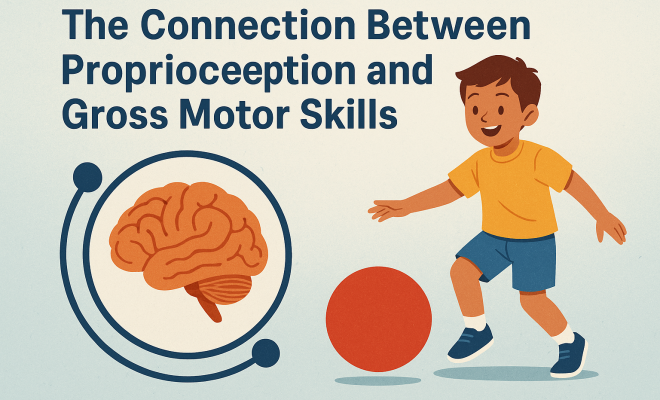
The Connection Between Proprioception and Gross Motor Skills
“`html
Understanding the intricate relationship between proprioception and gross motor skills is crucial for anyone engaged in physical education, rehabilitation, or general health and fitness. Proprioception, often called the “sixth sense,” refers to the body’s ability to perceive its position in space. Meanwhile, gross motor skills involve the large movements of muscles that enable activities such as walking, running, jumping, and other coordinated actions. Together, these two elements play a significant role in our physical capabilities and overall quality of life.
What is Proprioception?
Proprioception comes from specialized receptors located in our muscles, tendons, and joints, known as proprioceptors. These receptors send continuous feedback to the brain about body position and movement, allowing us to perform various physical tasks without constantly needing to look at our limbs. For example, when you close your eyes and touch your nose with your finger, that ability relies heavily on your proprioceptive senses.
Research highlights the profound impact of proprioception on athletic performance and daily activities. A study published in the Journal of Neurophysiology in 2017 emphasized that proprioceptive feedback is critical for fine-tuning motor control, especially during complex movements. But beyond athletics, proprioception is essential for even the simplest tasks, such as typing on a keyboard or navigating through a crowded room.
Defining Gross Motor Skills
Gross motor skills refer to the large movements that involve the arms, legs, and entire body. These skills are essential for daily functions, sports, and physical education. Common examples include running, swimming, jumping, and climbing. Developing these skills typically occurs in stages, beginning in infancy and continuing through childhood.
Children develop gross motor skills through play and exploration. Activities that involve running, throwing, and jumping help enhance coordination, balance, and strength. The Centers for Disease Control and Prevention (CDC) notes that children should engage in a variety of physical activities to foster these skills effectively.
The Interplay Between Proprioception and Gross Motor Skills
The connection between proprioception and gross motor skills is profound. Efficient gross motor function requires a well-developed sense of proprioception. When you run, your body must constantly adjust to maintain balance, speed, and rhythm. This adjustment relies on sensory feedback from proprioceptors, which informs you about your body’s position and movement in relation to the ground and other objects.
For instance, an athlete executing a jump relies on proprioceptive feedback to gauge the distance and height they need to achieve. A lack of proprioceptive awareness can lead to awkward movements, potential injuries, and decreased performance. Enhancing proprioceptive abilities can significantly improve gross motor skills across various activities and sports.
How Proprioception Affects Athletic Performance
Research shows that proprioceptive training can lead to improvements in athletic performance. A study conducted at the University of Virginia illustrated that athletes who participated in proprioceptive training demonstrated enhanced balance and coordination, which translated into better performance in their respective sports.
Moreover, proprioception plays a crucial role in injury prevention. Athletes with better proprioceptive abilities are less likely to suffer from joint injuries, as they can better sense their body’s position and make necessary adjustments to avoid falls or awkward landings. In sports like basketball or soccer, where dynamic movement is constant, improved proprioceptive awareness can be the difference between a successful play and a painful injury.
Practical Techniques to Enhance Proprioception
Several practical techniques can help enhance proprioception, particularly beneficial for athletes and individuals in rehabilitation. Here are a few effective strategies:
- Balance Exercises: Activities such as standing on one leg, using balance boards, or doing yoga can improve proprioceptive feedback.
- Eyes Closed Activities: Performing tasks with closed eyes, such as balancing or reaching for objects, forces the body to rely on proprioceptive cues.
- Dynamic Movements: Engaging in exercises that require movement in multiple planes (e.g., lateral lunges, multidirectional sprinting) enhances proprioceptive feedback.
- Resistance Training: Incorporating free weights or resistance bands can improve the body’s ability to sense the position of its limbs under load.
Incorporating these techniques into a regular training or rehabilitation program can significantly enhance proprioceptive abilities and, in turn, improve gross motor skills. (See: Proprioception and motor control study.)
Proprioception in Children: A Foundation for Development
For children, developing proprioception is essential for their physical and cognitive development. Research indicates that children with poor proprioceptive awareness may struggle with coordination and motor planning, which can affect their ability to participate in sports and physical activities.
Engaging children in various play activities—such as climbing structures, obstacle courses, or team sports—can help develop this sixth sense. Schools and parents can facilitate this development by encouraging active play and providing environments where children can explore their physical capabilities.
The Role of Proprioception in Rehabilitation
In rehabilitation, particularly after injury or surgery, proprioception training becomes a crucial component of recovery. Proprioceptive deficits are common after injuries, leading to impaired balance and increased risk of re-injury. Rehabilitation professionals often utilize proprioceptive exercises to restore balance and coordination in patients.
For example, after an ankle sprain, a physical therapist might use balance boards or unstable surfaces to challenge the patient’s proprioceptive abilities progressively. This approach not only helps regain strength and range of motion but also retrains the brain to better understand limb positioning.
Technological Advances in Proprioception Training
With the rise of technology, new innovations have emerged that cater to proprioceptive training. Wearable devices and virtual reality (VR) environments are becoming increasingly popular for enhancing proprioceptive feedback.
Devices that track motion and provide real-time feedback can help users understand their body mechanics during physical activities. Additionally, VR simulations offer immersive environments where individuals can practice balance and coordination in a controlled setting, which can be particularly beneficial for rehabilitation.
Current Research Trends in Proprioception and Motor Skills
Current research continues to explore the connections between proprioception and gross motor skills. Recent studies focus on how various factors, such as age, injury, and training methods, influence proprioceptive feedback and motor performance.
Moreover, researchers are investigating the implications of proprioception on cognitive functions. Emerging studies suggest that enhancing proprioception may positively impact cognitive processes, such as attention and spatial awareness, which are crucial for learning and development.
Understanding Proprioception in Different Age Groups
Proprioception develops differently across age groups, and understanding these differences can help tailor specific interventions to enhance gross motor skills effectively. In infants, proprioceptive feedback is critical for learning to crawl and walk. During this stage, exploring various movements helps build a foundation for future physical capabilities.
As children grow into adolescence, their proprioceptive senses can be fine-tuned through sports and structured physical activities. Teenagers often engage in more complex gross motor tasks, where refined proprioception becomes essential for performance and injury prevention. Adults also benefit from proprioceptive training, especially when returning to physical activities after a long break or injury.
Older adults face unique challenges as proprioceptive abilities can decline with age, often leading to balance issues and an increased risk of falls. Therefore, implementing proprioceptive exercises in senior fitness programs can help maintain balance and independence, significantly improving their quality of life.
Proprioception and Its Impact on Mental Health
The connection between physical activity, proprioception, and mental health is becoming increasingly recognized. Engaging in exercises that improve proprioceptive awareness can also lead to enhanced mood and cognitive function. Research shows that physical activity can elevate mood and decrease anxiety, linking proprioception to psychological well-being.
Activities that require coordination, balance, and spatial awareness have been shown to reduce symptoms of depression and anxiety. For example, yoga and tai chi, which emphasize body awareness and controlled movements, not only boost proprioception but also promote relaxation and mental clarity, creating a holistic approach to health. (See: CDC on proprioception importance.)
Statistics on Proprioception and Motor Skills Development
Understanding the importance of proprioception and gross motor skills is supported by various statistics. According to the CDC, around 70% of children aged 6 to 17 do not meet recommended levels of physical activity, which can hinder the development of these crucial skills. Additionally, studies show that children who engage in regular physical activity have a 30% higher chance of developing effective gross motor skills compared to their sedentary peers.
In adults, those who participate in structured exercise programs that include balance and coordination training report a 25% decrease in fall-related injuries. This highlights the importance of proprioceptive training across all age groups and its potential to improve overall safety and mobility.
Frequently Asked Questions (FAQ)
What is the best age to start proprioceptive training?
Proprioceptive training can start as early as infancy, as babies begin to explore movements. However, structured proprioceptive exercises can be particularly beneficial during childhood and adolescence when motor skills are developing. It’s essential to adapt activities to the age and skill level of the individual.
Can proprioception be improved at any age?
Yes, proprioception can be improved at any age. While it may take longer for older adults compared to children, engaging in balance and coordination exercises consistently can enhance proprioceptive feedback across all ages.
Are there specific sports that benefit most from proprioceptive training?
Sports that require agility, balance, and coordination, such as gymnastics, soccer, basketball, and skiing, greatly benefit from proprioceptive training. However, nearly every sport can see improvements with enhanced proprioceptive abilities.
How long does it take to see improvements in proprioception?
Improvements in proprioception can be seen within a few weeks of consistent training. However, the extent of improvement can vary based on the individual’s baseline abilities, the type of training undertaken, and frequency of practice.
What are some fun activities for children to improve proprioception?
Activities such as obstacle courses, dance, martial arts, and games that involve hopping, jumping, or balancing can be enjoyable ways to enhance proprioceptive awareness in children. Encouraging creative play can also facilitate these skills without the child realizing they’re working on their motor development.
The Neurophysiology of Proprioception
Understanding proprioception goes beyond just knowing what it is; it involves grasping the neurophysiological mechanisms that underpin this remarkable system. Proprioceptors are located throughout the body, predominantly in the muscles (muscle spindles), tendons (Golgi tendon organs), and joints (joint receptors). These receptors play a vital role in sending information to the central nervous system (CNS) regarding body position, movement, and tension in muscles.
When you move, proprioceptors detect changes in muscle length and tension. This sensory information is relayed to the brain, where it is integrated with visual and vestibular input to create a comprehensive understanding of body positioning and movement. In essence, proprioception enables the CNS to coordinate smooth, purposeful movements while simultaneously adjusting to environmental conditions.
The Role of Proprioception in Daily Life
While proprioception is often discussed in the context of sports and rehabilitation, it also plays a crucial role in our everyday lives. Simple tasks such as walking, climbing stairs, or even standing still require a well-functioning proprioceptive system. For instance, when you navigate through a crowded space, your body constantly adjusts its movements based on feedback from proprioceptors, allowing you to avoid obstacles efficiently.
Moreover, the importance of proprioception extends to performing complex tasks like driving, where split-second decisions are made based on the body’s awareness of position and motion. The ability to gauge distance and speed relies heavily on proprioceptive feedback, underscoring its significance beyond mere physical activity. (See: Research on proprioception in sports.)
Comparative Analysis: Proprioception vs. Other Senses
Proprioception is often compared to other senses, such as vision, hearing, and touch. One of the most fascinating aspects of proprioception is that it operates largely without conscious thought. Unlike vision, where you actively focus on objects, proprioception continuously provides feedback, allowing for fluid movement without direct attention. This unique characteristic makes proprioception essential for multitasking and performing various activities simultaneously.
In scenarios where one sense is impaired, such as vision loss, proprioception takes on an even greater role. People who are blind often develop enhanced proprioceptive abilities, allowing them to navigate their environments with remarkable efficiency. This adaptability showcases the incredible resilience of the proprioceptive system and its ability to compensate for other sensory deficits.
The Future of Proprioception Research
The research on proprioception continues to evolve, with exciting discoveries on the horizon. Scientists are increasingly exploring how proprioception interacts with emerging fields such as robotics, artificial intelligence, and neuroplasticity. For example, understanding proprioception can lead to advancements in developing better prosthetics that closely mimic natural limb movement by incorporating proprioceptive feedback mechanisms.
Furthermore, ongoing research into neuroplasticity is revealing how proprioceptive training can alter brain function and structure. Studies suggest that proprioceptive exercises may enhance synaptic connections and strengthen neural pathways, offering potential therapeutic benefits for various neurological conditions. As our understanding of proprioception deepens, we may uncover new ways to enhance physical performance, improve rehabilitation methods, and promote overall well-being.
Community and Social Aspects of Proprioception Training
Engaging in proprioception training can also have social benefits. Group activities that focus on balance and coordination, such as dance classes or team sports, often foster a sense of community and social interaction. These environments not only enhance proprioceptive skills but also provide emotional and psychological benefits through teamwork and camaraderie.
For children, participating in group activities that promote proprioceptive development can enhance social skills, cooperation, and communication. This can lead to greater self-esteem and confidence as they experience success in physical tasks alongside their peers. Ultimately, proprioception training can play an integral role in building connections and nurturing relationships, contributing to a richer, more fulfilling life.
Conclusion: The Importance of Proprioception for Everyone
Understanding the connection between proprioception and gross motor skills is essential for athletes, children, and anyone looking to maintain a healthy lifestyle. Enhanced proprioceptive abilities can lead to improved coordination, balance, performance, and injury prevention. Whether through structured training, engaging play for children, or innovative technology, fostering a strong sense of proprioception should be a priority for all.
By prioritizing proprioception in our physical activities, we can unlock a higher level of movement efficiency, ensuring that whether we’re running a marathon or simply walking to the store, we do so with confidence and grace.
“`
Trending Now
Frequently Asked Questions
What is proprioception and why is it important?
Proprioception, often referred to as the 'sixth sense,' is the body's ability to perceive its position in space. It is crucial for performing physical tasks without needing to look at our limbs, aiding in activities ranging from sports to daily functions.
How does proprioception affect gross motor skills?
Proprioception significantly influences gross motor skills by providing the brain with feedback about body position and movement. This feedback is essential for coordinating large muscle movements involved in activities like running, jumping, and climbing.
What are examples of gross motor skills?
Gross motor skills involve large muscle movements and include activities such as walking, running, jumping, swimming, and climbing. These skills are vital for daily functions and are developed through play and physical exploration.
How can I improve my proprioception?
Improving proprioception can be achieved through balance exercises, coordination drills, and activities like yoga or Pilates. These practices enhance body awareness and can lead to better control during complex movements.
Why is proprioception important in sports?
Proprioception is critical in sports as it helps athletes fine-tune their motor control, ensuring precise movements and coordination. Enhanced proprioceptive feedback can lead to improved performance and reduced risk of injury.
What’s your take on this? Share your thoughts in the comments below — we read every one.