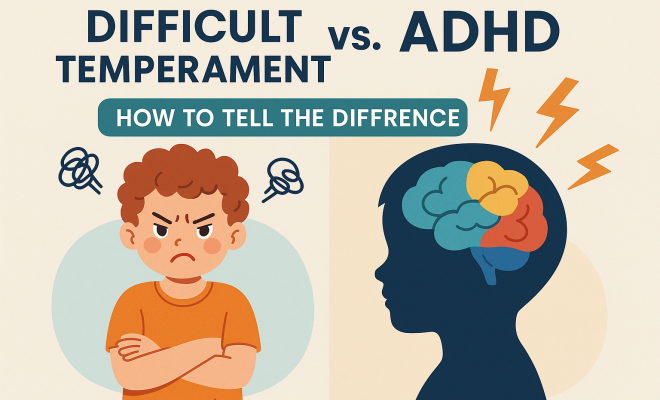
Difficult Temperament vs. ADHD: How to Tell the Difference
“`html
In the realm of child development, two terms often cause confusion among parents, educators, and even healthcare professionals: ADHD (Attention Deficit Hyperactivity Disorder) and difficult temperament. Both conditions can manifest with similar behavior patterns, which can lead to misdiagnosis and inadequate support. Understanding the nuances between ADHD and difficult temperament is crucial for providing effective interventions. In this article, we will dissect these two concepts, shining a light on their characteristics, differences, and how to approach each effectively.
1. Defining ADHD
ADHD is a neurodevelopmental disorder typically diagnosed in childhood, characterized by symptoms such as inattention, hyperactivity, and impulsivity. According to the CDC, approximately 6 million children in the U.S. have been diagnosed with ADHD. This disorder can significantly affect academic performance, relationships, and overall quality of life.
Diagnosing ADHD is typically based on behavioral assessments and reports from parents and teachers. The DSM-5 (Diagnostic and Statistical Manual of Mental Disorders, Fifth Edition) outlines specific criteria, including the presence of symptoms for at least six months and their impact on daily functioning. It’s important to recognize that ADHD is not simply a behavioral issue; it’s rooted in brain chemistry and development.
2. Understanding Difficult Temperament
Difficult temperament refers to a child’s inherent personality traits that may lead to challenging behaviors. Kids with a difficult temperament often display high levels of emotional reactivity, irritability, and a tendency to resist change. This concept is grounded in the work of developmental psychologist Alexander Thomas, who identified nine temperament traits in children, including adaptability, mood, and intensity.
Unlike ADHD, difficult temperament is not a disorder but rather a spectrum of behaviors that can be observed from an early age. Children with difficult temperaments may struggle in social situations or be easily overwhelmed, yet they do not necessarily exhibit the impulsivity or inattention characteristic of ADHD. Understanding a child’s temperament can offer valuable insights into their behavior and needs.
3. Key Differences Between ADHD and Difficult Temperament
The distinction between ADHD and difficult temperament can be subtle but significant. One major difference lies in the origin of the behaviors. ADHD behaviors are typically spontaneous, a result of neurological differences, while difficult temperament manifests from a child’s emotional response to their environment.
For instance, a child with ADHD might impulsively shout out answers in class without raising their hand, while a child with a difficult temperament may react strongly to unexpected changes in routine, such as being unable to play at their favorite park. It’s also essential to note that while difficult temperament can lead to challenges in behavior, it does not impact cognitive functioning or attention in the way ADHD does.
4. Diagnosing ADHD vs Difficult Temperament
Diagnosing ADHD involves a comprehensive evaluation process, including behavioral assessments, questionnaires, and input from parents and teachers. Specialists often use standardized tools to gauge a child’s behavior against established criteria. However, diagnosing difficult temperament is less formal; it often involves observing a child’s responses to various situations over time.
Parents and educators can play a pivotal role in this observational process. Keeping a journal of behaviors, noting triggers and responses, can help in assessing temperament. It’s crucial for caregivers to recognize that a difficult temperament is not a flaw but a part of a child’s personality that may require tailored approaches, rather than clinical intervention.
5. Common Misconceptions
One of the most common misconceptions is that children with difficult temperaments are simply ‘bad kids’ or ‘not trying hard enough.’ In reality, temperament is a natural variation in personality. Similarly, ADHD is often misunderstood as a lack of discipline. This perspective undermines the genuine challenges faced by children and their families.
Moreover, it is crucial to differentiate between transient behaviors and consistent patterns. A child might display difficult behaviors due to environmental changes or stressors, but that doesn’t necessarily indicate a difficult temperament. An understanding of these nuances can help parents and educators approach each child with empathy and tailored strategies.
6. Behavioral Strategies for Difficult Temperament
For children with a difficult temperament, strategies that emphasize emotional regulation are vital. Building a structured environment with clear expectations can help these children feel secure, reducing emotional outbursts. Techniques like modeling calm behavior, using visual schedules, and providing choices can empower children to navigate their feelings effectively. (See: CDC ADHD facts and statistics.)
Additionally, fostering resilience through consistent routines and positive reinforcement can markedly improve a child’s ability to handle frustration. Engaging in activities that promote self-soothing skills, such as mindfulness or creative expression, may also be beneficial. The goal is to create an environment that respects the child’s temperament while encouraging adaptability.
7. Interventions for ADHD
In contrast, children diagnosed with ADHD often benefit from a combination of behavioral therapy and medication. Behavioral interventions can include parent training, which equips parents with strategies to manage their child’s symptoms effectively. Cognitive-behavioral therapy (CBT) can also help children develop coping strategies to address impulsivity and attention issues.
Medication, such as stimulants or non-stimulants, may be prescribed to help balance neurotransmitters in the brain, improving focus and behavior. An individualized approach is essential, as each child may respond differently to various interventions. Collaboration with healthcare professionals is crucial in finding the right treatment plan.
8. Educational Support for Both Conditions
Education plays a pivotal role in the development of both children with ADHD and those with difficult temperaments. For children with ADHD, Individualized Education Plans (IEPs) or 504 Plans can provide necessary accommodations, such as extended time on tests, reduced distractions, and specialized instruction. Collaboration between parents, teachers, and specialists can enhance the academic experience for these children.
In the case of children with difficult temperaments, teachers can apply strategies that create a supportive classroom environment. Techniques like offering sensory breaks, using positive reinforcement, and establishing clear classroom rules can help these students thrive. Education professionals should also be educated about temperament differences to tailor their approaches effectively.
9. Current Research and Trends
Research continues to evolve in understanding the distinctions between ADHD and difficult temperament. Recent studies emphasize the importance of early identification and intervention, as addressing these challenges early can lead to better outcomes in behavior and academic performance.
Additionally, professionals are increasingly advocating for a strengths-based approach, focusing on each child’s unique abilities rather than solely on their challenges. This shift encourages resilience and promotes a more optimistic view of children with both conditions. As awareness grows, so does the recognition that support must be individualized to meet the diverse needs of children.
10. Conclusion: Embracing Individual Differences
Understanding the differences between ADHD and difficult temperament is vital for parents, educators, and healthcare providers. By recognizing the unique characteristics of each, we can tailor approaches that respect and nurture a child’s individuality. This understanding not only facilitates better interventions but also fosters a more inclusive environment where every child can thrive.
Ultimately, embracing these differences allows for comprehensive support, helping children navigate their emotions and behaviors in a world that can be overwhelming. By prioritizing awareness and effective strategies, we can empower children with ADHD and those with difficult temperaments to flourish.
11. The Neurobiological Basis of ADHD
Understanding ADHD requires a look into its neurobiological underpinnings. Research indicates that ADHD is associated with differences in the brain’s structure and function. For instance, studies using MRI scans have shown that children with ADHD may have reduced volume in the prefrontal cortex, an area critical for executive function, which includes planning, focus, and impulse control.
Furthermore, neurotransmitter imbalances, particularly of dopamine, are thought to play a significant role in the development of ADHD. This has led to the use of stimulant medications, which increase the availability of dopamine in the brain, ultimately improving concentration and reducing impulsivity. Understanding these biological factors helps demystify ADHD and reinforces the concept that it is a legitimate medical condition rather than a behavioral choice.
12. Emotional and Social Impacts
The emotional and social impacts of ADHD can be profound. Children with ADHD often face difficulties in forming and maintaining friendships due to impulsivity or inattentiveness. This can lead to feelings of isolation or frustration. A longitudinal study published in the journal Pediatrics found that children with ADHD are at a higher risk for developing anxiety and depression, often stemming from academic struggles and social rejection.
On the other hand, children with difficult temperament may also face social challenges, but these often relate to their emotional reactivity rather than attentional deficits. They might find it hard to make friends due to their intense emotional responses or resistance to new experiences. Understanding these emotional landscapes is critical for caregivers, allowing for tailored social skills training and emotional support. (See: NIH ADHD diagnosis information.)
13. Case Studies: ADHD vs Difficult Temperament
Let’s consider two case studies that illustrate the differences between ADHD and difficult temperament:
Case Study 1: Timmy (ADHD)
Timmy is a 7-year-old boy who struggles to sit still during class. His teacher reports that he frequently interrupts lessons and has difficulty waiting his turn during group activities. Despite being bright, his grades are suffering due to his inability to focus on tasks. After a comprehensive evaluation, Timmy is diagnosed with ADHD. His treatment plan includes behavioral therapy and medication, which helps him manage his symptoms more effectively.
Case Study 2: Sarah (Difficult Temperament)
Sarah, also 7 years old, is known for her strong reactions to changes in her daily routine. If her parents switch up her bedtime or schedule a last-minute activity, she becomes extremely upset. However, Sarah is attentive in class and excels academically. After careful observation, her parents recognize that her struggles stem from her difficult temperament rather than ADHD. They implement structured routines and provide her with choices to help her manage her emotions better.
14. Comparative Analysis of Treatment Approaches
Treatment for ADHD and support for difficult temperament often involve different strategies due to their distinct natures. For ADHD, treatments are typically more structured and may include:
- Medication: Such as stimulants like methylphenidate or amphetamines to enhance focus.
- Behavioral Therapy: Focused on improving specific skills and reducing disruptive behavior.
- Parent Training: Guiding parents on effective management of ADHD symptoms at home.
In contrast, approaches for children with difficult temperament might include:
- Routine Building: Creating a predictable environment to minimize emotional outbursts.
- Emotional Coaching: Teaching children to recognize and articulate their feelings effectively.
- Social Skills Training: Helping children navigate peer interactions more successfully.
This comparative analysis highlights how understanding the root cause of behaviors can lead to more effective interventions tailored to the individual child.
15. Frequently Asked Questions (FAQ)
What are the primary symptoms of ADHD?
The primary symptoms of ADHD include inattention (e.g., difficulty sustaining attention, careless mistakes), hyperactivity (e.g., fidgeting, inability to remain seated), and impulsivity (e.g., interrupting others, difficulty waiting for a turn).
Can children outgrow ADHD?
While some children may outgrow their symptoms as they mature, ADHD can persist into adolescence and adulthood for many. Early intervention can significantly improve outcomes.
What should I do if I suspect my child has a difficult temperament?
If you suspect your child has a difficult temperament, keep a journal of their behaviors, identify triggers, and consult with a pediatrician or child psychologist for guidance on effective strategies.
How can I support my child with ADHD at home?
Support for a child with ADHD at home can include establishing routines, using visual aids for tasks, providing positive reinforcement, and reducing distractions during homework.
Are there any dietary changes that could help with ADHD?
Some studies suggest that certain dietary changes, such as reducing sugar intake and ensuring a balanced diet rich in omega-3 fatty acids, may have a positive impact on ADHD symptoms. However, it’s essential to consult with a healthcare professional before making significant dietary changes.
How do I differentiate between ADHD and difficult temperament in my child?
Observing the context of behaviors can help. ADHD symptoms are often more impulsive and distractible, while difficult temperament behaviors are usually rooted in emotional responses and resistance to change. Consulting with a healthcare provider can also provide clarity.
16. Parenting Strategies for Managing Difficult Temperament
Managing a child with a difficult temperament requires thoughtful strategies that focus on understanding and adapting to their needs. Here are some effective parenting strategies:
- Encourage Open Communication: Let your child express their feelings. When they feel heard, it can help them process their emotions better.
- Practice Patience: Children with difficult temperaments may take longer to adjust to new situations. Allow them time and space to cope with changes.
- Positive Reinforcement: Celebrate small victories. When your child manages their emotions well, acknowledge their effort to build self-esteem.
- Model Emotional Regulation: Demonstrate how you manage your emotions in stressful situations. Children often learn by observing their parents.
- Provide Choices: Whenever possible, give your child choices in daily activities. This can help them feel more in control and less resistant.
17. Long-Term Outcomes and Prognosis
Understanding the long-term outcomes for children diagnosed with ADHD and those with difficult temperaments can help parents prepare for the future. Children with ADHD may face ongoing challenges with attention, learning, and social interactions, but with proper support, many can thrive in academic and social environments.
Studies show that children with ADHD who receive early intervention, including therapy and medication, are more likely to develop coping strategies that lead to better adult outcomes, such as stable employment and healthy relationships.
Children with difficult temperaments may also face challenges, particularly in social settings. However, with the right support in terms of emotional coaching and social skills development, many can learn to adapt and thrive. Over time, they often develop stronger emotional intelligence, which can serve them well in adulthood.
18. Expert Perspectives on ADHD and Difficult Temperament
Experts in child psychology emphasize the importance of recognizing the individual nature of each child’s behavior. Dr. John Ratey, a psychiatrist known for his work on ADHD, notes that “understanding the neurobiological aspects of ADHD is key to developing effective interventions.” He emphasizes that while ADHD presents challenges, it can also come with unique strengths, such as creativity and energy.
Dr. Tovah Klein, a child psychologist, highlights that children with difficult temperaments often become more resilient as they learn to navigate their emotions. “With support,” she says, “they can develop strong coping mechanisms that will serve them throughout their lives.” This perspective reinforces the notion that both conditions, while challenging, can be managed with the right strategies.
19. Conclusion: A Holistic Approach
Taking a holistic approach to understanding ADHD and difficult temperament is essential for providing comprehensive support. Whether through behavioral strategies, emotional coaching, or educational accommodations, recognizing the distinct needs of each child can lead to positive outcomes. Embracing the complexity of these behaviors allows families and educators to create nurturing environments where all children can thrive.
“`
Trending Now
Frequently Asked Questions
What are the symptoms of ADHD in children?
ADHD symptoms in children typically include inattention, hyperactivity, and impulsivity. Children may struggle to focus on tasks, act without thinking, and have difficulty sitting still. These behaviors can significantly affect their academic performance and social interactions.
How can I tell if my child has a difficult temperament?
A child with a difficult temperament often exhibits high emotional reactivity, irritability, and a resistance to change. These traits can be observed from an early age and may lead to challenging behaviors, but they are not considered a disorder like ADHD.
What is the difference between ADHD and difficult temperament?
ADHD is a neurodevelopmental disorder characterized by specific symptoms such as inattention and impulsivity, while difficult temperament refers to inherent personality traits that result in challenging behaviors. ADHD requires clinical diagnosis, whereas difficult temperament is a spectrum of behaviors.
How is ADHD diagnosed in children?
ADHD diagnosis is based on behavioral assessments and reports from parents and teachers, following the criteria set by the DSM-5. Symptoms must be present for at least six months and significantly impact daily functioning to confirm the diagnosis.
Can difficult temperament lead to ADHD?
Difficult temperament itself does not lead to ADHD, as they are distinct concepts. However, children with a difficult temperament may exhibit some behaviors that overlap with ADHD symptoms, leading to potential misdiagnosis if not properly evaluated.
What did we miss? Let us know in the comments and join the conversation.