Associative Play: Building Social Skills & Emotional Intelligence
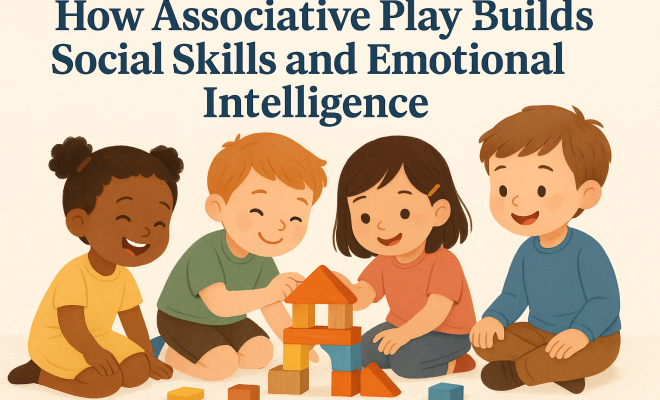
“`html
When it comes to childhood development, play is often viewed as mere fun and games. However, the dynamics of play can profoundly shape a child’s social skills and emotional intelligence. One particularly fascinating form of play is associative play. This type of play not only entertains children but also serves as a critical building block for nurturing vital interpersonal abilities. Let’s dive into how associative play works and why it matters.
Understanding Associative Play
Associative play typically emerges around the age of three or four, alongside parallel play, where children play alongside each other without much interaction. During associative play, children begin to engage with one another’s activities. They share materials, exchange ideas, and even mimic each other’s actions. Unlike cooperative play, which requires a more structured approach and teamwork, associative play allows for more natural, spontaneous interactions.
This type of play provides a foundation for social learning. Children navigate through different roles, negotiate rules, and simulate real-life scenarios that enhance their understanding of social interactions. Through associative play, children can experiment with communication and collaboration in an environment that feels safe and inviting.
The Importance of Social Skills
Social skills are crucial for successful interactions throughout life. These skills include effective communication, empathy, and conflict resolution—abilities that are not just essential for childhood but remain important into adulthood. Associative play facilitates the development of these skills.
During associative play, children learn to share space and resources, which is vital for understanding concepts like turn-taking and negotiation. For instance, when playing with blocks, one child might want to build a tower while another prefers to create a car. Through discussion and compromise, they learn to navigate their differing desires, fostering skills that will serve them well as they mature.
Emotional Intelligence: A Core Component
Emotional intelligence (EI) refers to the ability to recognize, understand, and manage one’s own emotions, as well as the emotions of others. Associative play plays an essential role in developing EI among children. As they interact with peers, children are challenged to interpret emotions through facial expressions, tones of voice, and body language.
For example, when a child sees a peer getting upset over a lost toy, the experience presents an opportunity to express compassion and support. These moments help children learn how to respond to the feelings of others effectively, fostering their capacity for empathy. By experiencing a wide range of emotional scenarios during play, children build a robust emotional vocabulary that will aid them in their everyday interactions.
Case Studies in Associative Play
Research conducted in various preschool environments highlights the significance of associative play. A study published in the journal Child Development observed children engaging in associative play and analyzed the social interactions that arose. The findings indicated that children who frequently participated in associative play exhibited greater social competence compared to their peers who engaged in solitary play.
Another case study found that children who participated in structured associative play activities, like group art projects, displayed improved communication skills and higher levels of emotional understanding. By working together towards a common goal, children learned to appreciate different perspectives and developed a sense of teamwork that is crucial as they grow.
Practical Insights for Parents and Educators
Encouraging associative play doesn’t have to be complex. Parents and educators can implement several practical strategies to nurture this form of play:
- Provide Open-Ended Materials: Toys like blocks, art supplies, and dress-up clothes allow children to express their creativity and collaborate with others.
- Facilitate Group Activities: Organize playdates or small group activities where children can interact and collaborate on projects or games.
- Encourage Communication: Model effective communication by engaging in conversations about feelings and sharing experiences, prompting children to articulate their thoughts.
- Observe and Reflect: Take time to observe children’s interactions during play and reflect back on what you see. This can help children become more aware of their social behaviors.
Current Relevance: Associative Play in a Digital Age
In today’s digital age, the nature of play is rapidly changing. Video games and screen-based entertainment have taken precedence over traditional forms of play, which can limit opportunities for associative interactions. Recognizing the importance of associative play is vital now more than ever. As children increasingly engage with technology, ensuring they have balanced, interactive experiences is crucial. (See: Child development and social skills.)
For parents concerned about screen time, integrating digital activities that promote social interaction, such as online cooperative games, can be beneficial. These games often require players to communicate and work together, mirroring some aspects of associative play. However, it’s essential to balance these activities with physical, face-to-face interactions to foster emotional and social growth fully.
Challenges Faced in Associative Play
While associative play has numerous benefits, it’s not without challenges. Some children may struggle to engage in this type of play due to shyness, social anxiety, or developmental delays. In such cases, it’s crucial to provide additional support.
Children who have difficulties with social interactions can benefit from guided play sessions, where an adult or older peer models appropriate behaviors. Creating a nurturing environment that encourages social experimentation can help these children develop confidence. Strategies might include role-playing scenarios or structured games that require communication and cooperation.
Integrating Associative Play into Learning Environments
Educators play a pivotal role in creating an environment that supports associative play. By integrating collaborative activities into the curriculum, teachers can help children develop not only academic skills but also the social and emotional skills necessary for success in life.
For instance, in a kindergarten classroom, teachers can design activities where children work together to create a story or solve a puzzle. This could involve mixing different groups of children regularly to expose them to new peers, encouraging diverse social interactions. Creating a classroom culture that celebrates cooperation and sharing is key to enhancing the benefits of associative play.
Long-Term Benefits of Associative Play
The impact of associative play extends far beyond childhood. Studies indicate that children who engage in regular associative play often develop stronger social networks, better conflict resolution skills, and a heightened ability to empathize with others as they transition into adolescence and adulthood.
Moreover, such skills are invaluable in the workforce. Employers today increasingly value emotional intelligence and social skills as they correlate with teamwork, leadership, and effective communication. The lessons learned during associative play can create a foundation for future success, shaping individuals who can navigate complex social and professional landscapes.
Common Misconceptions About Associative Play
Despite its importance, associative play often faces misconceptions that can undermine its value in childhood development. One common belief is that playtime should always be structured and goal-oriented. However, the essence of associative play lies in open-ended interactions that allow children to explore their creativity and build relationships organically.
Another misconception is that only structured games promote social skills. In reality, unstructured associative play is equally, if not more, beneficial. Children learn social dynamics through spontaneous interactions that arise during play, which are often more reflective of real-world scenarios. Encouraging free play can lead to more authentic social learning experiences.
Comparing Associative Play with Other Types of Play
To better understand the unique benefits of associative play, it’s helpful to compare it with other types of play, such as solitary play and cooperative play. While solitary play allows children to engage in their own worlds and can foster creativity, it often lacks the social interaction that is critical for developing interpersonal skills.
Cooperative play, on the other hand, involves children working together towards a common goal, which can sometimes lead to structured interactions that may not allow for the same level of creativity exhibited during associative play. In cooperative play, children might feel pressured to conform to group expectations, which can hinder their ability to explore different social dynamics and roles freely.
In contrast, associative play strikes a balance. Children can participate in shared activities while still having the freedom to express themselves individually. This blend of interaction and independence provides a rich environment for social and emotional growth.
The Role of Adult Facilitation in Associative Play
Adults can play a crucial role in facilitating associative play. By guiding children without dominating their interactions, adults can create a supportive atmosphere where children feel safe to explore social relationships. Here are a few strategies adults can use: (See: National Institute of Child Health on learning.)
- Encourage Group Participation: Invite children to join in on activities but allow them to choose their level of involvement. This helps maintain a balance between guiding and giving them space.
- Ask Open-Ended Questions: Questions like “What do you think will happen if we try this?” can spark creativity and dialogue among children, encouraging them to share their thoughts and ideas.
- Model Positive Interactions: Demonstrating appropriate conflict resolution, sharing, and empathy during play can provide children with concrete examples of how to navigate their interactions.
FAQ About Associative Play
What age does associative play typically begin?
Associative play usually begins around ages three to four, overlapping with parallel play, where children play beside one another without much interaction.
How can I encourage my child to engage in associative play?
Providing open-ended materials, facilitating group activities, encouraging communication, and observing their interactions can significantly boost your child’s engagement in associative play.
What are some signs that my child is engaging in associative play?
Look for signs such as sharing toys, exchanging ideas, and showing interest in what other children are doing while actively participating in their activities.
Is associative play necessary for all children?
Yes, associative play is beneficial for all children as it fosters social skills and emotional intelligence. However, children with social anxiety or developmental delays may need additional support to engage in this type of play.
Can associative play be beneficial for shy children?
Absolutely! Associative play can help shy children gradually build confidence in social situations by allowing them to engage with peers in a less structured environment.
What’s the difference between associative play and cooperative play?
Associative play involves children interacting in a shared activity while pursuing their interests, whereas cooperative play requires children to work together toward a common goal, often with more structured interactions.
Associative Play and Cultural Differences
Understanding how associative play manifests across different cultures adds another layer of richness to this concept. In some cultures, children are encouraged to engage in group play from an early age, while in others, individual play may be more common. This can influence the way associative play develops and is fostered.
For example, in collectivist societies, children’s play often emphasizes cooperation and community involvement, which aligns closely with the principles of associative play. Children may play games that require sharing and taking turns, reinforcing social bonds and community values. In contrast, in more individualistic cultures, children might have more opportunities for solitary play, which could delay the onset of associative play.
Research has shown that children from collectivist cultures tend to develop stronger communal play skills, while those from individualistic cultures may excel in independent problem-solving. Both forms of play have their unique benefits, but incorporating aspects of associative play from other cultures can enrich children’s play experiences across the globe.
Strategies for Parents: Creating a Rich Play Environment
Creating an environment conducive to associative play at home can significantly enhance your child’s social development. Here are some strategies to consider:
- Designate a Play Area: Set up a space where children can play freely and safely. This area should be stocked with various materials that encourage creativity and collaboration, such as art supplies, building blocks, or costumes.
- Limit Screen Time: While technology can offer some benefits, balancing screen time with opportunities for interactive, face-to-face play promotes better social skills. Encourage kids to play outside, join group activities, or participate in community events.
- Be Involved: Engage with your children during play. Participate in activities, offer suggestions, and help guide them in their interactions with other children. Your involvement can model positive play behaviors and reinforce social learning.
- Encourage Diverse Playmates: Arrange playdates with different groups of children. Exposure to diverse peers and play styles can enhance children’s adaptability and social skills.
The Role of Community in Supporting Associative Play
Communities play a critical role in fostering environments that encourage associative play. Public parks, community centers, and playgrounds serve as essential venues where children can come together to engage in this type of play.
Community programs that prioritize play can help facilitate associative interactions among children. For instance, organizing neighborhood playdays, cooperative games, or creative workshops can provide children with valuable opportunities to connect and develop their social skills. Furthermore, these community-based initiatives can bridge gaps between different social and economic backgrounds, promoting inclusivity and understanding through play.
As parents and educators, advocating for more community spaces dedicated to play can pave the way for an enriched social environment for children, ensuring that associative play remains a vital part of childhood experiences.
Longitudinal Studies on Associative Play
Longitudinal studies tracing the impact of associative play have revealed profound effects on social and emotional development that persist well into adulthood. Research indicates that individuals who engaged in associative play as children often demonstrate greater resilience and social adaptability later in life.
In a study that followed children into their twenties, researchers found that those who frequently engaged in associative play reported stronger interpersonal relationships and better emotional regulation compared to those who engaged predominantly in solitary or structured play. This suggests that the skills honed during those formative years can have lasting implications, helping individuals navigate challenges and opportunities throughout life.
The Future of Associative Play
As we navigate an increasingly complex world, the importance of associative play remains paramount. With the rise of digital play, there’s potential for blended experiences where traditional and digital forms of play coexist. Future playground designs may incorporate technology that encourages interactive play, merging the benefits of both worlds.
Moreover, educators and policymakers are beginning to recognize the essential role of play in learning and development. There’s a growing movement advocating for play-based learning in schools, emphasizing that play—particularly associative play—should be integrated into educational curricula. The aim is to foster environments where children can freely explore, create, and connect.
Ultimately, as society continues to evolve, the core principles of associative play—communication, cooperation, and emotional intelligence—will remain vital. Encouraging these skills will help shape a generation capable of thriving in diverse and collaborative settings.
Conclusion: The Lifelong Impact of Associative Play
As we’ve explored, associative play is more than just a child’s pastime; it’s a powerful tool for developing social skills and emotional intelligence. By encouraging children to engage in associative play, we equip them with the skills necessary to thrive in a complex, interconnected world. The lessons learned on the playground will resonate throughout their lives, shaping them into empathetic, capable individuals. So, let’s make room for more play—after all, it might just be one of the best investments in a child’s future.
“`
Trending Now
Frequently Asked Questions
What is associative play?
Associative play is a type of play that typically emerges around ages three to four, where children engage with one another's activities. They share materials, exchange ideas, and mimic actions, fostering social interaction without the structured teamwork seen in cooperative play.
How does associative play help with social skills?
Associative play helps develop social skills by allowing children to share space and resources, negotiate rules, and communicate their desires. This form of play encourages effective communication, empathy, and conflict resolution, essential skills for successful interactions throughout life.
When does associative play typically occur?
Associative play usually begins around the age of three or four, following parallel play, where children play alongside each other without much interaction. It marks an important stage in childhood development, enhancing social and emotional skills.
What are the benefits of associative play for children?
The benefits of associative play include improved communication skills, increased empathy, and better conflict resolution abilities. It provides a safe environment for children to experiment with social interactions, fostering essential interpersonal skills that are crucial throughout life.
How is associative play different from cooperative play?
Associative play differs from cooperative play in that it involves spontaneous interactions without the need for structured teamwork. While children in associative play engage with each other's activities, cooperative play requires more organized collaboration and shared goals.
What did we miss? Let us know in the comments and join the conversation.