ZPD & Scaffolding: Boosting Elementary Reading Skills
“`html
The journey of learning to read is a critical milestone for children, serving as a foundation for their future education and development. A key concept that plays a vital role in enhancing elementary reading skills is the zone of proximal development (ZPD), a term coined by renowned psychologist Lev Vygotsky. Understanding the ZPD can transform instructional strategies, particularly through the technique known as scaffolding. This article delves into the synergistic relationship between the zone of proximal development and scaffolding in elementary reading, providing valuable insight into effective teaching methodologies.
Understanding the Zone of Proximal Development
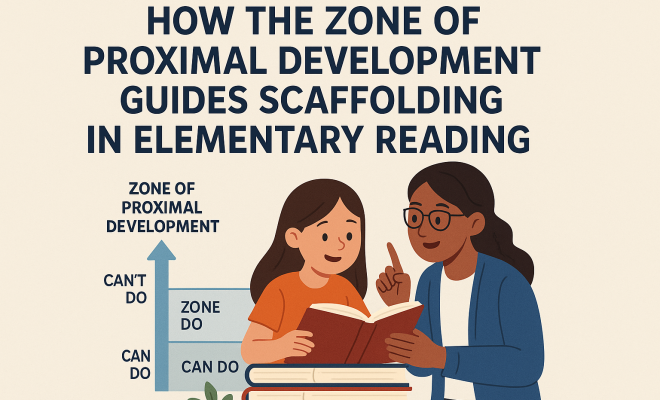
The zone of proximal development is defined as the gap between what learners can do independently and what they can achieve with guidance and support from a skilled partner, often a teacher or peer. Vygotsky posited that learning occurs most effectively within this zone, where children are challenged yet able to succeed with some assistance. This concept emphasizes the importance of social interaction and collaborative learning.
For instance, consider a child who can read simple sentences but struggles with more complex texts. By working with a teacher or older peer who can assist with vocabulary and comprehension strategies, the child can gradually develop the skills needed to tackle more challenging materials. This approach not only enhances reading abilities but also fosters a love for learning.
The Role of Scaffolding in Learning
Scaffolding is a teaching method that breaks learning into manageable chunks, providing support structures that help students grasp concepts they cannot yet master independently. It is closely tied to the zone of proximal development, as it aims to bridge the gap between a student’s current capabilities and their potential abilities.
In the context of elementary reading, scaffolding might involve a variety of strategies, such as:
- Modeling: The teacher demonstrates reading techniques, such as how to decode unfamiliar words or identify main ideas.
- Guided practice: Students read texts with assistance, allowing them to apply strategies in real-time.
- Feedback: Constructive feedback helps students understand their mistakes and learn from them.
- Gradual release: Over time, the support is reduced as students become more proficient and confident readers.
By employing these scaffolding techniques, educators can capitalize on the zone of proximal development, ensuring that students are both challenged and supported in their reading journey.
Key Strategies for Effective Scaffolding in Reading
To implement effective scaffolding in elementary reading, teachers should consider the following strategies:
Assessing Individual Needs
Each child has a unique learning profile. Teachers should conduct initial assessments to identify where students fall within their zone of proximal development. This may involve informal observations, running records, or standardized assessments. Understanding each student’s current reading level enables educators to tailor their scaffolding approaches accordingly.
Creating a Supportive Learning Environment
A classroom culture that promotes risk-taking and values mistakes as part of the learning process is essential. When students feel safe to express their thoughts and questions, they are more likely to engage in reading activities actively. Implementing cooperative learning groups can foster collaboration, allowing students to learn from each other while still receiving guidance from the teacher.
Utilizing Various Texts
Diverse reading materials that reflect students’ interests and experiences can make learning more relatable and engaging. Including a range of texts—fiction, non-fiction, picture books, and chapter books—ensures that all students find something appealing. This diversity also allows teachers to challenge students within their ZPD while taking into account their personal preferences.
Incorporating Technology
Technology can serve as a powerful tool in scaffolding reading instruction. Interactive e-books and reading applications often provide immediate feedback and allow students to practice at their own pace. For instance, platforms like Raz-Kids or Epic! offer leveled reading options that can be customized based on the learner’s needs, reinforcing the principles of the zone of proximal development. (See: Zone of Proximal Development.)
The Importance of Feedback in Scaffolding
Feedback is a crucial component of effective scaffolding. It should be timely, specific, and constructive, helping students understand their strengths and areas for improvement. Feedback can take various forms, such as verbal comments during reading sessions or written notes on assignments.
For example, if a student struggles with a particular sound or word during reading, a teacher might pause to provide immediate guidance on pronunciation and context. This kind of immediate support ensures that students aren’t left struggling with misconceptions, which could hinder their progress.
Building Independence Through Scaffolding
The ultimate goal of scaffolding is to help students achieve independence in their reading. This process involves gradually withdrawing support as students become more competent. Vygotsky emphasized the importance of this gradual release, stating that effective learning occurs when students are challenged just beyond their current capabilities.
Teachers can achieve this by regularly assessing students’ progress and adjusting their scaffolding strategies in response. As students demonstrate mastery of specific skills, educators should introduce more complex texts and concepts, encouraging learners to venture slightly beyond their comfort zones.
Challenges in Implementing Scaffolding
Despite its proven benefits, implementing scaffolding in elementary reading instruction can come with challenges. One of the primary obstacles is the varying proficiency levels within a single classroom. Teachers often face the daunting task of providing individualized support while also managing a group of students with diverse needs.
Additionally, time constraints and curriculum demands can limit the ability to provide sufficient scaffolding. Teachers may feel pressured to cover a specific amount of material within a limited timeframe, which might discourage them from taking the necessary time to scaffold effectively.
Professional Development and Training
To address these challenges, ongoing professional development is crucial. Teachers should have access to training sessions that focus on effective scaffolding strategies and the principles of the zone of proximal development. Workshops can provide educators with practical tools, lesson ideas, and peer collaboration opportunities, fostering a culture of continuous improvement in literacy instruction.
Moreover, mentorship programs or collaborative teaching models can offer support and guidance, allowing less experienced teachers to observe and learn from their peers who excel in scaffolding practices.
The Long-Term Impact on Literacy Development
When effectively applied, the combination of the zone of proximal development and scaffolding can lead to significant improvements in students’ reading abilities. Children who receive appropriate support are more likely to develop a love for reading and become lifelong learners. Research has shown that early literacy interventions can yield substantial gains in reading proficiency, setting the stage for future academic success.
As students become confident readers, they can engage more deeply with complex texts, enhancing their critical thinking and comprehension skills. This not only benefits their academic performance but also prepares them for the demands of higher education and the workforce.
The Current Relevance of ZPD and Scaffolding in Education
In today’s educational landscape, characterized by increasing emphasis on personalized learning and differentiated instruction, the principles of the zone of proximal development and scaffolding remain highly relevant. As educators strive to meet the diverse needs of their students, understanding and applying these concepts can lead to more effective teaching practices.
Furthermore, as technology continues to evolve, the integration of digital resources can enhance scaffolding efforts. Tools that allow for individualized learning paths can help educators better support students within their ZPD, providing just-in-time assistance and promoting self-directed learning.
Comparative Approaches to Reading Instruction
When discussing the zone of proximal development and scaffolding, it’s important to compare these strategies with other instructional methods. For instance, traditional teaching often emphasizes direct instruction, where the teacher delivers content with minimal interaction from students. While this approach can be effective in conveying information, it often lacks the personalized touch that scaffolding offers. (See: Harvard University Education Resources.)
Another approach is inquiry-based learning, where students explore topics through questions and research. This method encourages autonomy but may leave some students unsupported if they lack the foundational skills necessary to engage with the material. By integrating scaffolding within an inquiry-based framework, teachers can ensure that students are both challenged and supported, striking a balance between independence and guidance.
Research indicates that classrooms utilizing a blended approach—combining direct instruction, inquiry-based learning, and scaffolding—tend to see higher engagement rates and better academic outcomes. This synergy creates an environment where students can thrive, leaning on their teachers when necessary while also developing the skills to learn independently.
Expert Perspectives on ZPD and Scaffolding
Experts in the field of education have long championed the integration of the zone of proximal development and scaffolding into reading instruction. Dr. Barbara Rogoff, a prominent developmental psychologist, emphasizes the importance of social interaction in learning, aligning closely with Vygotsky’s theories. She suggests that learning is a communal process, and effective educators leverage this by fostering collaboration among students.
Another expert, Dr. Anne McGill-Franzen, has researched early literacy strategies extensively. She advocates for the use of scaffolding as a means to mitigate reading difficulties, particularly for struggling readers. Her findings indicate that students who receive targeted support within their ZPD are more likely to achieve proficiency compared to those who do not receive such assistance.
These expert insights underline the necessity of applying the principles of ZPD and scaffolding in diverse educational settings, ensuring that every student has the opportunity to succeed.
Real-World Applications and Case Studies
To better understand how the zone of proximal development and scaffolding play out in real-world applications, consider the following case studies:
Case Study 1: A Multi-Age Classroom
In a multi-age classroom, a teacher implemented scaffolding techniques by pairing older students with younger ones. The older students, having mastered certain reading skills, took on the role of mentors, providing the younger students with guidance and support. This peer-assisted learning not only helped the younger students progress within their ZPD but also reinforced the older students’ own skills, creating a reciprocal learning environment.
Case Study 2: Technology Integration
A school district adopted a digital reading platform that allowed students to select texts based on their interests and reading levels. Teachers used data from the platform to identify students’ ZPDs and tailored their scaffolding approaches accordingly. By analyzing students’ engagement and progress, the educators could adjust the complexity of texts and instructional techniques, leading to marked improvements in reading proficiency across the board.
Case Study 3: Community Partnerships
A community literacy program partnered with local schools to provide after-school reading support. Volunteers trained in scaffolding techniques worked one-on-one with students, helping them navigate their ZPD. The program not only improved students’ reading skills but also fostered a sense of community involvement and support, demonstrating the collective responsibility of literacy development.
Frequently Asked Questions (FAQ)
What is the zone of proximal development (ZPD)?
The zone of proximal development (ZPD) is the range of tasks that a learner can perform with guidance but cannot yet perform independently. It highlights the importance of support in learning, suggesting that effective instruction occurs just beyond a learner’s current abilities. (See: Zone of Proximal Development in Education.)
How does scaffolding support reading development?
Scaffolding provides structured support that helps students tackle reading tasks that they may not be able to complete on their own. This support can take the form of modeling, guided practice, and timely feedback, gradually leading students toward greater independence as they master reading skills.
Why is social interaction important in learning?
Social interaction plays a crucial role in learning because it enables students to collaborate, share ideas, and receive immediate feedback. According to Vygotsky, learning is inherently a social process, and interactions with peers and teachers can enhance understanding and retention of new information.
How can teachers assess a student’s ZPD?
Teachers can assess a student’s ZPD through various methods, including informal observations, running records, and standardized assessments. By gauging students’ current reading levels and their ability to perform tasks with assistance, educators can better tailor their instruction to meet individual needs.
What are some common challenges teachers face with scaffolding?
Common challenges include varying proficiency levels among students, time constraints, and curriculum demands. Balancing individual support while managing a diverse classroom can be difficult, and teachers may struggle to find the time to implement effective scaffolding techniques.
How can parents support their child’s learning within the ZPD?
Parents can play an integral role in their child’s learning by recognizing the importance of the ZPD. They can engage in shared reading activities, where they encourage their child to read aloud while providing support when necessary. Discussing books and asking open-ended questions can also stimulate comprehension and critical thinking. Additionally, creating a reading-friendly environment at home with access to a variety of texts can enhance their child’s reading journey.
What role does motivation play in the zone of proximal development?
Motivation is pivotal within the zone of proximal development, as it influences a child’s willingness to engage in challenging tasks. When students see progress through scaffolding, their motivation increases, creating a positive feedback loop that encourages further attempts and learning. Teachers can enhance motivation by celebrating small achievements and providing choices in reading materials, making the learning process more enjoyable.
What are the long-term effects of effective scaffolding on literacy development?
Effective scaffolding can lead to lasting benefits in literacy development, including improved reading fluency, comprehension, and overall academic performance. Students who experience successful scaffolding are often better equipped to tackle complex texts independently in the future, fostering a lifelong interest in reading and learning. Longitudinal studies have shown that students who receive quality scaffolding early tend to maintain higher literacy levels into higher grades compared to those who do not.
Conclusion: Embracing the Zone of Proximal Development
The zone of proximal development is more than just a theoretical concept; it is a practical framework for fostering effective reading instruction in elementary classrooms. By combining this understanding with scaffolding techniques, teachers can create rich learning environments that promote literacy skills, confidence, and a lifelong love for reading. As we continue to refine our educational practices, embracing the principles of the ZPD will undoubtedly help shape the next generation of confident, capable readers.
“`
Trending Now
Frequently Asked Questions
What is the zone of proximal development in education?
The zone of proximal development (ZPD) is the gap between what learners can do independently and what they can achieve with guidance. Coined by psychologist Lev Vygotsky, it highlights the importance of social interaction in learning, emphasizing that children learn best when challenged but supported by skilled partners.
How does scaffolding support learning in elementary reading?
Scaffolding supports learning by breaking complex tasks into manageable parts, providing temporary support structures. In elementary reading, it involves strategies like modeling, guided practice, and feedback, enabling students to gradually master skills they can't yet achieve independently, thus enhancing their reading abilities.
Why is social interaction important in the zone of proximal development?
Social interaction is crucial in the zone of proximal development because it facilitates collaborative learning. When children engage with peers or teachers, they receive guidance and support that helps them tackle challenges, promoting deeper understanding and skill development in areas like reading.
What are effective strategies for scaffolding in reading?
Effective scaffolding strategies in reading include modeling reading behaviors, using graphic organizers, providing targeted feedback, and gradually increasing text complexity. These approaches help students build confidence and skills, allowing them to progress from simpler texts to more complex materials.
How can teachers implement the zone of proximal development in the classroom?
Teachers can implement the zone of proximal development by assessing each student's current abilities and providing tailored support through scaffolding. This might involve small group work, one-on-one tutoring, or collaborative projects that encourage students to engage with challenging content while receiving guidance.
Have you experienced this yourself? We’d love to hear your story in the comments.