Boost Baby’s Brain: Fun Object Permanence Games
“`html
When babies are born, they experience the world through a very different lens. One of the key developmental milestones they’ll encounter in their early years is the concept of object permanence. This fundamental understanding is crucial, as it shapes how infants perceive their environment and interact with the world around them. If you’re a parent or caregiver looking to support your baby’s cognitive growth, you might be wondering how to introduce this concept in a fun and engaging way. Here, we’ll explore exciting object permanence games for babies that not only entertain but also facilitate this essential developmental skill.
Understanding Object Permanence
Object permanence is the knowledge that objects continue to exist even when they cannot be seen, heard, or touched. This idea was first introduced by the Swiss psychologist Jean Piaget in the mid-20th century. According to Piaget’s stages of cognitive development, infants begin to develop object permanence around 4 to 7 months, and this understanding becomes more refined as they grow older. Before this milestone, if a baby cannot see an object, they may believe it has vanished entirely.
Why is object permanence so vital? It lays the groundwork for more complex cognitive abilities, including memory, problem-solving, and even social interactions. When babies grasp this concept, they become more curious about their surroundings, leading to exploration and learning opportunities.
Why Play is Essential for Development
Play is a powerful tool for learning. Through play, babies explore their environment, test their abilities, and learn about cause and effect. Engaging in games that promote object permanence can also strengthen the bond between caregiver and child, fostering emotional connections while enhancing cognitive skills. These interactive experiences are fantastic for brain development, stimulating neural connections that are crucial in the early years.
1. Peek-a-Boo: The Classic Game
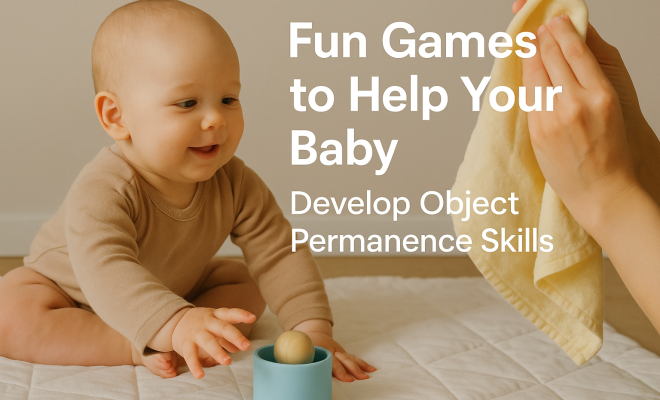
No list of object permanence games for babies would be complete without the classic game of peek-a-boo. This simple yet effective game helps babies understand that you still exist even when your face is hidden. To play, cover your face with your hands or a cloth and then reveal yourself with a cheerful expression. Babies love the element of surprise and will often giggle in response.
As your baby grows, you can modify the game by hiding behind furniture or using toys. This variation can deepen their understanding of object permanence as they learn that objects (and people) can be hidden in different places.
2. Hidden Toy Discovery
This game is straightforward yet very effective. Start by taking a toy that your baby enjoys and hide it under a cloth or blanket while your baby is watching. After a few moments, reveal the toy. Initially, your baby may be puzzled, but with repetition, they will begin to anticipate where the toy has gone and develop a deeper understanding that it still exists.
You can gradually increase the difficulty by hiding the toy in more challenging spots or using different fabrics. This game encourages problem-solving skills as your baby learns to search for the toy.
3. The Box Game
For this game, you’ll need a box or container and a few toys. Place a toy inside the box, allowing your baby to see it first. Close the box and encourage your baby to open it. This simple activity reinforces the concept of object permanence while enhancing fine motor skills as they figure out how to open the box. You can make it more exciting by using different types of toys or varying the size of the box.
As your baby becomes more adept at this game, try introducing multiple toys and ask them to find a specific one. This adds an extra layer of challenge and promotes critical thinking.
4. Cover and Uncover
Using a blanket or cloth, cover your baby’s favorite toy and then uncover it. This game is a fun way to help babies understand that the toy is still there, even when it’s obscured. You can also encourage your baby to cover and uncover toys themselves, which fosters independence and critical thinking. As they enjoy this game, they will likely start to anticipate the moment when the toy is revealed, helping to solidify their understanding of permanence.
This activity can also be adapted by using different colored cloths or sizes, making it visually stimulating and captivating for your baby. (See: Understanding object permanence.)
5. Object Hiding and Finding
In this interactive game, you can take turns hiding and finding objects. Start with the baby observing you as you hide a toy under one of several cups. Let them see where you place the toy, then shuffle the cups around. Encourage your baby to find the toy by lifting the cups. This not only promotes object permanence but also introduces basic concepts of logic as they learn to infer where the toy might be.
As your baby becomes more skilled, you can increase the number of cups or introduce a time limit for added excitement. This game can also become a collaborative effort, where you cheer each other on, fostering a supportive atmosphere.
6. Surprise Box
Prepare a surprise box filled with various objects. Let your baby peek inside and explore the items. Close the box, shake it, and ask them to guess what’s inside. Afterward, open the box together to reveal the objects. This game stimulates curiosity and reinforces the idea that just because the object is out of sight doesn’t mean it’s gone. Your baby will learn to associate sounds and movements with hidden objects, enhancing their understanding of object permanence.
You can even select thematic objects, like animals or shapes, which can introduce vocabulary and classification skills, offering a two-for-one benefit as they play.
7. The Ball Under the Cup Trick
This is a classic sleight-of-hand trick that can teach your baby about object permanence. Place a ball under one of several cups while your baby is watching, then shuffle the cups around. Ask your baby to find the ball. This activity teaches them to track the movement of objects and reinforces their understanding that the ball hasn’t disappeared, it’s just hidden.
As they get better at this game, consider introducing more cups or even smaller balls to keep them challenged and engaged. This game can be a fun family activity, allowing siblings or parents to join in, making it even more enjoyable.
8. Storytime with Lift-the-Flap Books
Lifting flaps in books is not only entertaining, but it’s also an effective way to develop object permanence. Look for books designed for babies that have flaps revealing hidden objects or characters. As your baby lifts each flap, they’ll learn that even when something is hidden, it can still be revealed. This activity also encourages language development and can be a delightful way to bond through reading.
Try choosing books with bright colors or textures to capture their attention. Engaging them in discussion about the pictures will further enhance their learning experience.
9. Interactive Play with Puppets
Puppets can be a delightful tool for teaching object permanence. Use a puppet that your baby loves and let it interact with them. You can hide the puppet behind your back or under a blanket, then bring it back into view to delight your baby. The puppet can even play peek-a-boo with your baby, reinforcing the concept in a playful manner.
This kind of imaginative play not only teaches object permanence but also fosters creativity and emotional development. Encourage your baby to mimic the puppet’s actions, enhancing their motor skills and creativity.
10. Sensory Bin Exploration
Creating a sensory bin filled with safe objects can be an engaging way to introduce object permanence. Fill a shallow container with rice, dried beans, or sand, and hide various toys or objects in it. Let your baby dig through the materials to find the hidden treasures. This not only strengthens their understanding of object permanence but also engages their tactile senses as they explore different textures. As they play, encourage them to describe what they find, further enhancing their vocabulary and language skills.
11. The Blanket Pull
Another entertaining game is the blanket pull. Place a toy on a blanket and then gently pull the blanket away, allowing the toy to stay in place. Your baby will learn that just because the blanket is moved doesn’t mean the toy has vanished. Repeat this action, giving your baby the chance to recognize the relationship between the blanket and the toy’s presence. As they grasp this concept, encourage them to pull the blanket for themselves. This activity fosters both their understanding of object permanence and the development of motor skills.
12. The Toy Train Game
Using a toy train set or a similar toy with a track, you can create a fun game showing object permanence. As you move the train out of sight behind an object, encourage your baby to follow along. You can make it even more engaging by using sounds, like a “choo-choo” noise, to signify the train’s movements. This teaches them that the train is still there, even if it’s momentarily out of sight. Over time, you can introduce multiple trains, allowing them to identify which one is which, enhancing both their memory and reasoning skills. (See: Research on cognitive development in infants.)
13. Hide and Seek with Family Members
Incorporate the family into the learning process by playing a simple game of hide and seek. Adult family members can hide in various spots around the house while the baby counts (with your help) to ten. As they seek out their loved ones, they’ll understand that even if someone is hidden from view, they still exist. This game not only strengthens their grasp of object permanence but also creates bonding experiences with family members.
14. Playdates with Object Permanence Focus
If you have other babies in your circle, organizing playdates can introduce new dimensions to playing object permanence games. Children can learn from observing each other. For instance, one baby might uncover a toy that another has hidden, leading to teaching moments and collaborative play. This interaction encourages social development alongside cognitive understanding. Set up a variety of object permanence games and let the babies play together, while you observe and guide them as needed.
Importance of Timing and Repetition
When engaging in object permanence games, timing and repetition play critical roles. Babies thrive on routine, and regularly introducing these games can significantly enhance their learning. Keep in mind that the same game can be repeated multiple times, each time potentially revealing something new. As babies become familiar with the games, they establish a sense of security which aids in their learning process.
Be patient and aware of your baby’s mood and attention span. If they seem disengaged, it’s perfectly fine to step back and try again later. The goal is to make learning fun and stress-free, allowing them to explore at their own pace.
Statistics on Early Childhood Development
Research has shown that engaging in play during early childhood is crucial for cognitive and social development. According to a study published in the journal Developmental Psychology, children who engage in play that encourages cognitive skills, including games that involve object permanence, show improved problem-solving abilities as they grow. In fact, it was found that children who regularly played such games scored higher on assessments measuring critical thinking and social skills.
Moreover, a report from the American Academy of Pediatrics emphasizes that play is essential for healthy brain development and suggests that parents integrate playful learning into daily routines. The benefits of these interactions not only foster cognitive skills but also promote emotional well-being and establish a foundation for lifelong learning.
Expert Perspectives on Object Permanence
Experts in child development emphasize the importance of object permanence as a fundamental milestone in infant cognition. Dr. Patricia Kuhl, a leading researcher in the field of early childhood development, notes, “Understanding that objects continue to exist outside of our immediate perception is a crucial part of developing a robust cognitive framework.” Engaging in play that promotes this understanding can lead to better problem-solving skills and social interactions as children grow.
Additionally, clinical psychologist Dr. Laura Markham highlights that “Games that encourage object permanence are not just beneficial for cognitive development; they also create emotional connections between caregivers and children. The joy and laughter shared during playtime create a secure attachment, which is essential for healthy emotional growth.”
Frequently Asked Questions (FAQ)
What age do babies understand object permanence?
Most babies start to develop a basic understanding of object permanence between 4 to 7 months of age. This understanding becomes more consistent and refined as they approach their first birthday.
How can I tell if my baby is beginning to understand object permanence?
Signs that your baby is grasping the concept of object permanence include their attempts to find hidden toys or their reactions when you play peek-a-boo. If they show excitement or curiosity when an object is revealed after being hidden, they are likely starting to understand that it still exists.
Are there any signs to watch out for if a baby struggles with this concept?
If a baby seems consistently confused when objects are hidden, or if they do not engage in games like peek-a-boo, it may necessitate a conversation with a pediatrician. Developmental delays can vary, but it’s always best to consult with a professional if there are concerns.
How often should I play these games with my baby?
Incorporate these games into your routine as often as possible, but pay attention to your baby’s mood. Short sessions of 10-15 minutes can be effective. The key is to keep it light and fun, making it a delightful bonding experience.
Can older children benefit from object permanence games?
Yes! While object permanence is primarily a skill developed in infancy, older children can still engage with variations of these games. As they grow, you can introduce more complex challenges to stimulate their cognitive development further.
What other benefits does playing object permanence games provide?
Playing object permanence games can enhance a baby’s physical development as they reach for hidden objects, improving their motor skills. These games also encourage language development, as caregivers often describe the actions and objects involved, enriching the baby’s vocabulary. Furthermore, such games can foster social skills when played with siblings or peers, teaching cooperation and shared joy in discovering hidden items.
Are there specific types of toys that are particularly good for object permanence games?
Toys that have multiple components or are part of a set can be excellent for demonstrating object permanence. Items like stacking cups, nesting blocks, or toys with hidden compartments can provide new layers of play. Additionally, soft toys that can be hidden and revealed can also facilitate these learning moments. Selecting toys that make sounds or have textures can further engage your baby in the learning process.
Encouraging Exploration Beyond Games
While structured games are fantastic for teaching object permanence, encouraging general exploration in everyday life can also reinforce this concept. Allow your baby to explore different environments, such as parks or even different rooms in your home. During these explorations, point out objects and comment on them to help them connect the idea that even when something is out of sight, it still exists. For instance, if you place a toy on a shelf, discuss how it’s still there, even if you can’t see it.
Creating a Safe Space for Learning
As your baby engages in these object permanence games, ensure that they have a safe and stimulating environment. Arrange a play area where they can freely explore without encountering hazards. Include a variety of toys and sensory objects that can intrigue and invite exploration. A comfortable and inviting space can encourage your baby to practice their newfound skills, leading to more opportunities for learning and discovery.
Conclusion
Incorporating these object permanence games for babies into your daily routine can yield profound benefits for your child’s cognitive and emotional development. These activities don’t just support the understanding of object permanence; they also foster curiosity, problem-solving skills, and creativity. Remember, every baby develops at their own pace, so be patient and keep the play fun and engaging.
As your baby masters these games, watch out for increased exploration and a vibrant curiosity about their surroundings. These signs confirm that they’re on the right track in their cognitive journey. Enjoy this exciting time of discovery and bonding as you guide them through this essential developmental phase!
“`
Trending Now
- read the full story
- our breakdown of “the three core considerations of dap: age, individual, and cultural appropriateness”
- this guide on “why neuroscientists say learning styles theory lacks scientific evidence”
- the complete explanation
- “How Childhood Attachment Patterns Affect Adult…
Frequently Asked Questions
What is object permanence in babies?
Object permanence is the understanding that objects continue to exist even when they cannot be seen, heard, or touched. This cognitive milestone typically develops in infants between 4 to 7 months of age and is crucial for their interaction with the environment.
Why is object permanence important for infants?
Object permanence is important as it lays the foundation for complex cognitive abilities like memory and problem-solving. It encourages curiosity and exploration, helping infants learn about their surroundings and enhancing their social interactions.
What are some fun games to teach object permanence?
Fun games to teach object permanence include classic activities like Peek-a-Boo, hiding toys under a blanket, and playing with boxes. These games engage babies and help reinforce their understanding that objects still exist even when they are not visible.
At what age do babies develop object permanence?
Babies typically begin to develop object permanence between 4 to 7 months. This understanding continues to evolve as they grow older, leading to more sophisticated cognitive abilities.
How does play support cognitive development in babies?
Play supports cognitive development by allowing babies to explore their environment, test their abilities, and learn about cause and effect. Engaging in games that promote object permanence strengthens emotional bonds and stimulates neural connections crucial for brain development.
Agree or disagree? Drop a comment and tell us what you think.