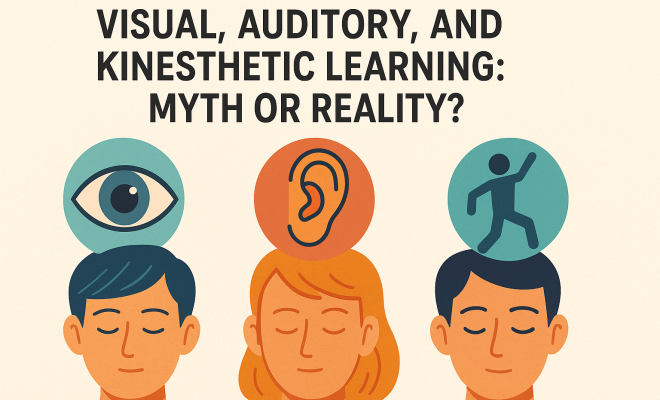
Visual, Auditory, and Kinesthetic Learning: Myth or Reality?
“`html
In the realm of education, the concept of learning styles has gained significant traction over the years. Most educators are familiar with the terms visual, auditory, and kinesthetic learning — but are these categories based on solid science, or are they simply myths that have gained popularity? Let’s break down the origins, key concepts, and practical implications of these learning styles to understand their true impact on education.
Understanding Learning Styles
The idea of learning styles emerged in the late 20th century, gaining ground in the 1970s and 1980s with theorists like Howard Gardner and his theory of multiple intelligences. Gardner’s framework suggested that individuals possess different types of intelligences that influence how they learn. This sparked interest in tailoring educational approaches to fit these perceived styles.
Today, many educators categorize learning preferences into three primary groups: visual, auditory, and kinesthetic. Each group is thought to reflect the way individuals prefer to receive and process information.
Visual Learners: Seeing is Believing
Visual learners are believed to absorb information best through sight. This might include diagrams, charts, and written instructions. Studies suggest that around 65% of the population identifies as visual learners, relying on images and spatial understanding to grasp concepts.
To cater to visual learners, educators can employ various strategies:
- Incorporating images and graphics into lessons.
- Using color-coded notes to highlight important points.
- Encouraging the use of mind maps or graphic organizers to structure thoughts.
While these methods can certainly enhance learning, the challenge arises when we examine whether identifying oneself as a visual learner truly leads to better educational outcomes.
Auditory Learners: Sounding Out Success
Auditory learners, on the other hand, thrive on listening and speaking. They benefit from lectures, discussions, and audio materials. Approximately 30% of the population is thought to fall into this category. For these learners, the spoken word is often more powerful than visual aids.
Effective strategies for auditory learners include:
- Encouraging group discussions and debates.
- Using storytelling as a teaching tool.
- Providing audio resources, such as podcasts or recorded lectures.
Again, while these methods can support auditory learning, it’s crucial to question whether this classification is as beneficial as it seems. Research suggests that while auditory input can enhance learning, simply labeling oneself as an auditory learner doesn’t guarantee improved performance.
Kinesthetic Learners: Learning by Doing
Lastly, kinesthetic learners are those who learn best through hands-on experiences. They thrive in environments where they can touch, manipulate, and engage with materials directly. Roughly 5% of people identify primarily as kinesthetic learners.
To effectively teach kinesthetic learners, educators can:
- Incorporate physical activities into lessons.
- Use role-playing or simulations to reinforce learning.
- Facilitate experiments or project-based learning opportunities.
Once again, while these approaches can be engaging and effective, the broader question remains: how effective are these classifications in improving overall academic performance? (See: Learning styles on Wikipedia.)
The Research Behind Learning Styles
Despite the popularity of learning styles, numerous studies have raised questions about their effectiveness. A significant report published by the National Center for Learning Disabilities in 2015 found little empirical evidence supporting the notion that tailoring instruction to individual learning styles leads to enhanced learning outcomes. In fact, it suggested that focusing on learning styles may detract from more effective teaching strategies.
Additionally, a comprehensive review by the University of Melbourne in 2020 concluded that the evidence supporting learning styles is weak. The researchers noted that while students might have preferences in how they consume information, these styles do not necessarily dictate how they learn best.
Practical Insights for Educators
So, what does this mean for educators? Should they abandon the concept of learning styles entirely? Not necessarily. Instead, they could focus on a more flexible approach to teaching that recognizes diverse learning preferences without being limited by rigid categories.
Here are some practical insights:
- Diversity in teaching methods: Using a mix of visual, auditory, and kinesthetic strategies can engage a broader range of students, regardless of their self-identified learning styles.
- Fostering a growth mindset: Encourage students to explore different methods of learning. This can include trying out new strategies that may not fit their perceived learning style, which can develop resilience and adaptability.
- Focus on metacognition: Teach students to reflect on their own learning processes. Understanding how they learn best can empower them to choose the most effective strategies for themselves.
The Role of Technology in Learning
In today’s digital age, technology plays a crucial role in education. Online platforms, interactive software, and multimedia resources can cater to multiple learning styles simultaneously, offering diverse ways for students to engage with content.
For instance, students can watch videos (satisfying visual learners), listen to podcasts (appealing to auditory learners), and participate in simulations or virtual labs (great for kinesthetic learners). The integration of technology allows for a more individualized learning experience that can transcend the limitations of traditional learning styles.
Learning Styles in Adult Education
While the concept of learning styles is often discussed in the context of K-12 education, it also has relevance in adult education and professional development. Adults often come with pre-existing knowledge, experiences, and preferred ways of learning that can influence training effectiveness.
For instance, in corporate training, recognizing that employees might benefit from varied training methods — such as visual aids, role-playing exercises, and group discussions — can lead to higher engagement and retention of information.
Moreover, many adult learners express a desire for practical, hands-on experiences, indicating that kinesthetic learning strategies can also be highly effective in this context.
Potential Pitfalls of Learning Styles
It’s essential to approach the concept of learning styles with a critical mindset. One major pitfall is the tendency to pigeonhole students based on their perceived styles. When educators rigidly categorize students, they may inadvertently limit their potential for growth by not exposing them to different methods.
Another concern is the risk of oversimplification. Learning is a complex process influenced by various factors, including motivation, prior knowledge, and context. Reducing it to a single style can obscure the intricacies of individual learning processes.
The Future of Learning Styles
As research continues to evolve, the understanding of learning styles may shift. Educators are increasingly leaning toward evidence-based approaches that emphasize deep learning over superficial categorization. The future might see a blending of traditional learning style theories with modern pedagogical practices that prioritize differentiated instruction, personalized learning, and technology integration.
Ultimately, the goal of education is to foster an environment where all students can thrive. By focusing on flexible teaching methods that account for a variety of learning preferences, educators can create dynamic classrooms that cater to the needs of every learner. (See: ScienceDirect article on learning styles.)
Comparative Analysis of Learning Styles
When discussing learning styles, it’s crucial to analyze how these styles contrast with one another and the implications for education. Visual learners, for example, may struggle in a predominantly auditory-based learning environment. Similarly, kinesthetic learners may find traditional lecture-based classes unengaging and ineffective. Understanding these differences can help educators design lessons that incorporate a variety of methods, ensuring all students remain engaged.
One way educators can achieve this balance is through a blended learning approach. This strategy combines online digital media with traditional face-to-face classroom methods, allowing for a richer educational experience that accommodates different learning preferences. Studies show that students often perform better when lessons integrate multiple learning styles rather than relying solely on one.
Learning Styles and Cognitive Development
Research shows that as children grow, their cognitive abilities evolve, which can affect their preferred learning styles. Younger students may naturally gravitate toward kinesthetic learning as they explore and interact with their environment. As they mature, they may develop a preference for visual or auditory learning as their cognitive processes become more sophisticated. Understanding these developmental changes can help educators adapt their teaching strategies to align with their students’ evolving needs.
Moreover, incorporating a variety of learning styles into education can foster cognitive flexibility. When students are exposed to various methods, they learn to adapt their thinking and problem-solving strategies, preparing them for real-world situations where flexibility is often necessary.
Frequently Asked Questions about Learning Styles
1. What are the main types of learning styles?
The primary types include visual, auditory, and kinesthetic. Visual learners prefer images and diagrams; auditory learners benefit from listening and discussions; kinesthetic learners thrive through hands-on activities.
2. How can teachers identify a student’s learning style?
Teachers can observe students’ preferences in class activities and participation. They can also use surveys or questionnaires designed to assess students’ learning preferences. However, it’s essential to remember that students may exhibit varying preferences depending on the subject matter or context.
3. Can someone belong to more than one learning style category?
Absolutely! Many people have a combination of learning preferences. It’s common for someone to identify as a visual learner in one context and an auditory learner in another. This variability is why it’s critical for educators to employ diverse teaching methods.
4. Are learning styles scientifically validated?
While learning styles remain popular in educational discourse, research has questioned their validity. Studies suggest that while students may have preferences, these do not dictate the most effective learning methods for them. More emphasis is placed on teaching strategies that engage multiple modalities.
5. How can technology support different learning styles?
Technology offers diverse tools that cater to various learning preferences. For example, visual learners can benefit from video content, auditory learners from podcasts or lectures, and kinesthetic learners from interactive simulations and hands-on activities. Integrating technology into the curriculum can help create a more inclusive learning environment.
6. Should educators strictly adhere to learning styles in their teaching?
Educators should be cautious about rigidly adhering to learning styles. A more flexible and adaptive approach that incorporates various teaching strategies can engage all students effectively and support comprehensive learning.
7. What is the impact of ignoring learning styles?
Ignoring learning styles can lead to disengagement among students. If the teaching method does not resonate with a student’s preferred way of learning, they may struggle to absorb the material, potentially leading to poor academic performance. A balanced approach that considers different learning styles can foster a more inclusive and effective educational environment.
Exploring Learning Styles in Special Education
Special education students often have unique learning challenges that can make conventional learning styles less effective. For example, a child with dyslexia might not benefit from text-heavy visual materials, while a student with ADHD may find it difficult to focus during traditional auditory lessons. Here, understanding the nuances of learning styles becomes crucial.
In special education, teachers often adopt a multi-sensory approach that caters to diverse learning styles, using tactile materials, visuals, and auditory cues to create a well-rounded educational experience. This method not only addresses specific learning needs but also builds a foundation for lifelong learning strategies.
The Influence of Culture on Learning Styles
Cultural backgrounds can also play a significant role in shaping learning styles. For instance, students from collectivist cultures may prefer collaborative learning experiences, valuing group harmony and shared knowledge. Conversely, students from individualistic cultures might thrive in environments that emphasize personal achievement and competitive learning.
Understanding these cultural influences can help educators create more inclusive classrooms. This might involve integrating group projects, culturally relevant materials, and diverse teaching methods that respect and celebrate students’ backgrounds.
Learning Styles and Emotional Intelligence
There’s a fascinating intersection between learning styles and emotional intelligence (EI). Emotional intelligence refers to the ability to recognize and manage one’s own emotions and the emotions of others. A student’s emotional state can significantly affect how they engage with learning materials, irrespective of their preferred style.
For example, a visual learner feeling anxious might struggle to process information presented in a chart. Similarly, an auditory learner may find it difficult to concentrate on lectures if they’re emotionally overwhelmed. Incorporating social-emotional learning (SEL) strategies can help students build resilience and improve their ability to navigate their learning preferences effectively.
Future Trends in Learning Styles Research
The field of educational psychology continues to evolve, and the future of learning styles research looks promising. With advancements in neuroscience and cognitive psychology, we’re gaining deeper insights into how the brain processes different types of information. This could lead to a more nuanced understanding of how learning styles can be interwoven with cognitive function.
Emerging technologies, such as artificial intelligence and adaptive learning platforms, are also changing the landscape of education. These tools can analyze individual learning patterns in real-time, allowing educators to tailor their approaches based on data rather than predefined categories. This shift could render the traditional concept of learning styles obsolete, paving the way for a more personalized educational experience.
Conclusion: Embracing Flexibility in Learning
While the concept of learning styles has its limitations, it serves as a valuable reminder of the diversity in learning preferences. The key takeaway for educators is to embrace flexibility and adaptability in their teaching methods. By creating an inclusive environment that caters to multiple ways of learning, educators can help all students reach their full potential.
“`
Trending Now
Frequently Asked Questions
What are the different types of learning styles?
The three primary types of learning styles are visual, auditory, and kinesthetic. Visual learners prefer to see information through diagrams and charts, auditory learners thrive on listening and speaking, while kinesthetic learners learn best through hands-on activities and movement.
Is the concept of learning styles scientifically supported?
While the idea of learning styles has gained popularity, many studies question its scientific validity. Research indicates that tailoring education to individual learning styles may not significantly enhance learning outcomes, suggesting that effective teaching strategies should be more flexible and inclusive.
How can educators support visual learners?
Educators can support visual learners by incorporating images, graphics, and color-coded notes into lessons. Additionally, using mind maps and graphic organizers can help visual learners better structure and process information.
What strategies benefit auditory learners?
Auditory learners benefit from strategies such as engaging in discussions, listening to lectures, and utilizing audio resources like podcasts. They may also find it helpful to read aloud or participate in group activities that involve verbal communication.
What is kinesthetic learning?
Kinesthetic learning refers to a style where individuals learn best through physical activities and hands-on experiences. Kinesthetic learners engage with material through movement, experiments, and practical applications, which help them grasp concepts more effectively.
Agree or disagree? Drop a comment and tell us what you think.