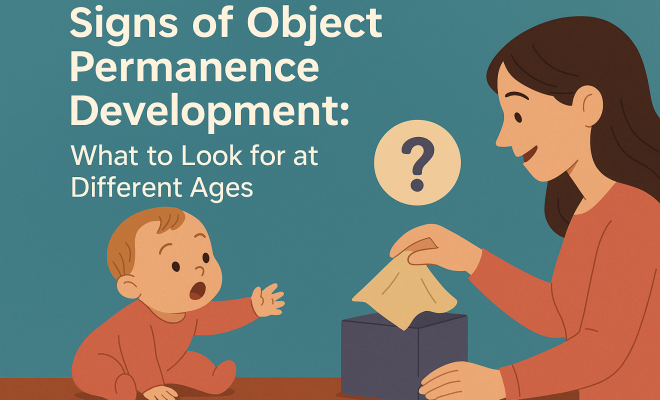
“Signs of Object Permanence Development: What to Look for at Different Ages”
“`html
Introduction to Object Permanence
Have you ever played a game of peekaboo with an infant only to watch their face light up with delight when you reappear? This delightful moment is more than just a fun interaction; it’s rooted deeply in a cognitive milestone called object permanence. This term refers to a child’s ability to understand that objects continue to exist even when they cannot be seen, heard, or touched. This cognitive development is crucial as it lays the foundation for a child’s understanding of the world around them.
What is Object Permanence?
Object permanence is a key concept in developmental psychology, first introduced by Swiss psychologist Jean Piaget in the early 20th century. Piaget observed that infants start to develop this understanding around 4 to 7 months of age. Prior to this, infants act as if objects that leave their sight cease to exist. As children grow older, they begin to realize that just because they can’t see something doesn’t mean it’s gone forever.
The Importance of Object Permanence
Understanding object permanence is essential for several reasons:
- Cognitive Development: It represents a critical stage in cognitive growth. Children who grasp this concept can begin to develop more complex cognitive skills, including memory and problem-solving.
- Attachment and Relationships: Recognizing that people and objects exist independently helps children form attachments. This is vital for emotional and social development.
- Language Acquisition: As children begin to comprehend that objects have a continuous existence, they also start associating words with these objects, aiding in their language development.
Signs of Object Permanence Development at Different Ages
Understanding the signs of object permanence development can help parents and caregivers support their child’s cognitive growth. Here’s a breakdown of what to look for at various stages:
0-4 Months: The Beginning
In the first few months of life, infants are primarily focused on immediate sensations and experiences. During this stage, they show no awareness of object permanence. If you were to hide a toy while playing with an infant, they would likely not search for it and would simply remain unaware of its existence. Instead, they rely heavily on their senses—seeing, hearing, and touching—to interact with their environment.
4-7 Months: The First Signs
By around four months, infants start to show early signs that they are beginning to grasp the concept of object permanence. You might notice your baby tracking a moving object with their eyes or showing interest in partially hidden objects. For example, if you place a cloth over a toy, an infant in this age range may reach out to explore the cloth but will not actively search for the toy underneath. This is a vital first step as it indicates they recognize that something is there, even if they cannot fully comprehend its permanence.
7-12 Months: Increasing Awareness
As infants approach their first birthday, their understanding of object permanence becomes more pronounced. Around 8 to 9 months, many infants will start actively searching for hidden objects, indicating they understand that these objects continue to exist out of sight. For instance, if you hide a toy under a blanket, they might actively lift the blanket to find it. This behavior signifies a growing cognitive ability to connect memory with physical objects.
During this stage, infants may also begin to engage in games like peekaboo, which not only entertain but also reinforce their understanding of object permanence. Every time you hide your face and then reveal it, your baby learns that you still exist, even when they cannot see you.
12-24 Months: Mastery of Object Permanence
By the time toddlers reach 12 months, they typically demonstrate a robust understanding of object permanence. They can search for concealed toys, and their play becomes more complex as they begin to manipulate objects in their environment. At this age, you’ll notice they might engage in more advanced play scenarios, like rolling a ball under the couch and then trying to retrieve it. This indicates not only an understanding of object permanence but also problem-solving skills.
Additionally, you might observe a toddler demonstrating separation anxiety when a parent or caregiver leaves the room. They understand that the parent still exists even if they can’t see them, and this can lead to distress. This behavior showcases their growing emotional and cognitive development. (See: Wikipedia article on object permanence.)
Encouraging Object Permanence in Infants
As parents and caregivers, there are various ways to foster the development of object permanence signs in infants:
- Play Peekaboo: This classic game is not only entertaining but also reinforces the idea that people can disappear and reappear.
- Hide and Seek with Toys: Hide a toy under a blanket and encourage your child to find it. This simple game can stimulate their cognitive skills and deepen their understanding of object permanence.
- Use Everyday Objects: Incorporate common household items in your games. For example, play hide and seek with a spoon, remote control, or other familiar items to reinforce their understanding.
- Talk About Objects: When playing, narrate what you’re doing. For instance, if you hide a toy, say, “Where did the teddy bear go? Let’s find it!” This language exposure helps further their cognitive and language development.
Common Misconceptions About Object Permanence
Despite its importance, there are several misconceptions regarding object permanence:
- All Children Develop Object Permanence at the Same Age: While the average age is around 8-12 months, some children may grasp the concept earlier or later. Each child develops at their own pace.
- Object Permanence Ends at the Toddler Stage: The understanding of object permanence continues to evolve as children grow. Older children and even adults can still experience challenges with complex scenarios involving object permanence.
- Object Permanence is Only About Physical Objects: This cognitive milestone extends beyond toys and objects. It also includes understanding that people, places, and even events continue to exist when they are not immediately present.
The Role of Parents and Caregivers
The role of parents and caregivers is critical in the development of object permanence. Your interactions can greatly influence how quickly and effectively a child grasps this concept. Engaging in activities that promote cognitive skills, like those mentioned above, strengthens their understanding of the world around them.
Moreover, responding to a child’s needs and emotions during this developmental phase fosters a sense of security. When children feel safe, they are more willing to explore and learn, further enhancing cognitive and emotional development.
Current Relevance of Object Permanence Understanding
In today’s fast-paced world, understanding object permanence remains relevant not just for child development but also for educational practices. Early childhood educators are increasingly recognizing the importance of this concept in shaping curriculum and teaching methods.
Research indicates that children who develop a strong understanding of object permanence tend to perform better in school settings as they transition into more complex cognitive tasks. Programs that incorporate play-based learning often emphasize activities that nurture this understanding—demonstrating that object permanence is foundational not just for social and emotional development, but for academic success as well.
Advanced Understanding of Object Permanence
As children grow beyond the toddler stage, their understanding of object permanence evolves into more complex forms. For instance, older children begin to grasp more abstract concepts related to permanence. This includes understanding that ideas, memories, and relationships retain their existence even when they are not directly observable. For example, when a child thinks about a friend who has moved away, they still maintain the knowledge that the friend exists, even if they are not physically present.
This advanced understanding is crucial for developing more sophisticated social skills. Children learn to empathize with others, predicting feelings and actions based on memories and experiences, which further strengthens their interpersonal relationships.
Statistics on Object Permanence Development
Research on child development provides fascinating insights into the timelines and variations of object permanence acquisition:
- Approximately 25% of infants show signs of understanding object permanence by 4 months.
- By 8 months, around 80% of infants display behaviors indicative of object permanence.
- By age 12 months, nearly all children exhibit a reliable understanding of the concept, which persists and becomes more refined as they enter preschool.
These statistics highlight the variability in development and emphasize the importance of recognizing each child’s unique timeline and milestones.
Real-Life Applications of Object Permanence
Grasping the concept of object permanence goes beyond mere cognitive development; it has practical implications in real-world scenarios. For example, in education, understanding how children perceive object permanence can help teachers design activities that facilitate learning. Interactive play, storytelling, and exploratory learning environments are all strategies that cater to this developmental need. (See: NIH article on cognitive development.)
In therapy and special education, professionals often use games and techniques that involve object permanence to help children with developmental delays or disorders. These strategies can improve emotional regulation, social skills, and cognitive abilities.
Expert Perspectives on Object Permanence
Child psychologists and educators emphasize the significance of object permanence in overall development. Dr. Sarah Johnson, a developmental psychologist, notes, “Object permanence is a foundational skill that sets the stage for future learning. When children understand that objects and people remain constant in their absence, they begin to build trust in their environment, which is critical for their emotional and cognitive growth.”
Many experts agree that fostering an understanding of object permanence not only aids in cognitive development but also enhances self-confidence in young children. As they realize their environment is predictable and stable, they feel more secure exploring their surroundings.
FAQs About Object Permanence
What age do babies understand object permanence?
Most babies begin to show signs of understanding object permanence between 4 to 7 months of age, with a more reliable grasp typically developing by 12 months.
How can I tell if my baby understands object permanence?
Look for behaviors such as searching for hidden objects, showing excitement when finding a toy that was concealed, or engaging in peekaboo. These behaviors indicate an emerging understanding of object permanence.
Is object permanence development the same for all children?
No, the development of object permanence can vary significantly from child to child. Some may show earlier signs, while others may take longer to grasp the concept.
How can I encourage my child’s understanding of object permanence?
Engage in activities like peekaboo, hide and seek, and narrating when objects are hidden or found. These playful interactions can stimulate your child’s cognitive development.
Does object permanence develop in adults as well?
While adults fully understand the concept of object permanence, they may encounter challenges with it in specific contexts, such as emotional relationships or abstract ideas where the permanence of feelings and memories is involved.
Further Exploration of Object Permanence Signs
As children mature, the signs of object permanence can manifest in increasingly sophisticated ways. For instance, children might begin to show understanding not just of physical objects, but also of the concepts of time and spatial relationships. They may understand that a friend who is currently unavailable still exists and will return, which is a more nuanced reflection of object permanence. This understanding helps them plan for the future and form deeper relationships.
Object Permanence and the Development of Memory
Memory plays a significant role in the understanding of object permanence. As children learn to remember where they’ve placed their toys, they are also exercising their memory skills. Studies have shown that children who engage in memory games tend to develop stronger object permanence skills. For example, if a child hides their favorite toy and recalls its location later, they reinforce the connection between memory and object permanence. This cognitive link builds the foundation for more complex memory tasks as they grow.
Comparative Analysis: Object Permanence Across Species
Interestingly, the concept of object permanence isn’t confined to humans. Research has shown that various animals also exhibit signs of object permanence. For instance, studies involving dogs have demonstrated that they can remember the location of a hidden ball. This has led to discussions about the evolutionary advantages of object permanence in different species. Understanding that a resource exists even when out of sight can be vital for survival, whether it’s hunting for food or finding mates.
Implications for Parenting Styles
The understanding of object permanence can also influence parenting styles. For instance, parents who are more engaged and responsive are likely to foster a secure attachment in their children. This secure attachment can promote a stronger grasp of object permanence. Conversely, children with less responsive caregiving may struggle with emotional regulation and understanding permanence, affecting their overall development.
In this context, parents can observe how their child reacts when a parent leaves the room, which can signal their understanding of both object permanence and attachment issues. Addressing these emotional needs through consistent interaction can help children feel secure, allowing them to explore their environment safely and confidently.
Challenges Associated with Object Permanence
While understanding object permanence is crucial for development, some children face challenges in this area. For instance, children on the autism spectrum may exhibit atypical development concerning object permanence. They may struggle to show interest in hidden objects and may not engage in games that rely on this understanding, such as peekaboo. Recognizing these challenges early can be essential for parents and caregivers, as targeted interventions can help bridge these gaps.
Therapists often recommend using visual aids, concrete examples, and repetitive play to encourage the understanding of object permanence in children who struggle with this concept. Tailoring activities to suit individual needs can significantly enhance their cognitive development.
Conclusion: The Lifelong Impact of Object Permanence
Understanding object permanence is more than a milestone; it’s a window into the cognitive growth of your child. By recognizing the signs of development at different ages, you can better support your child’s learning and emotional needs. Encouraging activities that reinforce this understanding can foster cognitive skills that last a lifetime.
Ultimately, the journey of discovering object permanence is a fascinating aspect of early childhood development. As parents and caregivers, embracing this journey equips you with the tools to nurture growth, fostering not only an understanding of the world around your child but also their deeper emotional connections. So the next time you play peekaboo, remember you’re not just having fun; you’re shaping a critical piece of their cognitive future.
“`
Trending Now
- our breakdown of what they forgot to include in my education degree
- our breakdown of “the three core considerations of dap: age, individual, and cultural appropriateness”
- “How to Teach to Different Learning Preferences Without Limiting Student Growth”
- this guide on “how childhood attachment patterns affect adult relationships and mental health”
Frequently Asked Questions
What is object permanence in child development?
Object permanence is the understanding that objects continue to exist even when they are not visible. This cognitive milestone typically develops in infants between 4 to 7 months of age and is crucial for their cognitive growth, emotional development, and language acquisition.
At what age do babies develop object permanence?
Babies generally start to develop object permanence between 4 to 7 months of age. Before this stage, infants may act as if objects that are out of sight no longer exist, but they gradually learn that objects remain in existence even when they can't be seen.
Why is object permanence important for children?
Object permanence is vital for cognitive development as it helps children form attachments, understand relationships, and develop memory and problem-solving skills. It also plays a significant role in language acquisition as children begin to associate words with objects.
What are the signs of object permanence in infants?
Signs of object permanence in infants include searching for hidden objects, showing excitement when a hidden toy is revealed, and demonstrating distress when a caregiver leaves the room. These behaviors typically begin to emerge around 4 to 7 months of age.
How can parents support the development of object permanence?
Parents can support the development of object permanence by engaging in games like peekaboo, hiding toys, and encouraging exploration. These activities help infants learn that objects and people still exist even when they are out of sight, fostering cognitive growth.
Agree or disagree? Drop a comment and tell us what you think.