Social Learning Theory vs. Behaviorism: Cognition’s Role in Learning
“`html
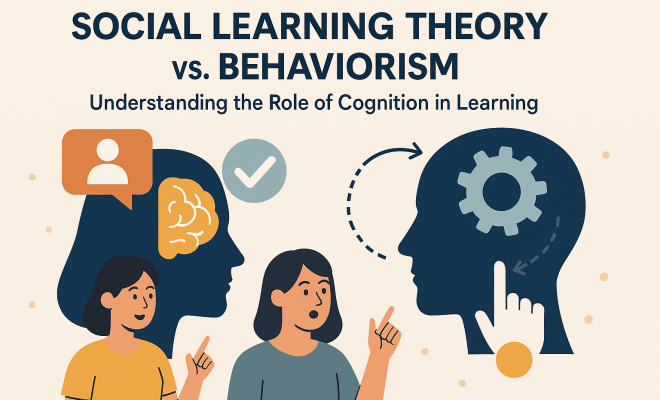
When it comes to understanding how we learn, two prominent theories often come into play: social learning theory and behaviorism. While both have significantly influenced educational practices and psychological understanding, they differ fundamentally in their approach to cognition and behavior. This article will delve deep into these two theories, examining their origins, key principles, practical implications, and current relevance. By the end, you’ll have a clear understanding of the social learning theory vs behaviorism debate.
1. The Roots of Behaviorism
Behaviorism emerged in the early 20th century, primarily through the work of psychologists like John B. Watson and B.F. Skinner. Watson’s 1913 manifesto declared that psychology should focus on observable behavior rather than internal mental states, laying the foundation for a movement that would dominate psychology for decades. Skinner later expanded on this by introducing the concept of operant conditioning, which posits that behaviors are shaped by their consequences, such as rewards or punishments.
This perspective views learning as a direct response to environmental stimuli. For instance, if a student receives praise for correct answers, they are likely to repeat that behavior. This focus on external factors makes behaviorism a practical framework for developing teaching methods aimed at reinforcing desired behaviors. However, critics argue that this approach overlooks the complexities of human thought and emotion, reducing learning to mere stimulus-response patterns.
2. Understanding Social Learning Theory
In contrast, social learning theory, developed by Albert Bandura in the 1960s, emphasizes the importance of observational learning, imitation, and modeling. Through groundbreaking experiments such as the famous Bobo doll study, Bandura demonstrated that children learn not just through direct experience but also by observing the actions of others and the consequences that follow. This highlighted the role of cognitive processes in learning.
According to Bandura, individuals can learn new behaviors by watching others, internalizing the observed behaviors, and reproducing them in their own lives. This theory suggests that social context and communication play pivotal roles in the learning process, making it more comprehensive compared to the behaviorist approach. Furthermore, social learning theory incorporates cognitive aspects such as attention, retention, reproduction, and motivation, illustrating that learning is not purely a behavioral phenomenon.
3. Key Differences: Focus on Behavior vs. Cognition
The most significant difference between social learning theory and behaviorism lies in their focus. Behaviorism concentrates on observable behaviors and external stimuli, while social learning theory incorporates internal cognitive processes. In behaviorism, learning is a straightforward process of reinforcement and punishment, largely ignoring the learner’s mental state. For example, a behaviorist might argue that a student learns math simply by practicing problems and receiving grades.
On the other hand, social learning theory acknowledges that cognitive factors such as beliefs, expectations, and social influences can greatly impact learning outcomes. This means that a student might be more motivated to learn math if they see peers succeeding and receiving positive reinforcement, highlighting how social dynamics and cognition interplay in the learning process.
4. Practical Applications in Education
Both theories have practical implications in educational settings. Behaviorism has led to the development of various instructional techniques, including direct instruction and behavior modification strategies. Teachers often use reward systems to reinforce good behavior, which can effectively shape classroom dynamics and student motivation.
Conversely, social learning theory has fostered collaborative learning experiences, encouraging students to work together and learn from one another. Techniques such as peer teaching, group projects, and role-playing are informed by the understanding that students can benefit immensely from observing and interacting with their peers. By integrating both theories, educators can create a more holistic learning environment that addresses both behavioral and cognitive aspects of learning.
5. The Role of Cognitive Processes
Cognition plays a vital role in social learning theory, distinguishing it from behaviorism. Bandura identified several cognitive processes that individuals engage in when learning through observation. These include attention (noticing the behavior of others), retention (storing the observed behavior in memory), reproduction (the ability to replicate the behavior), and motivation (the desire to engage in the behavior based on observed consequences). (See: Overview of Behaviorism.)
This cognitive framework allows for a deeper understanding of how learning occurs. For instance, a student observing their peers effectively solving math problems may not only remember the steps involved but also feel motivated to try it themselves, especially if they see their peers rewarded for their efforts. This highlights the importance of cognitive engagement in learning, something behaviorism fails to address adequately.
6. Critiques of Behaviorism
While behaviorism has been foundational in the field of psychology, it has faced considerable criticism. One major critique is its reductionist approach, which simplifies complex human behavior to mere stimulus-response mechanisms. Critics argue that this neglects the influence of emotions, thoughts, and social contexts in shaping behavior. Furthermore, behaviorism often overlooks intrinsic motivation, focusing primarily on extrinsic rewards, which can lead to superficial learning.
Additionally, critics point out that behaviorism fails to account for the role of creativity and problem-solving in learning. Students might be able to repeat learned behaviors but may struggle to apply those concepts in novel situations, suggesting that a more comprehensive model of learning is necessary.
7. Critiques of Social Learning Theory
Despite its strengths, social learning theory is not without its critiques. One major concern is the assumption that observational learning occurs uniformly across different contexts. Critics argue that individual differences, such as personality traits or prior experiences, can significantly influence how and what individuals learn from observation. For instance, a student who is shy may not feel comfortable imitating a peer’s behavior, regardless of how effective it may seem.
Moreover, social learning theory may inadvertently promote imitation over critical thinking. While observing positive behaviors can be beneficial, there is a risk that individuals may mimic actions without fully understanding the underlying principles or consequences. This highlights the need for educators to foster not only observational learning but also critical thinking and problem-solving skills.
8. Current Relevance and Future Directions
The debate between social learning theory vs behaviorism continues to influence modern educational practices. With the rise of digital learning environments, both theories offer valuable insights. For instance, online platforms often employ behaviorist techniques, such as gamification and reward systems, to encourage engagement. Simultaneously, social learning principles are critical in collaborative online spaces where peer interactions enhance learning.
Looking ahead, the integration of both approaches may provide the most effective strategy for teaching and learning. Recognizing the importance of cognitive processes alongside behavioral reinforcement can lead to more effective educational models that cater to diverse learning needs. As we continue to explore the complexities of learning, staying informed about these theories and their applications will be essential for educators, psychologists, and learners alike.
9. Real-World Examples of Social Learning Theory and Behaviorism
To better understand how these theories manifest in real-world scenarios, let’s consider some practical examples.
In a classroom setting influenced by behaviorism, a teacher implements a token economy system where students earn tokens for good behavior, which can later be exchanged for privileges like extra recess time or homework passes. This system reinforces desired behaviors and encourages students to adhere to classroom rules. While effective in promoting discipline, there’s a chance that students may only focus on earning tokens rather than truly understanding the importance of good behavior.
Conversely, a teacher employing social learning theory might set up a project where students work in groups to complete a science experiment. During the activity, students observe each other’s techniques and share their thoughts on what works best, learning collaboratively. This peer interaction not only enhances their understanding of scientific concepts but also fosters communication and social skills, showcasing how observation and imitation can lead to deeper learning.
10. Statistics Supporting Social Learning Theory and Behaviorism
Research has provided statistical support for both theories. For instance, a review of over 100 studies highlighted that social learning through observation can improve retention by up to 60% when compared to traditional learning methods alone. Moreover, a meta-analysis found that behavior modification techniques can lead to a 30% increase in positive behavior changes in educational settings. (See: Social and Emotional Learning.)
Interestingly, studies have shown that when both theories are combined, students can achieve even greater outcomes. Schools that integrate behavioral strategies with social learning practices report a 40% improvement in student engagement and a 25% increase in academic performance, indicating that a balanced approach can create a more effective learning environment.
11. Comparing Long-term Effects
When comparing the long-term effects of social learning theory and behaviorism, it’s crucial to consider how each theory impacts students beyond the classroom. Behaviorism often instills a sense of compliance and adherence to rules, which can be beneficial in structured environments. However, students might struggle with self-regulation and intrinsic motivation in real-world scenarios, relying heavily on external rewards.
On the other hand, social learning theory encourages students to be active participants in their learning journeys. By fostering collaboration and observational learning, students develop skills such as critical thinking, adaptability, and social awareness. These skills are increasingly vital in today’s interconnected world, where teamwork and communication are essential in the workplace. Thus, while behaviorism may yield immediate results, social learning may better prepare students for lifelong learning and real-world challenges.
12. Frequently Asked Questions (FAQ)
What are the main tenets of behaviorism?
Behaviorism is based on the idea that all behaviors are acquired through conditioning. The primary tenets include:
- Learning is a result of interaction with the environment.
- Behavior can be measured and observed.
- Reinforcement and punishment are key to shaping behavior.
- Internal states such as thoughts and feelings are not considered essential for understanding behavior.
How does social learning theory differ from cognitive theory?
While both social learning theory and cognitive theory acknowledge the role of mental processes in learning, social learning emphasizes the importance of observing others, whereas cognitive theory focuses on internal processes such as memory, perception, and problem-solving. Social learning theory integrates social influences, while cognitive theory often looks at how individuals process information independently.
Can both theories be applied simultaneously in education?
Yes! Educators can effectively integrate both theories into their teaching practices. For instance, a teacher can use behaviorist techniques to establish classroom management while using social learning strategies to promote collaboration and peer-to-peer learning. This combination can help address both behavioral and cognitive aspects of student development.
What are the limitations of each theory?
Behaviorism may oversimplify learning by neglecting internal cognitive processes and intrinsic motivation. Critics argue it can lead to surface-level learning. Social learning theory may assume that all individuals learn in the same way, not accounting for personal differences or the potential for mindless imitation.
How can understanding these theories help educators?
Understanding these theories allows educators to tailor their instructional methods to better meet the needs of their students. By recognizing the strengths and limitations of each approach, teachers can create a balanced learning environment that fosters both behavioral discipline and deep cognitive engagement, ensuring a more enriching educational experience for all learners.
13. The Intersection of Technology and Learning Theories
As technology continues to advance, its integration into education presents a unique opportunity to explore the intersection of social learning theory vs behaviorism. With the rise of e-learning platforms and educational apps, educators can leverage technology to facilitate both behavioral and cognitive learning.
For example, many e-learning platforms employ gamification strategies, a behaviorist approach that uses rewards and challenges to engage learners. By incorporating points, badges, and leaderboards, educators can motivate students to complete tasks and participate actively. Yet, these platforms also often include collaborative features, such as discussion boards and peer review, which align with social learning principles by allowing students to learn from each other’s perspectives.
Furthermore, virtual reality (VR) and augmented reality (AR) technologies provide immersive learning experiences where students can observe and practice skills in real-world scenarios. This aligns well with social learning theory, as students can see firsthand the application of concepts, interact with virtual peers, and learn collaboratively in a safe environment.
14. The Role of Cultural Context in Learning
Cultural context significantly influences the applicability and effectiveness of both social learning theory and behaviorism. Cultural norms and practices shape how individuals learn and interact. For instance, in collectivist cultures, social learning might be emphasized more heavily, as group harmony and cooperation are valued. Students may be taught to learn from observing community elders or peers, which aligns seamlessly with Bandura’s theory.
In contrast, individualistic cultures may lean more toward behaviorist strategies that reward personal achievement and competition. This cultural framework might encourage students to focus on their individual performance, where behaviorism’s reinforcement strategies could thrive. Understanding these cultural contexts helps educators tailor their methods to better fit the learning styles and expectations of their students.
15. Future Research Directions
The ongoing debate surrounding social learning theory vs behaviorism invites continuous research into their effectiveness and applicability in various learning environments. Future studies could explore new technologies in education, such as artificial intelligence, and how they can adapt to different learning theories. For instance, can AI-driven tutoring systems effectively balance behavioral reinforcements with social learning experiences?
Moreover, longitudinal studies examining the long-term effects of each theory on academic performance, social skills, and emotional well-being would provide deeper insights. This research could assist educators in refining their approaches, ultimately leading to improved learning outcomes for diverse student populations.
In the evolving landscape of education, understanding the social learning theory vs behaviorism debate is crucial. By acknowledging the strengths and limitations of both theories, we can foster more effective and nuanced approaches to teaching and learning that resonate with the needs of today’s learners.
“`
Trending Now
Frequently Asked Questions
What is the difference between social learning theory and behaviorism?
Social learning theory emphasizes observational learning, imitation, and modeling, while behaviorism focuses on observable behaviors and the influence of environmental stimuli. Behaviorism views learning as a response to external factors, whereas social learning theory considers the role of cognitive processes in understanding and replicating behaviors.
Who developed social learning theory?
Social learning theory was developed by psychologist Albert Bandura in the 1960s. His research, particularly the Bobo doll study, illustrated how individuals learn behaviors by observing others and the consequences of their actions, highlighting the importance of social context in learning.
What are the key principles of behaviorism?
Key principles of behaviorism include the belief that learning occurs through conditioning, either classical or operant, where behaviors are shaped by rewards and punishments. This theory emphasizes observable behavior rather than internal mental processes, making it a practical approach for behavior modification in educational settings.
How does social learning theory apply to education?
Social learning theory applies to education by encouraging teaching methods that incorporate modeling and observational learning. Educators can facilitate learning by demonstrating behaviors, fostering an environment where students can observe and imitate successful actions, thereby enhancing their understanding and skills.
What are the criticisms of behaviorism?
Critics of behaviorism argue that it oversimplifies the learning process by reducing it to stimulus-response patterns. This approach is said to ignore the complexities of human cognition, emotions, and the role of internal mental states in shaping behavior, which are essential for a comprehensive understanding of learning.
What’s your take on this? Share your thoughts in the comments below — we read every one.