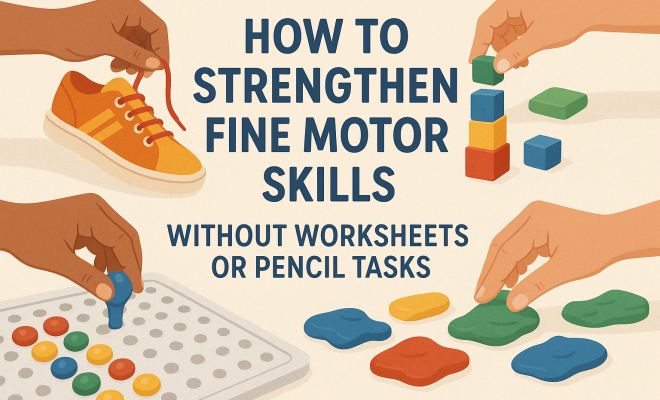
“How to Strengthen Fine Motor Skills Without Worksheets or Pencil Tasks”
“`html
When it comes to developing fine motor skills in children, traditional methods often involve worksheets and pencil tasks. However, there’s a treasure trove of engaging, hands-on activities that can foster these essential skills without the use of paper and pencils. Fine motor skills activities are crucial for kids as they are linked to later literacy, self-care, and overall cognitive development. Below, we will explore eight innovative ways to strengthen fine motor skills while keeping things fun and engaging.
1. Play Dough Sculpting: Unleashing Creativity and Dexterity
Making shapes and sculptures with play dough is not just enjoyable; it’s an effective way to enhance fine motor skills. Children can practice pinching, rolling, and flattening dough, which builds hand strength and coordination. Encourage your children to create various items, from animals to abstract shapes, to stimulate their creativity. This activity also allows for sensory exploration, which is invaluable for young learners.
You can introduce tools like plastic knives, rolling pins, and cookie cutters to diversify their experience. By using these tools, children will learn to manipulate the dough in different ways, further refining their motor skills. You can even incorporate themes, such as making seasonal decorations, to make the experience more engaging.
Additionally, you can extend this activity by integrating sensory elements such as food coloring or scents. Adding different textures, like rice or sand, to the dough can enhance the sensory experience, making it even more appealing. You might also challenge your child to create specific objects based on a theme, such as “under the sea” or “insects,” which can encourage deeper creativity and problem-solving skills.
2. Building Blocks: The Foundation for Coordination
Building blocks are not just a classic toy; they are a wonderful way to promote fine motor skills. Activities such as stacking, aligning, and balancing blocks encourage hand-eye coordination and spatial awareness. Children must exercise precision and control, which are key components of fine motor development.
Consider involving your child in building something specific, like a bridge or a tower, to provide them with a goal. You can ask questions along the way to encourage problem-solving and critical thinking, such as, “How can we make this tower taller without it falling?” This interaction not only supports motor skills but also cognitive development.
To enrich this experience, incorporate block challenges where children must build structures that can hold weight or withstand certain conditions. For example, challenge them to create a bridge that can hold a toy car or a tower that can survive a gentle shake. This kind of critical thinking reinforces both fine motor skills and engineering concepts, making the playtime educational as well as fun.
3. Crafting with Scissors: Cutting for Coordination
Using scissors might seem simple, but it’s an incredibly effective way to develop fine motor skills. Start by allowing your child to cut various materials like paper, cardboard, or even straws. You can make it more interesting by creating a cutting station where they can experiment with cutting different shapes or patterns.
As they get more comfortable, introduce more challenging tasks, such as cutting along lines or curves. This practice not only enhances their hand strength but also improves their grip and control. Additionally, combine this activity with storytelling or art projects to make it more engaging. For instance, they can create characters or scenes from their favorite stories while practicing their cutting skills.
To deepen their learning experience, you might discuss safety rules regarding scissors and the importance of proper cutting techniques. You can also introduce creative projects that require the use of both scissors and glue, enabling them to develop sequencing skills as they plan and execute their craft projects. Activities like creating a scrapbook from cut-out pictures can allow for organization and storytelling, which further promotes fine motor skills alongside literacy.
4. Gardening Activities: Nature’s Fine Motor Playground
Gardening presents a natural and enjoyable opportunity to boost fine motor skills. Tasks like digging, planting seeds, watering plants, and weeding require a variety of movements that strengthen hand muscles. Kids can explore the textures of soil, the shapes of seeds, and the beauty of growing plants, all while developing their dexterity. (See: CDC on child development milestones.)
To make this activity educational, you can discuss the lifecycle of plants, types of vegetables, or the importance of caring for our environment. Additionally, you can create a small garden space where children can take charge of their own plants, further encouraging responsibility and nurturing behaviors.
Consider expanding this into a full gardening project where children can learn about composting, the importance of pollinators, or even the science of plant growth. They can track the growth of their plants in a gardening journal, which reinforces not just their fine motor skills through writing, but also their understanding of scientific observations. This multifaceted approach can provide a rich learning experience that intertwines nature and education.
5. Cooking and Baking: A Recipe for Success
Getting children involved in cooking and baking can be a delightful way to strengthen fine motor skills. Measuring ingredients, stirring mixtures, and kneading dough are all tasks that require precision and control. They also offer practical applications of math and science concepts, making the activity multidimensional.
You can start with simple recipes that allow them to engage with each step. Encourage them to use measuring cups, spoons, and spatulas to help develop their grasp and coordination. Additionally, decorating cookies or cupcakes offers an opportunity for creative expression and fine motor practice, as they learn to control piping bags or sprinkle toppings.
To make this experience even richer, discuss the nutritional value of the ingredients you’re using and the science behind cooking processes, like how heat changes the texture of food. You can also engage them in meal planning, allowing them to choose recipes and make grocery lists. This not only promotes fine motor skills but also nurtures decision-making and organizational skills.
6. Beading and Jewelry Making: Stringing Together Skills
Beading is a fantastic activity that promotes fine motor skills through threading and manipulation. Children can practice their pincer grasp while stringing beads onto thin cords or wires. This activity is not only fun, but it also helps enhance their concentration and patience—skills that are vital for successful engagement in various tasks.
Consider providing different types of beads, such as large wooden ones for younger children and smaller plastic ones for older kids. You can also incorporate patterns or color matching to add an educational element. As they create bracelets or necklaces, they develop a sense of accomplishment while strengthening their fine motor skills.
Additionally, consider extending the activity by introducing knot-tying techniques, which can further enhance their dexterity. Challenge them to create themed jewelry or gifts for friends and family to encourage social skills and giving. This can create opportunities for storytelling about the creations, enhancing both their verbal skills and fine motor development simultaneously.
7. Interactive Games: Learning through Play
There’s a wealth of interactive games available that focus on fine motor skills development. From board games that require movement of pieces to digital apps designed to enhance hand-eye coordination, these activities are both entertaining and beneficial. Look for games that involve manipulation, such as picking up components with tweezers or moving pieces with a steady hand.
Games like Jenga or Operation are classic choices to consider, as they require players to use fine motor control to avoid toppling the pieces or triggering a buzzer. Integrating these games into family game night can make the experience even more enjoyable while reinforcing essential skills.
To add an educational layer, you might also explore games that require strategic thinking or teamwork. Games that involve building, like LEGO sets or magnetic tiles, can enhance both fine motor skills and creative thinking. You can also introduce puzzles that require fitting pieces together, which promotes spatial reasoning and fine motor dexterity at the same time.
8. Art and Craft Projects: Expressing Creativity
Art activities like painting, drawing, or collage-making are exceptional fine motor skills activities. Using different tools like brushes, sponges, or fingers to apply paint allows children to explore various techniques while honing their hand movements. You might consider setting up a dedicated art space where they can freely express themselves. (See: NIH on learning and development.)
Encourage them to create projects that require cutting, pasting, and arranging materials. As they engage in these tasks, they develop not only fine motor skills but also their ability to plan and execute creative ideas. Plus, having a completed piece of art can boost their self-esteem and provide a sense of accomplishment.
To deepen their artistic journey, you could introduce mixed media projects that incorporate textiles, natural materials, or recycled items. Discussing different art styles and famous artists can also inspire creativity and further engage their imagination. Art critiques can be a fun way to develop their evaluative skills while fostering a sense of community and collaboration in creative expression.
9. Play with Textiles: Weaving and Stitching Fun
Textile activities can be an excellent way to strengthen fine motor skills while allowing children to explore their creativity. Simple activities like weaving yarn through a cardboard loom or threading fabric strips can be both engaging and educational. You can introduce sewing basics with large plastic needles and thick yarn, which will help improve their grip and coordination.
Making simple crafts, such as friendship bracelets or hand-sewn pillows, can also provide a sense of accomplishment while enhancing fine motor skills. As they work with different textures and colors, children can develop their tactile senses and learn about patterns and design. You might create themed projects, such as sewing holiday decorations or gifts for family members, which can add a personal touch and foster emotional connections.
Additionally, you can discuss different textile techniques and their cultural significance, which can broaden their perspective while keeping them engaged in the hands-on activities. This blend of fine motor skill development and cultural education makes for a rich and fulfilling experience.
10. Paper Mâché: Strengthening Skills through Sculpture
Paper mâché is not just a fun craft; it’s an excellent opportunity for children to develop fine motor skills through the process of tearing, dipping, and layering paper. This hands-on activity requires coordination and control as children create their sculptures or masks. The tactile nature of working with wet paper also enhances sensory experiences, making it a well-rounded activity.
Start with simpler projects like bowls or basic shapes, then progress to more complex designs as their confidence grows. You can encourage them to paint and decorate their finished projects, adding another layer of fine motor skill development through detailing and artistic expression.
As they work on paper mâché projects, you can discuss the concepts of recycling and creativity, emphasizing how everyday materials can be transformed into art. This not only teaches valuable skills but also promotes environmental awareness and innovation.
Frequently Asked Questions (FAQ)
What are fine motor skills?
Fine motor skills are the abilities that require small movements in the hands, fingers, and wrists. They involve coordinating these movements to perform tasks like writing, buttoning clothes, and using utensils.
Why are fine motor skills important?
Fine motor skills are crucial because they are linked to later success in academic and everyday tasks. They play a significant role in a child’s ability to write, draw, and engage in self-care activities like dressing and feeding themselves.
At what age should children start practicing fine motor skills activities?
Children can start engaging in fine motor skills activities as early as infancy, with activities like grasping toys. As they grow, you can introduce more complex tasks that suit their developmental stage, typically around age 2 to 3 for basic fine motor activities, and gradually increase the complexity as they mature.
How can I encourage my child to participate in fine motor skills activities?
Make activities enjoyable and incorporate them into your daily routine. Use themes that interest your child, set up playdates to engage with peers, and provide praise for their efforts to boost motivation and confidence.
Are there specific toys that can help develop fine motor skills?
Yes, there are numerous toys designed specifically to enhance fine motor skills. Look for construction sets, puzzles, threading toys, and art supplies that encourage manipulation and coordination.
How can I tell if my child is developing fine motor skills appropriately?
Generally, children will reach specific milestones at certain ages, such as the ability to grasp objects, manipulate toys, and use utensils. If you’re concerned about your child’s fine motor development, consider consulting with a pediatrician or occupational therapist for guidance.
What should I do if my child shows frustration during fine motor skills activities?
It’s essential to remain patient and supportive. If your child feels frustrated, try simplifying the task or providing guidance. Break down the activity into smaller, more manageable steps and celebrate small successes to build their confidence. Create a positive environment where effort is praised, rather than focusing solely on outcomes.
Can fine motor skills activities be done indoors and outdoors?
Absolutely! Many fine motor skills activities can be adapted for both environments. For instance, gardening is a great outdoor activity, while arts and crafts can be done indoors. Encourage versatility in the activities you choose to keep things fresh and exciting for your child.
Incorporating these activities into your routine can significantly impact your child’s fine motor skill development without needing worksheets or structured tasks. By keeping it fun and engaging, you’ll create an environment where your child can thrive and grow. Remember, the key is to provide opportunities for exploration and creativity, allowing fine motor skills to strengthen naturally. So, roll up your sleeves, get hands-on, and enjoy the process of learning together!
“`
Trending Now
Frequently Asked Questions
What are some activities to improve fine motor skills in children?
Engaging activities such as play dough sculpting, building with blocks, and sensory bins can significantly enhance fine motor skills in children. These hands-on tasks promote hand strength, coordination, and creativity without the use of worksheets or pencil tasks.
How does play dough help with fine motor development?
Play dough sculpting encourages children to pinch, roll, and flatten, which builds hand strength and dexterity. Incorporating tools like cookie cutters and rolling pins can further refine their motor skills while allowing for creative expression.
Why are fine motor skills important for children?
Fine motor skills are crucial for children's development as they are linked to later literacy, self-care, and overall cognitive abilities. Strengthening these skills helps children perform tasks like writing, buttoning clothes, and using utensils more effectively.
What are some fun ways to strengthen fine motor skills?
Fun ways to strengthen fine motor skills include activities like crafting with beads, playing with building blocks, and engaging in sensory play with materials like rice or sand. These activities keep children engaged while developing essential skills.
Can sensory play enhance fine motor skills?
Yes, sensory play is an excellent way to enhance fine motor skills. Activities that involve different textures and materials, such as sand, rice, or water, encourage children to explore and manipulate, which builds their hand strength and coordination.
What did we miss? Let us know in the comments and join the conversation.