
Boost Learning: Kinesthetic Activities for Every Subject
“`html
Understanding Kinesthetic Learning
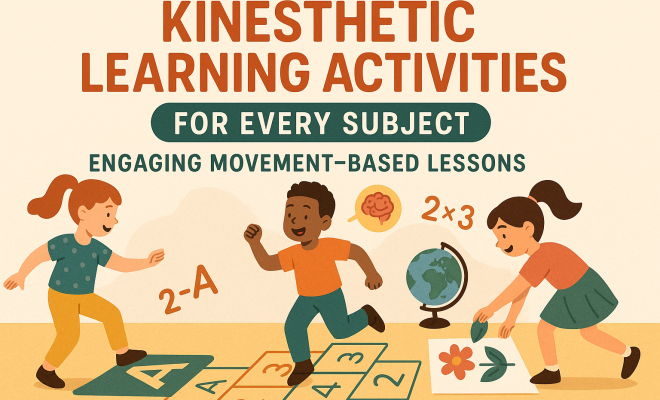
Kinesthetic learning, often referred to as tactile learning, emphasizes the importance of movement in the educational process. It recognizes that many students grasp concepts better when they have the opportunity to physically engage with the material. This learning style aligns with the theory proposed by psychologist Howard Gardner, who identified multiple intelligences, including bodily-kinesthetic intelligence. In essence, kinesthetic learners thrive when they can act, manipulate, and experience their lessons firsthand.
Incorporating kinesthetic learning activities not only helps in reinforcing academic concepts but also caters to students’ diverse learning preferences. This approach is especially beneficial in today’s classrooms, where teachers face the challenge of engaging students who might otherwise find traditional methods dull or uninspiring. With that in mind, let’s explore various movement-based lessons that can be applied across different subjects.
Why Kinesthetic Learning Matters
Research indicates that kinesthetic learning can significantly enhance retention and understanding. A study published in the “Journal of Educational Psychology” found that students who participated in active learning experiences scored higher on tests compared to those who engaged in passive learning methods. The hands-on approach promotes engagement and encourages students to take ownership of their learning process.
Moreover, movement has been linked to improved cognitive function. A report from the National Center for Biotechnology Information suggests that physical activity facilitates neuron growth and connections in the brain, further enhancing learning capabilities. With these findings, it’s clear that integrating kinesthetic learning activities into the curriculum is not just a trend—it’s a necessity for fostering a dynamic educational environment.
Kinesthetic Learning Activities for Math
Mathematics can often be perceived as abstract and detached from real-life applications. However, kinesthetic learning activities can transform math lessons into interactive experiences. Here are a few strategies:
- Math Scavenger Hunts: Create a scavenger hunt where students must solve math problems to find the next clue. Each clue can relate to a specific math concept, such as geometry or algebra. For instance, if students solve an equation that leads them to a specific location, they may discover a puzzle piece that fits into a larger math problem.
- Body Geometry: Use students’ bodies to create geometric shapes. For example, in a lesson about triangles, students can form different types of triangles using their arms and legs. This not only reinforces the concept but also allows students to physically embody the shapes.
- Measurement Relay: Organize a relay race where students must measure objects around the classroom using non-standard units (like paper clips) and record their findings. This activity encourages teamwork and reinforces measurement skills in a fun, competitive way.
Kinesthetic Learning Activities for Science
Science is inherently hands-on, making it an ideal subject for kinesthetic learning. Here are some engaging activities:
- Interactive Experiments: Rather than simply reading about chemical reactions, students can participate in experiments that allow them to mix substances and observe outcomes. For example, creating a volcano with baking soda and vinegar not only teaches chemical reactions but also engages students’ senses.
- Science Walks: Organize a nature walk where students can observe and identify different plants, animals, and ecosystems. They can collect samples or take pictures to analyze back in the classroom, making the learning experience more tangible.
- Human Anatomy Lessons: Teach human anatomy by having students label organs on a life-sized drawing or model. For a more immersive experience, they could role-play as different systems of the body, such as the circulatory system, explaining their functions while physically moving around the classroom.
Kinesthetic Learning Activities for Language Arts
Language arts can sometimes feel stagnant, but incorporating kinesthetic activities can bring stories to life. Consider these options:
- Storytelling Through Movement: Assign students different characters from a story and have them act out scenes using movements that represent their characters’ emotions or actions. This helps deepen their understanding of character development and plot.
- Word Charades: Use charades as a way to learn new vocabulary. Students can act out the meaning of their assigned word without speaking, allowing their peers to guess the word based solely on their movements.
- Grammar Games: Create a grammar game where students physically move to different stations that each represent a part of speech. As they interact with each station, they must provide examples or form sentences using the part of speech represented.
Kinesthetic Learning Activities for History
History can often be reduced to dates and names, but it can be made more engaging through movement-based activities:
- Historical Role Play: Organize a role-playing session where students take on the personas of historical figures. They can enact key events or debates, enabling a deeper understanding of historical contexts and motivations.
- Timeline Charades: Create a timeline of significant events and have students act out each event in chronological order. This helps them visualize the sequence and connections between historical moments.
- Map Activities: Use large floor maps to allow students to physically walk through historical events. For instance, during a lesson on the American Revolution, they could physically trace the paths of troops on a large map.
Kinesthetic Learning Activities for Social Studies
Social studies can benefit significantly from kinesthetic learning. Engaging activities can help students grasp complex social dynamics and cultural insights: (See: Active learning and health benefits.)
- Cultural Dance Lessons: Explore the cultures of different countries by teaching students traditional dances. This allows them to physically engage with the cultural context while learning about the history and significance of the dances.
- Debate in Motion: Organize debates where students must move to different areas of the classroom depending on their stance on an issue. This encourages active participation and helps them physically embody their opinions.
- Societal Structures Simulation: Use simulations to demonstrate different government structures. Students can represent different branches of government and engage in mock decision-making processes, helping them understand civic responsibility.
Kinesthetic Learning Activities for Physical Education
Incorporating kinesthetic learning within physical education not only promotes fitness but also enhances cognitive skills:
- Fitness Stations: Set up different fitness stations that focus on various skills, such as agility, strength, and coordination. Students rotate through the stations, engaging their minds and bodies in various activities.
- Team Sports Strategy: When teaching team sports, have students physically demonstrate strategies rather than just discussing them. This can foster teamwork and improve their understanding of game dynamics.
- Movement-Based Challenges: Create challenges that require students to solve problems through movement, such as navigating an obstacle course while answering questions related to fitness or health.
Kinesthetic Learning Activities for Art
Art can also incorporate kinesthetic learning principles, allowing students to express their creativity in physical ways:
- Sculpture Projects: Provide materials that students can manipulate to create sculptures. This hands-on approach fosters creativity while allowing students to explore 3D forms and concepts.
- Art Walks: Organize art walks where students explore various art styles and movements in their community. They can take notes and sketch ideas that resonate with them, bridging the gap between observation and creation.
- Interactive Art Installations: Encourage students to create installations that require audience interaction. This not only engages their creative side but also promotes collaboration and discussion around art.
How to Implement Kinesthetic Learning Activities in Your Classroom
To effectively integrate kinesthetic learning activities into your curriculum, consider the following strategies:
- Start Small: You don’t have to overhaul your teaching style overnight. Begin with one or two kinesthetic activities per week and gradually increase as you see positive outcomes.
- Involve Students in Planning: Engage students in the planning process. Ask for their input on activities they would enjoy. This can increase their motivation and commitment to the learning process.
- Assess and Reflect: After implementing an activity, take time to reflect on its effectiveness. Assess student engagement and understanding. Seek feedback from students on what worked or what could be improved.
- Collaborate with Colleagues: Work with fellow educators to share ideas and resources. Collaborating can lead to innovative approaches that enhance the kinesthetic learning experience across subjects.
The Future of Kinesthetic Learning
As education continues to evolve, the emphasis on active learning will likely grow stronger. With advancements in technology, there are even more opportunities to incorporate movement into learning. Virtual reality (VR) and augmented reality (AR) can create immersive learning environments that engage students on multiple levels.
Furthermore, as educators recognize the diverse needs of their students, kinesthetic learning activities will remain crucial in addressing various learning styles. By fostering environments that encourage movement, creativity, and engagement, we can cultivate a generation of learners who are not only knowledgeable but also capable of applying their knowledge in real-world contexts.
In a world that increasingly values creativity and critical thinking, embracing kinesthetic learning activities can provide students with the tools they need to thrive. Whether through math, science, language arts, social studies, physical education, or art, movement-based lessons can enrich the educational experience and make learning enjoyable.
Additional Examples of Kinesthetic Learning Activities
To further illustrate the versatility of kinesthetic learning, let’s consider additional examples across various subjects:
Kinesthetic Activities in Mathematics
- Fraction Pizza: Have students create pizzas using paper plates, where each slice represents a fraction. They can cut and assemble their pizzas based on given fraction problems, allowing them to visualize and physically manipulate fractions.
- Graphing Using Movement: Create a large coordinate grid on the classroom floor using tape. Students can represent points by standing at specific coordinates, providing a visual and physical way to understand graphing.
Kinesthetic Activities in Science
- Plant Growth Simulation: Use a large pot or container to allow students to plant seeds and observe growth over time. They can physically measure and record the height of the plants weekly, incorporating math and observation skills.
- Physics with Balls: Engage students in experiments where they roll different balls down ramps to study speed and friction. This hands-on approach allows them to see the concepts of physics in action.
Kinesthetic Activities in Language Arts
- Character Emotion Walk: Have students walk around the classroom expressing different emotions as they relate to characters in a story. This allows them to explore character motivations through physical expression.
- Sentence Building Relay: Set up a relay where students must run to a board, write a word, and race back to tag the next teammate who will add to the sentence. This fosters teamwork and reinforces grammar and sentence structure.
Kinesthetic Activities in History
- Historical Event Reenactments: Encourage students to reenact a historical event, dressing up in period costumes and acting out roles. This immersive approach helps them understand the significance of events and figures.
- Civilization Building: Have students physically construct models of ancient civilizations using classroom materials, exploring the architecture and societal structures of different eras.
Kinesthetic Activities in Social Studies
- World Map Challenge: Spread a large world map on the floor and call out countries or capitals. Students must race to the correct location on the map, reinforcing their geographical knowledge through movement.
- Current Events Discussion Circles: Organize students into small groups to discuss current events. After a discussion, they must physically move to a new group to share their insights, promoting collaboration and communication.
Kinesthetic Activities in Physical Education
- Obstacle Course Learning: Create an obstacle course that incorporates academic challenges at each station (e.g., math problems, vocabulary quizzes) that they must complete before moving on.
- Dance Through History: Teach students dances from different historical periods, allowing them to learn about the culture and context while engaging in physical activity.
Kinesthetic Activities in Art
- Nature Art: Organize an outdoor day where students collect natural materials (leaves, sticks, stones) to create art pieces, connecting their work to the environment.
- Movement and Music Integration: Have students create artwork while listening to music, allowing the rhythm to inspire their creative process and movements.
Statistics Supporting Kinesthetic Learning
Emphasizing the benefits of kinesthetic learning, several studies have highlighted its effectiveness. According to a 2019 study conducted by the University of Kansas, students who engage in physical activity during lessons score significantly higher on standardized tests. The research found that 85% of students reported increased focus and retention of information when lessons included movement.
Another compelling statistic comes from the National Education Association, which notes that incorporating kinesthetic learning can improve student motivation by up to 20%. Students who actively participate in the learning process tend to have better attendance and a more positive attitude toward school, leading to higher academic performance.
Expert Perspectives on Kinesthetic Learning
Experts in education highlight the importance of kinesthetic learning for developing a well-rounded student. Dr. John Ratey, a clinical professor of psychiatry at Harvard Medical School, states, “Movement is a powerful tool for learning. It not only enhances cognitive function but also helps students connect emotionally to the material.” His research supports the idea that physically engaging with content leads to deeper understanding and retention.
Dr. Linda B. Nilson, author of “Teaching at Its Best,” emphasizes that “students learn best when they are involved in the learning process, particularly through hands-on experiences.” She advocates for educators to create active learning environments that prioritize student engagement.
Frequently Asked Questions (FAQ) about Kinesthetic Learning Activities
What is kinesthetic learning?
Kinesthetic learning is a style of education where students learn best through physical activities and hands-on experiences rather than through traditional listening or reading methods.
How can I identify kinesthetic learners in my classroom?
Kinesthetic learners often prefer to move around, fidget, and engage in activities that involve physical manipulation. They may struggle with long periods of sitting still and often excel in activities that require hands-on involvement.
Are kinesthetic learning activities suitable for all ages?
Yes! Kinesthetic learning activities can be adapted for students of all ages. Younger children may benefit from more play-based activities, while older students can engage in complex projects or simulations.
How can I make kinesthetic learning activities more effective?
To enhance the effectiveness of kinesthetic learning activities, consider integrating clear educational goals, providing opportunities for reflection, and ensuring that activities are directly tied to the curriculum content.
Can kinesthetic learning activities be integrated with technology?
Absolutely! Technology can enhance kinesthetic learning activities. For example, using tablets to record experiments or virtual reality programs that allow students to explore different environments can add a tech-savvy twist to physical learning.
What are some low-cost kinesthetic activities I can implement?
Many kinesthetic activities can be done with minimal resources. Examples include using classroom furniture for obstacle courses, creating scavenger hunts with common classroom supplies, or employing everyday items like balls for math games.
Challenges and Solutions in Implementing Kinesthetic Learning Activities
While integrating kinesthetic learning activities can vastly enhance student engagement, challenges may arise. Here are some common issues along with potential solutions:
Classroom Space Constraints
Limited space can hinder the ability to conduct physical activities. To address this, consider using small group activities that allow for movement within confined areas. You can also utilize outdoor spaces whenever possible for larger activities.
Managing Diverse Learning Styles
Not all students may respond positively to kinesthetic learning. It’s important to find a balance. Incorporate a variety of teaching styles—auditory, visual, and kinesthetic—within a single lesson to cater to all learners.
Teacher Training and Familiarity
Some educators may feel unprepared to implement kinesthetic activities. Professional development workshops focusing on active learning strategies can empower teachers with the knowledge and confidence to integrate movement into their lessons.
Looking Ahead: The Role of Kinesthetic Learning in Future Education
As we move deeper into the 21st century, there’s a growing emphasis on skills like creativity, problem-solving, and collaboration—skills that kinesthetic learning fosters. The rise of project-based learning (PBL) and inquiry-based learning models aligns perfectly with kinesthetic approaches, allowing students to explore and experiment in meaningful ways.
Additionally, with the ongoing advancements in digital technology, there are endless possibilities for merging kinesthetic activities with digital tools. Imagine students using augmented reality to visualize historical events while physically interacting with the content through role-play or simulation.
Ultimately, kinesthetic learning activities not only enrich educational experiences but also prepare students for a future that values innovation and adaptability. By instilling a love for learning through movement, we are cultivating learners who are not only knowledgeable but also passionate about exploring the world around them.