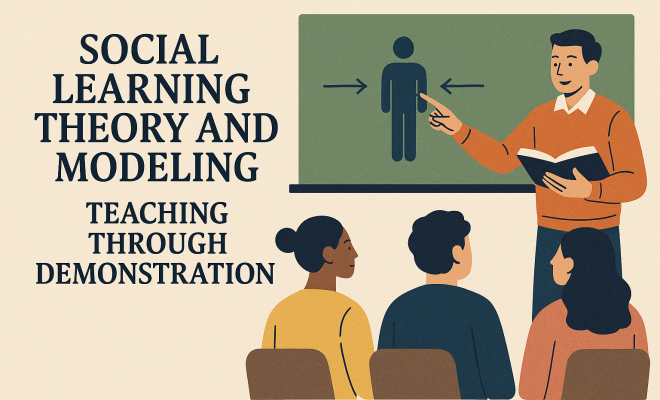
Social Learning Theory and Modeling: Teaching Through Demonstration
“`html
Introduction to Social Learning Theory
Social Learning Theory (SLT), developed by Albert Bandura in the 1960s, revolutionized our understanding of how people learn in social contexts. At its core, SLT asserts that much of human learning occurs through observation and imitation, rather than through direct experience alone. This paradigm shift in educational psychology emphasizes that watching others can be just as powerful, if not more so, than traditional methods of learning.
Bandura’s famous Bobo doll experiment vividly illustrated this principle. In this study, children who observed adults behaving aggressively toward a Bobo doll were more likely to mimic that behavior themselves. This finding highlighted the role of modeling in learning, a key component of social learning theory. Today, as we explore the interplay between social learning and modeling, we find that these concepts are not just academic theories but practical tools for teachers, parents, and anyone involved in education.
The Historical Context of Social Learning Theory
To appreciate the impact of social learning theory, it’s essential to understand its historical context. Prior to Bandura’s work, behaviorism dominated the field of psychology. The behaviorist approach, championed by figures like B.F. Skinner, emphasized learning through reinforcement and direct experiences. While behaviorism laid the groundwork for understanding learning, it often overlooked the complexities of social interactions and cognitive processes.
Bandura sought to bridge this gap. He proposed that learning is not merely a function of reinforcement but also involves cognitive processes that occur when observing others. This perspective paved the way for a more comprehensive understanding of how individuals learn from their environment, especially through social contexts. By integrating cognitive factors with behavioral theories, social learning theory emerged as a robust framework to explain various learning phenomena.
Key Concepts of Social Learning Theory
At its core, social learning theory comprises several critical concepts that must be understood to leverage its effectiveness in educational settings:
- Modeling: The process of observing and imitating the behavior of others. This can include actions, attitudes, and emotional responses.
- Attention: For modeling to be effective, learners must pay attention to the model. Factors like attractiveness, credibility, and the perceived relevance of the model play significant roles in capturing attention.
- Retention: Observing behaviors alone is insufficient; learners must be able to remember the behaviors they have witnessed. This involves encoding the information into memory.
- Reproduction: After retention, learners must have the skills and capabilities needed to reproduce the observed behavior. This step often requires practice and reinforcement.
- Motivation: Even if a person has observed and retained a behavior, they need motivation to enact it. Factors such as rewards, social acceptance, and personal satisfaction can drive this motivation.
The Importance of Modeling in Education
Modeling serves as a cornerstone of social learning theory and plays an essential role in educational practices. Teachers, parents, and mentors act as models, demonstrating behaviors, skills, and attitudes that students can emulate. The implications of this are profound:
1. **Skill Development:** When educators model specific skills—such as problem-solving techniques in math or reading strategies in literacy—students can see these techniques in action, making it easier for them to understand and apply them in their own work.
2. **Behavioral Expectations:** Teachers who model positive behaviors and attitudes create a classroom environment where students feel safe and supported. This modeling helps establish norms for social interaction, respect, and cooperation.
3. **Cultural Transmission:** Through modeling, educators can impart cultural values, norms, and practices. This social learning is crucial for fostering empathy, social responsibility, and community engagement among students.
Practical Applications of Social Learning Theory
Incorporating social learning theory into educational practices requires intentional strategies. Here are several practical applications that educators can implement:
1. **Peer Collaboration:** Encouraging students to work in pairs or groups allows them to observe and learn from one another. Peer teaching has been shown to deepen understanding and retention of concepts.
2. **Demonstration:** Teachers can provide live demonstrations of skills or concepts. This could be as simple as solving a math problem on the board or conducting a science experiment. Seeing the process in action helps students grasp complex ideas. (See: Wikipedia on Social Learning Theory.)
3. **Use of Multimedia:** Videos, simulations, and interactive media can serve as powerful models. For instance, educational videos that showcase real-world applications of science concepts can inspire students and enhance their learning experience.
The Role of Technology in Social Learning
In today’s digital age, technology plays a pivotal role in facilitating social learning. Here are a few ways technology enhances the principles of social learning theory:
- Online Communities: Platforms like forums, social media, and learning management systems allow students to engage with peers, share ideas, and learn collaboratively from diverse perspectives.
- Video Resources: Educational platforms such as YouTube offer a wealth of modeling opportunities. Students can watch tutorials, lectures, and demonstrations from experts in various fields.
- Interactive Simulations: Tools that simulate real-world scenarios encourage experiential learning through observation and practice, aligning perfectly with the principles of social learning theory.
Challenges in Implementing Social Learning Theory
While the benefits of social learning theory are substantial, several challenges can arise in its implementation:
1. **Diverse Learning Styles:** Not all students learn effectively through observation. Some may need hands-on experiences or auditory learning methods, prompting educators to adapt their approaches to meet diverse needs.
2. **Quality of Models:** The effectiveness of modeling depends significantly on the quality of the model. If students observe negative behaviors or attitudes, they may replicate those rather than the intended positive behaviors.
3. **Motivation Factors:** Motivating students to engage in modeled behaviors can be challenging, particularly in a diverse classroom where personal interests and external influences vary widely.
Measuring the Impact of Social Learning Theory
To assess the effectiveness of social learning strategies, educators can utilize various methods:
- Observation: Directly observing students as they interact and apply modeled behaviors can provide insights into their understanding and retention.
- Feedback Surveys: Collecting feedback from students about their experiences with modeling can identify areas for improvement and highlight successful strategies.
- Academic Performance Metrics: Tracking academic performance before and after implementing social learning strategies can demonstrate the impact of these methods on student learning outcomes.
Real-World Examples of Social Learning Theory in Action
Numerous educational institutions and organizations have successfully implemented social learning theory principles. Here are a few notable examples:
1. **Peer Tutoring Programs:** Schools that have established peer tutoring programs show significant improvements in students’ comprehension and engagement. This model allows students to learn from each other, enhancing their skills through observation and practice.
2. **Workshops and Demonstrations:** Organizations like the Khan Academy utilize video demonstrations to model problem-solving techniques, enabling students to learn at their own pace while observing effective strategies.
3. **Mentorship Programs:** Many universities employ mentorship programs, where experienced students or professionals model success strategies and behaviors for newer students, fostering a culture of learning and support.
The Future of Social Learning Theory
As education continues to evolve, the principles of social learning theory will likely become even more integral to effective teaching. The rise of remote and hybrid learning environments emphasizes the need for innovative modeling techniques that engage learners.
Moreover, as we delve deeper into understanding neuroplasticity—the brain’s ability to adapt and change—it becomes evident that social learning plays a crucial role in brain development and lifelong learning. By continuing to embrace social learning theory, educators can cultivate a more dynamic, responsive, and inclusive educational landscape.
Conclusion: Embracing the Power of Social Learning
Social learning theory offers a compelling framework for understanding the complexities of how we learn from one another. Its emphasis on modeling, observation, and social interaction provides valuable insights for educators and learners alike. By harnessing the power of social learning, we can create environments that not only facilitate academic success but also foster the development of compassionate, engaged individuals equipped for the challenges of the future.
Frequently Asked Questions about Social Learning Theory
Understanding social learning theory can raise many questions. Here are some common inquiries that educators and learners often have:
1. What is the primary difference between social learning theory and behaviorism?
While behaviorism focuses on learning through direct reinforcement and consequences, social learning theory posits that individuals can learn by observing others, without direct reinforcement. It incorporates cognitive processes, suggesting that thought patterns influence learning and behavior as much as environmental stimuli. (See: NIH article on observational learning.)
2. Can social learning theory be applied outside educational settings?
Absolutely! Social learning theory is applicable in various contexts, including workplaces, therapy, and community programs. For instance, in corporate training, employees can learn from observing experienced colleagues, and in therapy, patients may adopt coping strategies by witnessing others’ experiences.
3. How can parents utilize social learning theory at home?
Parents can model desired behaviors in daily life, engage in discussions about actions and outcomes, and encourage their children to observe others positively. For example, allowing children to see parents resolve conflicts respectfully can teach them effective communication skills.
4. What role does technology play in modern applications of social learning theory?
Technology enhances social learning by providing platforms for collaborative learning, access to diverse models through videos and online courses, and opportunities for interactive and immersive learning experiences. Virtual classrooms and social media enable students to connect and learn from peers anywhere in the world.
5. How can teachers ensure they’re modeling appropriate behaviors?
Teachers should be mindful of their actions and attitudes, as students are keen observers. Regularly reflecting on their behavior, seeking feedback from peers, and creating a positive classroom culture can help educators model the behaviors and attitudes they wish to instill in their students.
6. Are there specific strategies for motivating students to engage in modeled behaviors?
Yes, educators can use intrinsic and extrinsic motivators, such as praise, rewards, or opportunities for leadership, to encourage students. Building strong relationships and creating a supportive environment where students feel valued can significantly enhance motivation.
7. How can social learning theory inform the curriculum?
Curricula can be designed to include collaborative projects, peer teaching, and opportunities for real-life modeling through field trips or guest speakers. By integrating social learning principles, educators can create a more engaging and effective learning experience.
8. What is the significance of Bandura’s Bobo doll experiment today?
Bandura’s Bobo doll experiment remains a landmark study in psychology, highlighting the influence of observational learning. Its findings continue to resonate, reminding educators and parents of the importance of positive role models in shaping behavior and attitudes in children.
9. How can social learning theory be linked to emotional intelligence?
Social learning theory connects with emotional intelligence as observing others helps individuals develop empathy, social awareness, and interpersonal skills. By learning from the emotional responses and social interactions of others, individuals can enhance their emotional intelligence, improving relationships and communication.
10. Is there ongoing research in social learning theory?
Yes, researchers continue to explore various aspects of social learning theory, including its applications in digital environments, its role in developing emotional intelligence, and its effectiveness across diverse populations. This ongoing research allows for the evolution of educational practices that better serve learners’ needs.
Exploring Social Learning Theory in Different Contexts
Social learning theory isn’t confined to classrooms. Its principles can be widely observed across various domains, leading to effective learning and behavior modification. Here are a few contexts where SLT effectively applies:
1. Workplace Training and Development
In corporate settings, SLT can enhance employee training programs. Companies often use mentorship and coaching to allow experienced employees to model desired behaviors and work processes. For instance, a new employee observing a seasoned team member handle a client meeting can learn effective communication and negotiation techniques. Furthermore, organizations that foster a culture of collaboration and feedback encourage employees to learn from one another continuously.
2. Community Learning Initiatives
Community programs that focus on social learning emphasize shared experiences. For example, community health initiatives often involve community members modeling healthy behaviors, like exercising or cooking nutritious meals. These initiatives create opportunities for observational learning, whereby participants learn not only from the program leaders but also from each other. Studies show that such peer-led initiatives are often more effective than traditional methods because they leverage existing social networks.
3. Media and Social Learning
With the advent of social media, the impact of social learning has expanded dramatically. Platforms like TikTok and Instagram serve as modern-day models where users learn from viral challenges, DIY projects, or tutorials. For instance, a cooking trend on TikTok may prompt viewers to try new recipes, demonstrating social learning through observation and imitation. However, it’s essential to be mindful of the content consumed, as negative or harmful behaviors can also spread through these channels.
Research Findings Related to Social Learning Theory
Research continues to support the principles of social learning theory, highlighting its relevance in contemporary society. Here are some findings:
1. The Impact of Positive Role Models
A study published in the Journal of Educational Psychology found that students who had positive role models (such as teachers and older peers) demonstrated higher academic performance and greater engagement in school activities. The study emphasizes the importance of having credible and relatable models in educational settings to foster a positive learning environment.
2. SLT in Digital Learning Environments
Recent research has explored how SLT principles apply in digital learning environments. A study from the International Journal of Educational Technology in Higher Education noted that online collaborative projects and discussion forums significantly enhance student engagement and learning outcomes. The findings suggest that students benefit greatly from observing and interacting with peers in virtual settings.
3. Social Learning and Emotional Well-Being
Another significant research area is the relationship between social learning and emotional health. Studies have shown that observing prosocial behavior can lead to increased empathy and altruism. For example, a study published in the Journal of Personality and Social Psychology indicated that individuals who frequently observed acts of kindness were more likely to engage in helping behaviors themselves, showcasing the powerful impact of social learning on emotional regulation and community building.
The Significance of Social Learning Theory in Modern Education
As we navigate a rapidly changing educational landscape, the relevance of social learning theory cannot be overstated. Here’s why it’s crucial:
1. Encouraging Lifelong Learning
Social learning theory promotes the idea that learning is a continuous process. In today’s world, where knowledge and skills need constant updating, fostering an environment where individuals learn from each other enhances adaptability and resilience. Lifelong learning is essential for personal and professional growth, and social learning theory supports this by emphasizing peer interactions and observational learning.
2. Enhancing Cultural Competence
In increasingly diverse classrooms, social learning theory can help students develop cultural competence. By observing peers from different backgrounds, students can learn to appreciate diverse perspectives and develop empathy. This is particularly important in today’s global society, where understanding and respecting cultural differences is crucial for effective collaboration and communication.
3. Supporting Mental Health and Well-Being
Social learning theory fosters supportive relationships and community building, essential for mental health. Schools that prioritize peer learning and positive modeling create environments where students feel safe and supported, which is crucial in promoting mental well-being. Programs that incorporate social learning principles can help students develop coping strategies by observing how peers handle challenges and stress.
Final Thoughts on Social Learning Theory
Social learning theory remains a vital framework for understanding how individuals learn from one another. Its concepts of modeling, observation, and interaction are crucial for effective teaching and learning. Whether in classrooms, workplaces, or community settings, the principles of SLT enable us to harness the power of social interactions to enhance learning outcomes and personal development. As we continue to explore and implement these ideas, we pave the way for more inclusive, supportive, and effective educational practices.
“`
Trending Now
Frequently Asked Questions
What is Social Learning Theory?
Social Learning Theory (SLT), developed by Albert Bandura in the 1960s, posits that people learn through observation and imitation of others, rather than solely through direct experience. This theory emphasizes the importance of modeling in learning, as demonstrated by Bandura's Bobo doll experiment, where children mimicked aggressive behaviors observed in adults.
How does modeling work in Social Learning Theory?
Modeling in Social Learning Theory refers to the process where individuals learn behaviors by observing others. This can include imitating actions, attitudes, and emotional responses. Bandura's research highlighted that witnessing behaviors in others can effectively influence one's own actions, making modeling a crucial component for educators and parents in teaching.
What was the Bobo doll experiment?
The Bobo doll experiment, conducted by Albert Bandura, demonstrated the principles of Social Learning Theory. In this study, children who observed adults acting aggressively towards a Bobo doll were more likely to replicate that aggressive behavior themselves, illustrating the impact of observational learning and the significance of modeling in development.
How does Social Learning Theory differ from behaviorism?
Social Learning Theory differs from behaviorism by incorporating cognitive processes into the understanding of learning. While behaviorism focuses solely on reinforcement and direct experiences, SLT acknowledges that individuals also learn by observing others, thus recognizing the role of social interaction and cognition in the learning process.
Why is Social Learning Theory important in education?
Social Learning Theory is important in education because it provides insights into how students can learn effectively through observation and imitation. By understanding the principles of modeling, educators can create environments that foster cooperative learning and encourage positive behaviors, ultimately enhancing the learning experience.
Have you experienced this yourself? We’d love to hear your story in the comments.