7 Essential Strategies for Effective Scaffolding in Competency-Based Education
“`html
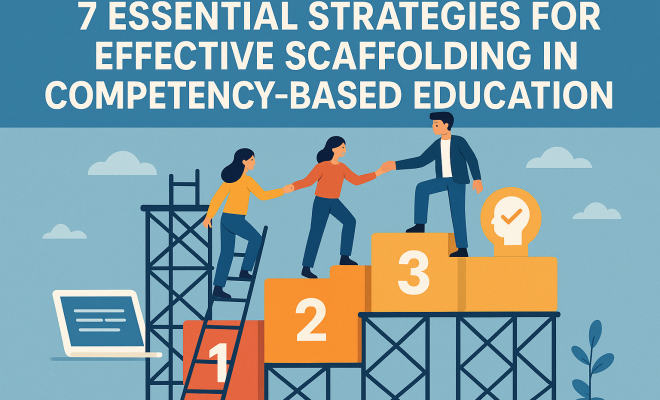
In the realm of education, one term that’s been gaining traction is scaffolding in education. This method involves breaking down learning into manageable chunks and providing instructional frameworks that support students as they progress through their studies. Particularly in competency-based education (CBE), scaffolding has proven to be an invaluable tool for educators aiming to equip students with the skills they need to succeed. So let’s explore what scaffolding in education means, its foundational role in CBE, and practical strategies for teachers to implement it effectively.
Understanding Competency-Based Education
Competency-based education is an innovative approach that emphasizes mastering skills and knowledge rather than merely completing assignments or attending classes. In a CBE framework, students progress at their own pace, demonstrating their understanding of specific competencies before moving on to more challenging material. This model aligns perfectly with the principles of scaffolding, as it necessitates tailored support and guidance to help each learner achieve their goals.
One of the fundamental aspects of CBE is the clear definition of competencies, which are the specific skills and knowledge that students need to acquire. By defining these competencies, educators can create targeted instruction and assessment strategies that help students understand their learning objectives and how to achieve them.
The Role of Scaffolding in Competency-Based Education
Scaffolding provides a structured approach to teaching that helps students bridge the gap between their current understanding and the desired competencies. This is especially essential in competency-based education, where students might enter the learning process with varying levels of prior knowledge and skills.
Implementing scaffolding in CBE allows teachers to:
- Identify students’ starting points and tailor instruction accordingly.
- Provide immediate feedback and support during the learning process.
- Encourage independent problem-solving as students gain confidence in their abilities.
- Facilitate a sense of ownership over their learning journey.
By doing so, scaffolding becomes a dynamic support system that adapts to the needs of each learner, fostering a more personalized educational experience.
Key Elements of Scaffolding in Education
When considering scaffolding within the CBE context, it’s crucial to understand its key elements:
- Assessment: Regular assessments help identify students’ strengths and weaknesses, guiding teachers in providing the appropriate level of support.
- Modeling: Teachers can demonstrate how to approach tasks, providing students with a clear example of what’s expected.
- Guided Practice: This involves working alongside students as they attempt tasks, gradually reducing support as they become more capable.
- Independent Practice: Once students have shown understanding, they should be encouraged to practice independently to reinforce their learning.
Effective scaffolding incorporates these elements in a way that resonates with the individual learning styles and needs of students.
Practical Strategies for Implementing Scaffolding in CBE
Now that we have a foundational understanding of scaffolding in education and its relevance to competency-based education, let’s dive into practical strategies that teachers can implement in their classrooms.
1. Start with Clear Learning Goals
Before introducing content, it’s essential to communicate clear learning objectives. In a CBE framework, these objectives often center around specific competencies. When students understand what they’re expected to learn, they can better organize their thoughts and efforts. This clarity builds a solid foundation for the scaffolding process.
2. Utilize Formative Assessments
Regular formative assessments allow you to gauge students’ understanding and adjust your scaffolding accordingly. These assessments can take various forms — quizzes, discussions, or even quick reflections. The key is to use this information actively to provide immediate support or challenge students who are ready to advance. (See: scaffolding in education.)
3. Provide Structured Learning Activities
Design activities that break down the learning process into smaller, manageable steps. For example, if teaching a complex concept such as the scientific method, you might first introduce each step individually before asking students to apply all the steps in a hands-on experiment. This structured approach helps students assimilate the information more effectively.
4. Foster Collaborative Learning
Encouraging collaboration among students can enhance the scaffolding process. Group work allows students to support each other, share insights, and discuss challenges. By working together, they can reinforce their understanding and develop critical social skills, which are essential in today’s interconnected world.
5. Gradually Fade Support
As students become more adept at a particular competency, gradually reduce the support you provide. This process, known as “fading,” encourages independence and builds confidence. For instance, if students initially need extensive guidance while writing an essay, start by providing detailed outlines and examples, then slowly transition to less structured support as their skills improve.
6. Encourage Self-Assessment
Teach students to evaluate their own work critically. Self-assessment fosters a sense of ownership and empowers students to take responsibility for their learning. Providing rubrics or checklists can help guide this process, allowing students to reflect on their progress toward the defined competencies.
7. Reflect and Adjust
Finally, regularly reflect on the effectiveness of your scaffolding strategies. Gather feedback from students, review their progress, and make adjustments as needed. This continual cycle of reflection and adjustment not only enhances student learning but also promotes professional growth for educators.
Current Relevance of Scaffolding in Competency-Based Education
The relevance of scaffolding in education, particularly within the framework of competency-based education, is more pronounced than ever. As educational institutions increasingly adopt CBE models, understanding and implementing effective scaffolding strategies become critical for success.
With the emphasis on personalized learning pathways, scaffolding serves as an essential bridge to ensure that students with varying abilities can access, engage with, and master the curriculum. It allows educators to address the diverse needs of their learners, promoting equity and access in education.
Challenges in Implementing Scaffolding in CBE
While the benefits of scaffolding in competency-based education are clear, teachers may face challenges when implementing this approach. Some common challenges include:
- Time Constraints: Developing and adjusting scaffolding strategies can be time-consuming, particularly when managing a diverse classroom.
- Resource Availability: Effective scaffolding may require access to various teaching materials and tools, which not all educators have.
- Resistance to Change: Shifting from traditional teaching methods to a more student-centered approach can be daunting for some educators.
To overcome these challenges, it’s crucial for educators to collaborate, share resources, and seek professional development opportunities. Building a supportive community within schools can facilitate the sharing of best practices and foster a culture of innovation.
Examples of Scaffolding in Various Subjects
Scaffolding can be applied across different subjects and grade levels. Here are a few examples of how this can look in practice:
Mathematics
In a math classroom, scaffolding might involve introducing students to concepts incrementally. For example, when teaching fractions, a teacher might start with visual aids that illustrate what fractions represent. After students grasp the basic concept, the teacher can introduce more complex operations, such as addition and subtraction of fractions, gradually increasing the difficulty of tasks. Additionally, using manipulatives, like fraction tiles or pie charts, can help students visualize operations, aiding comprehension.
Language Arts
In language arts, scaffolding could take the form of structured writing workshops. Teachers may begin by modeling the writing process, showing students how to brainstorm, organize, and draft their ideas. As students practice these skills, the teacher gradually provides less guidance, allowing them to take more ownership of their writing. Peer reviews can also be an essential component, where students share their drafts and give constructive feedback to each other, reinforcing their learning.
Science
In science education, scaffolding can help students engage in inquiry-based learning. For instance, when teaching about ecosystems, a teacher might first guide students through a simple experiment on plant growth before moving on to more complex projects, such as designing an experiment to test the effects of different variables on an ecosystem. By gradually introducing complexities, students build a solid foundational understanding that they can apply to more intricate concepts. (See: Competency-Based Education.)
Expert Perspectives on Scaffolding in Education
Many educational experts emphasize the necessity of scaffolding in creating effective learning environments. Dr. John Bransford, a noted education researcher, asserts that “effective learning requires understanding how to learn.” He advocates for instructional strategies that empower students to become self-regulated learners. Scaffolding aligns perfectly with this viewpoint, as it provides the support students need to navigate their learning process independently.
In addition, educational psychologist Dr. Barbara Rogoff highlights the importance of social context in learning. She states that “learning is a socially mediated process.” This perspective reinforces the idea that collaborative scaffolding can significantly enhance student engagement and understanding. By working together, students can learn from each other, enriching their educational experience.
Statistics Supporting Scaffolding in Education
Research indicates that scaffolding can lead to significant improvements in student learning outcomes. A study published in the Journal of Educational Psychology found that students who received scaffolded instruction performed 25% better on assessments than those who did not. Furthermore, a report by the Bill & Melinda Gates Foundation indicates that personalized learning approaches, which often include scaffolding techniques, can lead to increased student engagement and achievement levels.
Additionally, a survey conducted by the National Center for Education Statistics revealed that 78% of teachers who implemented scaffolding strategies reported higher student motivation and participation in classroom activities. This data underscores the positive impact that effective scaffolding can have on the classroom environment and student success.
Frequently Asked Questions (FAQ)
What is scaffolding in education?
Scaffolding in education refers to instructional techniques that provide temporary support to students as they learn new concepts. This support is gradually removed as students become more competent and confident in their abilities.
Why is scaffolding important in competency-based education?
Scaffolding is crucial in competency-based education because it allows educators to tailor support for each student based on their individual needs. It helps ensure that all students can achieve the defined competencies at their own pace.
How can I implement scaffolding in my classroom?
You can implement scaffolding by starting with clear learning goals, utilizing formative assessments, providing structured learning activities, and encouraging collaborative learning. Gradually fading support and promoting self-assessment are also key components.
What are some common challenges of scaffolding?
Challenges can include time constraints, limited resources, and potential resistance from educators accustomed to traditional teaching methods. Collaboration and professional development can help mitigate these challenges.
Can scaffolding be used in all subjects?
Absolutely! Scaffolding can be effectively used across all subjects, including math, science, language arts, and social studies, by adapting the strategies to fit the specific content and learning objectives.
Additional Perspectives on Scaffolding
To deepen our understanding of scaffolding in education, it’s essential to look at how different educational philosophies interpret its role. For instance, constructivist educators advocate for scaffolding as a means to help students construct their own understanding, rather than simply receiving information passively. This approach encourages active engagement, where students build knowledge through experiences and interactions.
In contrast, traditional education models may view scaffolding as a set of predetermined steps for students to follow. This perspective can sometimes overlook the nuances of individual learning paths. Recognizing that scaffolding is not a one-size-fits-all approach allows educators to be more flexible and responsive to student needs. (See: health and academic success.)
Real-World Applications of Scaffolding
In real-world applications, scaffolding extends beyond the classroom and can be observed in various contexts, such as workplace training and community education programs. Consider a corporate training scenario where new employees are introduced to complex software systems. Trainers often use scaffolding techniques by providing initial, detailed instruction and gradually reducing support as employees become more proficient. This approach not only enhances learning but also boosts confidence in applying new skills in real-world situations.
Similarly, in community education settings, scaffolding can be instrumental in programs aimed at adult learners who may have different educational backgrounds. By assessing their existing knowledge and tailoring the learning experience, facilitators can help these learners build on their skills effectively, promoting lifelong learning.
The Future of Scaffolding in Education
Looking ahead, the future of scaffolding in education may be influenced by advancements in technology. With the rise of personalized learning platforms and artificial intelligence, educators have new tools at their disposal to implement scaffolding in innovative ways. For example, adaptive learning technologies can assess individual student progress in real-time and provide customized scaffolding support tailored to each learner’s specific needs.
As educators increasingly embrace these technologies, the challenge will be to ensure that they complement, rather than replace, the essential human elements of teaching — such as building relationships, understanding context, and fostering a supportive learning environment. Balancing technology with traditional scaffolding methods could lead to a more holistic approach to education that meets the diverse needs of modern learners.
Current Research Trends in Scaffolding
Recent research trends emphasize the importance of understanding the cognitive processes involved in scaffolding. Studies have shown that when students are provided with effective scaffolding, they engage in deeper cognitive processing, leading to better retention of information and skills. Research also explores how different types of scaffolding, such as peer scaffolding, where students support each other, can enhance collaborative learning experiences.
Additionally, there’s an increasing focus on the role of emotional and social factors in scaffolding. Understanding how students’ motivations and emotional states can influence their learning processes is crucial for developing effective scaffolding strategies. This holistic view emphasizes that scaffolding is not merely an instructional technique but a comprehensive approach to nurturing student growth and resilience.
Conclusion
Scaffolding in education is not just a teaching strategy; it’s a philosophy that underscores the importance of supporting each student’s unique learning journey. In the context of competency-based education, effective scaffolding enables students to take ownership of their learning while ensuring they acquire the necessary skills to succeed.
By understanding the principles of scaffolding and implementing practical strategies, educators can create a classroom environment that nurtures growth, fosters independence, and ultimately leads to student success. Together, we can build a more inclusive and effective educational system that prepares all learners for the challenges of the future.
“`
Trending Now
Frequently Asked Questions
What is scaffolding in education?
Scaffolding in education refers to breaking down learning into manageable chunks and providing structured support to help students progress. It is particularly effective in competency-based education, where tailored guidance aids students in mastering skills and knowledge.
How does competency-based education work?
Competency-based education (CBE) focuses on mastering specific skills and knowledge rather than simply completing assignments. Students progress at their own pace, demonstrating their understanding of competencies before advancing to more challenging material.
Why is scaffolding important in competency-based education?
Scaffolding is crucial in competency-based education as it helps bridge the gap between students' current understanding and the competencies they need to achieve. It allows for personalized support tailored to each learner's unique starting point.
What strategies can teachers use for effective scaffolding?
Teachers can implement effective scaffolding strategies by identifying students' starting points, providing immediate feedback, and creating targeted instruction that aligns with defined competencies to support student learning.
How can scaffolding improve student learning outcomes?
Scaffolding improves student learning outcomes by offering structured support that helps learners navigate complex concepts. It enhances understanding, boosts confidence, and encourages mastery of competencies, ultimately leading to better performance in competency-based education.
What’s your take on this? Share your thoughts in the comments below — we read every one.