
Unlock Potential: ZPD & Scaffolding in Education
“`html
The educational landscape is continually evolving, but some concepts stand the test of time, proving to be as relevant today as they were upon their introduction. One such concept is the zone of proximal development (ZPD), a term coined by Russian psychologist Lev Vygotsky in the early 20th century. This framework remains fundamental in understanding how learners can achieve their full potential with the right support. When paired with the practice of scaffolding, the ZPD becomes an incredibly powerful tool for educators looking to enhance student learning. This article explores both concepts in depth, examining their significance, practical implementations, and current relevance in today’s educational system.
Understanding the Zone of Proximal Development
The zone of proximal development refers to the difference between what a learner can do independently and what they can accomplish with guidance from a more knowledgeable other, be it a teacher, peer, or parent. Vygotsky introduced this critical concept as part of his sociocultural theory of cognitive development, emphasizing the social contexts of learning.
To illustrate the ZPD, consider a child learning to solve math problems. If the child can solve basic addition problems but struggles with more complex subtraction, the ZPD would encompass the potential to grasp subtraction with the help of a teacher who explains the principles behind it. The idea is that learners can achieve greater understanding and skills when they receive appropriate support.
The Core Principles of Vygotsky’s Theory
Vygotsky’s work is rich with implications for teaching and learning. Here are some core principles that underpin the zone of proximal development:
- Social Interaction: Learning is inherently a social process. Interaction with peers and adults fosters cognitive development.
- Scaffolding: This principle involves providing support that is tailored to the needs of the learner. As they become more competent, the support is gradually removed.
- Cultural Tools: Language and other cultural artifacts significantly influence cognitive development. Vygotsky argued that tools such as language enable individuals to function in their cultural context.
What is Scaffolding?
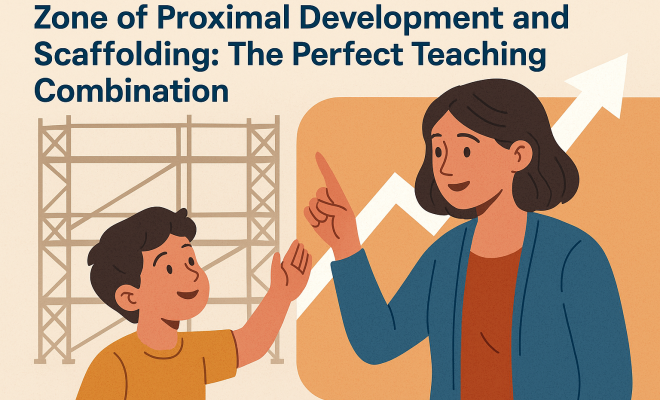
Scaffolding is an instructional method that involves providing temporary support to learners until they can perform tasks independently. Think of scaffolding in construction – it’s a supportive structure that helps build something strong and lasting. In education, scaffolding can come in various forms.
Examples of scaffolding techniques include:
- Modeling: Demonstrating a process or a skill before asking students to try it themselves. For instance, a teacher might model how to analyze a text before assigning a similar task.
- Think-Alouds: Teachers verbalize their thought processes to demonstrate how to approach problem-solving or critical thinking.
- Guided Practice: Providing opportunities for students to practice new skills with direct support and feedback from the teacher.
- Chunking Information: Breaking down complex information into manageable pieces, making it easier for students to digest and understand.
The Synergy Between ZPD and Scaffolding
When we pair the zone of proximal development with scaffolding, we find a dynamic and effective approach to teaching. Scaffolding is most effective when it is responsive to a student’s ZPD, meaning the support provided aligns perfectly with their current abilities and challenges. This creates an optimal environment for learning to take place.
Tailoring Instruction to Individual Needs
To effectively utilize the ZPD and scaffolding, educators must be adept at assessing each student’s current knowledge and skills. This often involves informal assessments, observations, and discussions to gain insight into where a student stands. Once a teacher has this information, they can design lessons that target the specific ZPD of their students.
For example, a teacher may use formative assessments such as quizzes or interactive discussions to identify where students are succeeding or struggling. Based on this data, the teacher can adjust their scaffolding strategies – perhaps simplifying the tasks for struggling students while offering enrichment activities to those who are ready for more advanced challenges.
Practical Applications of ZPD and Scaffolding in the Classroom
Implementing the concepts of the zone of proximal development and scaffolding in the classroom can take many forms. Here are several strategies that educators can adopt:
Group Work and Peer Learning
Group work is a powerful method for leveraging social interactions that foster learning. By grouping students of varying abilities, those who are more competent can assist their peers who may be grappling with specific concepts. This aligns perfectly with the ZPD, as students can provide support and scaffolding to one another.
Interactive Learning Environments
Classrooms that encourage exploration and interaction can significantly enhance learning. For instance, incorporating technology such as educational apps or online platforms can provide tailored experiences that respond to individual ZPDs.
Feedback and Reflection
Regular, constructive feedback is essential for effective scaffolding. When students receive timely feedback, they can adjust their approach and understand their mistakes. Additionally, encouraging self-reflection helps students become aware of their learning processes and enables them to set personal learning goals. (See: Wikipedia article on Zone of Proximal Development.)
Curriculum Design
Curriculum should be designed with the ZPD in mind. This means creating lessons that are challenging yet achievable, allowing students to stretch their abilities without feeling overwhelmed. Differentiated instruction is crucial here, as it allows teachers to cater to the diverse needs of their classroom.
Current Relevance of ZPD and Scaffolding in Education
As education continues to adapt to new challenges, the principles of the zone of proximal development and scaffolding remain incredibly relevant. With the rise of remote learning and digital classrooms, educators are finding innovative ways to implement these concepts in virtual environments.
Online Learning and Scaffolding
In an online context, scaffolding can take on new forms. For instance, video tutorials, interactive simulations, and online forums can provide students with the guidance they need. Teachers can create structured paths through which students achieve mastery over topics, ensuring they are supported while learning independently.
Addressing Diverse Learning Needs
With classrooms becoming increasingly diverse, understanding and applying the ZPD and scaffolding effectively can help address varied learning needs. Teachers can identify students who require additional support and ensure that their learning experiences are personalized and impactful.
Emphasizing Lifelong Learning
The concepts of the zone of proximal development and scaffolding also extend beyond traditional schooling. They encourage a culture of lifelong learning where individuals continue to seek support and guidance throughout their educational journeys, adapting to new challenges and environments.
Challenges in Implementing ZPD and Scaffolding
Despite their benefits, there are challenges to effectively implementing the zone of proximal development and scaffolding in the classroom. One significant hurdle is a lack of training and understanding among educators. Without a comprehensive grasp of these concepts, the potential benefits may not be fully realized.
Time Constraints
Another challenge is the time constraints that teachers often face. Designing lessons that incorporate individualized scaffolding can be time-consuming, especially in larger classrooms where individual needs are diverse. Creating a balanced curriculum that allows for both guided instruction and independent learning requires careful planning and resource management.
Balancing Independence and Support
Finding the right balance between providing support and encouraging independence is also critical. While scaffolding is essential, it’s equally important that students develop autonomy and learn to tackle challenges on their own. Educators must know when to step back and allow students to apply what they’ve learned without assistance.
Future Directions in Education
As we look to the future, the principles of the zone of proximal development and scaffolding will likely evolve alongside educational practices and technologies. Emphasis on personalized learning experiences, equipped with feedback mechanisms and adaptive learning technologies, will enhance the implementation of these foundational ideas.
Teachers will continue to play a pivotal role not just as conveyors of knowledge but as facilitators of learning experiences that tap into each student’s ZPD. As educators develop their skills and adapt to changing environments, the effective integration of scaffolding strategies will remain a hallmark of quality education.
Real-World Examples of ZPD and Scaffolding
To further understand the practical applications of the zone of proximal development and scaffolding, let’s look at some real-world examples from various educational settings:
Elementary Education
In a third-grade classroom, a teacher observes that her students are struggling with multiplication. Instead of teaching the entire class the same way, she assesses their individual ZPDs. She discovers some students can multiply within 10 but struggle with larger numbers. Others have a basic grasp of multiplication but lack confidence.
The teacher decides to scaffold her instruction. For students who struggle with larger numbers, she uses visual aids like arrays and number lines. For those who understand multiplication but lack confidence, she pairs them with peers who can explain the concept in relatable terms. This peer-to-peer interaction not only boosts confidence but reinforces the learning process for both students.
High School Math
In a high school algebra class, the teacher introduces quadratic equations. She recognizes that while some students can solve simple equations independently, others are just beginning to grasp algebraic concepts. To cater to the varying ZPDs, she organizes small groups based on their abilities. Each group works on problems tailored to their developmental level with the teacher circulating to provide support as needed. (See: CDC resource on scaffolding in education.)
As students demonstrate increased understanding, the teacher gradually reduces her assistance, allowing them to tackle more complex problems independently. This gradual release of responsibility helps students gain mastery over the content.
Higher Education
In a college-level writing course, a professor employs scaffolding techniques to enhance students’ research and writing skills. At the start of the semester, she provides structured templates for writing essays, helping students understand the components and flow of academic writing.
As the semester progresses, she encourages students to create their own outlines and identifies peer review opportunities where students critique each other’s drafts. By employing scaffolding, she ensures students develop the necessary writing skills while gradually taking ownership of their learning.
Statistics Supporting ZPD and Scaffolding Effectiveness
Numerous studies support the efficacy of utilizing the zone of proximal development and scaffolding in education. Here are some statistics that highlight their effectiveness:
- According to a study published in the Journal of Educational Psychology, students who received scaffolding showed a 30% increase in problem-solving abilities compared to those who did not.
- A survey conducted by the George Lucas Educational Foundation found that 78% of teachers who implemented scaffolding techniques reported increased student engagement and motivation.
- Research from the Educational Research Review found that when students were supported within their ZPD, their overall academic performance improved by an average of 25% across various subjects.
Expert Perspectives on ZPD and Scaffolding
Understanding the importance of the zone of proximal development and scaffolding has been emphasized by numerous education experts. Here are a few notable quotes from thought leaders in the field:
“Scaffolding is not just a way to provide support; it’s about empowering students to take risks in their learning.” – Dr. Linda Darling-Hammond
“The ZPD is a reminder that learning is a social endeavor. The more we collaborate, the more we can achieve.” – Dr. Marcia Tate
Frequently Asked Questions
What is the main purpose of the Zone of Proximal Development?
The main purpose of the zone of proximal development is to identify what a learner can achieve with guidance as opposed to what they can do alone. This helps educators tailor their instruction to better support individual learners.
How can teachers assess a student’s ZPD?
Teachers can assess a student’s ZPD through informal observations, discussions, formative assessments, and diagnostic tests. Understanding where a student struggles or excels allows for more effective scaffolding.
What are some effective scaffolding strategies for remote learning?
For remote learning, effective scaffolding strategies include the use of interactive online resources, video explanations, virtual study groups, and providing clear, step-by-step instructions for assignments.
Can scaffolding be used in all subjects?
Yes, scaffolding can be applied across all subjects. Whether it’s math, science, language arts, or social studies, the principles of providing structured support and gradually removing it as students gain competence can enhance learning outcomes in any discipline.
How does scaffolding differ from traditional teaching methods?
Scaffolding differs from traditional teaching in that it emphasizes responsive, tailored support rather than a one-size-fits-all approach. It encourages collaboration, active engagement, and gradual independence, focusing on individual learner needs. (See: Harvard University educational resources.)
Expanding the Concepts of ZPD and Scaffolding
As educators continue to explore and implement the zone of proximal development and scaffolding, there are emerging trends and methodologies that further enhance these concepts.
Integrating Technology
The integration of technology into the classroom has revolutionized how scaffolding can be applied. Tools such as learning management systems (LMS) allow educators to create customized learning paths that cater to each student’s ZPD. For instance, platforms can offer adaptive quizzes that adjust the difficulty based on a student’s performance, providing immediate feedback and resources based on their needs.
Universal Design for Learning (UDL)
Universal Design for Learning is an educational framework that emphasizes flexible approaches to teaching that can accommodate individual learning differences. UDL aligns beautifully with the ZPD and scaffolding, as it encourages educators to provide multiple means of engagement, representation, and action/expression tailored to the diverse needs of all students.
Social Emotional Learning (SEL)
Another important aspect to consider is the role of social emotional learning in conjunction with the ZPD. Educators who understand their students’ emotional needs while providing scaffolding can create a supportive environment that fosters resilience and motivation. SEL programs encourage collaboration and communication, reinforcing the social aspects of learning that Vygotsky emphasized.
Common Misconceptions About ZPD and Scaffolding
With the rise of these concepts in educational discourse, several misconceptions persist that can hinder effective implementation.
Misconception 1: ZPD is Static
Many educators may think of the ZPD as a fixed point, but it is dynamic. A student’s ZPD can shift as they gain new skills and knowledge, requiring ongoing assessment and adjustments to scaffolding strategies.
Misconception 2: Scaffolding Means Hand-Holding
Some may believe that scaffolding equates to doing the work for students, but it’s about providing the right amount of support to encourage independence. Effective scaffolding helps students learn how to solve problems on their own, not just finish tasks.
Misconception 3: It Only Applies to Younger Students
Another common misconception is that the ZPD and scaffolding are only relevant in elementary education. In reality, these principles are applicable across all educational levels, from early childhood to higher education, adapting to the complexities of the content and the learners involved.
Conclusion
The zone of proximal development and scaffolding represent a powerful duo in the realm of education, fostering environments where learners can flourish. By understanding and implementing these concepts, educators can create supportive learning spaces that respond to the needs of every student, helping them to reach their full potential. As we continue to explore innovative approaches to education, the integration of these principles will be crucial in shaping a future where all learners can succeed.
“`
Trending Now
Frequently Asked Questions
What is the Zone of Proximal Development?
The Zone of Proximal Development (ZPD) is a concept introduced by Lev Vygotsky that defines the gap between what a learner can achieve independently and what they can accomplish with guidance. It emphasizes the importance of social interactions and support in enhancing a learner's potential.
How does scaffolding relate to the Zone of Proximal Development?
Scaffolding is a teaching method that involves providing tailored support to learners within their Zone of Proximal Development. By offering appropriate assistance, educators can help students progress from what they can do alone to more complex tasks, fostering deeper understanding and skills.
Why is the ZPD important in education?
The ZPD is crucial in education as it highlights the role of social interactions in learning. Understanding a student's ZPD allows educators to provide targeted support that can enhance cognitive development and facilitate the acquisition of new skills.
What are the core principles of Vygotsky's theory?
Core principles of Vygotsky's theory include the importance of social interaction in learning and the concept of scaffolding. These principles emphasize that cognitive development is facilitated through collaborative experiences with more knowledgeable individuals.
How can teachers implement the ZPD in the classroom?
Teachers can implement the ZPD by assessing each student's current abilities and providing appropriate support through scaffolding. This can involve guided instruction, collaborative learning opportunities, and progressively challenging tasks that encourage students to reach their potential.
What did we miss? Let us know in the comments and join the conversation.

