“How to Teach Phoneme Segmentation and Blending to Kindergarten Students”
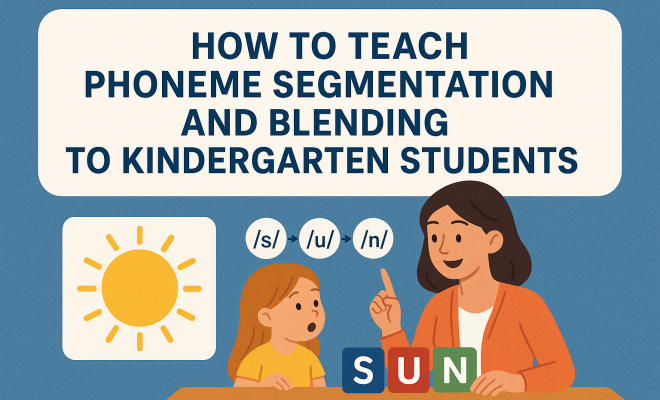
“`html
Teaching phoneme segmentation and blending to kindergarten students is crucial for early literacy development. As young learners start their educational journeys, understanding the sounds that make up words lays the foundation for reading and writing skills. In this article, we’ll explore effective strategies to engage students in phoneme segmentation and blending, making learning both fun and effective.
1. Understanding Phonemes
Phonemes are the smallest units of sound in a language. In English, there are about 44 phonemes, which can be represented by letters or combinations of letters. For instance, the word “cat” consists of three phonemes: /k/, /æ/, and /t/. Recognizing these sounds is essential for young learners, as it helps them decode words and understand how letters correspond to sounds.
For kindergarteners, teaching phonemes starts with auditory activities. By listening to different sounds, children can begin to identify phonemes in words. Activities like clapping for each sound in a word or using visual aids can bolster their understanding. The relationship between phoneme segmentation and blending is vital; once children can segment sounds, they will be able to blend them back together to form words.
2. Creating a Phoneme-Rich Environment
To effectively teach phoneme segmentation in kindergarten, it’s important to create an environment rich in language and sounds. Displaying word walls, using labels on classroom items, and incorporating songs and rhymes can immerse children in phonetic awareness. This exposure helps them to hear and recognize phonemes naturally as part of their daily interactions.
Additionally, incorporating phonemic awareness activities into everyday routines can enhance learning. For example, during circle time, teachers can use puppets to emphasize specific phonemes or play sound games that encourage children to listen for the beginning, middle, and ending sounds in words. Such practices not only reinforce phoneme segmentation but also make learning enjoyable and interactive.
3. Implementing Sound Games
Sound games are an engaging way to teach phoneme segmentation and blending. Activities like “I Spy” with sounds, where teachers say, “I spy with my little eye something that starts with /b/”, can help children practice identifying the initial sounds of words. These playful approaches make abstract concepts tangible and memorable for young learners.
Other games, like phoneme hopscotch, can also be effective. In this game, children jump on letters or phonemes as they say the sounds aloud. Not only does this physical activity support their learning, but it also promotes gross motor skills, making the experience more holistic. By integrating movement with sound recognition, students are likely to retain information better.
4. Utilizing Technology and Digital Resources
In today’s digital age, technology can play a significant role in teaching phoneme segmentation. There are numerous apps and online resources specifically designed for early literacy that can engage kindergarteners. Many of these tools incorporate games and interactive lessons that allow children to practice phoneme segmentation in a fun, gamified way.
For instance, applications like Starfall or ABCmouse offer phonics games that can reinforce the skills taught in the classroom. By using such digital resources, teachers can cater to different learning styles and provide personalized learning experiences. Additionally, incorporating technology can keep students motivated and interested in learning.
5. Integrating Literature and Storytelling
Storytelling and literature are powerful tools for teaching phoneme segmentation. Reading aloud to children allows them to hear the rhythm and sounds of language, reinforcing their phonemic awareness. During storytime, teachers can emphasize specific phonemes by slowing down their speech and exaggerating sounds, prompting students to listen actively. (See: Early Learning Resources from the U.S. Department of Education.)
Furthermore, interactive read-alouds where students are encouraged to predict words or sounds can enhance their phoneme blending skills. Asking questions like, “What sound do you hear at the beginning of this word?” encourages children to think critically about the sounds they hear and how they connect to the words in the story.
6. Incorporating Hands-On Activities
Hands-on activities can significantly benefit phoneme segmentation when teaching kindergarten students. Using manipulatives like letter tiles or sound cards allows children to physically engage with phonemes. For example, teachers can use magnetic letters on a whiteboard, asking kids to move letters around as they segment and blend sounds to create words.
Another effective hands-on approach is using playdough to form letters or sounds. As children manipulate the dough, they can verbally segment and blend phonemes, making the learning process tactile and engaging. These activities not only help with phonemic awareness but also support fine motor skill development.
7. Assessing Phonemic Awareness Progress
Assessing students’ progress in phoneme segmentation is essential for tailoring instruction to their needs. Teachers can use various informal assessment methods, such as observing students during activities or using simple phoneme segmentation tests. For example, asking students to segment words into sounds and then blend them back can provide immediate insights into their understanding.
It’s also beneficial to keep track of students’ progress over time. By maintaining records of their assessments, educators can adjust their teaching strategies to better meet the needs of each child. Regular check-ins allow for timely interventions, ensuring that no student falls behind in their phonetic understanding.
8. Encouraging Family Involvement
Family involvement is crucial in reinforcing phoneme segmentation at home. Encouraging parents to engage in phonemic awareness activities, like reading together or playing sound games, can extend learning beyond the classroom. Providing families with resources and suggestions on how to support their child’s phonemic development can bridge the gap between school and home.
Simple home activities, such as listening for sounds in everyday conversations or creating a phoneme scavenger hunt, can make practice at home enjoyable. When families are actively involved, children are more likely to develop a strong foundation in phoneme segmentation, setting them up for success in reading and writing as they progress through school.
9. Different Approaches to Phoneme Segmentation
Different approaches can be taken to teach phoneme segmentation, catering to various learning styles among kindergarten students. For visual learners, using color-coded letters can help. For instance, assign a different color to each phoneme in a word, allowing children to visualize the segmentation process. This technique can make abstract concepts more concrete.
Auditory learners benefit from songs and chants that emphasize phonemic sounds. Creating catchy songs that highlight phonemes helps these learners internalize sounds through melody and rhythm. Kinesthetic learners, on the other hand, may thrive on movement-based activities. Incorporating dance or movement while saying phonemes reinforces memory through physical engagement.
10. Case Studies and Success Stories
Many schools have implemented successful phoneme segmentation programs. For example, a kindergarten class in Texas incorporated sound games into their daily routine, and over a semester, student reading scores increased by 25%. This improvement showcases the effectiveness of making phoneme segmentation engaging and fun.
Another notable case is a school in California that introduced digital phonics tools. Teachers reported higher engagement levels and improved phonemic awareness among students, especially those who struggled with traditional learning methods. These case studies highlight the importance of adapting teaching strategies to meet diverse student needs. (See: National Institute of Child Health and Human Development on reading.)
11. Statistics on Phonemic Awareness
Research has shown that phonemic awareness is a strong predictor of literacy success. According to the National Early Literacy Panel, students who develop solid phonemic awareness skills are 2 to 3 times more likely to be successful in reading. This statistic emphasizes the importance of early intervention and focused phonemic training in kindergarten.
Furthermore, a study published in the Journal of Educational Psychology found that children who participate in phonemic awareness activities regularly outperform their peers in reading comprehension tests by an average of 30%. These statistics underline the correlation between phoneme segmentation practice and long-term reading success.
12. Strategies for Differentiating Instruction
Every child learns at a different pace, and it’s essential to differentiate instruction to meet varied needs in the classroom. Some students may grasp phoneme segmentation quickly, while others may need more time and practice. Tailoring your approach can ensure that all students benefit from phonemic awareness activities.
For those who excel quickly, consider providing advanced challenges like segmenting multisyllabic words or introducing more complex phonetic rules. For students who struggle, using more visual aids or breaking sounds down into smaller, more manageable parts can be helpful. Small group instruction allows teachers to focus on particular skills with a few students, providing targeted support where it’s most needed.
13. Building a Strong Vocabulary Foundation
Phoneme segmentation is just one part of the essential literacy skills needed for kindergarten students. Building a strong vocabulary alongside phoneme segmentation practices can enhance overall literacy development. The more words children know, the easier it becomes for them to decode and understand text.
Incorporating rich vocabulary experiences can happen during read-aloud sessions, discussions about stories, and through interactive activities. Word maps, where children draw connections between new words and their meanings, can help solidify vocabulary understanding. This dual approach to phoneme segmentation and vocabulary building can create a robust framework for literacy skills.
14. Creating a Phonemic Awareness Curriculum
To effectively teach phoneme segmentation, creating a structured curriculum may be beneficial. A well-thought-out curriculum outlines specific goals, activities, and assessment strategies to guide teachers through the phonemic awareness process. This curriculum can include a mix of direct instruction, interactive activities, and assessments to ensure comprehensive coverage of phoneme segmentation skills.
Incorporating thematic units around phonemic awareness—like a “Sounds of Nature” theme—can engage students by connecting phonemes with real-world experiences. By planning lessons that are cohesive and thematic, teachers can enhance engagement and understanding.
15. FAQs about Phoneme Segmentation in Kindergarten
What is phoneme segmentation?
Phoneme segmentation is the ability to break down words into their individual sounds, or phonemes. It is a critical skill that helps children learn to read and spell.
At what age should phoneme segmentation be taught?
Phoneme segmentation is typically introduced in kindergarten, around ages 5 to 6, as children begin to develop their language and literacy skills. (See: Phoneme Segmentation in Psychology Research.)
How can I help my child with phoneme segmentation at home?
Encourage your child to play sound games, read together, and practice identifying sounds in everyday words. Simple activities like clapping for each sound can also reinforce this skill.
What are some examples of phoneme segmentation activities?
Examples include using manipulatives to build words, playing phoneme hopscotch, or engaging in rhyming games and songs. Listening to audiobooks and discussing the sounds can also be beneficial.
How long should phoneme segmentation practices take each day?
Daily practices can vary, but 10 to 15 minutes of focused phoneme segmentation activities can be very effective. The key is consistency and making it enjoyable for the child.
What impact does phoneme segmentation have on reading skills?
Phoneme segmentation significantly impacts reading skills. Children who are proficient in phoneme segmentation tend to develop better decoding skills, which are essential for reading fluently. Phonemic awareness is linked to higher reading comprehension levels later on.
Can phoneme segmentation be taught in non-traditional settings?
Absolutely! Phoneme segmentation can be effectively taught in various settings, including at home or in informal learning environments like libraries or community centers. Utilizing games and activities that focus on sounds can make learning accessible and fun outside the traditional classroom.
Why is parental involvement important in phoneme segmentation?
Parental involvement is crucial because it reinforces what is learned at school. When parents engage in phonemic activities with their children, it fosters a home environment that values literacy, making it easier for children to practice and apply what they’ve learned in school.
In summary, teaching phoneme segmentation and blending to kindergarten students is a multifaceted process that requires creativity, engagement, and a solid understanding of phonemic awareness. By implementing these strategies—creating a phoneme-rich environment, utilizing sound games, integrating literature, and encouraging family involvement—teachers can significantly enhance their students’ literacy skills. As educators, it’s vital to remember that each child learns at their own pace, and supporting them through diverse, interactive, and enjoyable methods will foster a love for reading and a strong foundation for their educational future.
“`
Trending Now
- 15 Read-Alouds That Make Teachers Cry Every Time
- “Using Bloom’s Taxonomy to Write Better…
- “Bloom’s Taxonomy for Parents: How to Ask Questions That Deepen Your Child’s Learning at Home”
- the complete explanation
- “Proprioception Activities for Kids: 25 Sensory Diet Ideas to Improve Body Awareness”
Frequently Asked Questions
What is phoneme segmentation?
Phoneme segmentation is the ability to break down words into their individual sounds or phonemes. For example, the word 'cat' can be segmented into three phonemes: /k/, /æ/, and /t/. This skill is essential for young learners as it forms the basis for reading and writing.
How can I teach phoneme blending to kindergarten students?
To teach phoneme blending, start with auditory activities where students listen to individual sounds and then combine them to form words. Use engaging methods like clapping for each sound or visual aids. Gradually introduce blending exercises where children practice saying the sounds together to create whole words.
Why is phonemic awareness important for early literacy?
Phonemic awareness is crucial for early literacy because it helps children understand the relationship between sounds and letters. Recognizing and manipulating phonemes enables them to decode words, which is fundamental for developing reading and writing skills.
What activities can support phoneme segmentation in the classroom?
Activities like using puppets during circle time, playing sound games, and creating word walls can support phoneme segmentation. Engaging students in clapping for sounds in words or using songs and rhymes can also enhance their phonetic awareness in a fun and interactive way.
How can I create a phoneme-rich environment for my students?
To create a phoneme-rich environment, display word walls, label classroom items, and incorporate songs and rhymes. Encourage phonemic awareness through daily routines and interactive activities, allowing children to immerse themselves in language and sounds, which reinforces their learning naturally.
What did we miss? Let us know in the comments and join the conversation.