Piaget’s Irreversibility: Impact on Preschool Learning
“`html
Understanding Piaget’s Theory of Irreversibility
Jean Piaget, a Swiss psychologist, is renowned for his pioneering work in the field of developmental psychology, particularly concerning how children learn and think. One of the pivotal aspects of his theory is what he terms irreversibility. This concept is particularly crucial when examining the cognitive development of preschool-aged children, who are often in the preoperational stage of development.
Defining Irreversibility
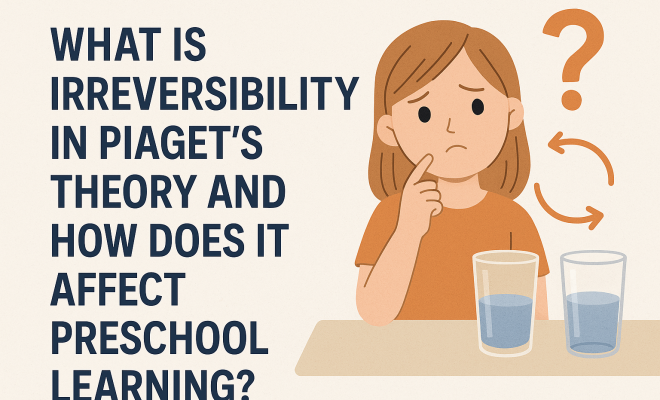
Irreversibility, according to Piaget, refers to the inability of a child in the preoperational stage to understand that an action can be reversed or undone. For instance, if you pour water from a short, wide glass into a tall, narrow one, a young child may struggle to comprehend that the amount of water remains constant, despite its different appearance. This cognitive limitation is not merely an oversight; it reflects how young children process their experiences and the world around them.
The Stages of Cognitive Development
To fully appreciate the implications of Piaget’s theory of irreversibility, it’s essential to understand his broader framework of cognitive development. Piaget proposed four stages:
- Sensorimotor Stage (0-2 years): During this stage, infants learn through sensory experiences and manipulating objects.
- Preoperational Stage (2-7 years): Children begin to use language and think symbolically, but their thinking is intuitive and egocentric.
- Concrete Operational Stage (7-11 years): Logical reasoning begins to emerge, and children can understand the concept of conservation.
- Formal Operational Stage (12 years and up): Abstract thinking and problem-solving capabilities develop.
Irreversibility is particularly prominent in the preoperational stage, where children find it challenging to mentally reverse operations. This limitation significantly impacts their learning processes and interactions with their environment.
Examples of Irreversibility in Early Childhood
To illustrate irreversibility, consider a few common scenarios in preschool settings:
- Liquid Measurement: As previously mentioned, children often believe that a taller glass contains more water than a shorter one, even if both hold the same volume.
- Play-Dough Manipulation: If a child rolls a ball of play-dough into a flat pancake, they might not realize they can reshape it back into a ball. This inability to reverse their actions showcases their cognitive limitations.
- Food Arrangement: Presenting the same amount of food in different shapes or arrangements can confuse young children. They might think that a spread-out meal has more food than a neatly stacked one.
These examples highlight how irreversibility influences children’s understanding of conservation—recognizing that quantity remains the same despite changes in shape or arrangement.
Impact on Learning and Problem Solving
Irreversibility doesn’t just affect a child’s understanding of physical properties; it also shapes their problem-solving skills. Children in the preoperational stage often rely on their perceptions rather than logical reasoning. For instance, they might jump to conclusions based on visible attributes rather than considering underlying principles.
This reliance on perception can hinder their ability to engage in structured learning activities. For teachers and parents, recognizing these cognitive limitations can be instrumental in designing effective learning experiences that are age-appropriate and engaging.
Strategies for Educators to Address Irreversibility
Understanding Piaget’s theory of irreversibility can empower educators to create learning environments that address these cognitive challenges. Here are several strategies that can help:
- Use Hands-On Learning: Provide activities that allow children to manipulate objects physically. For example, using measuring cups to demonstrate liquid volume can help them grasp concepts of conservation.
- Encourage Play-Based Learning: Incorporate play into lessons. Role-playing and imaginative play can help children explore different scenarios, making learning more relatable and tangible.
- Ask Open-Ended Questions: Prompt children to think critically by asking questions that require them to explain their reasoning. For instance, asking them why they believe one container holds more water than another can stimulate cognitive development.
- Visual Aids: Use charts, pictures, and other visual aids to help illustrate concepts of irreversibility. Visual representations can aid understanding of abstract ideas.
These approaches not only address the challenges posed by irreversibility but also foster a more engaging learning environment. (See: Jean Piaget's contributions to psychology.)
The Role of Language in Overcoming Irreversibility
Language acquisition plays a significant role in cognitive development and can help alleviate some of the limitations imposed by irreversibility. As children learn to express their thoughts and feelings verbally, they develop a better understanding of concepts. Language allows them to articulate their reasoning and explore ideas more deeply.
Storytelling is an excellent tool for encouraging language use and comprehension. When children listen to stories, they can identify cause-and-effect relationships and learn about actions and consequences, which can gradually help them understand reversibility. Moreover, engaging in discussions about stories can reinforce their ability to think critically and articulate their thoughts more coherently.
Current Relevance of Piaget’s Theory of Irreversibility in Education
Piaget’s theory, including the concept of irreversibility, continues to be relevant in contemporary educational practices. Educators and child psychologists still reference his work to inform teaching methods and curricula designs. Understanding cognitive limitations can help educators tailor their approaches to the developmental stages of their students.
In today’s diverse classrooms, the ability to recognize varying levels of cognitive understanding is more crucial than ever. By applying Piaget’s insights, educators can create inclusive environments where all children can thrive. This includes being sensitive to the fact that some children may require more time and support to grasp concepts that others may understand more quickly.
Parent Involvement in Supporting Learning
Parents also play a pivotal role in facilitating their children’s learning and understanding of irreversible concepts. Activities at home can complement what children learn in preschool. For example:
- Cooking Together: Measuring ingredients can illustrate concepts of volume and quantity, reinforcing lessons learned in the classroom.
- Outdoor Play: Engaging in activities like building with blocks or playing with sand encourages children to explore their environment and understand physical properties.
- Reading Together: Choose books that introduce concepts of cause and effect, helping children to think critically about narratives and the actions of characters.
Strong collaboration between educators and parents can facilitate a child’s understanding of irreversibility and contribute significantly to their cognitive development.
Deeper Analysis of Irreversibility and Conservation
A crucial aspect of Piaget’s theory of irreversibility is its relationship with the concept of conservation. Conservation refers to a child’s understanding that certain properties of objects, such as volume or mass, remain unchanged even when their form or arrangement changes. The inability to understand conservation is deeply linked to irreversibility.
For instance, when children observe that pouring liquid from one glass to another alters its appearance, they often conclude that the amount of liquid has changed. This reflects a lack of understanding that the action of pouring can be reversed. By engaging children in experiments that demonstrate conservation, educators can help them grasp these fundamental concepts more effectively. Activities such as using clay to show that reshaping does not change the amount of material can be particularly beneficial.
Real-World Applications of Understanding Irreversibility
Recognizing and addressing the concept of irreversibility has practical implications. For example, it can inform the design of educational materials and toys aimed at preschoolers. Products that incorporate reversible actions can better help children develop cognitive skills. A simple toy that allows children to stack and unstack blocks could reinforce the idea of reversibility effectively.
Additionally, in the realm of parenting, being aware of how children perceive actions can help parents navigate everyday situations. For instance, understanding that a child may not grasp that a toy can be put back together after being taken apart can influence how parents frame instructions and expectations.
Statistics on Cognitive Development and Irreversibility
Research has provided valuable insights into cognitive development and how it relates to Piaget’s theory of irreversibility. A study published in the Journal of Experimental Child Psychology found that children aged 3 to 5 years struggled with conservation tasks. Less than 30% of children in this age group could correctly demonstrate conservation of liquid volume in a controlled environment. (See: Child development stages and learning.)
Moreover, a longitudinal study indicated that children who were exposed to hands-on learning experiences showed a 25% increase in understanding conservation concepts compared to those who were presented with abstract explanations. These statistics reinforce the importance of practical engagement in facilitating cognitive development and overcoming the limitations posed by irreversibility.
Common Misconceptions about Irreversibility
Even among educators and parents, misconceptions about irreversibility can lead to challenges in teaching and nurturing cognitive development. Here are a few common misconceptions:
- All children understand reversibility at the same age: Cognitive development is not uniform. Each child develops at their own pace, leading to varying degrees of understanding of irreversibility.
- Irreversibility is a sign of a lack of intelligence: Irreversibility is a natural part of cognitive development in young children. It reflects developmental stages rather than intelligence.
- Only structured learning activities matter: While structured activities are essential, informal learning experiences through play and exploration significantly contribute to understanding irreversibility.
Addressing these misconceptions can help create a more supportive learning environment for children as they navigate their cognitive development.
FAQ About Piaget’s Theory of Irreversibility
What age group is most affected by irreversibility?
Children aged 2 to 7 years, particularly those in the preoperational stage, are most affected by irreversibility. Their cognitive limitations mean they struggle to understand that certain actions can be reversed.
How can parents help their children understand reversibility?
Parents can engage in simple activities that demonstrate reversibility, like play-dough manipulation, measuring liquids, or rearranging objects. These hands-on tasks can help reinforce the concept of reversibility in everyday life.
Does irreversibility affect emotional understanding?
While primarily a cognitive concept, irreversibility can influence emotional understanding, as children may struggle to understand that actions have consequences. Discussing emotions and outcomes can help children learn about emotional reversibility.
What educational approaches are effective for teaching about irreversibility?
Effective educational approaches include hands-on activities, play-based learning, and using visual aids. These methods help children make connections and better understand the concept of irreversibility in a tangible way.
Is it possible for children to overcome irreversibility?
Yes, as children progress through the stages of cognitive development, particularly into the concrete operational stage, they begin to grasp the concept of reversibility more easily. Educators and parents can facilitate this process through supportive learning environments.
Challenges Faced by Children in Overcoming Irreversibility
Even as children begin to transition out of the preoperational stage, they may still face challenges in overcoming irreversibility. One of the significant barriers is the reliance on direct, concrete experiences rather than abstract thinking. Many children continue to interpret information based on their immediate perceptions, which can lead to misunderstandings.
Additionally, cultural and environmental factors can play a role in how children conceptualize reversibility. For example, children who are exposed to more varied educational experiences or those who engage in discussions about actions and consequences may develop a better understanding more quickly than their peers in less stimulating environments.
Expert Perspectives on Piaget’s Theory of Irreversibility
Experts in child development frequently emphasize the importance of Piaget’s theories in shaping modern educational practices. Dr. Laura Berk, a well-known developmental psychologist, has pointed out that while Piaget’s stages are not rigid, they provide a framework for understanding children’s cognitive growth. She highlights that educators should embrace these principles to foster environments where children can explore concepts of reversibility and conservation through guided discovery.
Similarly, Dr. David Sousa, an educational consultant, emphasizes the role of formative assessment in recognizing where children are in their understanding of irreversibility. He advocates for using observations and interactions to tailor educational experiences that can better meet children’s developmental needs.
Effective Activities to Support Understanding of Irreversibility
Here are a few engaging activities that can help children grasp the concept of irreversibility:
- Water Play Activities: Use different shaped containers to pour water back and forth. Encourage children to predict whether the amount of water will stay the same or change as it is transferred between containers.
- Crafting with Modeling Clay: Allow children to create shapes with modeling clay, then reshape those forms. Discuss how the same amount of clay is present regardless of its shape.
- Cooking and Baking: Involve children in recipes that require measuring and mixing ingredients. Discuss how different mixtures can be separated back into original components (e.g., making trail mix). This illustrates that their actions can be reversed and help them understand volume and quantity.
Long-Term Effects of Understanding Irreversibility
Understanding irreversibility and overcoming its challenges can have long-term benefits for children. Children who develop a solid grasp of these concepts are better equipped to handle more complex mathematical and scientific principles later in their educational journey. For example, understanding conservation is foundational for grasping more advanced topics such as fractions and algebra. Additionally, fostering critical thinking skills through activities that engage children in exploring reversibility can enhance their problem-solving abilities across various subjects.
Conclusion: Embracing Piaget’s Insights for Effective Preschool Learning
Understanding Piaget’s theory of irreversibility provides valuable insights into preschool learning and child development. Recognizing that children in the preoperational stage may struggle with concepts of reversibility allows parents and educators to tailor their approaches effectively. By employing hands-on learning strategies, fostering open-ended discussions, and involving parents in the educational process, we can help children navigate their cognitive limitations and cultivate a deeper understanding of the world around them.
This understanding not only enhances their learning experiences but also equips them with the critical thinking skills necessary for future academic success. As we strive to create enriching, effective educational environments, Piaget’s theories remain a cornerstone in shaping how we approach early childhood education.
“`
Trending Now
- our breakdown of how mindfulness practices improve executive function and emotional regulation
- the complete explanation
- How ADHD Affects Executive Function and Emotional Regulation in High School
- The Role of Nonverbal Communication in…
- our breakdown of how scaffolding supports english language learners in elementary school
Frequently Asked Questions
What does irreversibility mean in Piaget's theory?
In Piaget's theory, irreversibility refers to the inability of children in the preoperational stage to understand that actions can be reversed. For example, they may not grasp that pouring water into different-shaped glasses doesn't change the amount, highlighting their cognitive limitations during this developmental phase.
How does Piaget's irreversibility affect preschool learning?
Irreversibility impacts preschool learning by limiting children's ability to understand transformations and conservation. This cognitive limitation means they may struggle with tasks that require them to mentally reverse actions, which can affect their problem-solving skills and comprehension of concepts in their environment.
What are the stages of cognitive development according to Piaget?
Piaget proposed four stages of cognitive development: Sensorimotor (0-2 years), where infants learn through sensory experiences; Preoperational (2-7 years), characterized by symbolic thinking but egocentric reasoning; Concrete Operational (7-11 years), where logical reasoning emerges; and Formal Operational (12 years and up), involving abstract thinking.
At what stage does irreversibility occur in children?
Irreversibility primarily occurs during the preoperational stage of cognitive development, which spans ages 2 to 7. During this period, children are learning to use language and think symbolically, yet they often struggle with the concept that certain actions can be undone or reversed.
Why is understanding irreversibility important for educators?
Understanding irreversibility is crucial for educators as it helps them tailor learning experiences to the cognitive abilities of preschoolers. Recognizing that children may not grasp reversible actions allows educators to design activities that promote better understanding of conservation and logical reasoning as they develop.
Agree or disagree? Drop a comment and tell us what you think.