Child Development: When Do Kids Master Conservation?
“`html
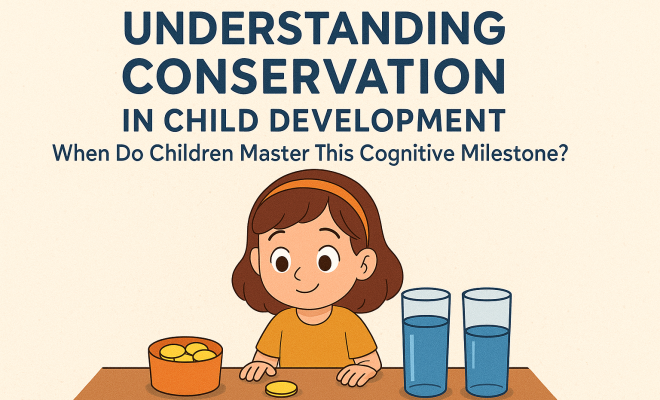
When it comes to understanding how children think and learn, one cognitive milestone stands out: conservation. This fundamental concept in conservation in child development refers to a child’s ability to recognize that certain properties of objects remain the same, even when their shape or arrangement changes. Think about a classic example: pouring water from a short, wide glass into a tall, narrow one. While most adults can easily see that the volume of water remains unchanged, young children often struggle with this idea, showcasing how their cognitive skills are still in development.
What Is Conservation in Child Development?
Conservation is a term coined by Swiss psychologist Jean Piaget, who identified it as a crucial aspect of cognitive development. Piaget proposed that children go through a series of stages in their cognitive abilities, with conservation typically emerging during the concrete operational stage, around ages 7 to 11. This stage signifies a shift in thinking from egocentric perspectives to a more logical understanding of the world.
There are several types of conservation that children learn to master, including:
- Conservation of volume: Understanding that changing the shape of a liquid doesn’t change its volume.
- Conservation of mass: Recognizing that the amount of matter remains the same despite changes in shape or size.
- Conservation of number: Acknowledging that the number of objects remains constant despite rearrangement.
- Conservation of length: Grasping that the length of an object stays the same even if it’s bent or stretched.
Mastering conservation signifies a child’s progression toward more sophisticated cognitive processing. It reflects their ability to think logically about relationships and understand the underlying principles of objects’ properties.
The Stages of Cognitive Development According to Piaget
To fully appreciate conservation, it’s essential to understand Piaget’s stages of cognitive development. He identified four main stages:
- Sensorimotor Stage (Birth to 2 years): During this phase, infants learn through their senses and actions. They explore the world around them, developing object permanence—the understanding that objects continue to exist even when out of sight.
- Preoperational Stage (2 to 7 years): In this stage, children begin to use language and think symbolically but struggle with logic. Their thinking is often egocentric, meaning they have difficulty seeing things from others’ perspectives.
- Concrete Operational Stage (7 to 11 years): Here is where conservation starts to emerge. Children begin to think logically about concrete events and understand the concept of conservation.
- Formal Operational Stage (12 years and up): In this final stage, abstract reasoning becomes possible. Adolescents can think about hypothetical situations and use deductive reasoning.
Understanding these stages provides valuable insight into when and how children master conservation. During the concrete operational stage, children’s cognitive abilities mature, allowing them to grasp more complex concepts.
How Do Children Develop Conservation Skills?
The development of conservation skills is not a one-size-fits-all process; it varies from child to child. Factors influencing this development include age, cognitive readiness, and exposure to relevant experiences. Children typically exhibit the ability to conserve during the concrete operational stage, but it’s not a sudden switch. Instead, it develops gradually through practice and exposure.
For instance, children may first show an understanding of conservation of number, realizing that the count remains the same even if the arrangement changes (like spreading out or grouping objects). This skill often forms the foundation for mastering the more complex types of conservation.
Experiential learning plays a significant role in developing conservation skills. Hands-on activities can help children visualize and understand these concepts. For example, using playdough to shape and reshape a ball into different forms can help them grasp that the amount of material remains constant despite visual changes.
Practical Insights for Parents and Educators
Understanding conservation in child development is valuable for parents and educators as they work to nurture cognitive growth. Here are some practical strategies to help children develop their conservation skills:
- Engage in hands-on activities: Use everyday objects to demonstrate conservation principles. For instance, pour water from one container to another and ask children if the amount changes.
- Encourage questions: When children encounter new situations, prompt them to ask questions about their observations. This encourages critical thinking and reasoning.
- Use comparison exercises: Present them with two identical objects and then alter one while discussing the similarities and differences. This can help develop their understanding of mass, number, and volume.
- Incorporate games: Utilize games that involve sorting, grouping, or measuring. Activities such as sorting objects by size or color can stimulate discussions about conservation.
By integrating these strategies into daily routines and educational settings, you can provide children with the tools they need to develop their conservation skills.
The Role of Culture in Conservation Development
It’s also critical to consider the cultural context in which children are raised, as cultural practices can significantly influence cognitive development, including conservation skills. Piaget’s theory has been critiqued for being too focused on Western norms and values, and subsequent research has highlighted how children from different cultures may develop these skills differently. (See: Conservation in psychology.)
For example, children from cultures that emphasize communal living and shared resources may exhibit conservation skills earlier or in ways that differ from those in more individualistic societies. Understanding these cultural influences can help educators and parents tailor their approaches to better support children’s learning.
Research Findings on Conservation in Child Development
Research on conservation in child development has expanded significantly since Piaget’s initial observations. Studies have explored various factors that contribute to a child’s understanding of conservation, including cognitive development, language skills, and educational strategies.
Recent findings suggest that children may exhibit an understanding of conservation earlier than Piaget proposed, particularly when provided with the right support and learning experiences. For example, some studies have shown that children as young as five can demonstrate limited conservation skills with proper guidance.
Additionally, the role of language has been emphasized in recent research. Language development is closely tied to cognitive growth, and children who engage in discussions about conservation concepts often perform better in tasks related to it. This underscores the importance of verbal reasoning and cognitive engagement in facilitating the mastery of conservation.
Challenges in Mastering Conservation and How to Overcome Them
While many children eventually master conservation, some may struggle. Factors such as learning difficulties, environmental influences, or a lack of exposure to relevant experiences can impede their understanding. Recognizing these challenges allows parents and educators to implement supportive measures.
To help children who are struggling, consider the following strategies:
- Provide individualized support: Assess each child’s unique needs and adapt your teaching methods accordingly. Some children may require more hands-on experiences, while others may benefit from verbal explanations.
- Reinforce concepts: Repeated exposure to conservation concepts through various activities can help solidify understanding. Incorporate conservation tasks into everyday discussions and play.
- Foster a growth mindset: Encourage children to view challenges as opportunities for growth. By reinforcing resilience, children are likely to persevere when faced with difficult concepts.
With patience and the right approach, even children who initially struggle with conservation can achieve mastery.
Current Relevance of Conservation in Child Development
Understanding conservation in child development is not just an academic exercise; it has practical implications for today’s educational practices and parenting strategies. As the world becomes increasingly complex, fostering critical thinking and logical reasoning skills in children is more important than ever.
In today’s fast-paced, information-rich environment, the ability to think critically and understand underlying principles is vital. Mastering conservation lays the foundation for more advanced cognitive skills that are essential for problem-solving and decision-making. As educators and parents, recognizing the significance of conservation can inform teaching styles and parenting approaches, ensuring that children are equipped with the cognitive tools they need to thrive.
Conclusion: Embracing Conservation as a Milestone in Child Development
In summary, conservation in child development is a significant cognitive milestone that marks a child’s growth from egocentric thinking to a more logical understanding of the world. By fostering environments that support the development of conservation skills, we can help children navigate their cognitive landscapes more effectively. Through hands-on experiences, supportive interactions, and a recognition of cultural influences, we can empower children to master this essential aspect of cognitive development. As we understand and embrace conservation, we take significant steps toward nurturing well-rounded, logical thinkers who can tackle the challenges of the future.
Understanding the Importance of Conservation Skills Beyond Childhood
While conservation is often discussed in the context of early childhood education, its importance extends far beyond the ages of 7 to 11. Mastering conservation is foundational for advanced mathematical concepts, scientific reasoning, and everyday problem-solving skills that children will encounter as they grow older.
For instance, in mathematics, understanding that the quantity of a set remains the same regardless of how it is arranged is essential for grasping more complex operations like addition and multiplication. Similarly, in science, conservation principles help students understand fundamental concepts such as conservation of energy and mass, which are crucial for higher-level physics and chemistry.
Moreover, conservation skills also play a role in social interactions. Children who can grasp that others have different perspectives are more likely to develop empathy and social skills, which are vital for successful interpersonal relationships. As they learn to appreciate that people may view situations differently, their capacity for social reasoning and emotional intelligence grows. (See: Research on cognitive development.)
Real-Life Applications of Conservation Understanding
The concept of conservation isn’t just theoretical; it has real-life applications in various fields. For example, in environmental science, conservation knowledge helps children understand the importance of resource management and sustainability. They learn that the conservation of natural resources—like water and energy—is essential for maintaining a healthy ecosystem.
In everyday life, children apply conservation principles when they engage in tasks such as cooking or crafting. Understanding that measurements remain constant regardless of how ingredients are mixed or shaped helps them succeed in tasks that require attention to detail and critical thinking.
Statistics on Conservation in Child Development
Recent research has provided valuable statistics that shed light on how children develop conservation skills. Studies indicate that approximately 30% of children show some understanding of conservation principles by the age of 5. By age 7, this figure rises to about 70%, indicating that most children have started to grasp conservation concepts.
Furthermore, educational interventions that focus on hands-on learning experiences can increase the rate of mastery by as much as 25%. This shows the powerful impact that structured educational approaches can have on children’s cognitive development.
Expert Perspectives on Conservation in Child Development
Experts in child psychology and education emphasize the significance of conservation in a child’s cognitive toolkit. Dr. Sarah Johnson, a developmental psychologist, states, “Understanding conservation is crucial because it lays the groundwork for logical reasoning. Once children can grasp that properties remain constant, they are better equipped to tackle more complex problems in math and science.”
Additionally, educators advocate for incorporating conservation concepts into early learning curricula. According to Dr. Mark Reynolds, an educational researcher, “Integrating conservation activities not only aids cognitive development but also fosters curiosity and critical thinking skills that last a lifetime.”
Frequently Asked Questions About Conservation in Child Development
What age do children typically master conservation skills?
Most children begin to exhibit understanding of conservation skills between the ages of 5 and 7. By the end of the concrete operational stage (around age 11), most will have fully mastered these concepts.
How can parents help their children develop conservation skills at home?
Parents can engage their children in everyday activities that illustrate conservation principles. Simple experiments, like measuring liquids or comparing sizes of objects, can provide practical learning experiences.
Are there specific toys or games that promote conservation learning?
Yes! Toys that involve sorting, stacking, and measuring—like building blocks, puzzles, and measuring cups—can help children practice and understand conservation concepts while playing.
Can children struggle with conservation even if they are developmentally on track?
Absolutely. Individual differences in learning styles, environmental factors, and personal experiences can impact a child’s mastery of conservation skills, even if they are generally on track developmentally.
Is conservation relevant in adult problem-solving and decision-making?
Yes, the ability to understand conservation principles translates into adult cognitive processes as well. It influences how we make decisions about resources, manage time, and solve complex problems in various aspects of life.
Conclusion: The Lifelong Impact of Conservation Skills
Conservation in child development is a vital milestone that transcends early education. By understanding and nurturing these skills, we equip children with the ability to think logically and critically throughout their lives. The implications of mastering conservation skills extend into various areas, influencing academic success, social interactions, and even environmental awareness. As we continue to support children in their journey toward mastering these principles, we ensure they grow into thoughtful, resourceful adults capable of navigating an increasingly complex world.
Additional Insights Into Conservation and Its Applications
Understanding conservation isn’t just about academic growth; it reinforces essential life skills. Children who grasp conservation principles are more likely to develop skills like analytical thinking, problem-solving, and even project management as they learn to manage and manipulate different factors while keeping core principles in mind.
Consider, for example, a child learning to bake. Understanding that the total amount of flour remains the same regardless of whether it’s in a cup or a bowl helps them transfer that knowledge to similar scenarios in life where quantities do not change even as circumstances do. This type of reasoning is fundamental in various real-life applications, from budgeting and personal finance to understanding scientific principles in future academic settings.
Broader Implications of Conservation Skills in Education
In educational settings, teachers can leverage conservation principles to create interdisciplinary learning experiences. By integrating conservation concepts with subjects like art and science, educators can create rich learning environments that stimulate children’s curiosity and foster deeper understanding.
For instance, a simple art project that involves shaping clay can become a lesson in conservation of mass. Teachers can encourage children to weigh their clay before and after molding it into different shapes, thus reinforcing the concept through creative expression. Such interdisciplinary approaches not only clarify abstract concepts but also cater to various learning styles, making education more inclusive.
Engagement Techniques to Reinforce Conservation Learning
Engagement techniques are essential for reinforcing conservation concepts. This includes interactive discussions, storytelling, and playful experimentation. For instance, using storytelling to convey scenarios where objects undergo transformations while maintaining their properties can make learning much more relatable and memorable for children. Encouraging children to narrate their observations during such activities further cements their understanding.
Incorporating technology can also play a role. Educational apps that focus on mathematical concepts related to conservation can provide a fun platform for children to explore and learn at their own pace, ensuring that they grasp these foundational skills while enjoying the learning process.
Case Studies on Conservation in Child Development
Real-world case studies showcase the relevance of conservation skills in child development. In a classroom setting in a rural community, educators implemented an intervention program focused on hands-on learning related to conservation. They measured the children’s understanding of volume and mass before and after the program. The results were remarkable—children who had previously struggled with these concepts demonstrated significant improvement, with a 40% increase in their ability to comprehend conservation tasks by the end of the program.
These cases highlight the efficacy of tailored educational approaches in overcoming challenges related to conservation. They show that with the right resources and instructional methods, all children can achieve a solid understanding of conservation principles, further underscoring the importance of adapting teaching techniques to meet diverse learning needs.
“`
Trending Now
Frequently Asked Questions
What is conservation in child development?
Conservation in child development refers to a child's ability to understand that certain properties of objects, such as volume, mass, number, and length, remain unchanged despite alterations in their shape or arrangement. This cognitive milestone is crucial for logical thinking and typically develops during the concrete operational stage, around ages 7 to 11.
At what age do children understand conservation?
Children generally begin to master the concept of conservation between the ages of 7 and 11, which aligns with Piaget's concrete operational stage of cognitive development. During this time, they start to move from egocentric thinking to a more logical understanding of the world around them.
What are the types of conservation children learn?
Children learn several types of conservation, including conservation of volume (liquid), mass (matter), number (objects), and length (dimensions). Mastering these concepts is essential for developing logical reasoning and understanding the principles that govern object properties.
Why is conservation important in child development?
Conservation is important in child development because it signifies a child's advancement in cognitive processing. It reflects their ability to think logically about relationships and understand that certain properties of objects remain constant, which is foundational for more complex reasoning skills.
How does Piaget's theory relate to conservation?
Piaget's theory of cognitive development outlines stages that children go through, with conservation emerging during the concrete operational stage. This theory emphasizes that as children develop, they transition from egocentric thinking to logical reasoning, which includes mastering the concept of conservation.
Agree or disagree? Drop a comment and tell us what you think.