How Reciprocity Develops from Parallel Play to Cooperative Play
“`html
The development of social skills in children is a fascinating journey, marked by different stages of play. One of the most important aspects of this journey is the evolution from parallel play to cooperative play. Understanding how reciprocal play in education develops not only emphasizes its significance in early childhood development but also provides valuable insights for educators and parents alike.
Understanding Play: The Basics
Play is an essential part of childhood, serving as a primary means through which children explore their environment, build relationships, and learn vital social skills. Psychologist Mildred Parten proposed a classic framework for understanding the various stages of play that children experience, which includes:
- Solitary Play
- Parallel Play
- Associative Play
- Cooperative Play
This framework illustrates how children transition from individualistic play to more social forms, ultimately leading to cooperative play, where they not only share space but also collaborate and engage in shared goals.
What is Parallel Play?
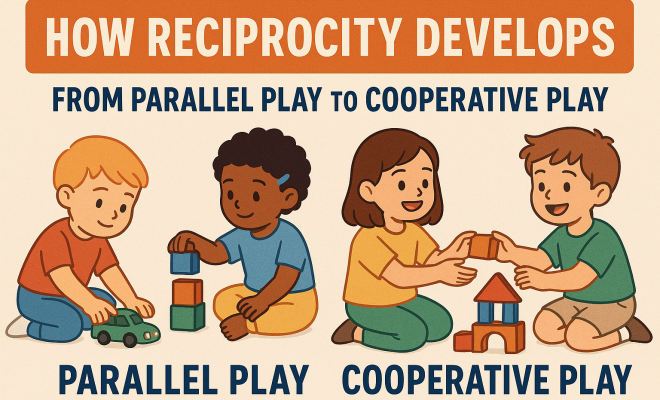
Parallel play typically occurs between the ages of 2 and 3 years. During this stage, children play side by side but do not directly interact with one another. They may use similar toys or engage in similar activities, yet their play remains independent. For example, two children might build with blocks next to each other but without any communication or interaction regarding their creations.
This type of play is crucial for several reasons:
- Independence: It fosters a sense of autonomy as children learn to explore their interests without relying on others.
- Observation: Children observe their peers, which can enhance their understanding of social cues and behaviors.
- Preparation for Interaction: It lays the groundwork for future interactions, as children start to become aware of others around them.
In essence, parallel play is a vital stepping stone toward more interactive forms of play.
The Transition to Cooperative Play
As children grow, they begin to move beyond parallel play, eventually entering a stage of cooperative play. This transition is not instantaneous but rather a gradual progression influenced by various factors, including social context, cognitive development, and emotional maturity.
Cooperative play involves children working together towards a common goal, sharing ideas, negotiating roles, and engaging in imaginative scenarios that require collaboration. For instance, children may decide to build a fort together, assign roles, and negotiate how to use toys within that shared play context.
Research has shown that cooperative play fosters essential social skills such as:
- Communication: Children learn to articulate their thoughts and ideas while discussing plans with peers.
- Negotiation: They practice negotiating roles and rules, which are crucial conflict resolution skills.
- Empathy: Working in groups encourages children to consider the feelings and perspectives of others.
This transition is critical as it plays a significant role in developing the skills necessary for successful interpersonal relationships throughout life.
The Role of Reciprocity in Play
Central to the progression from parallel to cooperative play is the concept of reciprocity. In the context of play, reciprocity refers to the mutual exchange of actions, ideas, and emotions between children. It is what allows them to move from solitary engagement to collaborative efforts.
Reciprocal play in education helps to establish a framework in which children learn to respond to one another’s actions. This back-and-forth interaction not only enriches their play experience but also reinforces their social bonds. For instance, when one child shares a toy, the other learns the importance of sharing in return, fostering a cycle of positive interaction. (See: Understanding the concept of play.)
Researchers have emphasized the importance of reciprocal play in building not just social skills but also cognitive abilities. Children involved in reciprocal interactions are more likely to develop critical thinking skills and creativity, as they are exposed to diverse perspectives and problem-solving approaches.
Practical Insights for Educators
Understanding the progression from parallel play to cooperative play is crucial for educators who aim to create an optimal learning environment. Here are several actionable insights:
- Facilitate Opportunities for Interaction: Teachers should create structured play opportunities that encourage children to interact. This could involve group projects or collaborative games that naturally lead to cooperative play.
- Model Reciprocal Interactions: Adults can guide children by modeling how to share, negotiate, and work together. Demonstrating mutual respect and collaboration helps children understand how to engage with peers.
- Encourage Reflection: After play sessions, educators can facilitate discussions that encourage children to reflect on their experiences, exploring what went well and how they can improve their interactions.
By creating environments that foster reciprocal play in education, educators help children develop the necessary skills for successful future interactions.
The Importance of Play in Emotional Development
While social skills are critical, it’s equally important to recognize the role of play in emotional development. As children engage in cooperative play, they not only learn social norms but also how to navigate their emotions and those of others. They experience joy, frustration, empathy, and excitement, all of which contribute to emotional intelligence.
For instance, when conflicts arise during play, children learn to manage their feelings, express their needs, and resolve disagreements. This is where reciprocity takes center stage. They learn to be mindful of each other’s emotions, leading to stronger connections and friendships.
Moreover, these emotional experiences during play can lead to resilience. By facing challenges and overcoming obstacles in play, children build the ability to cope with real-life challenges, adapting to new situations and environments.
Modern Relevance: Play in the Digital Age
As we move further into the digital age, the nature of play is evolving. Technology has introduced new play formats, such as online gaming and virtual reality experiences. While these can provide opportunities for cooperative play, they also present challenges to developing reciprocal interactions.
Online platforms often lack the physical presence that characterizes traditional play, which can hinder the development of key social skills. However, there are ways educators and parents can ensure that children still engage in meaningful interactions:
- Set Guidelines for Digital Play: Establish clear expectations for how children should interact in digital environments, encouraging respectful communication and teamwork.
- Balance Digital and Physical Play: Ensure that children have ample opportunities for physical play alongside digital interactions. This balance is crucial for holistic development.
- Incorporate Technology Thoughtfully: Use technology as a tool to enhance traditional play rather than replace it. For example, incorporating educational apps that promote collaborative problem-solving can foster reciprocal play.
By applying these strategies, we can adapt to the changing landscape of play while still promoting the development of reciprocity and cooperation.
Real-World Examples of Reciprocal Play in Education
To truly appreciate the impact of reciprocal play in education, it’s helpful to look at real-world examples. Various educational institutions and programs have successfully integrated play-based learning into their curricula:
- Reggio Emilia Approach: Originating in Italy, this approach emphasizes child-led learning through play. Educators create rich environments where children can explore, share ideas, and engage in cooperative projects, fostering a culture of reciprocity.
- Project Zero at Harvard University: This initiative focuses on understanding how children learn and develop creativity through play. Teachers are trained to facilitate cooperative play experiences, emphasizing collaborative and reciprocal relationships among students.
- Outdoor Schools: Programs like Forest Schools encourage children to learn through nature-based play, promoting teamwork and collaboration. Activities such as building shelters or navigating obstacle courses require children to communicate, negotiate, and collaborate effectively.
These examples highlight the importance of fostering an environment where reciprocal play is encouraged, leading to enhanced social, cognitive, and emotional development.
The Future of Play in Education
As conversations around education continue to evolve, play remains a critical component of effective learning. Advocates for play-based education emphasize that integrating elements of play into the curriculum can lead to greater engagement, creativity, and critical thinking skills. Moreover, as we see shifts in educational paradigms, understanding the nuances of reciprocal play in education will become increasingly relevant.
Looking ahead, it’s essential for educators, parents, and policymakers to remain committed to promoting play as a foundational aspect of childhood development. This includes: (See: Importance of play in child development.)
- Advocating for Play-Based Learning: Supporting policies that prioritize play in early childhood education programs can ensure children benefit from these invaluable experiences.
- Continual Research: Investing in research on the impact of play on child development can help refine practices and teaching methods, ensuring they align with the latest findings.
- Community Engagement: Building partnerships between schools, families, and community organizations can create a supportive environment for play, reinforcing its importance across various contexts.
As we’ve explored throughout this article, reciprocal play in education is foundational for nurturing a child’s social, emotional, and cognitive growth. By actively promoting and facilitating opportunities for reciprocal interactions, educators, parents, and caregivers can empower children to develop the skills they need to thrive in a diverse and interconnected world. The commitment to incorporating play into educational contexts not only enriches children’s lives but also lays the groundwork for future generations to engage meaningfully with one another. As we continue to prioritize play as a vital component of learning, the potential for fostering empathy, creativity, and collaboration in our children remains limitless.
Deeper Analysis of Reciprocal Play in Education
Reciprocal play does not merely function on a surface level of interaction; it serves as a foundational pillar for various aspects of a child’s development. Research indicates that engaging in reciprocal play can improve cognitive flexibility, which is the ability to adapt to new situations and think creatively. This adaptability is crucial in a rapidly changing world where problem-solving skills are continually tested.
Furthermore, studies show that children who regularly engage in reciprocal play are more likely to exhibit higher levels of empathy and emotional intelligence. A 2021 study published in the “Journal of Child Psychology” found that children who participated in cooperative games scored notably higher on empathy assessments than those who engaged in solitary play. This suggests that the skills gained from reciprocal play can translate into real-world relationships.
Another interesting aspect of reciprocal play is its relationship with cultural competence. Children who engage in diverse cooperative play scenarios learn to navigate different cultural contexts and perspectives. This exposure is increasingly important in our globalized society, where understanding and respecting diverse viewpoints can lead to enhanced social cohesion and collaboration.
Statistics Highlighting the Impact of Play
Various statistics underscore the impact of reciprocal play in educational settings:
- According to a 2020 report by the American Academy of Pediatrics, children who engage in regular play with peers demonstrate improved problem-solving skills, with a 30% higher success rate in collaborative tasks compared to those who play alone.
- Research from the National Institute for Play indicates that children who participate in cooperative play show a 20% increase in social skills by the age of five compared to their peers who do not engage in such play.
- A survey by the International Play Association revealed that 75% of educators believe that play-based learning significantly enhances children’s emotional and social development.
Comparative Analysis of Play Styles Across Cultures
Understanding how play styles differ across cultures can provide valuable insights into the role of reciprocal play in education. For instance, in many Indigenous cultures, play is often integrated into daily life and learning. Children might learn traditional skills through cooperative games that emphasize community, reciprocity, and shared responsibilities.
Conversely, in more individualistic cultures, the focus might be on competition and solitary achievements. However, even within these frameworks, there is a growing recognition of the value of cooperative play. For example, educators in Japan are increasingly incorporating group activities that require negotiation and cooperation, which aligns with their cultural values of harmony and collective responsibility.
FAQ About Reciprocal Play in Education
What is reciprocal play?
Reciprocal play refers to the mutual exchange of actions, ideas, and emotions during play. It’s essential for developing social skills, communication, and emotional intelligence in children.
Why is reciprocal play important in education?
Reciprocal play is vital because it helps children develop critical social and cognitive skills. It fosters cooperation, sharing, empathy, and emotional regulation, which are all essential for successful interpersonal relationships.
How can educators promote reciprocal play in the classroom?
Educators can promote reciprocal play by creating structured play opportunities, modeling cooperative behaviors, and encouraging reflection after play sessions to enhance children’s understanding of their interactions.
Can digital play support reciprocal interactions?
Yes, digital play can support reciprocal interactions if used thoughtfully. Educators and parents can set guidelines for respectful communication and teamwork in digital environments while balancing digital experiences with physical play.
What skills do children develop through reciprocal play?
Children develop various skills through reciprocal play, including communication, negotiation, conflict resolution, empathy, and creativity. These skills are crucial for their overall social and emotional development.
How does reciprocal play influence emotional development?
Reciprocal play allows children to navigate their emotions and those of others, leading to increased emotional intelligence, resilience, and stronger friendships. It also provides opportunities to manage conflicts and express feelings effectively.
The Importance of Play in Diverse Educational Settings
The understanding of reciprocal play extends beyond early childhood education; it also plays a critical role in diverse educational settings, including special education. Children with different needs can benefit immensely from cooperative play, as it provides them with opportunities to engage with peers and develop social skills tailored to their specific contexts. For instance, educators can create inclusive play environments that accommodate varying abilities, where all children can participate meaningfully.
Research from the National Center for Learning Disabilities suggests that children with learning difficulties who participate in reciprocal play settings show improved social interactions and emotional regulation. These improvements can lead to better academic performance as children feel more connected and motivated within their learning environments. Creating inclusive opportunities not only encourages reciprocal play but also fosters a sense of belonging among all students.
Encouraging Parental Involvement in Reciprocal Play
Parents play a crucial role in facilitating and encouraging reciprocal play at home. By modeling cooperative behaviors and engaging in shared activities, parents can help children understand the importance of reciprocity in their interactions. Here are some strategies for parents:
- Set Up Playdates: Regular playdates with peers can provide children with opportunities to practice reciprocal interactions in a comfortable setting.
- Participate in Games Together: Playing board games or engaging in sports as a family can teach children about teamwork, communication, and fair play.
- Encourage Group Activities: Involving children in community programs or group sports can help them develop social skills in diverse environments.
Family dynamics significantly influence a child’s learning experience, so promoting reciprocal play at home sets a strong foundation for social development.
The Role of Educators in Fostering Reciprocal Play
Educators can take proactive steps to ensure that their classrooms are environments that promote reciprocal play. Implementing play-based learning strategies can enhance student engagement and foster valuable social skills. Here are actionable methods educators can consider:
- Incorporate Play into Curriculum: Designing lessons that integrate play can make learning more enjoyable and effective. For example, using role-playing scenarios can help children practice social skills while learning academic content.
- Create Collaborative Projects: Group projects encourage students to work together toward common goals, allowing them to practice negotiation and communication skills as they navigate their roles within the group.
- Use Play to Teach Conflict Resolution: Through guided play, educators can help students learn how to manage conflicts by modeling appropriate responses and encouraging dialogue.
By actively engaging children in reciprocal play, educators lay the groundwork for a collaborative and inclusive learning experience.
“`
Trending Now
Frequently Asked Questions
What is parallel play in child development?
Parallel play is a stage in child development, typically occurring between ages 2 and 3, where children play alongside each other without direct interaction. They may use similar toys or engage in similar activities but do so independently. This type of play is important for fostering independence, observation skills, and preparing for future social interactions.
How does cooperative play differ from parallel play?
Cooperative play involves children actively engaging with one another to achieve shared goals, unlike parallel play, where they play side by side without interaction. Cooperative play typically emerges after parallel play, indicating a child's increasing social skills and ability to collaborate with peers.
What are the stages of play according to Mildred Parten?
Mildred Parten identified several stages of play in children: solitary play, parallel play, associative play, and cooperative play. These stages illustrate the progression from individualistic play to more interactive forms, culminating in cooperative play where children work together and share goals.
Why is parallel play important for children?
Parallel play is crucial for children's development as it fosters independence, allowing them to explore their interests without reliance on others. Additionally, it enhances observation skills, helping children learn social cues and behaviors, and lays the groundwork for future interactions with peers.
At what age does parallel play typically occur?
Parallel play usually occurs between the ages of 2 and 3 years. During this stage, children engage in play alongside their peers but do not directly interact, marking an important phase in their social development as they learn to navigate their environment.
What did we miss? Let us know in the comments and join the conversation.