Catlist
Categories
- Assessment
- Behavior Management
- Child Development
- Classroom Management
- Cognitive Development
- Critical Thinking/Creativity
- Curriculum & Instruction
- Digital & Mobile Technology
- Digital Leadership
- Diversity
- Early Childhood
- EdTech & Innovation
- Education Foundations
- Educational/Cognitive Psychology
- Elementary Education
- Equity
- Gamification
- Gifted & Talented Education
- Higher Education
- Instructional Technology
- Language and Communication Disorders
- Language Development
- Language Education
- Learning Disabilities
- Middle School Education
- Mild/Moderate Disabilities
- Multicultural/Multiethnic Education
- Multilingual Education
- New Teachers
- Online Learning & eLearning
- Parental Involvement
- Parenting
- Philosophical Foundations of Education
- Reading & Literacy
- School Finance
- School Law
- Severe Disabilities
- Social Foundations of Education
- Special Education
- Special Education Law
- Teachers
- Teaching & Learning Theories
- Teaching/Learning Methods & Strategies
- Tests and Measurements
- Writing PreK-12
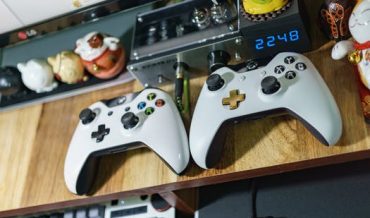
In its simplest definition, a natural user interface (NUI) uses the body’s movements to achieve certain outcomes. In the consumer market, examples of NUIs include the Nintendo® WiiTM, Xbox KinectTM, and the iPhone virtual assistant, Siri. The potential in the field of K–12 education is still being realized but will
Edupedia
- June 12, 2018

Is a collaborative website, which can be directly edited by anyone with access to it.
- June 12, 2018

These Web applications give students the chance to perform physical science experiments over and over, from anywhere with Internet access. As in a physical lab, the performance of the student will determine the results of the experiment. While not a replacement for all in-lab exercises, the virtual version can provide
- June 12, 2018
This technology is making mainstream waves through its use in popular cell phones like the Android-platform Razr M. While it is a convenience tool for people without disabilities, speech-to-text provides a learning advantage for students who have mobility or dexterity problems or those who are blind. It allows students to
- June 12, 2018

Refers to the programs and applications that make use of the hardware to direct the functions of a computer. Software allows users to give instructions to the computer hardware and receive feedback.
- June 12, 2018
Refers to the ability and platforms that allow users to interact online, often in real time. Users can conduct live chats, and create or leave comments on blogs or discussion groups.
- June 12, 2018
Simulations are akin to video games, which automatically make them more attractive to your students. There are many types of simulations that can help instruct children, teens, and college students. For example, there are flight simulators that can be used to help highlight different areas, such as the historic flight
- June 12, 2018

This technology is slightly different from text-to-speech. It simply informs students of what is on a screen. A student who is blind or visually impaired can benefit from the audio interface screen readers provide. Students who otherwise struggle to glean information from a computer screen can learn more easily through
- June 12, 2018

Depending on developmental patterns, children may need to learn differently than their peers. Instead of ABCs and numbers first, a child with language delays may benefit from bright pictures or colors to learn new concepts. Sensory enhancers may include voice analyzers, augmentative communication tools, or speech synthesizers. With the rapid
- June 12, 2018
Is a compilation of works collected throughout your teaching career that highlights your work and accomplishments.
- June 12, 2018