TK vs. Preschool: Curriculum, Goals & Your Child’s Future
“`html
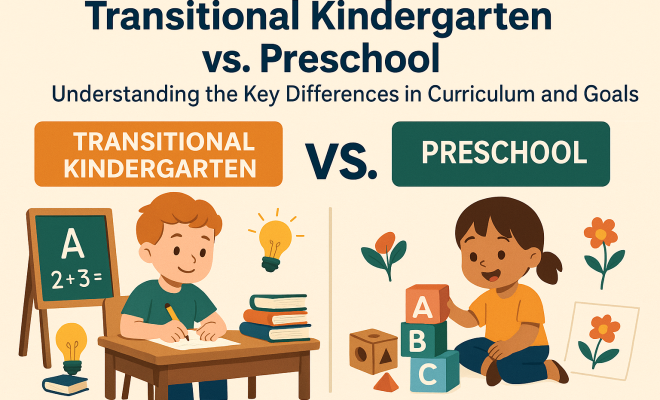
Choosing the right educational path for your child is a significant decision that can shape their early development and future learning. As parents, you might find yourself pondering the differences between transitional kindergarten and preschool. Understanding the key distinctions in curriculum and goals will help you make an informed choice that aligns with your child’s needs and your family’s educational philosophy.
1. Defining Transitional Kindergarten and Preschool
Transitional kindergarten (TK) and preschool serve as foundational stepping stones in a child’s education, but they cater to different age groups and developmental stages. Transitional kindergarten is typically designed for children who turn five years old between September 2 and December 2. It’s aimed at those who may need an additional year of preparation before entering traditional kindergarten, providing a bridge between preschool and kindergarten.
On the other hand, preschool can accommodate children as young as two years old, generally catering to children between the ages of three and five. The focus in preschool is often on socialization, basic academic skills, and nurturing curiosity through play-based learning. It’s a more generalized early education experience compared to the structured environment of transitional kindergarten.
2. Curriculum Differences
One of the most crucial aspects of understanding transitional kindergarten vs preschool lies in their curricula. Transitional kindergarten programs typically emphasize a more structured, academic-focused curriculum. These programs align closely with state kindergarten standards and often include lessons in literacy, mathematics, science, and social studies. The goal is to ensure children enter kindergarten fully prepared.
Conversely, preschool curricula tend to be more flexible and play-based, focusing on social skills, creativity, and emotional development. Activities might include art projects, storytelling, outdoor play, and simple math or literacy games. The objective in preschool is to nurture a love for learning and help children develop the social skills necessary for classroom engagement.
3. Social and Emotional Development
Both transitional kindergarten and preschool play vital roles in social and emotional development, but they approach this goal differently. Transitional kindergarten focuses on preparing children for the structured environment of kindergarten. This preparation includes learning how to follow directions, work in groups, and develop independence. Teachers often implement routines and expectations similar to those they will encounter in kindergarten.
In preschool, educators emphasize socialization through play. Children learn to share, take turns, and resolve conflicts naturally as they engage in group activities. This environment fosters emotional intelligence and helps children navigate their feelings in a safe space, promoting self-regulation and cooperative play.
4. Teacher Qualifications
Understanding teacher qualifications is another important factor when considering transitional kindergarten vs preschool. Teachers in transitional kindergarten often hold a bachelor’s degree in early childhood education or a related field and are typically required to meet specific state standards. This training prepares them to implement a more academic curriculum and support children’s preparation for elementary school.
In contrast, preschool teachers may have varying levels of education and experience. While many have degrees in early childhood education, it’s not uncommon to find educators with associate degrees or certifications in child development. The emphasis in preschool is often more on nurturing and play-based learning than on implementing a strict academic curriculum.
5. Classroom Structure and Environment
The classroom environment plays a significant role in how children learn and develop. Transitional kindergarten classrooms typically have a structured layout, with designated areas for different types of learning activities, including reading, math, and science. This structured environment is designed to mimic a kindergarten classroom, helping children transition smoothly into formal schooling.
In preschool, the environment is often more fluid and open-ended, encouraging exploration and creativity. Learning spaces might be filled with various play stations, allowing children to choose what interests them at any given moment. This setup fosters independence and imaginative play, which are essential components of early childhood development.
6. Parental Involvement and Communication
Parental involvement can significantly influence a child’s educational experience in both transitional kindergarten and preschool settings. In transitional kindergarten, parents may find opportunities for involvement through structured events, curriculum nights, and volunteering in the classroom. This engagement helps parents understand the academic focus of the program and how they can support learning at home.
Preschool programs also encourage parental involvement but in a more informal way. Parents might be invited to participate in special events, share their talents, or volunteer for occasional field trips. The communication between preschool teachers and parents often revolves around social development milestones and how to support their child’s interests and social skills outside of school. (See: U.S. Department of Education on early learning.)
7. Costs and Accessibility
Financial considerations are often a deciding factor for families when weighing transitional kindergarten vs preschool. Transitional kindergarten is usually offered through public school systems, making it a potentially more affordable option compared to private preschool programs. Many states provide TK programs free of charge, funded by public education budgets, which can significantly ease the financial burden on families.
Preschool costs can vary widely depending on the institution and location. Private preschools often come with tuition fees, which can be a significant financial commitment for families. However, some community programs and local governments offer subsidized preschool options to help make early education more accessible.
8. Current Trends in Early Childhood Education
In recent years, there has been a growing emphasis on early childhood education, leading to changes in both transitional kindergarten and preschool programs. Many educators and policymakers are advocating for increased access to high-quality early education, recognizing its long-term benefits for children. This trend has resulted in expanded TK programs in various states, allowing more children to benefit from this educational phase.
Additionally, there’s been a shift towards integrating social-emotional learning into early childhood curriculums. Both transitional kindergarten and preschool are increasingly focusing on teaching children how to manage their emotions, build relationships, and solve problems collaboratively. This holistic approach to education acknowledges that academic success is closely tied to emotional well-being.
9. Making the Right Choice for Your Child
When deciding between transitional kindergarten and preschool, consider your child’s individual needs, personality, and developmental stage. If your child is ready for a more structured learning environment that emphasizes academic skills, transitional kindergarten could be the right fit. This program may also be beneficial for children who have birthdays that place them at the younger end of the kindergarten age range.
On the other hand, if your child thrives in a play-based learning environment and benefits from social interactions with peers, preschool might be the ideal setting. Remember, the goal is to create a nurturing experience that promotes a love for learning and supports your child’s growth in all areas of development.
10. Final Thoughts
Ultimately, the decision between transitional kindergarten vs preschool is a personal one that depends on various factors, including your child’s readiness, your educational philosophy, and the resources available in your community. Both options offer valuable experiences that can help shape your child’s early learning journey. By understanding the key differences and similarities between these two programs, you can make an informed decision that sets your child on the path to success in their educational journey.
11. Transitioning from Preschool to Transitional Kindergarten
For many families, transitioning from preschool to transitional kindergarten is an important milestone. It’s vital to ensure that your child is emotionally and academically ready for this change. While preschool focuses on play-based activities, TK requires a certain level of readiness for more structured learning. One way to help your child prepare is to engage them in activities that mimic aspects of a TK classroom. Simple exercises like following multi-step instructions, practicing recognizing letters and numbers, or engaging in group activities can be helpful.
Parents can also collaborate with preschool teachers to understand their child’s readiness and areas that may need support. Open communication can provide insights into your child’s strengths and challenges, allowing you to address any concerns ahead of time.
12. Expert Perspectives on Early Education
Experts in early childhood education often emphasize the importance of a balanced approach, combining both academic readiness and social-emotional development. Dr. Laura Markham, an expert in parenting and early childhood development, underscores the value of nurturing emotional intelligence during these formative years. She points out that children who develop strong emotional skills are not only better prepared for kindergarten but are also more likely to succeed later in life.
Additionally, Dr. David Elkind, an advocate for play-based learning, has highlighted the risks of overly academic-focused early education. He argues that play is essential for children’s development and encourages a love for learning, creativity, and problem-solving skills. His perspective suggests that while transitional kindergarten is necessary for some children, the importance of play in preschool should never be underestimated.
13. Statistics on Early Childhood Education
Research consistently highlights the significant advantages of early education. According to the National Institute for Early Education Research, children who attend high-quality preschool programs are more likely to achieve academic success later in life. Statistical data shows that children in these programs score higher on standardized tests and are less likely to drop out of high school.
Moreover, studies indicate that children who participate in early education programs demonstrate improved social skills, with fewer behavioral problems compared to their peers who did not attend preschool or transitional kindergarten. This data emphasizes the long-term benefits of both transitional kindergarten and preschool in nurturing well-rounded children.
14. Key Considerations for Choosing a Program
When contemplating transitional kindergarten vs preschool, consider several key factors. First, assess your child’s developmental readiness. Are they outgoing and eager to learn, or do they need more time to develop social skills? Next, evaluate the program’s philosophy. Does it align with your educational values? For instance, if you prioritize play-based learning, you might lean more towards preschool.
Another crucial aspect is the schedule and location. Consider the availability of programs near your home and their compatibility with your family’s routine. Lastly, think about the long-term educational trajectory. Does the transitional kindergarten program feed into a reputable elementary school? Understanding these aspects can help in making the most informed decision possible.
15. Frequently Asked Questions
What is the age requirement for transitional kindergarten?
Typically, children must turn five between September 2 and December 2 to qualify for transitional kindergarten. However, this can vary by state.
Is preschool necessary if my child will attend transitional kindergarten?
While preschool isn’t strictly necessary, it can provide valuable social and emotional skills that will benefit your child in transitional kindergarten.
Can my child attend both preschool and transitional kindergarten?
Yes, some children attend preschool before transitioning into transitional kindergarten, allowing them to benefit from both play-based learning and a structured academic setting.
What if my child has special needs?
If your child has special needs, it’s important to look for programs that offer the necessary support, whether it’s in a preschool or transitional kindergarten setting. Many programs are equipped to cater to children with diverse learning requirements.
How do I know which program is best for my child?
Start by observing your child’s readiness for structured learning versus play-based activities. Speak with educators to gain insight into both programs and consider your child’s personality and learning style.
Are there any public options for preschool?
Yes, some states and local governments offer public preschool programs, often at low or no cost. Research your local options to find affordable early education choices.
16. Long-Term Impact of Early Education on Academic Success
The early years of a child’s education can have lasting effects on their academic journey. Studies reveal that children who participate in high-quality early education are often better prepared for academic challenges throughout their schooling. According to the National Education Association, children who attend preschool are significantly more likely to perform better in reading and math as they progress through elementary school.
Moreover, children who experience structured programs like transitional kindergarten tend to exhibit better behavior in the classroom. They are more adept at following rules and interacting positively with peers, which can lead to a more productive learning environment in later grades. This foundational skill set can be crucial as children move into more rigorous academic settings.
17. Social Skills Development in Early Education
Social skills are another important facet of early childhood education. Programs, whether they be preschool or transitional kindergarten, provide children with the opportunity to interact with peers and develop essential social competencies. Transitional kindergarten, with its more structured format, often emphasizes group work and collaborative projects, helping children learn how to communicate effectively, negotiate roles, and share responsibilities.
Preschool, on the other hand, may offer a more relaxed environment where children can explore social dynamics through free play. They learn to navigate friendships, understand social cues, and develop empathy. Both settings contribute significantly to a child’s ability to form relationships and manage conflicts—skills that will serve them well throughout their lives.
18. Comparing Class Sizes and Student-to-Teacher Ratios
Class sizes and student-to-teacher ratios can greatly influence the quality of education in both transitional kindergarten and preschool settings. Generally, transitional kindergarten classes may have higher student-to-teacher ratios due to funding and staffing structures within public school systems. This can sometimes lead to a more standardized experience for children, but might limit individual attention.
Conversely, many preschools, especially private ones, may offer smaller class sizes, allowing for more personalized instruction and interaction. This can enhance the learning experience as educators can cater more closely to individual needs. Parents should consider the student-to-teacher ratio in their decision-making process, as a smaller ratio can often lead to a more nurturing educational environment.
19. Impact of Technology in Early Education
In today’s increasingly digital world, the role of technology in early education is also worth considering. Some transitional kindergarten programs are beginning to incorporate technology, using educational apps and online resources to complement traditional teaching methods. This can be beneficial in teaching children basic computer skills and how to navigate digital learning tools.
Preschool programs might take a more cautious approach, focusing on limiting screen time in favor of hands-on activities and play-based learning. However, parents should be aware of the balance needed between technology and traditional learning. Reliable research suggests that while technology can enhance learning, it should not replace the foundational skills developed through social interactions and unstructured play.
20. Preparing for the Transition: Tips for Parents
As your child approaches the transition from preschool to transitional kindergarten, there are several strategies you can employ to facilitate a smooth change. Start by familiarizing your child with the structure of a TK classroom. If possible, arrange visits to the school and meet the teachers to help ease any anxieties.
Encourage independence by allowing your child to engage in simple tasks like dressing themselves or following a daily routine at home. Establishing a consistent routine can provide the security and structure they will encounter in transitional kindergarten. Finally, maintain open communication with your child’s preschool teachers and prospective TK educators to ensure that you are all working together to support your child’s growth and readiness.
21. Conclusion: A Personalized Decision
Choosing between transitional kindergarten and preschool is a highly personalized decision that should take into account your child’s unique needs and your family’s circumstances. Both educational paths offer distinct benefits that can influence your child’s development. By carefully evaluating each option, considering factors like educational philosophy, social development, and long-term goals, you can make a choice that best supports your child’s growth and fosters a love for learning.
22. Frequently Asked Questions (Continued)
How can I assess my child’s readiness for transitional kindergarten?
To assess readiness, observe your child’s ability to follow directions, interact with peers, and exhibit interest in learning activities. You can also consult with preschool teachers for their insights on your child’s development.
What resources are available for parents considering early education options?
Resources can include local education websites, parenting forums, and school district offices. They often provide information on available programs, developmental milestones, and parenting workshops.
Are there benefits to enrolling in a hybrid program that includes both preschool and transitional kindergarten?
Yes, hybrid programs can provide a balanced approach that helps children gain both social skills from preschool and academic preparedness from transitional kindergarten. This can enhance their overall learning experience.
Can transitional kindergarten be beneficial for gifted children?
Absolutely! Transitional kindergarten can provide gifted children with the opportunity to engage in more challenging academic content while still allowing them time for social interactions and emotional development with peers.
Is it common for children to repeat transitional kindergarten?
While not uncommon, it varies by region. Some children may benefit from an extra year in TK if they need more time to develop their skills. This decision often involves discussions between parents, teachers, and school administrators.
“`
Trending Now
Frequently Asked Questions
What is the difference between transitional kindergarten and preschool?
Transitional kindergarten (TK) is designed for children turning five between September 2 and December 2, focusing on preparing them for kindergarten with a structured curriculum. Preschool, on the other hand, accommodates younger children aged two to five and emphasizes socialization and play-based learning.
What age is appropriate for transitional kindergarten?
Transitional kindergarten is typically for children who turn five years old between September 2 and December 2. It serves as a bridge for those needing an additional year of preparation before entering traditional kindergarten.
What does the curriculum look like in transitional kindergarten?
The curriculum in transitional kindergarten is more structured and academically focused, aligning with state kindergarten standards. It includes lessons in literacy, mathematics, science, and social studies to ensure children are fully prepared for kindergarten.
How does preschool curriculum differ from transitional kindergarten?
Preschool curriculum is generally more flexible and play-based, focusing on social skills, creativity, and emotional development. Activities often include art projects and storytelling, contrasting with the academic emphasis found in transitional kindergarten.
Is transitional kindergarten necessary for all children?
Transitional kindergarten is not necessary for all children; it specifically benefits those who may need extra preparation before entering kindergarten. Parents should consider their child's developmental readiness and educational needs when deciding.
What did we miss? Let us know in the comments and join the conversation.