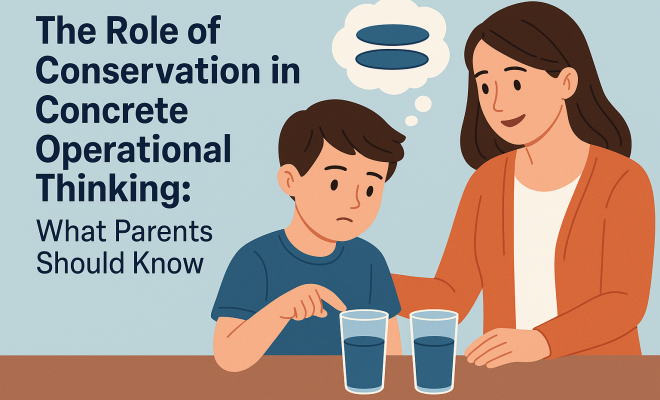
“The Role of Conservation in Concrete Operational Thinking: What Parents Should Know”
“`html
The world of child development is a fascinating realm, filled with intricate theories and concepts that help parents understand how their children learn and grow. One such essential area is concrete operational thinking, a term coined by psychologist Jean Piaget. This stage, which typically occurs between the ages of 7 and 11, marks a critical period in cognitive development. At this juncture, children begin to grasp the concept of conservation—an essential principle for understanding quantity, volume, and number irrespective of the shape or arrangement. This article delves into the role of conservation in concrete operational thinking, providing parents with valuable insights and practical tips.
Understanding Concrete Operational Thinking
Before we dive deeper into conservation, it’s crucial to understand what concrete operational thinking actually entails. According to Piaget, this stage follows the preoperational stage, where children primarily engage in symbolic play and struggle with logic. During the concrete operational stage, children start to think logically about concrete events. They can perform operations and understand the concepts of time, space, and causality.
Children in this stage develop the ability to classify objects, recognize relationships, and understand the idea of reversibility—knowing that actions can be reversed. This newly found capacity allows them to solve problems more effectively than in their earlier developmental stages. However, it’s essential to note that this logical thinking is still tied to concrete objects or events; abstract thinking remains challenging.
The Concept of Conservation
Conservation is a significant cognitive achievement associated with concrete operational thinking. It refers to the understanding that certain properties of objects—such as volume, mass, and number—remain constant even when their form or appearance changes. For example, if you take two equal balls of clay and roll one into a long cylinder, a child who understands conservation will recognize that both shapes still contain the same amount of clay.
This understanding is crucial for logical reasoning and problem-solving. The ability to grasp conservation helps children navigate their world more effectively, allowing them to make sense of various concepts and relationships. Mastering conservation signifies that a child is moving beyond mere physical appearances to comprehend more profound relationships and principles.
Key Types of Conservation
In the realm of psychological development, conservation can be categorized into several types:
- Conservation of Number: Recognizing that the number of items remains unchanged despite rearrangement.
- Conservation of Mass: Understanding that an object’s mass remains constant regardless of its shape or form.
- Conservation of Volume: Grasping that the volume of liquid remains the same even when poured into different containers.
- Conservation of Length: Knowing that the length of an object stays the same even if broken into parts.
Each of these aspects plays a role in a child’s overall cognitive development and is crucial for their ability to engage with the world around them.
How Children Develop Conservation Skills
The development of conservation skills typically unfolds through a series of stages. During the early stages of concrete operational thinking, children may struggle with conservation tasks. However, as they gain experience and exposure, they begin to develop these skills. Here are some ways children learn conservation:
- Hands-on Experiences: Engaging in activities that allow them to manipulate objects helps solidify their understanding of conservation.
- Observation: Watching others perform conservation tasks can provide children with models of how to think about the conservation of various properties.
- Problem-Solving Activities: Games and challenges that require logical reasoning often promote conservation thinking.
Encouraging children to explore and experiment with different materials and concepts fosters their understanding of conservation. Their natural curiosity can be a powerful ally in this developmental phase.
The Role of Parents in Fostering Conservation Skills
As parents, you play a pivotal role in supporting your child’s cognitive development, particularly during the concrete operational thinking stage. Here are some practical strategies to help nurture your child’s understanding of conservation:
- Engage in Play-Based Learning: Use toys and games that involve measuring, sorting, and classifying objects. This kind of play encourages children to think about numbers and properties in more complex ways.
- Encourage Questioning: Prompt your child to ask questions about why things are the way they are. This can help promote critical thinking and a deeper understanding of conservation.
- Provide Concrete Examples: Use real-world situations to illustrate conservation. For instance, pouring juice from one cup to another can spark discussions about volume.
- Use Visual Aids: Diagrams, charts, and physical objects can help children visualize conservation principles more effectively.
By actively engaging with your child and encouraging their curiosity, you can significantly enhance their understanding of conservation and other key cognitive skills. (See: Concrete operational stage on Wikipedia.)
Common Mistakes Parents Make
While most parents want to support their children’s cognitive development, some common missteps can hinder their progress in grasping conservation:
- Overemphasizing Abstract Concepts: Children in this age group are still grounded in concrete experiences. Pushing them to understand abstract ideas too early can lead to confusion.
- Not Allowing Enough Exploration: Children learn through trial and error. Restricting their opportunities to explore can stunt their understanding of essential concepts like conservation.
- Failing to Connect Learning to Real Life: If children don’t see how conservation applies to their everyday experiences, they might struggle to grasp its importance.
Recognizing these pitfalls can help you navigate the complexities of your child’s learning process more effectively.
The Importance of Understanding Conservation for Future Learning
The understanding of conservation is not just a milestone in cognitive development; it serves as a foundation for future learning. Children who grasp these concepts are better equipped to tackle more complex mathematical tasks later on, such as addition, subtraction, and measurement. They also become more adept at logical reasoning and critical thinking, skills that are invaluable throughout their educational journey and beyond.
Moreover, a solid understanding of conservation can foster a sense of confidence in children. When they can manipulate and understand different aspects of the world around them, they become more willing to explore new ideas and take on challenges. This mindset is crucial for academic success and personal growth.
Current Relevance of Conservation in Educational Settings
In today’s educational landscape, the principles of conservation and concrete operational thinking are increasingly integrated into curricula. Educators are becoming more aware of the importance of hands-on learning experiences that reinforce these concepts. Many classrooms now incorporate activities that allow children to engage directly with materials, promoting a deeper understanding of conservation principles.
Furthermore, the rise of experiential learning and STEM (Science, Technology, Engineering, and Mathematics) education aligns perfectly with these developmental concepts. By fostering a hands-on approach, educators are helping children solidify their understanding of conservation while also preparing them for future academic challenges.
Encouraging Lifelong Learning Through Conservation
As parents, nurturing your child’s understanding of conservation can have profound long-term effects. By fostering a love for learning and encouraging curiosity, you set the groundwork for lifelong education. Here are some additional tips to help promote this journey:
- Model Problem-Solving: Show your child how you approach problems and challenges in your own life. This modeling helps them internalize problem-solving strategies.
- Encourage Exploration: Let your child take the lead in their learning. Provide opportunities for them to explore different subjects of interest.
- Celebrate Effort: Emphasize the importance of effort over simply getting the right answer. This mindset encourages resilience and a growth attitude.
By instilling these values, you can help your child not only grasp conservation but also develop a love for learning that will serve them throughout their lives.
Real-World Applications of Conservation
Understanding conservation isn’t just an academic exercise; it has practical applications in everyday life. For instance, when children comprehend the conservation of volume, they can better grasp concepts like sharing evenly during snack time or measuring ingredients while cooking. These real-world applications enhance their cognitive development by allowing them to use abstract concepts in practical contexts.
In grocery shopping, asking children to compare quantities (like how many apples are in a bag versus a basket) gives them a chance to apply their understanding of conservation. It also aligns with math skills, reinforcing what they learn in school while making it relevant to their daily experiences.
Statistics on Cognitive Development Stages
Research has shown that a strong grasp of conservation is linked to later academic success. For example, studies suggest that children who demonstrate understanding in conservation tasks score higher in mathematics and science assessments. One study published in the “Journal of Experimental Child Psychology” found that children who mastered conservation by age eight were 30% more likely to perform well in standardized tests compared to their peers who struggled with these concepts.
This correlation emphasizes the importance of nurturing these cognitive abilities early in life. As children transition through these developmental stages, the skills they develop can have a lasting impact, influencing their educational trajectory and self-esteem. (See: CDC on child development and learning.)
Expert Perspectives on Concrete Operational Thinking
Experts in child psychology stress the importance of understanding concrete operational thinking in fostering a nurturing environment for children. Dr. Laura Brown, a child psychologist, states, “The concrete operational stage is where children start to make sense of the world around them in a logical way. It’s a crucial time for parents and educators to support and challenge their thinking without pushing them too far into abstraction.” This insight helps parents grasp the delicate balance between encouraging learning while respecting their child’s developmental stage.
Educational psychologist Dr. Michael Green adds, “Hands-on learning experiences are invaluable. When children can physically interact with objects, they not only learn about conservation but also develop critical thinking skills that will serve them well beyond the classroom.” This perspective underscores the need for integrating practical, experiential learning into educational frameworks.
Frequently Asked Questions (FAQs)
1. What age do children typically start to understand conservation?
Children generally begin to grasp conservation concepts around the age of 7, during the concrete operational stage of development. However, the exact age can vary depending on individual experiences and exposure.
2. How can I tell if my child understands conservation?
Look for signs such as their ability to explain why a quantity remains the same despite changes in shape or size. Engaging them in activities that involve measuring or sorting can also provide insight into their understanding.
3. What activities can help promote conservation skills?
Activities like measuring ingredients for a recipe, sorting objects by size or shape, and playing games that require counting or comparing quantities can be very effective in promoting conservation skills.
4. Why is understanding conservation important for my child’s education?
A strong grasp of conservation lays the groundwork for more complex mathematical skills and logical reasoning. It helps children understand relationships between different concepts, which is essential for academic success.
5. Can I help my child with conservation skills if they struggle?
Absolutely! Providing hands-on experiences, encouraging questions, and using real-life examples can help your child build their understanding. Patience and consistent practice are key to reinforcing these skills.
The Lasting Impact of Conservation on Cognitive Development
In summary, understanding the role of conservation in concrete operational thinking is essential for parents who wish to support their children’s cognitive development. By recognizing the importance of conservation, engaging in meaningful activities, and fostering a love for learning, you can significantly influence your child’s educational journey. As they navigate through this critical stage of development, the skills they acquire will set the groundwork for future success—both academically and personally. So, embrace the journey and watch your child’s cognitive abilities flourish!
Exploring the Connection Between Conservation and Social Development
Interestingly, the understanding of conservation also has implications beyond academics. Research suggests that children who grasp conservation concepts tend to exhibit improved social skills. This is likely because their enhanced ability to think logically and recognize relationships allows them to navigate social interactions more effectively. For instance, children who understand that the number of toys remains the same regardless of how they are arranged may be more likely to share and cooperate with peers during playtime.
As children learn to negotiate and collaborate in group settings, their cognitive development intertwines with their social growth. They become more adept at understanding others’ perspectives, which can lead to stronger friendships and better conflict resolution skills. Therefore, fostering an understanding of conservation can contribute positively to a child’s overall social competence.
Practical Activities to Enhance Conservation Skills
To further enhance your child’s understanding of conservation, engaging them in specific activities can be incredibly beneficial. Here are some practical ideas that you can easily incorporate into everyday life:
- Water Play: Fill different containers with varying shapes and sizes and have your child predict which holds more or less. Let them pour water from one container to another to see the concept of volume in action.
- Cooking Together: Involve your child in cooking processes that require measuring ingredients. Discuss how the amount remains constant regardless of how you chop or mix ingredients.
- Sorting Games: Use everyday objects like buttons or blocks to create sorting games based on size, color, or shape. Ask your child if the total number changes as they sort.
- Art Projects: Use clay or playdough to create shapes and then transform them. Discuss how the mass remains the same regardless of the shape.
Involving your child in these activities not only reinforces their understanding of conservation but also makes learning fun and memorable.
Understanding Conservation in the Digital Age
As technology continues to evolve, it also affects how children learn about conservation. Digital educational tools and apps are now available that allow children to engage in interactive conservation-related activities. These tools can make abstract concepts more tangible through simulations and visual aids.
For instance, apps that allow children to manipulate virtual objects can help them visualize how conservation works in a way that is engaging and accessible. However, it’s essential for parents and educators to balance screen time with hands-on experiences to ensure a well-rounded understanding of these concepts.
The Importance of Early Intervention
Recognizing signs of difficulty in understanding conservation is essential for parents. Early intervention can be crucial in helping children who may struggle with these concepts. If you notice your child having difficulty grasping the idea of conservation, consider seeking support from educators or child development specialists. They can provide tailored strategies and resources to help your child build these critical cognitive skills.
It’s never too early or too late to support your child’s development. By encouraging exploration and providing the right tools, you can help them navigate the complexities of cognitive development smoothly.
Conclusion: The Broader Implications of Conservation Understanding
Understanding the concept of conservation within the framework of concrete operational thinking undoubtedly sets children up for success. Not only does it lay the groundwork for academic excellence, but it also enriches their social interactions and problem-solving abilities. As parents, your engagement and support during this critical stage can have lasting implications not just in school but in every aspect of your child’s life. By nurturing their cognitive development, you’re helping them build a resilient foundation for lifelong learning and growth.
“`
Trending Now
- this guide on how mindfulness practices improve executive function and emotional regulation
- this guide on the relationship between object permanence and cognitive development in infants
- our breakdown of the role of nonverbal communication in pragmatic language development
- this guide on how scaffolding supports english language learners in elementary school
Frequently Asked Questions
What is concrete operational thinking in child development?
Concrete operational thinking is a cognitive developmental stage identified by psychologist Jean Piaget, typically occurring between ages 7 and 11. During this phase, children begin to think logically about concrete events, understand concepts like time and space, and develop skills such as classification and reversibility.
What does conservation mean in psychology?
In psychology, conservation refers to the understanding that certain properties of objects, such as volume, mass, and number, remain constant despite changes in their shape or appearance. This concept is crucial for children in the concrete operational stage of development.
How can parents support their child's understanding of conservation?
Parents can support their child's understanding of conservation by engaging them in hands-on activities that involve measuring, pouring, and comparing quantities. Simple experiments, like using clay or water, can help illustrate how properties remain constant even when objects change form.
At what age does concrete operational thinking develop?
Concrete operational thinking typically develops between the ages of 7 and 11. During this period, children start to think logically about real-world situations and develop a better understanding of concepts such as conservation, classification, and reversibility.
What are the key characteristics of concrete operational thinkers?
Key characteristics of concrete operational thinkers include the ability to think logically about concrete objects, classify items, recognize relationships, and understand reversibility. However, their thinking is still closely tied to tangible experiences, making abstract concepts more challenging.
Have you experienced this yourself? We’d love to hear your story in the comments.