Why Kids Think Taller Glasses Hold More Water
“`html
Children’s understanding of the world is a fascinating and complex journey. One specific area that often puzzles educators and parents alike is how young children perceive volume and conservation concepts. In particular, the common belief among preschoolers that more water in a glass equates to a taller glass serves as an interesting case study for exploring conservation concepts for children. This article delves into the cognitive development behind these misconceptions, offering insights and practical ways to help young children grasp these fundamental concepts.
Understanding Conservation Concepts
At its core, conservation concepts refer to the understanding that quantity or volume remains the same despite changes in shape or arrangement. This cognitive ability is crucial in various areas of learning, particularly in mathematics and science. Young children typically struggle with this concept, particularly during the ages of two to seven, as they are still developing their cognitive skills.
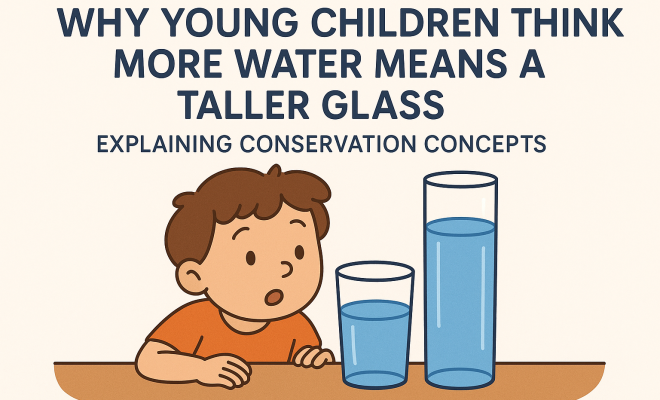
The notion of conservation was significantly articulated by Swiss psychologist Jean Piaget, who identified it as a part of his stages of cognitive development. According to Piaget, children in the preoperational stage tend to be egocentric and focus primarily on appearances rather than the underlying principles that dictate reality. For instance, when asked whether a tall, narrow glass holds more water than a short, wide glass, a young child might confidently assert that it does—regardless of the actual volume of water in both containers.
The Role of Cognitive Development
Understanding why young children think more water means a taller glass is essential for grasping their cognitive development. During the preoperational stage, children are primarily engaged in magical thinking and personal interpretations of their surroundings. Their reasoning is often based on observable features rather than logical deduction. This developmental stage can lead to misconceptions regarding conservation.
For example, a child might see a glass filled with water and notice that it appears taller than another glass filled with the same volume but in a different shape. This can lead them to incorrectly conclude that the height of the glass is directly related to the amount of water it contains. At this age, children might also struggle with tasks involving reversibility, meaning they cannot easily understand that the volume of water remains constant even if it is poured into a differently shaped container.
Common Misconceptions in Young Children
When discussing conservation concepts for children, it’s essential to identify specific misconceptions that arise during early childhood. The belief that more water equals a taller glass is one of several misconceptions that can hinder a child’s understanding of basic principles of volume and capacity. Here are some other common misconceptions:
- Shape Over Substance: Children may think the shape of the glass significantly impacts how much liquid it can hold.
- Visual Cues: Young children are heavily influenced by visual aspects; they might believe that a wider glass with less water contains less than a taller glass with more water solely based on the visual appearance.
- Non-constant Volume: Children might assume that volume can change in different contexts, failing to grasp that a certain amount of liquid remains the same regardless of the container.
Practical Insights for Educators and Parents
As parents and educators, it’s essential to recognize these misconceptions and actively work to counter them. Teaching conservation concepts for children can be both engaging and informative. Here are some effective strategies:
1. Hands-On Experiments
Engaging children in hands-on experiments with liquid can be a powerful way to teach them about conservation. For example, use various containers of different shapes and sizes to pour the same amount of water into each. Allow children to pour water from one container to another and visually observe that the amount remains unchanged, regardless of the container’s shape. This simple activity can dramatically illustrate the concept of conservation.
2. Play-Based Learning
Utilizing play-based learning can also be beneficial. Incorporate measurement games and activities where children can explore different volumes. For instance, using measuring cups while cooking can be an enjoyable way for children to grasp the concept of quantity and capacity.
3. Storytelling and Visual Aids
Using storytelling and visual aids can be another effective method. Create engaging narratives or utilize picture books that highlight conservation concepts. Children respond well to stories, and weaving in conservation themes can make the learning experience memorable.
Current Relevance of Conservation Education
In today’s world, teaching conservation concepts for children has broader implications beyond cognitive development. With increasing environmental challenges, instilling a sense of conservation at an early age is crucial for fostering responsible citizens. Understanding how to value resources can translate into positive environmental behaviors as they grow into adulthood. (See: Conservation in psychology.)
For instance, when children learn about the importance of conserving water, they may develop habits such as turning off the tap while brushing their teeth or understanding the necessity of water conservation during droughts. These concepts can be integrated into daily lessons, making learning both relevant and practical.
Connecting Conservation Education to Environmental Awareness
The relationship between conservation concepts for children and environmental awareness is strong. By establishing a fundamental understanding of conservation early on, children are more likely to engage in environmentally friendly behaviors throughout their lives. For example, teaching kids about the water cycle and its importance can foster respect and care for water resources.
Consider using environmental themes in classroom activities. Projects on recycling, composting, and conserving energy can make the topic of conservation relatable and important. Moreover, when children understand that their actions can have a significant impact on their environment, they are more inclined to make eco-friendly choices.
The Role of Technology in Teaching Conservation
In our increasingly digital world, technology can play a vital role in teaching conservation concepts for children. Educational apps and online resources can provide interactive experiences that reinforce learning. For example, virtual simulations can allow children to experiment with different scenarios related to water usage and conservation.
Moreover, online platforms can connect classrooms with environmental organizations, fostering a deeper understanding of conservation issues on a global scale. By leveraging technology, educators can create engaging and informative lessons that resonate with children in a format they are familiar with.
Case Studies and Research Findings
Research into conservation concepts for children has yielded significant insights into effective teaching practices. Studies have shown that when children engage in interactive learning experiences, their understanding of concepts related to volume and conservation improves. For instance, a research study by the University of Michigan found that children who participated in hands-on learning activities were more likely to grasp conservation concepts than those who learned through traditional methods.
Moreover, a study published in the Journal of Research in Childhood Education highlighted the importance of storytelling in teaching conservation. The research indicated that children who were taught through narratives retained the information better and could apply it in real-world situations.
Challenges in Teaching Conservation Concepts
Despite the best intentions of educators and parents, challenges often arise when teaching conservation concepts for children. One significant hurdle is the variance in developmental stages among children. Each child learns at their own pace and may require tailored approaches to understand complex concepts.
Additionally, misconceptions can sometimes be deeply ingrained, making them difficult to overcome. It’s vital to address these misconceptions with patience and creativity, using various teaching methods to engage children effectively.
Final Thoughts
Understanding why young children think more water means a taller glass opens the door to a broader discussion about cognitive development and conservation concepts for children. By recognizing their misconceptions and employing practical strategies to teach these essential concepts, we can equip them with the tools they need for a more profound understanding of the world around them.
Ultimately, fostering a mindset of conservation at an early age not only enhances cognitive development but also contributes to a healthier planet. By investing in children’s understanding of conservation today, we are shaping responsible, environmentally conscious adults for tomorrow.
Expanding the Understanding of Conservation Concepts
While we have discussed various strategies to teach conservation concepts for children, it’s also important to explore how these concepts can be expanded upon as children grow. Once children grasp the basic principles of conservation, educators can gradually introduce more complex ideas related to science and mathematics. This gradual build-up allows children to see the connections between different concepts and encourages deeper learning.
Integrating STEM Education
Integrating Science, Technology, Engineering, and Mathematics (STEM) into conservation education can create a rich learning environment. For instance, experiments that involve measuring liquids can transition into lessons on chemical reactions or density. By relating conservation concepts to broader scientific principles, children can appreciate the significance of these concepts in various fields. (See: Child cognitive development.)
For example, teaching about the water cycle can include discussions about evaporation and condensation, linking conservation to environmental science. Through project-based learning, children can observe firsthand how these processes work in nature, reinforcing their understanding of conservation.
Incorporating Real-World Examples
Bringing real-world examples into the discussion of conservation concepts makes learning more relatable. Discussing current environmental issues, such as plastic pollution or climate change, can foster critical thinking. Children can explore how conservation principles apply to these topics, allowing them to see the relevance of their learning in the context of global challenges.
For instance, a project that involves creating a recycling program at school can teach children about waste management while reinforcing the importance of conserving resources. Such initiatives empower children to feel like they can make a difference, further instilling a conservation mindset.
Statistical Insights on Conservation Education
Statistics can also play an important role in teaching children about conservation concepts. Presenting data in an age-appropriate manner can help children understand the impact of their actions. For instance, sharing statistics on how much water is wasted each day can spark discussions around water conservation.
A study from the U.S. Geological Survey found that the average American uses about 88 gallons of water per day. Discussing this statistic with children can lead to conversations about how they can reduce their water usage. Activities like tracking their water consumption for a week can help them relate personal habits to broader statistics, fostering a sense of accountability.
Expert Perspectives on Conservation Concepts for Children
Experts in child development and environmental education emphasize the importance of early conservation education. Dr. Jane Goodall, a renowned primatologist and conservationist, advocates for teaching children about the environment. She suggests that fostering a connection to nature can enhance conservation awareness and inspire future generations to protect it.
Educational psychologists often highlight the role of curiosity in learning. When children are encouraged to ask questions about their environment, they are more likely to engage with conservation concepts. Creating an atmosphere where inquiry is welcomed can lead to deeper understanding and appreciation for the world around them.
FAQs about Conservation Concepts for Children
What age should I start teaching my child about conservation concepts?
Starting as early as preschool age is beneficial. Children are naturally curious, and introducing basic conservation concepts can set a strong foundation for future learning.
How can I make learning about conservation fun for my child?
Utilizing interactive games, storytelling, and hands-on activities can make learning enjoyable. Incorporating art projects or outdoor exploration can also enhance engagement.
Are there specific books or resources you recommend for teaching conservation concepts?
Books like “The Lorax” by Dr. Seuss and “The Earth Book” by Todd Parr are excellent choices. They present conservation themes in a relatable and engaging manner.
How can conservation education impact my child’s future?
By cultivating an understanding of conservation, children are likely to grow into environmentally conscious adults. This mindset can lead to healthier habits and a commitment to sustainability throughout their lives.
Can technology be overused in teaching conservation concepts?
While technology can enhance learning, it’s crucial to balance screen time with hands-on experiences. Too much reliance on technology may hinder children’s ability to connect with nature directly.
Community Engagement in Conservation Education
Engaging the community in conservation education can greatly enhance children’s learning experiences. Field trips to local parks, nature reserves, or environmental centers provide children with opportunities to learn about local ecosystems and conservation efforts firsthand. These experiences can be incredibly impactful, allowing children to see the relevance of conservation concepts in real-world contexts.
Moreover, involving families in conservation projects, such as community clean-ups or tree-planting events, can reinforce what children learn in the classroom. When children witness their parents and community members actively participating in conservation efforts, it sends a powerful message about the importance of taking care of the environment.
The Importance of Emotional Connections to Nature
Research indicates that emotional connections to nature can enhance children’s understanding of conservation concepts. When children develop a love for nature, they are more likely to engage in conservation efforts. Spending time outdoors, exploring natural environments, and allowing children to interact with nature can foster these emotional ties.
Encouraging children to express their feelings about nature through journaling or art can also deepen their connection. This emotional engagement can transform abstract conservation concepts into personal experiences, making them more relatable and easier to understand.
Exploring Cross-Cultural Approaches to Conservation Education
Different cultures have various approaches to conservation education, and exploring these can enrich children’s understanding. Learning about indigenous practices and sustainable living in different communities can provide diverse perspectives on conservation.
For example, stories and traditions from indigenous peoples often emphasize the importance of harmony with nature. Incorporating these narratives into lessons can broaden children’s views on conservation and highlight the value of respecting diverse ways of living sustainably.
Conclusion
By weaving together practical strategies, expert insights, and real-world applications, we can create a comprehensive approach to teaching conservation concepts for children. As they learn to appreciate the importance of conservation, they not only enhance their cognitive skills but also develop a strong sense of responsibility toward the environment. This holistic approach ensures that children are not just passive learners but active participants in shaping a sustainable future.
“`
Trending Now
Frequently Asked Questions
Why do young children think more water means a taller glass?
Young children often believe that more water equates to a taller glass due to their cognitive development stage, where they focus on appearances rather than underlying concepts. This misunderstanding is part of the preoperational stage identified by Jean Piaget, where children struggle with conservation concepts.
What are conservation concepts in child development?
Conservation concepts refer to the understanding that quantity or volume remains constant despite changes in shape or arrangement. This cognitive ability develops during early childhood and is crucial for learning in mathematics and science, but young children often struggle with it due to their developmental stage.
At what age do children understand conservation concepts?
Children typically begin to grasp conservation concepts between the ages of 7 to 11, transitioning from the preoperational stage to the concrete operational stage in Piaget's theory. During this time, they start to understand that volume and quantity remain the same despite changes in appearance.
How can parents help children understand volume and conservation?
Parents can help children understand volume and conservation by providing hands-on activities, such as pouring water between different shaped containers, and encouraging discussions about the results. Using visual aids and real-life examples can also enhance their understanding of these fundamental concepts.
What is the preoperational stage in child development?
The preoperational stage, according to Jean Piaget, occurs roughly between ages 2 to 7, where children engage in magical thinking and are egocentric. They focus on observable features rather than logical reasoning, which can lead to misconceptions about concepts like volume and conservation.
Agree or disagree? Drop a comment and tell us what you think.