Mastering Bloom’s Taxonomy: Assess All 6 Cognitive Levels
“`html
When it comes to evaluating student learning, educators often find themselves grappling with the best methods to assess comprehension, retention, and application. Bloom’s Taxonomy, developed by Benjamin Bloom in 1956, offers a structured framework that categorizes cognitive skills into six levels: Remembering, Understanding, Applying, Analyzing, Evaluating, and Creating. Crafting assessments that span all these levels can elevate the learning experience, promoting deeper understanding and critical thinking. In this article, we’ll explore the significance of Bloom’s Taxonomy assessments, delve into how to create them, and discuss best practices for implementation.
The Foundation of Bloom’s Taxonomy
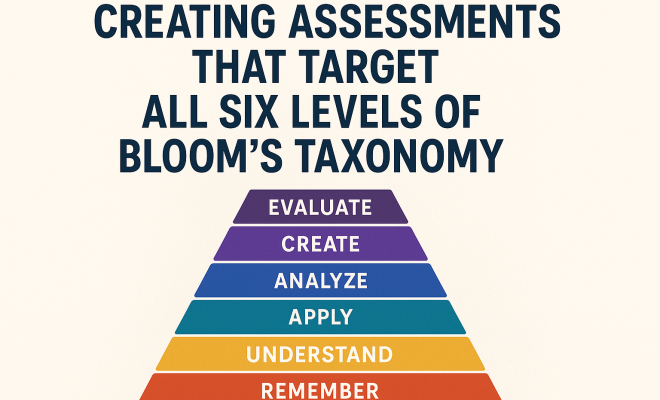
Before diving into creating assessments, it’s essential to understand the foundation of Bloom’s Taxonomy. Originally published in 1956, the taxonomy was a pioneering effort to categorize educational objectives. The original framework included six levels, but it was later revised in the 2000s by a group led by Lorin Anderson and David Krathwohl. The revised taxonomy includes:
- Remembering: Recalling basic facts and concepts.
- Understanding: Explaining ideas or concepts.
- Applying: Using information in new situations.
- Analyzing: Drawing connections among ideas.
- Evaluating: Justifying a decision or course of action.
- Creating: Producing new or original work.
This hierarchical structure is not just about memorization; it emphasizes cognitive development and encourages educators to design assessments that foster critical thinking and creativity. In today’s educational landscape, where rote memorization is often eschewed for deeper learning methods, Bloom’s Taxonomy is more relevant than ever.
Why Use Bloom’s Taxonomy Assessments?
Using Bloom’s Taxonomy assessments provides several benefits for both educators and students. For educators, these assessments can simplify the evaluation process, ensuring that a wide range of cognitive skills are tested. For students, assessments that engage multiple levels of Bloom’s Taxonomy can facilitate mastery of content and a deeper understanding of material.
Moreover, assessments designed around Bloom’s framework can guide instruction. By identifying which levels students struggle with, teachers can tailor their teaching strategies accordingly. For example, if many students excel at Remembering but struggle with Evaluating, educators may need to incorporate activities that promote higher-order thinking skills.
Designing Assessments for Each Level
Creating effective Bloom’s Taxonomy assessments requires careful planning and consideration of each cognitive level. Here’s a breakdown of how to design assessments for each level, along with examples:
1. Remembering
At the Remembering level, assessments should focus on students’ ability to recall facts and basic concepts. This can include:
- Multiple-choice questions identifying key facts.
- Fill-in-the-blank exercises where students complete sentences with the correct terms.
- Short answer questions asking students to list important dates or events.
For instance, in a history class, an assessment might ask students to list the major causes of World War I. This straightforward recall allows educators to gauge basic understanding.
2. Understanding
Once students can remember information, the next step is to assess their understanding. At this level, assessments can include:
- Open-ended questions prompting explanations of concepts.
- Concept maps illustrating relationships between ideas.
- Summarizing passages from texts.
For example, students might be asked to explain the significance of the Magna Carta in a political science course. This requires them to process and articulate their understanding, rather than simply regurgitating facts.
3. Applying
To test application skills, assessments should require students to use their knowledge in practical scenarios. This can include:
- Case studies requiring students to apply theories to real-life situations.
- Simulations where students must resolve problems using learned concepts.
- Projects that demonstrate the application of skills.
For instance, in a mathematics class, students might be asked to calculate the area of different shapes based on learned formulas. This form of assessment evaluates their ability to apply knowledge to new situations.
4. Analyzing
Assessments targeting the Analyzing level focus on students’ ability to break down information and examine relationships. Effective assessment types include: (See: Bloom's Taxonomy overview.)
- Comparative essays where students analyze two different theories.
- Data analysis tasks requiring students to interpret graphs or statistics.
- Group discussions evaluating various perspectives on a topic.
An example might involve students analyzing the effects of climate change on biodiversity and evaluating different viewpoints presented in research articles.
5. Evaluating
At the Evaluating level, assessments should assess students’ judgment and decision-making skills. This might include:
- Debates requiring students to defend or refute a position.
- Peer reviews where students assess the work of others.
- Reflection essays that allow students to evaluate their learning experiences.
For example, students could be asked to evaluate the effectiveness of a public policy and provide evidence to support their judgment.
6. Creating
The highest level, Creating, involves synthesizing information to generate new ideas or products. Assessments can include:
- Research projects that encourage students to develop new theories.
- Design projects, such as creating a marketing plan.
- Artistic works, like composing a piece of music or writing a story.
An example could be students creating a business proposal for a startup based on market research, demonstrating their ability to synthesize information into a cohesive plan.
Integrating Technology in Bloom’s Taxonomy Assessments
In today’s digital age, technology can play a significant role in creating engaging Bloom’s Taxonomy assessments. Tools such as learning management systems (LMS), educational apps, and online quizzes can facilitate a range of assessment types across all six levels.
For instance, educators can use platforms like Google Forms or Kahoot! to create interactive quizzes that assess remembering and understanding. Alternatively, tools like Padlet or Trello can help students collaborate on projects that require analyzing, evaluating, and creating.
Moreover, digital simulations in subjects like science or math can allow for real-world applications, enabling students to apply concepts in a virtual environment. Integrating technology not only makes assessments more accessible but also enhances student engagement.
Best Practices for Implementing Bloom’s Taxonomy Assessments
Implementing effective Bloom’s Taxonomy assessments requires thoughtful planning and execution. Here are some best practices:
- Align Assessments with Learning Objectives: Ensure that each assessment directly correlates with the specific learning objectives of your course or lesson.
- Use Varied Assessment Methods: Incorporate different types of assessments to cater to diverse learning styles and abilities.
- Provide Clear Instructions: Clearly articulate what is expected in each assessment to avoid confusion and ensure students can demonstrate their understanding.
- Encourage Self-Assessment: Allow students to reflect on their own learning through self-assessment tools, enhancing their metacognitive skills.
By adhering to these practices, educators can create assessments that not only evaluate learning effectively but also contribute to the overall educational experience.
Challenges in Creating Bloom’s Taxonomy Assessments
Despite the benefits, creating assessments that effectively utilize Bloom’s Taxonomy can come with challenges. One common issue is the time required to develop high-quality assessments that cover all levels. Crafting varied questions that accurately gauge different cognitive skills demands thoughtful preparation.
Another challenge is ensuring that students understand the expectations at each assessment level. Some students may excel in lower levels but struggle with higher-order thinking skills. Therefore, providing scaffolding and support is crucial to help students develop these abilities over time.
Lastly, ensuring that assessments remain fair and unbiased is essential. Assessments should consider diverse backgrounds and learning experiences, ensuring all students have an equal opportunity to succeed.
The Future of Bloom’s Taxonomy Assessments
As education continues to evolve, the relevance of Bloom’s Taxonomy assessments will only grow. With an increasing emphasis on critical thinking and problem-solving skills in the 21st-century classroom, educators are challenged to innovate their assessment strategies continually.
Incorporating interdisciplinary approaches and project-based learning can enhance the effectiveness of Bloom’s Taxonomy assessments. By promoting collaboration and creativity, educators can foster an environment where students engage deeply with content.
Moreover, as educational technology advances, new tools will emerge, allowing for even more dynamic and interactive assessments. Embracing these changes will empower educators to remain effective in assessing a diverse range of skills and competencies.
Real-World Applications of Bloom’s Taxonomy Assessments
Bloom’s Taxonomy assessments aren’t just theoretical; they have practical applications in various educational settings. For example, in a medical school, assessments might be crafted to mirror real-life scenarios where aspiring doctors must apply their knowledge to diagnose patients. In this context, assessments might involve case studies that require students to analyze symptoms, evaluate potential treatment plans, and create a patient care strategy.
In corporate training programs, Bloom’s Taxonomy can guide the creation of assessments that enhance employee performance. For instance, training on new software might start with quizzes to assess remembering features, progress to scenarios for applying the software in hypothetical situations, and culminate in projects where employees create new workflows using the software. This progression helps ensure that employees not only learn the material but can also apply it effectively in their jobs.
Statistics on the Effectiveness of Bloom’s Taxonomy Assessments
Research has shown that assessments designed using Bloom’s Taxonomy can significantly enhance learning outcomes. A study by the Association for Educational Communications and Technology found that students who engaged in higher-order assessments (those at the Applying, Analyzing, Evaluating, and Creating levels) demonstrated a 15% increase in retention rates compared to those who participated only in lower-order assessments.
Furthermore, educators reported that using Bloom’s Taxonomy helped them identify specific areas where students struggled, leading to targeted instruction. An internal study conducted by a university’s education department revealed that 80% of instructors found Bloom’s assessments helpful for tailoring their teaching methods based on student performance data.
Expert Perspectives on Bloom’s Taxonomy Assessments
Educators and researchers alike have spoken about the transformative potential of Bloom’s Taxonomy assessments. Dr. Patricia Cross, an educational scholar, emphasizes that “Bloom’s Taxonomy is not just a framework for assessment; it’s a roadmap for teaching.” Her assertion highlights the idea that these assessments can guide educators in developing effective curriculum designs that promote deeper learning.
Dr. Richard Anderson, a professor of education, suggests that “the key to utilizing Bloom’s Taxonomy effectively is understanding the interplay between the levels.” He advocates for creating assessments that not only evaluate but also promote a continuum of learning where students can transition smoothly from lower to higher-order thinking.
Frequently Asked Questions about Bloom’s Taxonomy Assessments
What is Bloom’s Taxonomy?
Bloom’s Taxonomy is a framework that categorizes cognitive skills into six levels, which include Remembering, Understanding, Applying, Analyzing, Evaluating, and Creating. It helps educators design assessments that engage different levels of student cognition.
How can I implement Bloom’s Taxonomy assessments in my classroom?
To implement Bloom’s Taxonomy assessments, start by identifying your learning objectives. Develop questions and tasks that align with each level of the taxonomy, ensuring a balance of lower and higher-order thinking skills. Use diverse assessment methods and technology to enhance engagement.
How do Bloom’s Taxonomy assessments benefit students?
These assessments promote critical thinking and deeper understanding by encouraging students to engage with content at multiple cognitive levels. They also help students build essential skills that are valuable in real-world situations.
Can Bloom’s Taxonomy be applied outside the classroom?
Absolutely! Bloom’s Taxonomy can be applied in various settings, including corporate training, workshops, and even self-directed learning. It provides a structured approach to assessing skills and knowledge across different domains.
Are there any specific tools for creating Bloom’s Taxonomy assessments?
Yes, various educational technology tools can help in designing assessments aligned with Bloom’s Taxonomy. Platforms like Google Forms, Quizlet, and Socrative allow educators to create quizzes that target different cognitive levels, while project management tools can facilitate collaborative projects.
Challenges Educators Face When Using Bloom’s Taxonomy Assessments
While Bloom’s Taxonomy provides a valuable framework for assessment, educators may encounter specific challenges when implementing it. One of the main concerns is ensuring that all students are prepared for higher-order thinking tasks. Students often come from diverse backgrounds and varying educational levels, which means educators must consider how to bridge these gaps effectively.
Another challenge is the ongoing need for professional development in assessment design. Many educators may not have received training on how to create assessments that align with Bloom’s framework. Professional development workshops focused on this taxonomy can equip teachers with essential skills and strategies for crafting effective assessments.
Examples of Bloom’s Taxonomy Assessments in Different Subjects
Different subjects will require unique assessments that align with Bloom’s Taxonomy. Here are some examples across various disciplines:
- Mathematics: For the Remembering level, a quiz on multiplication tables can be given. At the Creating level, students could be asked to develop their own word problems that incorporate different mathematical concepts.
- Science: In a biology class, students might be asked to summarize the stages of cellular respiration (Understanding), then conduct an experiment to observe the effects of light on plant growth (Applying), and finally, present their findings in a report (Creating).
- Literature: Analyzing a character’s development in a novel would fall under the Analyzing level. Students could be tasked with debating the motivations of different characters (Evaluating) and then writing a creative piece from the perspective of one of those characters (Creating).
Assessment Techniques to Enhance Bloom’s Taxonomy Implementation
To effectively utilize Bloom’s Taxonomy assessments, educators can implement various techniques to enhance their assessment strategies:
- Portfolio Assessment: Encourage students to compile a portfolio that showcases their work across different levels of Bloom’s Taxonomy. This can include projects, essays, and reflections that demonstrate their learning journey.
- Rubrics: Develop rubrics that clarify expectations for each assessment level. This helps students understand how their work will be evaluated and what is needed to achieve higher-order thinking.
- Peer Assessment: Allow students to assess each other’s work based on Bloom’s levels. This not only reinforces learning but also develops critical evaluation skills among students.
Case Studies on Successful Implementation of Bloom’s Taxonomy Assessments
Examining case studies where Bloom’s Taxonomy assessments have been successfully implemented can provide practical insights:
One notable case occurred at a mid-sized university where faculty members integrated Bloom’s Taxonomy into their curriculum redesign. By aligning course objectives with the taxonomy, they reported a 20% increase in student engagement and a significant improvement in overall student performance. Faculty also noted that students became more adept at critical thinking and were able to apply their knowledge in real-world scenarios more effectively.
Another example comes from a high school where teachers collaborated to create interdisciplinary assessments using Bloom’s Taxonomy. In a project combining history and art, students were tasked with creating a visual representation of a historical event. This not only assessed their understanding and application of historical knowledge but also encouraged creativity and analysis, resulting in a more enriched learning experience.
Evaluating the Success of Bloom’s Taxonomy Assessments
To determine the effectiveness of Bloom’s Taxonomy assessments, educators should consider various evaluation methods. Gathering student feedback through surveys can provide insight into their perceptions of the assessments and their learning experiences. Tracking student performance over time using assessment data can help educators identify trends and areas for improvement. Additionally, analyzing which assessments lead to the highest engagement and learning outcomes can guide future instructional design.
How to Adapt Bloom’s Taxonomy for Diverse Learners
In any classroom, students come with different learning styles, backgrounds, and abilities. Adapting Bloom’s Taxonomy assessments to accommodate diverse learners is crucial for creating an inclusive educational environment. Here are some strategies:
- Use Multiple Modalities: Provide assessments that cater to various learning styles, such as visual, auditory, and kinesthetic. For example, allow students to present their findings using multimedia tools or hands-on demonstrations.
- Scaffold Assessments: Break down complex tasks into smaller, manageable steps. This supports students who may struggle with higher-order thinking and allows them to gradually build their skills.
- Offer Choices: Let students choose from a range of assessment types. Providing options empowers students and can lead to increased motivation and engagement.
Conclusion: The Power of Comprehensive Assessments
Creating assessments that target all six levels of Bloom’s Taxonomy not only enriches the learning experience but also equips students with the skills they need to thrive in an increasingly complex world. By focusing on diverse cognitive skills, educators can foster a deeper understanding of content, encourage critical thinking, and inspire creativity. In shaping assessments through this lens, educators are not just measuring learning; they are nurturing future thinkers, innovators, and leaders. Remember, the ultimate goal of education is not merely to teach students what to think, but how to think.
“`
Trending Now
Frequently Asked Questions
What are the six levels of Bloom's Taxonomy?
The six levels of Bloom's Taxonomy are Remembering, Understanding, Applying, Analyzing, Evaluating, and Creating. This framework categorizes cognitive skills to help educators design assessments that promote critical thinking and deeper understanding in students.
Why is Bloom's Taxonomy important for assessments?
Bloom's Taxonomy is important for assessments because it provides a structured framework to evaluate a range of cognitive skills. It encourages educators to create assessments that foster critical thinking, creativity, and a deeper understanding of concepts rather than relying solely on memorization.
How can I create assessments using Bloom's Taxonomy?
To create assessments using Bloom's Taxonomy, start by defining learning objectives at each of the six levels. Develop questions and tasks that target these objectives, ensuring a mix of lower-order thinking skills like remembering and understanding, along with higher-order skills like analyzing and creating.
What are some best practices for implementing Bloom's Taxonomy assessments?
Best practices for implementing Bloom's Taxonomy assessments include aligning assessment activities with learning objectives, using a variety of question types to engage different cognitive levels, and continuously evaluating and adjusting assessments based on student performance and feedback.
How does Bloom's Taxonomy promote critical thinking?
Bloom's Taxonomy promotes critical thinking by encouraging educators to design assessments that require students to analyze, evaluate, and create rather than just remember information. This approach fosters deeper engagement with the material and helps students develop higher-order thinking skills.
Have you experienced this yourself? We’d love to hear your story in the comments.