
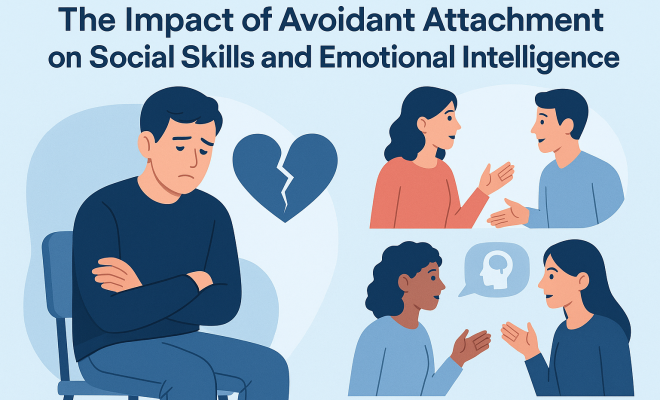
The Impact of Avoidant Attachment on Social Skills and Emotional Intelligence
“`html
Avoidant attachment is a term that describes a particular style of relating to others, often rooted in early childhood experiences. Understanding how this attachment style affects social skills and emotional intelligence is vital for anyone looking to improve their relationships and interactions. This article delves into the nuances of avoidant attachment, offering insights and practical advice for those who identify with this style.
Understanding Avoidant Attachment
Avoidant attachment typically emerges from interactions with caregivers who are consistently unavailable or unresponsive to emotional needs. Children in these environments learn to adapt by suppressing their emotional expressions and distancing themselves from others. This early programming can lead to distinct patterns in adulthood. Adults with avoidant attachment may find it difficult to trust others or express their feelings, leaning towards self-reliance instead.
The psychological theory of attachment was pioneered by John Bowlby and Mary Ainsworth in the mid-20th century. Ainsworth’s “Strange Situation” experiment highlighted how infants reacted to separations and reunions with their caregivers, categorizing attachment styles into secure, anxious, and avoidant. People with avoidant attachment often struggle with intimacy and can feel overwhelmed by emotional closeness, which directly impacts their social interactions.
Impacts on Social Skills
Social skills are essential for building relationships, both personal and professional. Individuals with avoidant attachment may experience several challenges in social settings:
- Difficulty in Initiating Conversations: Avoidantly attached individuals often struggle to start conversations, fearing vulnerability. This can lead to missed opportunities in networking or making new friends.
- Limited Emotional Expression: Those with avoidant attachment may find it hard to open up about their feelings, making it challenging to establish deeper connections.
- Struggles with Nonverbal Cues: They may misinterpret or overlook nonverbal communication, which plays a crucial role in social interactions.
- Conflict Avoidance: Avoidant individuals tend to avoid conflicts, sometimes leading to unresolved issues in relationships. This avoidance can cause friction and misunderstandings over time.
These challenges can create a cycle of isolation and relational difficulties. The more someone withdraws, the less practice they have in navigating social situations, reinforcing their avoidance.
Emotional Intelligence: A Crucial Component
Emotional intelligence (EI) is defined as the ability to recognize, understand, and manage one’s own emotions, as well as to recognize and influence the emotions of others. It plays a critical role in effective communication and relationship-building. For individuals with avoidant attachment, emotional intelligence can be significantly hampered.
Research from psychologist Daniel Goleman indicates that there are five key components of emotional intelligence: self-awareness, self-regulation, social awareness, empathy, and relationship management. Individuals with avoidant attachment often struggle particularly with:
- Self-Awareness: They may have difficulty recognizing their own emotional needs, which can lead to frustration and anxiety.
- Empathy: Understanding others’ feelings requires a degree of openness, which can feel threatening for avoidant individuals.
- Relationship Management: Building and maintaining relationships requires emotional investment, which avoidant individuals might shy away from.
As a result, the ability to connect with others on an emotional level is severely compromised, often leading to shallow or superficial relationships.
Impact on Professional Life
The repercussions of avoidant attachment extend beyond personal relationships into professional scenarios. In the workplace, effective collaboration, teamwork, and networking are crucial for success. However, individuals with avoidant attachment may find themselves at a disadvantage due to their social skill deficits.
Managers and leaders often need to engage in emotional labor—understanding team dynamics, providing feedback, and navigating interpersonal conflicts. Avoidant individuals may struggle with these tasks, leading to: (See: Attachment theory overview.)
- Missed Opportunities for Leadership: Their inability to connect emotionally may prevent them from being seen as approachable leaders.
- Difficulty in Teamwork: Collaboration relies on open communication and trust, which can be challenging for those who avoid emotional closeness.
- Networking Challenges: Building professional networks is often based on personal connections, which avoidant individuals may not cultivate.
These challenges can hinder career advancement, leading to feelings of frustration and inadequacy.
Strategies for Improvement
While avoidant attachment can pose challenges to social skills and emotional intelligence, there are concrete steps individuals can take to develop these areas:
- Therapy and Counseling: Engaging with a therapist who specializes in attachment theory can provide insights and strategies for overcoming avoidance. Cognitive-behavioral therapy (CBT) is particularly effective in addressing cognitive distortions associated with avoidant attachment.
- Practice Vulnerability: Start with small steps. Share a minor personal story or an opinion in a safe environment. Gradually increase the depth of your sharing as you build trust.
- Mindfulness Practices: Mindfulness can help in recognizing and regulating one’s emotions. Techniques such as meditation can assist in developing self-awareness and emotional regulation.
- Social Skills Training: Consider joining groups or workshops focused on building social skills. Role-playing scenarios can help in practicing conversational techniques.
By actively working on these strategies, individuals can begin to break the cycle of avoidance and improve their interpersonal relationships.
Real-Life Examples
Understanding the theoretical implications of avoidant attachment is essential, but real-life examples can offer powerful insights into how it manifests. Consider the story of Laura, a marketing manager who struggles with making connections at work. Her avoidant attachment style leads her to keep her colleagues at arm’s length, missing networking opportunities and collaborative potential.
After recognizing her pattern, Laura sought therapy. Through her sessions, she learned to identify her triggers and practiced opening up to her peers. She shared her thoughts during team meetings, leading to newfound connections and improved teamwork. Over time, Laura’s confidence grew, and she found herself moving into a leadership role, showcasing how addressing avoidant attachment can significantly alter one’s professional trajectory.
Current Relevance in a Digital Age
In today’s digitally driven world, the implications of avoidant attachment are particularly noteworthy. Social media and online platforms can create a façade of connection while simultaneously exacerbating feelings of isolation for avoidantly attached individuals. The online environment often lacks in-depth emotional exchanges, making genuine connections harder to establish.
Moreover, the rise of remote work has made face-to-face interactions less frequent, potentially increasing avoidance. Without the need to engage in physical spaces, individuals with avoidant attachment may find it even easier to withdraw from social settings.
Given these trends, it’s more important than ever for those with avoidant attachment to actively seek out opportunities for genuine social interaction—both online and offline. Engaging in community activities, support groups, or even online forums focused on personal growth can help break down barriers and encourage more meaningful connections.
The Role of Education
Education plays a crucial role in understanding and addressing the impacts of avoidant attachment on social skills and emotional intelligence. Integrating attachment theory into educational curriculums can help raise awareness among both students and educators.
Teaching social-emotional learning (SEL) in schools provides students with the tools to understand their emotions, recognize those in others, and develop healthier relationships. Programs that focus on building empathy, communication skills, and emotional regulation can be beneficial for all students—especially those who may exhibit signs of avoidant attachment.
By fostering an environment that emphasizes emotional intelligence, educational institutions can help break the cycle of avoidant attachment for future generations, paving the way for healthier interpersonal interactions. (See: CDC on mental health and attachment.)
Expert Perspectives
To gain deeper insights into avoidant attachment and its implications for social skills, we consulted several experts in psychology and attachment theory.
Dr. Emily Hart, a clinical psychologist, emphasizes that “individuals with avoidant attachment often have a rich inner emotional life but are conditioned to hide it. This internal conflict can lead to significant stress.” She advocates for creating safe spaces where these individuals can express themselves without judgment.
Another expert, Professor Mark Johnson, a well-known researcher in attachment theory, highlights the role of mindfulness. “Mindfulness practices can help individuals with avoidant attachment to connect with their emotions gradually,” he notes. “Over time, this connection can pave the way for healthier relationships.” His research suggests that even short, daily mindfulness exercises can lead to substantial improvements in emotional awareness.
Statistics and Studies
Understanding the prevalence and impact of avoidant attachment can provide further context. According to a study published in the journal *Attachment & Human Development*, approximately 25% of adults exhibit avoidant attachment styles. This statistic underscores how common this experience is, affecting a significant portion of the population.
Another compelling statistic from the American Psychological Association indicates that individuals with avoidant attachment are more likely to report feelings of loneliness and dissatisfaction in their relationships compared to those with secure attachment. The data suggests that addressing these attachment issues can improve overall well-being.
Moreover, studies show that therapy can significantly reduce the negative consequences of avoidant attachment. A meta-analysis revealed that individuals engaging in therapeutic practices reported an increase in relationship satisfaction and emotional openness after completing a structured program designed to address attachment issues.
Practical Tips for Building Social Skills
Improving social skills can be a gradual process, especially for those with avoidant attachment. Here are some practical tips to help you build social skills effectively:
- Set Small Goals: Start with specific, achievable social goals, such as having a brief chat with a coworker or attending a social event for a limited time.
- Use Positive Affirmations: Reinforce your self-worth and ability to connect with others by using positive affirmations. Remind yourself that it’s okay to be vulnerable.
- Engage in Group Activities: Joining clubs or groups that align with your interests can provide a more comfortable setting for social interactions.
- Reflect on Encounters: After social situations, reflect on what went well and what could improve. This reflection can help you learn and grow.
- Seek Feedback: Ask trusted friends or family for feedback on your social interactions. They can provide insights that you might not be aware of.
Common Misconceptions
Addressing avoidant attachment can be complicated by misconceptions. Some common myths include:
- Avoidant Individuals Don’t Care: It’s a misconception that people with avoidant attachment don’t care about relationships. Often, they care deeply but fear vulnerability.
- Therapy is Not Necessary: Some may think they can overcome avoidant attachment alone, but professional help can provide crucial support.
- All Avoidance is Negative: While avoidance can lead to challenges, it’s important to recognize that some individuals may need boundaries to feel safe.
FAQ Section
What is avoidant attachment?
Avoidant attachment refers to a relational style often formed in childhood, where individuals learn to suppress their emotional needs due to unresponsive or unavailable caregivers.
How can I tell if I have avoidant attachment?
Common signs include difficulty in trusting others, reluctance to express feelings, and a tendency to withdraw from emotional intimacy.
Can avoidant attachment be changed?
Yes, with therapy, mindfulness practices, and social skills training, individuals can work towards healthier relational patterns and improve their emotional intelligence.
What are some effective therapeutic approaches for avoidant attachment?
Cognitive-behavioral therapy (CBT) and attachment-focused therapy are both effective in addressing the thought patterns and behaviors associated with avoidant attachment.
How does avoidant attachment affect parenting?
Individuals with avoidant attachment may find it challenging to connect emotionally with their children, potentially leading to a cycle of avoidant behaviors in the next generation. Awareness and active efforts can help break this cycle.
Building Interpersonal Relationships: A Step-by-Step Approach
For individuals looking to improve their social skills and mitigate the effects of avoidant attachment, breaking down the process into manageable steps can be extremely beneficial. Here’s a simple guide:
- Self-Reflection: Start with an honest assessment of your feelings about relationships. Journaling can be a useful tool for uncovering your thoughts and emotions.
- Identify Triggers: Keep track of situations that trigger your avoidance. Understanding these can help you prepare and respond differently in future interactions.
- Practice Gradual Exposure: Gradually expose yourself to social situations that feel uncomfortable. This could range from attending a small gathering to having a one-on-one conversation.
- Develop Active Listening Skills: Focus on listening more than speaking in conversations. This can relieve some pressure and help you engage with others more comfortably.
- Monitor Your Progress: Regularly check in with yourself about how you feel during and after social interactions. Celebrate small successes, as they are vital for building confidence.
Peer Support: Finding Community
For many, building social skills can be daunting, especially if you’re dealing with avoidant attachment. One effective way to navigate this is through peer support. Here’s how to find and utilize community resources:
- Support Groups: Look for support groups focused on attachment styles or social anxiety. Sharing experiences with others facing similar challenges can reduce feelings of isolation.
- Online Communities: Engage with online forums and groups where you can discuss your experiences and learn from others. Websites like Reddit have communities tailored to mental health discussions.
- Workshops and Classes: Many local organizations offer workshops in emotional intelligence, communication skills, and social interactions. These can provide structured environments to practice skills.
- Friends and Family: Reach out to supportive friends or family members who can encourage you to engage socially and provide constructive feedback.
The Long-Term Benefits of Addressing Avoidant Attachment
Addressing avoidant attachment is not just about improving social skills; it can lead to profound long-term benefits in various aspects of life. Here are some positive outcomes individuals may experience:
- Improved Relationships: As you develop healthier attachment styles, your personal and professional relationships can become more fulfilling and supportive.
- Enhanced Emotional Well-being: Increased emotional intelligence can lead to greater self-awareness and emotional regulation, contributing to overall mental health.
- Career Advancement: Stronger social skills can open doors to networking opportunities and career growth, as effective collaboration becomes more feasible.
- Increased Resilience: Building emotional and social resilience can help you better navigate life’s challenges, enhancing your overall quality of life.
Conclusion: A Path Forward
Living with avoidant attachment can pose significant challenges to social skills and emotional intelligence. However, understanding the roots of this attachment style and actively working towards improvement can lead to profound changes in one’s personal and professional life. Whether through therapy, practice, or educational initiatives, the path to enhanced social skills and emotional intelligence is not only achievable but essential for fostering deeper connections with ourselves and others.
“`
Trending Now
Frequently Asked Questions
What is avoidant attachment?
Avoidant attachment is a style of relating to others that typically develops from early childhood experiences with unresponsive caregivers. Individuals with this attachment style often suppress their emotions and distance themselves from others, leading to challenges in forming close relationships.
How does avoidant attachment affect social skills?
Avoidant attachment can hinder social skills by making it difficult for individuals to initiate conversations, express emotions, and build trust. This can result in missed networking opportunities and challenges in personal relationships.
What are the signs of avoidant attachment in adults?
Adults with avoidant attachment often exhibit signs such as difficulty trusting others, reluctance to express feelings, and a tendency towards self-reliance. They may feel overwhelmed by emotional closeness, impacting their social interactions.
Can avoidant attachment be changed?
Yes, avoidant attachment can be changed through self-awareness, therapy, and practice in developing emotional intelligence and social skills. Engaging in supportive relationships can also help individuals learn to manage their attachment style.
What is the impact of avoidant attachment on emotional intelligence?
Avoidant attachment can negatively impact emotional intelligence by limiting emotional expression and awareness. Individuals may struggle to identify and communicate their feelings, which can hinder their ability to understand and connect with others emotionally.
Agree or disagree? Drop a comment and tell us what you think.

