Teach Emotional Regulation to Preschool & Kindergarten Kids
“`html
Understanding Emotional Regulation
Emotional regulation is the ability to manage and respond to emotional experiences in a healthy way. For young children, especially those in preschool and kindergarten, this skill is crucial. At this stage of development, children are still learning how to identify their feelings, express them appropriately, and cope with overwhelming emotions. This foundational skill can set the stage for their future emotional health and social interactions.
Emotional regulation involves various components, including the ability to recognize emotions, understand their triggers, and employ strategies to manage them. For preschoolers, these skills often manifest through play and social interactions, making early childhood education a prime opportunity for teaching emotional regulation.
The Importance of Emotional Regulation in Early Education
Teaching emotional regulation in preschool is more than just a nice-to-have; it’s a necessity. Research indicates that children who learn to regulate their emotions have better social skills, improved academic performance, and enhanced mental health outcomes. For instance, a study published in the journal Child Development found that children who can manage their emotions effectively are less likely to exhibit behavioral problems as they grow.
Additionally, emotional regulation plays a significant role in conflict resolution and relationship-building. Children who can manage their feelings are more likely to empathize with peers, which fosters positive interactions and friendships. In a classroom setting, this skill can lead to a more harmonious learning environment, where children are able to focus on their studies rather than being distracted by emotional distress.
Key Components of Teaching Emotional Regulation
Several key components are essential when teaching emotional regulation in preschool. These include:
- Emotion Recognition: Helping children label their emotions, such as happiness, sadness, frustration, and anger.
- Understanding Triggers: Teaching children to identify what causes their feelings, whether it’s a situation or a specific event.
- Expression of Emotions: Encouraging healthy ways to express emotions, whether through words, art, or play.
- Coping Strategies: Introducing strategies such as deep breathing, counting to ten, or using calming techniques to manage feelings.
- Social Skills: Promoting skills such as sharing, taking turns, and expressing empathy, which are crucial for building relationships.
Practical Strategies for Educators
Implementing emotional regulation strategies in the classroom doesn’t need to be daunting. Here are some practical techniques educators can adopt:
1. Integrate Emotional Literacy into Daily Activities
Incorporating emotional literacy into daily routines can help children recognize and express their feelings. Reading books that highlight emotions, such as The Feelings Book by Todd Parr, can create discussions about feelings. Encourage children to share experiences related to the emotions addressed in the story, fostering a safe space to express themselves.
2. Use Visual Aids
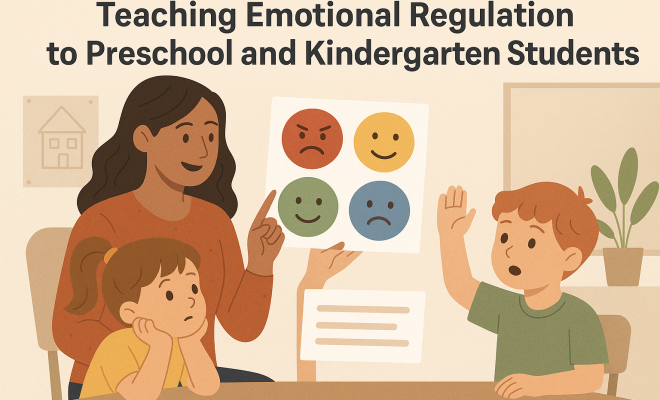
Visual aids can be powerful tools in teaching emotional regulation. For example, using an emotion chart can help children identify their current feelings. You can create a feelings wheel, where children can point to the emotion they are experiencing, thus fostering awareness and understanding.
3. Role-Playing Scenarios
Role-playing can be an effective way for children to practice emotional regulation. Create scenarios that might provoke strong emotions, such as losing a toy or not getting a turn on the slide. Guide children through these scenarios, encouraging them to express feelings while also exploring solutions.
4. Mindfulness and Breathing Exercises
Incorporating mindfulness practices can help children learn to calm themselves when feeling overwhelmed. Simple breathing exercises, like taking deep breaths or blowing bubbles, can help children center themselves. Even just a few minutes of mindfulness practice can significantly improve focus and emotional control.
5. Create a Calm-Down Corner
A calm-down corner in the classroom provides a space where children can retreat when they feel overwhelmed. This space can include calming tools like stress balls, soft pillows, or books about emotions. Encourage children to use this space when they need a break, empowering them to take charge of their emotional regulation.
Engaging Families in Emotional Learning
While educators play a crucial role, families also have a significant influence on a child’s emotional development. Engaging families in the process can create a consistent message about emotional regulation. Here are some ways to involve parents:
1. Workshops and Resources
Organizing workshops for parents can help them understand the importance of emotional regulation and teach them strategies they can use at home. Providing resources, such as books or articles, can also equip parents with tools to support their children’s emotional growth.
2. Communication
Regular communication between educators and families about a child’s emotional progress can foster a partnership in teaching emotional regulation. Sharing successes or challenges can help parents reinforce the skills being taught in the classroom. (See: children and emotional regulation.)
3. Family Activities
Encouraging family activities that focus on emotional learning can create opportunities for practice outside of school. For instance, families can play games that involve identifying emotions or practice role-playing scenarios together.
Current Research and Trends in Emotional Regulation
Recent studies continue to shed light on the importance of emotional regulation in early childhood education. Research shows that integrating social-emotional learning (SEL) into the curriculum positively impacts student behavior and academic performance. A 2021 meta-analysis found that SEL programs can lead to significant improvements in students’ emotional regulation skills, relationships, and academic outcomes.
Moreover, the COVID-19 pandemic has underlined the necessity for emotional regulation. As children face new social dynamics and stressors, educators are encouraged to prioritize emotional learning even more. Programs aimed at developing emotional regulation skills can help children cope with anxiety and uncertainty, equipping them with tools to manage their feelings in challenging situations.
Challenges and Solutions in Emotional Regulation Education
While teaching emotional regulation is vital, it doesn’t come without challenges. Some key obstacles educators face include:
1. Diverse Emotional Needs
Each child has unique emotional needs and experiences. What works for one child may not resonate with another. To address this, educators can use differentiated instruction to tailor emotional learning to each child’s needs. This may involve observing children’s interactions and adjusting strategies accordingly.
2. Time Constraints
With a packed curriculum, finding time to focus on emotional regulation can be challenging. Educators can integrate emotional learning into existing subjects, such as through literature or social studies, ensuring that emotional regulation becomes an inherent part of the educational experience.
3. Staff Training
To effectively teach emotional regulation, educators themselves must be equipped with the right skills. Providing professional development opportunities focused on emotional intelligence and regulation strategies can enhance teachers’ confidence and effectiveness in this area.
Measuring Progress in Emotional Regulation
Assessing progress in emotional regulation can be complex, given the subjective nature of emotions. However, there are several methods educators can use to gauge children’s emotional growth:
1. Observational Assessments
Regularly observing children during play and social interactions can provide insights into their emotional regulation skills. Educators can take notes on how children handle conflicts, express emotions, and respond to various situations.
2. Self-Reporting Tools
For older preschoolers, self-reporting tools such as simple emotion checklists can help them articulate their feelings. This encourages self-reflection and reinforces their understanding of emotional regulation.
3. Feedback from Peers
Encouraging children to give feedback to each other can promote emotional awareness. It allows them to reflect on their actions and how they affect others, further enhancing their emotional regulation skills.
Wrap-Up: The Future of Emotional Regulation Education
The journey of teaching emotional regulation in preschool is ongoing and ever-evolving. As research continues to support its significance, educators must remain adaptable, incorporating new strategies and insights into their teaching practices. The skills children acquire during these formative years can have lasting effects on their social, emotional, and academic futures.
Ultimately, fostering emotional regulation in young learners is not just about managing feelings; it’s about equipping them with the tools they need to thrive in an increasingly complex world. With the right support and resources, educators can help shape emotionally intelligent individuals ready to face life’s challenges.
Deepening the Understanding of Emotional Regulation
To better frame the importance of emotional regulation in preschool, it’s beneficial to discuss how emotional skills develop over time. Research by the National Association for the Education of Young Children (NAEYC) emphasizes that children as young as two years old can begin to express emotions like joy and frustration. By preschool age, they start to understand more complex emotions such as guilt and pride. This developmental trajectory highlights the importance of targeted educational interventions during preschool years. Fostering emotional regulation early on empowers children to manage their emotions and reactions effectively throughout their lives.
How Emotional Regulation Influences Learning
There’s a direct correlation between emotional regulation and cognitive performance. According to a 2020 study from the University of Pennsylvania, children who exhibit higher levels of emotional regulation tend to have better attention spans and memory retention capabilities. This means that supporting emotional learning not only leads to better social interactions but also enhances academic achievement.
For instance, a preschooler who can calm down after feeling upset is more likely to return to a task with a clear mind and focus, compared to a child who struggles to manage their feelings. Thus, emotional regulation serves as a foundation for lifelong learning and personal development.
Statistics on Emotional Regulation and Child Development
Data from various studies paint a vivid picture of the impact emotional regulation has on children. For example, a report from the Collaborative for Academic, Social, and Emotional Learning (CASEL) indicates that students who participate in SEL programs demonstrate an 11 percentile-point gain in academic achievement compared to those who do not. Furthermore, over 90% of teachers believe that emotional regulation skills are essential for their students’ success.
Additionally, studies show that children who experience difficulties with emotional regulation are at a higher risk for behavioral disorders, including Attention-Deficit/Hyperactivity Disorder (ADHD) and Oppositional Defiant Disorder (ODD). This underscores the need for early intervention and education focused on emotional skills.
Expert Perspectives on Emotional Regulation in Preschool
Experts in child psychology emphasize the role of emotional regulation in fostering resilience and adaptability. Dr. John Gottman, a prominent psychologist known for his research in emotional intelligence, asserts that children learn best when they feel safe and understood. He argues that when educators take the time to nurture emotional skills, they are not only teaching children how to handle their feelings but are also instilling a sense of security and belonging that is vital for academic and social success.
Furthermore, educational psychologist Dr. Linda Darling-Hammond emphasizes that emotional regulation can help mitigate the effects of stress and trauma, particularly in children from underserved communities. She points out that fostering emotional skills in preschool can lead to a more equitable educational environment, where all children have the opportunity to thrive.
Comparative Approaches to Emotional Regulation in Education
Different educational frameworks incorporate emotional regulation in various ways. For example, the Montessori method focuses on child-led learning and independence, allowing children to explore their emotions through free play and guided activities. This approach encourages self-regulation as children make choices and face natural consequences.
In contrast, the Reggio Emilia approach emphasizes collaborative learning and communication. Children are encouraged to express their feelings in group settings, which promotes emotional literacy through peer interactions. Both methods show that emotional regulation can be effectively integrated into diverse educational philosophies, catering to different learning styles.
FAQ: Emotional Regulation in Preschool
What is emotional regulation and why is it important for preschoolers?
Emotional regulation is the ability to recognize, understand, and manage one’s emotions. For preschoolers, developing this skill is essential as it contributes to their social interactions and academic success. Children who can regulate their emotions are better equipped to navigate challenges, resolve conflicts, and build healthy relationships.
How can parents support emotional regulation at home?
Parents can support emotional regulation by creating an environment that encourages open discussions about feelings. Reading books that highlight emotions, practicing mindfulness together, and modeling healthy emotional responses are excellent ways to reinforce what children learn at school. Additionally, families can engage in activities that promote emotional awareness, such as creating an emotion chart together.
What are some signs that a child may struggle with emotional regulation?
Signs of difficulty with emotional regulation can include frequent tantrums, difficulty calming down after upset, aggressive behavior, or withdrawing from social interactions. If a child consistently struggles to manage their feelings, it may be beneficial to seek guidance from educators or child psychologists to address these challenges.
How does emotional regulation affect academic performance?
Emotional regulation has a profound impact on academic performance. Children who can manage their emotions tend to have better focus, problem-solving skills, and resilience in the face of challenges. This translates into higher academic achievement and a more positive attitude towards learning.
Are there specific programs designed to teach emotional regulation in preschool?
Yes, many early childhood education programs incorporate social-emotional learning (SEL) curricula that focus on emotional regulation. Programs like the Second Step curriculum and the Incredible Years provide structured frameworks that teach children about emotions, coping strategies, and building interpersonal skills.
What role do educators play in teaching emotional regulation?
Educators are pivotal in teaching emotional regulation. They set the tone for emotional learning through their interactions with children and the classroom environment. By modeling emotional awareness and providing opportunities for practice, educators help children develop essential skills that lay the groundwork for their lifelong emotional health.
The Role of Play in Emotional Regulation
Play is a vital component of emotional development and regulation in preschoolers. Through play, children explore their emotions, practice social skills, and learn to navigate various emotional landscapes. For example, pretend play — such as playing house or doctor — allows children to express and process their feelings in a safe and imaginative context. This type of play can help them understand different perspectives, which is a crucial aspect of empathy.
Research shows that children who engage in imaginative play exhibit better emotional regulation skills. According to a 2019 study in the journal Developmental Psychology, children who participate in play-based learning environments demonstrate improved emotional understanding and self-regulation compared to those in more structured settings. Thus, incorporating ample playtime in preschool not only enriches learning but also fosters emotional skills.
The Connection Between Emotional Regulation and Behavioral Issues
Understanding the link between emotional regulation and behavioral issues is essential for educators and parents alike. Children who struggle with emotional regulation are more likely to display disruptive behaviors, such as aggression or withdrawal. Research published in the journal Journal of Abnormal Child Psychology indicates that children with poor emotional regulation are at a higher risk for developing behavioral problems, anxiety, and depression as they grow.
By addressing emotional regulation early, educators can potentially reduce the incidence of such issues. Implementing targeted emotional learning strategies can not only enhance a child’s ability to manage their feelings but also decrease disruptive behaviors in school settings. This creates a more conducive learning environment for all students.
Building Emotional Regulation Skills Through Group Activities
Group activities can be particularly beneficial in teaching emotional regulation to preschoolers. Activities that require teamwork, such as group art projects or cooperative games, help children practice sharing emotions and learning to navigate interpersonal conflicts. For instance, during a group art project, a child may feel frustrated when their ideas are not acknowledged by peers. This moment provides a perfect opportunity for educators to guide the child in expressing their feelings and finding a resolution.
Moreover, group activities encourage children to practice empathy, as they learn to recognize and respond to the emotions of their peers. A study in The Journal of Educational Psychology found that children who frequently engage in group activities show higher levels of emotional understanding and regulation. Thus, fostering collaborative experiences in preschool can significantly contribute to emotional skill development.
The Impact of Cultural Factors on Emotional Regulation
Cultural factors play a significant role in shaping how children learn to regulate their emotions. Different cultures have varying beliefs and practices regarding the expression of feelings. For instance, in some cultures, expressing emotions openly is encouraged, while in others, restraint is valued. Understanding these cultural differences is crucial for educators when teaching emotional regulation.
Research suggests that culturally responsive teaching can enhance emotional regulation skills in diverse classrooms. By acknowledging and incorporating cultural perspectives on emotions, educators can create a more inclusive environment that respects children’s backgrounds. This approach not only fosters emotional understanding but also promotes a sense of belonging among all students.
Closing Thoughts on Emotional Regulation in Preschool
The significance of emotional regulation in preschool cannot be overstated. As children navigate their emotional landscapes, they develop essential skills that will impact their relationships, academic success, and overall well-being throughout their lives. Educators, parents, and communities must prioritize emotional learning, providing children with the support and tools they need to thrive.
In a rapidly changing world, fostering emotional regulation skills in young learners is more critical than ever. By embracing effective strategies, engaging families, and recognizing the influence of cultural factors, we can help prepare children to face life’s challenges with resilience and confidence.
“`
Trending Now
Frequently Asked Questions
What is emotional regulation in preschoolers?
Emotional regulation in preschoolers refers to their ability to manage and respond to emotions in a healthy way. It involves recognizing feelings, understanding their triggers, and employing coping strategies, crucial for their social interactions and overall emotional health.
Why is teaching emotional regulation important in early education?
Teaching emotional regulation is vital because it helps children develop better social skills, improves academic performance, and enhances mental health. Children who can manage emotions effectively are less likely to face behavioral issues as they grow.
How can teachers help children with emotional regulation?
Teachers can support emotional regulation by incorporating activities that promote emotion recognition, providing a safe environment for expression, and teaching coping strategies through play and social interactions, fostering a supportive classroom atmosphere.
What are the benefits of emotional regulation for children?
Benefits of emotional regulation for children include improved social skills, better conflict resolution abilities, enhanced empathy towards peers, and a more conducive learning environment, allowing them to focus on studies without emotional distractions.
What strategies can be used to teach emotional regulation?
Strategies to teach emotional regulation include using storybooks to discuss feelings, role-playing scenarios, practicing mindfulness, and encouraging children to express their emotions through art and play, making learning engaging and relatable.
What’s your take on this? Share your thoughts in the comments below — we read every one.