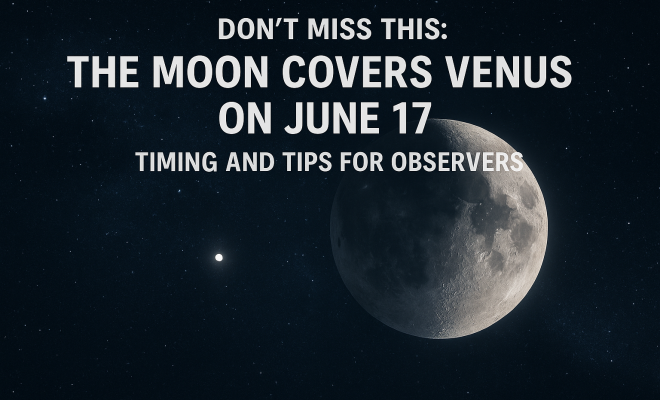
Moon Covers Venus: June 17, 2026 – A Rare Celestial Event
“`html
The night sky often offers breathtaking views, but few events can match the excitement of a celestial alignment where the Moon covers Venus. Mark your calendars for Wednesday, June 17, 2026, as this rare occurrence promises a visual spectacle that should not be missed. This article will guide you through this unique event, detailing what to expect, when and where to watch, and how to make the most of this astronomical phenomenon.
Understanding the Moon-Venus Occultation
The term ‘occultation’ refers to an event when one celestial body passes in front of another, temporarily hiding it from view. In this case, the Moon will move directly in front of Venus, causing the bright planet to vanish from sight for several minutes. Such occurrences are relatively rare, particularly with Venus, the second planet from the Sun, known for its brilliance in the evening and morning sky. When you think about it, the combination of the Moon’s proximity to Earth and Venus’s brightness makes this event particularly engaging for both amateur and seasoned astronomers.
Why This Event Matters
Meteor showers, planetary alignments, and lunar eclipses often steal the spotlight in the astronomical community, but occultations also hold a special place. They provide not just a visual treat but also a fascinating opportunity to study the dynamics of celestial bodies. Observing how the Moon covers Venus can offer insights into their relative distances and the effects of the Moon’s motion.
Moreover, these events often generate a surge in interest among the general public. Searches for “moon covers Venus” spike during the lead-up to the event, as enthusiasts and casual observers alike seek details on how to witness this celestial dance. The visual element is particularly strong; images of the Moon and Venus together can generate significant social media buzz. This makes it an excellent chance for photographers and those wanting to share a little piece of the cosmos with their friends and followers.
Timing Is Everything
In the world of astronomy, timing is crucial, and this event is no exception. The Moon will cover Venus at different times depending on your location in the U.S. Here’s a breakdown:
- East Coast (New York City): The occultation will occur around 10:30 PM EDT.
- Texas (Dallas): Observers can catch the event starting at approximately 9:45 PM CDT.
- Denver: Expect the Moon to cover Venus around 9:00 PM MDT.
Being prepared and knowing the precise timing for your location can significantly enhance your viewing experience. If you’re in a different region, consult local astronomical resources or apps that can provide exact timings based on your coordinates.
How to Prepare for the Occultation
If you want to make the most of this event, preparation is key. First, check the weather forecast for the night of June 17. Clear skies are essential for optimal viewing, so keep an eye on meteorological updates leading up to the event. If the forecast predicts cloud cover, have a backup plan for a nearby location that might offer better visibility.
Next, gather your gear. While Venus is visible to the naked eye, you may want to enhance your experience with a telescope or binoculars. These tools can provide an astonishing view, particularly as the Moon slowly obscures the planet. Don’t forget to bring along a camera to capture this fleeting moment. Astrophotography is a rewarding hobby, and the Moon covering Venus offers an excellent opportunity to practice your skills.
Finding the Best Viewing Locations
Choosing the right spot to watch the Moon cover Venus is just as vital as the timing. Look for locations that offer a clear view of the western horizon, where both celestial bodies will appear. Urban areas might be obstructed by buildings and light pollution, so consider heading to a park or an open space away from city lights.
Some public observatories and astronomy clubs often host special viewing events for such occasions. If there’s one in your area, it could be a good idea to join in; not only will you have access to better telescopes and guidance from enthusiasts, but it can also be a fun social outing. (See: Understanding occultation events.)
Documenting the Experience
As you prepare for this event, think about how you’d like to document the experience. Social media is a powerful tool for sharing astronomical events, and capturing the Moon covering Venus can create stunning content. If you’re planning on taking photos, set your camera to manual mode to control exposure settings. The Moon will be bright, and Venus will be relatively dim by comparison, so finding the right balance is crucial.
Consider using a tripod to stabilize your shots and reduce any blur. If you’re using a phone, many have excellent camera capabilities, especially when you use special astrophotography apps that can help you adjust settings for low-light conditions. Sharing your images online can spark interest and perhaps inspire others to look up at the night sky.
Why Venus Captivates Skywatchers
Venus often earns the nickname “Evening Star” or “Morning Star” due to its brightness and visibility around sunset or sunrise. Its beauty has captured the imaginations of cultures throughout history, serving as a symbol of love and beauty. When the Moon covers Venus, the event adds a layer of intrigue, as observers witness not just the disappearance of a bright celestial body, but a dynamic interaction between two heavenly entities.
This phenomenon is a reminder of the wonders of our solar system. Looking up and witnessing the Moon’s slow glide across the face of Venus can inspire feelings of awe and curiosity about the universe. It invites us to ponder our place in the cosmos and the intricate connections between celestial bodies.
Further Exploration of Occultations
While the Moon covering Venus is an exciting event, it’s just one of many occultations that occur throughout the year. For instance, the Moon often passes in front of other planets, and each occurrence offers a unique viewing experience. Observations of lunar occultations have helped astronomers refine their understanding of the Moon’s orbit and the distances between celestial bodies.
Additionally, some occultations involve stars, providing fascinating opportunities to study the brightness and size of these distant suns. If you find yourself captivated by the Moon’s dance with Venus, you may want to keep an eye out for upcoming occultations, as they can offer equally thrilling experiences.
Frequently Asked Questions About the Moon Covering Venus
What exactly happens during the occultation of Venus by the Moon?
During the occultation, the Moon passes directly between Earth and Venus, blocking our view of the planet. This event lasts for several minutes and can be observed from various locations on Earth depending on the alignment.
How often does the Moon cover Venus?
Occultations of Venus by the Moon are relatively rare. Many times, the Moon will be near Venus but not directly in front of it. On average, there are about 10 to 12 lunar occultations of Venus each century, making this a significant event for sky watchers.
Can I see the occultation with my naked eye?
Yes, Venus is one of the brightest objects in the night sky, and the Moon is also quite visible. You should be able to see the event without any special equipment, but using binoculars or a telescope can enhance the experience.
Is it safe to observe the Moon covering Venus?
Absolutely! Observing the Moon and Venus is safe for your eyes. Unlike solar events, there are no harmful rays emitted that require special equipment, so you can enjoy the event with just your eyes or simple optical aids.
What other celestial events should I look out for in 2026?
In addition to the Moon covering Venus, 2026 will feature a partial lunar eclipse on May 26 and a total solar eclipse on August 12. Keep an eye on astronomical calendars for more exciting events occurring that year! (See: NASA's resources on celestial events.)
How can I share my experience with others?
Using social media platforms is a great way to share your experience. You can post photos, live updates, or even host a watch party with friends and family. Engaging with local astronomy clubs can also help you connect with others who are interested in the event.
Learning from the Experience
Witnessing the Moon cover Venus isn’t just a sight to behold; it’s an opportunity for education. Many online resources and community events will provide information about the science behind these phenomena. You might learn about the orbits of Venus and the Moon, their relative sizes, distances from Earth, and how they move through space. Taking the time to educate yourself can add layers of appreciation to the experience.
Local Astronomy Clubs and Resources
Consider reaching out to local astronomy clubs or planetariums in your area. These organizations often host events, offer telescopes for public viewing, and provide knowledgeable guides who can enhance your understanding of celestial events. Participating in these gatherings can also connect you with other enthusiasts, creating a sense of community around the shared wonder of the night sky.
Embracing the Night Sky Beyond the Occultation
While the Moon covering Venus will be a spectacular highlight in 2026, it’s just one of many wonders in our universe. Whether you’re gazing at a full moon, tracking the movements of Mars, or catching a glimpse of a shooting star, the night sky is full of opportunities for exploration. Consider keeping a journal of your observations, noting the dates and details of celestial events you witness, as this can deepen your connection to the cosmos.
Celestial Events Leading Up to the Occultation
Before the Moon covers Venus, several significant celestial events will occur that can serve as excellent warm-ups for skywatchers. For instance, the Perseid meteor shower, peaking around August 12 each year, offers a fantastic chance to see shooting stars against the dark night sky. Additionally, the conjunction of Jupiter and Saturn in early 2026 will create a dazzling sight that stargazers won’t want to miss.
Another noteworthy event is the opposition of Mars, which occurs when the planet is directly opposite the Sun from Earth. This makes Mars particularly bright and visible, offering a perfect opportunity for telescope observers to spot surface features and perhaps even Mars’ polar ice caps. Engaging in these events can enhance your overall appreciation for the cosmos and lead up to the thrilling experience of the Moon covering Venus.
Enhancing Your Astronomy Skills
As you prepare for the Moon covering Venus, consider using this opportunity to enhance your astronomy skills. Start by familiarizing yourself with the constellations surrounding these celestial bodies. Apps like SkySafari or Star Walk can help you identify stars and constellations in real-time, making your viewing experience more immersive.
Additionally, you might want to experiment with tracking celestial objects. Many modern telescopes come with computerized tracking systems, but you can also practice manually tracking the motion of the Moon and Venus across the night sky. This builds a deeper understanding of celestial mechanics and enhances your observational skills.
Involving Friends and Family
Sharing your love for astronomy with friends and family can make the experience of watching the Moon cover Venus even more enjoyable. Organize a night out under the stars, complete with blankets and snacks, and invite others to join you. Whether it’s a casual gathering or a more formal viewing party, involving others can turn a solitary experience into a memorable event. (See: Research on celestial dynamics.)
Consider printing out star charts or having a mini-educational session to discuss the significance of the event and share fun facts about Venus and the Moon. Engaging others can foster a sense of community and spark curiosity in those who might not typically pay attention to the stars.
Capturing the Moment: Astrophotography Tips
If you’re keen on capturing the Moon covering Venus through photography, here are some tips to help you get the best shots. First, familiarize yourself with your camera settings. A properly exposed image of the Moon can be tricky due to its brightness, so play around with your settings beforehand to find the right balance.
Consider experimenting with different lenses if you have a DSLR or mirrorless camera. A telephoto lens can help you get closer to the action, while a wide-angle lens may capture the surrounding night sky beautifully. If you want to take a time-lapse video of the event, some cameras and smartphones allow you to set intervals for capturing images, which can be compiled later into a stunning visual story.
Make It a Regular Event: Stargazing Nights
After witnessing the Moon cover Venus, consider making stargazing a regular event. Host monthly gatherings to observe different celestial events throughout the year. Whether it’s a lunar eclipse, planetary conjunction, or simply exploring the night sky, forming a habit can enrich your understanding of astronomy and strengthen bonds with fellow stargazers.
Encourage participants to research the events ahead of time, share their findings, and bring their telescopes or binoculars. Not only does this create an engaging environment for learning, but it helps to establish a community with shared interests and passion for the night sky.
Conclusion: Embrace the Magic of the Night Sky
Occultations such as the Moon covering Venus are reminders of the beauty and mystery of our universe. As June 17, 2026, approaches, take the time to prepare, educate yourself, and share the experience with others. This event isn’t just about witnessing a temporary disappearance; it’s about connecting with the cosmos and the shared human experience of gazing upward in wonder.
Make sure to embrace the moment, whether you’re capturing the event on camera or simply enjoying it with friends and family. The night sky has a way of bringing people together, sparking conversations, and igniting a sense of curiosity. As the Moon gracefully obscures Venus, let it serve as a reminder of the beauty that lies beyond our everyday lives.
“`
Trending Now
Frequently Asked Questions
When will the Moon cover Venus?
The Moon will cover Venus on June 17, 2026. This rare celestial event is an exciting opportunity for both amateur and experienced astronomers to witness a spectacular alignment in the night sky.
What is a Moon-Venus occultation?
A Moon-Venus occultation occurs when the Moon passes directly in front of Venus, temporarily hiding the bright planet from view. This fascinating event allows observers to experience a unique astronomical phenomenon.
Why are occultations important in astronomy?
Occultations, such as the Moon covering Venus, are important because they provide insights into the dynamics of celestial bodies. They help astronomers study distances and the motion of the Moon against bright planets like Venus.
How can I observe the Moon covering Venus?
To observe the Moon covering Venus, find a clear viewing location on the night of June 17, 2026. Use binoculars or a telescope for a better view, and plan to arrive early to set up and enjoy the spectacle.
What makes the Moon-Venus event special?
The Moon-Venus event is special due to its rarity and visual appeal. Venus is one of the brightest objects in the night sky, and seeing it disappear behind the Moon creates a captivating experience for observers.
Have you experienced this yourself? We’d love to hear your story in the comments.