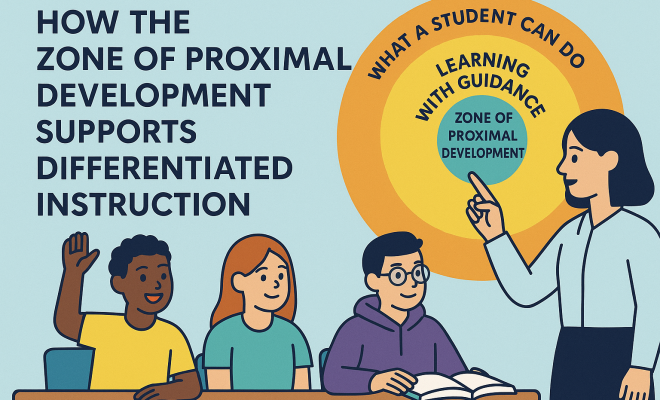
How the Zone of Proximal Development Supports Differentiated Instruction
“`html
Understanding the Zone of Proximal Development
The concept of the zone of proximal development (ZPD) originates from the work of Russian psychologist Lev Vygotsky in the early 20th century. Vygotsky posited that there is a crucial space between what a learner can do independently and what they cannot achieve even with help. This zone represents the range of tasks that learners can perform with guidance but not yet on their own. Understanding this zone is essential for educators aiming to tailor their teaching approaches to diverse student needs.
The Foundations of Differentiated Instruction
Differentiated instruction is an educational strategy that focuses on customizing teaching to meet the various needs of students. Rather than a one-size-fits-all approach, differentiated instruction aims to adapt the learning environment, content, process, and products according to students’ abilities, interests, and learning profiles. This method is grounded in the belief that all students have unique strengths and weaknesses, and effective teaching must consider these differences.
Connecting ZPD to Differentiated Instruction
The link between the zone of proximal development and differentiated instruction is profound. Educators can leverage the ZPD to create a learning environment where students are challenged just beyond their current capability, thereby promoting growth and engagement. By identifying each student’s ZPD, teachers can provide appropriate scaffolding—temporary support that is gradually removed as students become more proficient.
Scaffolding Strategies for Effective Learning
To facilitate learning within the ZPD, educators can employ various scaffolding strategies:
- Modeling: Teachers demonstrate a skill or process before asking students to attempt it themselves, providing a clear example of the expected outcome.
- Collaborative learning: Pairing students with peers who possess complementary skills allows them to support each other, fostering a collaborative atmosphere.
- Questioning: Open-ended questions encourage students to think critically and explore concepts more deeply.
- Feedback: Timely and specific feedback helps guide students through their learning journey and reinforces understanding.
Practical Applications of the ZPD in the Classroom
Implementing the concept of the zone of proximal development in the classroom can take many forms. For instance, teachers can assess students’ current levels of understanding using formative assessments, allowing them to identify each student’s ZPD accurately. Once identified, educators can group students based on their ZPDs and tailor activities to match their needs. For example, a teacher might create small groups where students tackle different tasks based on their readiness levels, ensuring that they are all working within their ZPD.
Benefits of Using ZPD in Differentiated Instruction
Integrating the ZPD into differentiated instruction offers numerous benefits:
- Enhanced engagement: When students are challenged at the right level, they are more likely to be engaged and motivated to learn.
- Increased mastery: Targeting learning within the ZPD helps students develop skills and knowledge more effectively.
- Growth mindset: Students begin to see challenges as opportunities for growth, fostering resilience and a love for learning.
- Improved self-efficacy: As students succeed in tasks within their ZPD, they gain confidence in their abilities, which can lead to greater academic success.
The Role of Technology in Supporting ZPD
Technology can be a powerful ally in applying the zone of proximal development within differentiated instruction. Digital tools can provide personalized learning experiences, enabling students to progress at their own pace. For example, educational software can adapt its content based on a student’s performance, ensuring that they remain within their ZPD. Furthermore, online platforms can facilitate collaborative learning experiences, allowing students to engage with peers and access resources that support their learning. (See: Zone of Proximal Development.)
Challenges Educators May Face
While the integration of the ZPD into differentiated instruction is beneficial, it does not come without challenges. Educators may face difficulties in accurately assessing each student’s ZPD, especially in diverse classrooms with varying levels of ability. Additionally, managing multiple groups or tasks simultaneously can be overwhelming. Teachers must also be adept at creating a supportive classroom environment that encourages risk-taking and collaboration among students.
Current Relevance: ZPD in Modern Education
As educational landscapes evolve, understanding the zone of proximal development remains critically relevant. With the push towards personalized learning, educators are increasingly called upon to meet individual student needs. The ZPD provides a theoretical framework that guides teachers in crafting effective, engaging learning experiences. Furthermore, with the rise of online and blended learning models, leveraging the ZPD can lead to innovative instructional strategies that better support diverse learners.
Examples of ZPD in Various Educational Settings
The application of the ZPD can be seen across different educational contexts, illustrating its versatility. In a kindergarten classroom, for instance, teachers can use guided reading sessions where children read books slightly above their independent reading level. This practice helps them develop their reading skills within their ZPD while receiving necessary support from the teacher. In contrast, in a high school math class, a teacher might implement peer tutoring, pairing students who excel in algebra with those who struggle with the concepts. This not only aids the learners below their level but also reinforces the tutor’s understanding by requiring them to explain their thought processes.
Statistics and Research on ZPD Effectiveness
Research has shown that understanding and applying the zone of proximal development can lead to significant improvements in student learning outcomes. According to a study published in the Journal of Educational Psychology, students who received instruction tailored to their ZPD demonstrated a 30% increase in test scores compared to those who received traditional, one-size-fits-all instruction. This statistic underscores the power of differentiated instruction, emphasizing the need for educators to assess and adapt their teaching strategies accordingly.
Expert Perspectives on ZPD
Educational experts emphasize the importance of the ZPD in shaping effective teaching practices. Dr. Linda Darling-Hammond, a renowned educator and researcher, states, “Understanding the ZPD allows educators to unlock the potential of their students. When we teach within this zone, we empower students to take ownership of their learning.” Similarly, Dr. John Hattie, known for his work on visible learning, highlights that effective feedback and scaffolding based on a student’s ZPD can lead to substantial academic gains. These expert insights reinforce the idea that when teachers are aware of their students’ ZPDs, they can implement strategies that foster deeper learning and understanding.
FAQs about the Zone of Proximal Development
What is the zone of proximal development?
The zone of proximal development (ZPD) is the range of tasks that a learner can perform with assistance but not independently. It highlights the importance of social interaction in learning, as students often need support to reach their potential.
How can teachers identify a student’s ZPD?
Teachers can identify a student’s ZPD through various methods, including formative assessments like quizzes, observations during classroom activities, or one-on-one discussions. These assessments help educators gauge where students are in their learning and what they need to progress. (See: Harvard's Educational Research.)
Can the ZPD apply to adult learners as well?
Absolutely! The concept of ZPD is applicable to learners of all ages. Adult education programs often use this framework to help learners acquire new skills, especially when they are transitioning to new job roles or learning new technologies.
What are some practical ways to implement ZPD in the classroom?
Some practical ways to implement ZPD include using small group instruction, peer tutoring, providing varied learning materials, and maintaining ongoing assessments to adjust teaching methods based on student progress.
How does ZPD relate to social learning theories?
The ZPD is closely related to social learning theories, particularly those developed by Vygotsky. His ideas emphasize that learning is a social process and that interaction with more knowledgeable others (teachers or peers) is essential for cognitive development. This learning occurs best in the ZPD, where collaboration and scaffolding take place.
What challenges might arise when applying the ZPD in diverse classrooms?
Diverse classrooms may present challenges such as varying levels of readiness, different cultural backgrounds, and diverse learning styles. Teachers need to be flexible and creative in their approaches, ensuring that they meet the needs of all students while effectively managing the classroom dynamics.
Leveraging ZPD in Remote and Hybrid Learning
The shift to remote and hybrid learning has added layers of complexity to the application of the zone of proximal development. Teachers must now find innovative ways to support students in an online environment. This includes utilizing digital platforms that allow for real-time feedback, creating virtual breakout rooms for small group discussions, and fostering peer interactions through discussion boards. For instance, a teacher might use an online tool like Google Classroom to assign tasks that are tailored to various ZPDs, enabling students to collaborate with peers while receiving the necessary guidance.
Integrating ZPD with Culturally Responsive Teaching
Combining the principles of the ZPD with culturally responsive teaching can enhance learning experiences for a diverse student body. Educators can draw from students’ cultural backgrounds and experiences, helping them relate to the material more personally. When teachers understand students’ ZPDs within the context of their cultural frameworks, they can create more meaningful learning experiences. For example, a history lesson might include perspectives from various cultures, allowing all students to engage in discussions that are relevant to their backgrounds, thus operating effectively within their ZPD.
Case Studies of ZPD in Action
Several schools have successfully implemented the ZPD framework, leading to improved educational outcomes. One notable example comes from a charter school in New York, where teachers utilized individualized learning plans based on students’ ZPDs. By conducting regular assessments, the school was able to adjust classroom activities to suit the learning needs of each student. As a result, they saw a significant rise in literacy scores over two academic years.
Another illustrative case occurred in a suburban school district, which adopted a peer mentoring program. The school identified students with higher proficiency levels and paired them with peers who required more support. This peer-to-peer interaction not only helped those struggling to understand complex math concepts but also allowed the mentors to solidify their knowledge by teaching others. This approach proved highly effective in creating a collaborative learning environment aligned with the principles of the ZPD.
Future Directions for ZPD Research and Practice
The ongoing evolution of educational practices calls for continuous research and adaptation of the ZPD framework. Future studies might explore the impact of artificial intelligence in personalizing learning experiences within the ZPD. AI-driven platforms can analyze student performance data to suggest tailored instructional content, ensuring that learners are consistently engaged within their ZPD.
Furthermore, as education becomes increasingly globalized, it would be beneficial to investigate how the ZPD can be adapted across different cultural contexts. Understanding how local educational practices and cultural expectations influence the ZPD could enrich the theory and provide educators with more nuanced strategies for implementation.
Conclusion: Embracing the ZPD for Student Success
By embracing the principles of the zone of proximal development, educators can create nurturing and dynamic learning environments that cater to individual student needs. Differentiated instruction, grounded in the understanding of each student’s ZPD, empowers learners to thrive academically and develop a lifelong love of learning. As you consider how to implement these strategies in your own classroom, remember that the goal is not to make learning easier but to make it more effective and meaningful for every student.
“`
Trending Now
Frequently Asked Questions
What is the Zone of Proximal Development?
The Zone of Proximal Development (ZPD) is a concept introduced by Lev Vygotsky, referring to the range of tasks that learners can perform with guidance but not yet independently. It highlights the space between what a learner can do alone and what they cannot achieve even with help, emphasizing the importance of targeted support in education.
How does differentiated instruction work?
Differentiated instruction is an educational strategy that customizes teaching methods to accommodate the diverse needs of students. It adapts the learning environment, content, and processes based on individual abilities, interests, and learning profiles, ensuring that all students receive personalized support tailored to their strengths and weaknesses.
What is the relationship between ZPD and differentiated instruction?
The relationship between the Zone of Proximal Development (ZPD) and differentiated instruction is significant. Educators use ZPD to identify the right level of challenge for each student, allowing them to provide appropriate scaffolding that promotes growth. This tailored approach helps engage students and supports their learning journey effectively.
What are some scaffolding strategies for learning?
Effective scaffolding strategies include modeling, where teachers demonstrate a skill before students attempt it, and collaborative learning, which pairs students with peers who have complementary skills. These strategies provide essential support to help students progress through their Zone of Proximal Development and achieve greater independence.
Why is understanding ZPD important for teachers?
Understanding the Zone of Proximal Development is crucial for teachers because it allows them to tailor their instruction to meet individual student needs. By recognizing each student's ZPD, educators can provide the right level of challenge and support, fostering engagement and promoting effective learning outcomes.
What’s your take on this? Share your thoughts in the comments below — we read every one.