Object Permanence Games That Support Brain Development
“`html
Understanding Object Permanence
Object permanence is a fundamental concept in child development that refers to the understanding that objects continue to exist even when they cannot be seen, heard, or touched. This cognitive ability typically emerges in infants around 4 to 7 months of age, marking a significant milestone in their overall brain development. The realization that objects don’t disappear just because they are out of sight plays a crucial role in the way children interact with their environment.
Jean Piaget, a renowned developmental psychologist, first introduced the idea of object permanence in his theory of cognitive development. According to Piaget, children go through distinct stages of cognitive growth as they develop this understanding. The acquisition of object permanence not only fosters better interactions with their surroundings but also lays the groundwork for future skills, including problem-solving and memory retention.
The Significance of Object Permanence Games
Object permanence games are activities designed to help children practice and enhance their understanding of this crucial concept. Engaging in these games not only boosts cognitive abilities but also creates a strong bond between the child and caregiver. As children play, they develop essential skills such as focus, memory, and anticipation, which are vital for their overall brain development.
Moreover, these games can be tailored to fit various developmental stages, making them versatile tools for promoting learning. Whether a child is just beginning to grasp object permanence or is refining their understanding, there’s a game suitable for every age and skill level.
Examples of Object Permanence Games
There are numerous fun and engaging object permanence games that you can easily incorporate into your daily routines with infants and toddlers. Here are some popular ones:
- Peek-a-Boo: A classic game that even the youngest infants can enjoy. By covering your face with your hands or a cloth and then revealing it again, you help your child learn that you still exist even when they can’t see you.
- Hide and Seek with Toys: This game involves hiding a favorite toy under a blanket or behind furniture and encouraging your child to find it. This not only reinforces the concept of object permanence but also enhances their problem-solving skills.
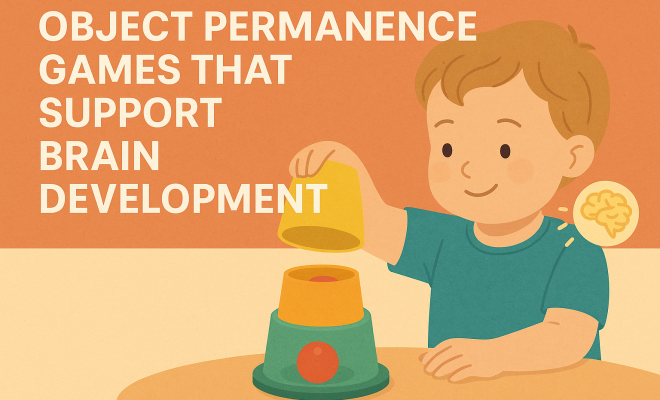
- Under the Cup Game: Place a small object under one of several cups. Shuffle the cups around and ask your child to identify where the object is hidden. This game can be adapted for older toddlers by increasing the number of cups or introducing multiple objects.
- Box Surprise: Use a box to hide toys or objects. Let your child watch you place the items inside, then close the box. Encourage them to open the box to reveal what’s inside, reinforcing the idea that the objects are still there even when not in sight.
Developmental Benefits of Object Permanence Games
Engaging in object permanence games provides several developmental benefits for children:
- Enhanced Cognitive Skills: As children practice finding hidden objects, they strengthen their memory and problem-solving abilities.
- Improved Motor Skills: Many of these games require reaching, grasping, and manipulating objects, which help refine fine motor skills.
- Social Interaction: Playing these games with caregivers promotes bonding, communication, and social development, nurturing emotional intelligence.
Incorporating Object Permanence Games into Daily Life
Making object permanence games a part of your daily routine doesn’t have to be complicated. Here are some actionable tips to seamlessly integrate them into your interactions with your child:
- Be Consistent: Incorporate these games into your playtime regularly. The more often children play, the more they will understand the concept.
- Use Everyday Objects: You don’t need fancy toys to play these games. Items such as cups, blankets, and boxes can be used creatively to engage your child.
- Follow Your Child’s Cues: Pay attention to your child’s responses. If they seem bored or frustrated, switch to a different game or adjust the difficulty level to maintain their interest.
Adapting Object Permanence Games for Different Ages
While younger children may benefit from simpler games, as they grow older, their understanding of object permanence deepens. Here’s how you can adapt these games for various age groups:
Infants (0-12 months)
At this stage, simplicity is key. Games like peek-a-boo or hiding your face behind a scarf engage their developing sense of object permanence while also being delightful and silly.
Toddlers (1-3 years)
As children begin to walk and explore, you can introduce more complex games like the under the cup game or hide and seek with toys. These activities encourage them to think critically while keeping them entertained. (See: Wikipedia article on object permanence.)
Preschoolers (3-5 years)
By this age, children can handle more challenging tasks. You might set up scavenger hunts around the house where they have to search for hidden objects, enhancing their cognitive abilities further.
Real-World Implications of Object Permanence Skills
The understanding of object permanence extends beyond just games; it significantly influences various aspects of a child’s life. This skill forms the foundation for later cognitive abilities, including language development and social skills.
For instance, when children grasp that objects continue to exist even when out of sight, they become more curious about the world around them. This curiosity drives them to explore their environment, prompting questions and interactions that foster language skills. Furthermore, social interactions become richer as children learn to anticipate actions and reactions, leading to better communication skills.
Research and Expert Perspectives
Numerous studies have highlighted the importance of play in early childhood development. According to research conducted by the American Academy of Pediatrics, engaging in interactive play significantly promotes cognitive development and strengthens parent-child relationships.
Child psychologists often stress the importance of games that promote object permanence. Dr. Kathy Hirsh-Pasek, a leading researcher in child development, notes that “Playing together is not just fun; it’s fundamental to cognitive and emotional growth. Simple games can have profound impacts on a child’s development, helping them build essential skills for life.”
Challenges and Misconceptions Surrounding Object Permanence
Despite the known benefits, some parents may hesitate to engage in object permanence games, often due to misconceptions. One common belief is that children will naturally develop these skills without specific activities. However, research indicates that engaging in intentional play can accelerate cognitive development.
Another challenge is the misconception that these games are only beneficial for infants. While younger children certainly gain the most from them, engaging older toddlers and preschoolers in similar activities can continue to reinforce their understanding of object permanence and enhance cognitive skills.
Expanding Object Permanence Games: A Deeper Dive
It’s essential to understand the various ways in which object permanence games can not only be utilized but also expanded upon to create a richer learning environment. Parents and caregivers can take these foundational games and add layers of complexity or incorporate various themes to keep children engaged and aid in their cognitive growth.
Incorporating Technology
In today’s digital age, technology can be an excellent tool for enhancing object permanence games. There are various apps and interactive toys designed specifically to teach this concept using engaging visuals and sounds. For example, some apps replicate peek-a-boo experiences with animated characters, providing a fun and interactive way for children to learn about object permanence.
Using Storybooks
Storybooks are another great way to reinforce the concept of object permanence. Reading stories where characters hide and reappear can be a wonderful way to engage children while teaching them this concept. Choose books with flaps that reveal hidden images, so children can physically interact with the story, enhancing their understanding of the concept in a narrative context. (See: CDC on child development milestones.)
Thematic Play
Thematic play can also bring object permanence games to life. For example, you might create a “grocery store” scenario where items are hidden under cups or in bags. Encourage your child to shop by finding and retrieving items, reinforcing their understanding of object permanence while also introducing them to social interactions and role-playing.
Statistics on Early Child Development
Understanding the significance of object permanence games can be further elucidated by statistics related to early childhood development. Research shows that children who engage in consistent play activities during their formative years are more likely to develop stronger cognitive skills. According to a report from the National Institute for Early Education Research, children who participate in interactive play are 30% more likely to excel in problem-solving tasks by the age of five, compared to those who do not.
Additionally, studies indicate that around 60% of children who have regular exposure to object permanence activities show improved memory skills, which are critical as they transition into more structured learning environments like preschool and kindergarten.
Expert Tips for Maximizing Object Permanence Games
To get the most benefit from object permanence games, consider these expert tips:
- Mix Up the Games: Don’t be afraid to switch things up! Variety keeps children engaged and helps them see object permanence from different angles.
- Encourage Questions: As your child plays, ask questions that provoke thought, like “Where do you think the toy went?” This encourages critical thinking and reinforces their understanding of the concept.
- Celebrate Success: When your child succeeds in finding a hidden object or completes a challenge, celebrate their success! Positive reinforcement helps build confidence and encourages them to keep learning.
FAQ Section
What is object permanence?
Object permanence is the understanding that objects continue to exist even when they cannot be seen, heard, or touched. It is a significant milestone in cognitive development that typically emerges between 4 to 7 months of age.
How do object permanence games help with a child’s development?
These games enhance cognitive skills, improve memory and problem-solving abilities, and promote fine motor skills. They also encourage social interaction and emotional bonding between caregivers and children.
At what age should I start playing object permanence games with my child?
You can start playing simple object permanence games with infants as young as 4 months. Adjust the complexity as your child grows older and gains a better understanding of the concept.
Can older children benefit from object permanence games?
Yes! While younger children may gain the most from these games, older toddlers and preschoolers can still benefit from variations that reinforce their understanding and enhance their cognitive skills.
What are some creative ways to play object permanence games?
Creative ways include using everyday household items for hiding games, incorporating storybooks with flaps, using technology such as apps, or creating themed play scenarios. The key is to keep it engaging and fun!
How Object Permanence Influences Emotional Development
Understanding object permanence has a profound impact not just on cognitive skills but also on emotional development. As children learn that objects and people still exist when not visible, they begin to develop a sense of trust and security. This realization fosters stronger emotional attachments to caregivers and helps mitigate separation anxiety. For instance, when a child knows that their parent will return even if they leave the room, it cultivates a sense of safety and predictability.
The Connection Between Object Permanence and Future Learning
The skills acquired through object permanence games extend into later childhood and even adulthood. For example, the ability to understand that something can exist without being in a direct line of sight is essential for academic success in subjects like math and science. Children who grasp object permanence early on often excel in tasks that require logical reasoning and abstract thinking. This foundational skill prepares them for more complex concepts in school, such as understanding numbers and relationships between objects.
More Fun Variations of Object Permanence Games
If you’re looking for more ways to engage your child in learning about object permanence, here are some variations on traditional games:
Nature Scavenger Hunt
Take your object permanence games outside by organizing a nature scavenger hunt. Hide small, colorful objects like toys or flashcards in a garden or park and encourage your child to find them. This variation not only reinforces the concept of object permanence but also connects children to nature and encourages physical activity.
Musical Hide and Seek
Combine music with hide and seek to create a unique twist. Play a song while your child hides their eyes, then stop the music. When the music stops, they must find you or a hidden object, emphasizing both sound and sight in relation to object permanence.
The Role of Caregivers in Teaching Object Permanence
Caregivers play a pivotal role in teaching object permanence through consistent interactions and engagement. Research shows that children benefit greatly from responsive and interactive caregivers. Those who actively participate in play and communication help children reinforce their understanding of object permanence. You can enhance this learning by narrating your actions during play, like saying, “I’m hiding the toy!” or “Look, I’m covering my face!” This kind of verbal interaction enriches the learning experience and deepens the child’s comprehension.
Conclusion: The Lasting Impact of Object Permanence Games
Object permanence games are much more than simple pastimes. They serve as vital activities that support and enhance brain development, paving the way for essential cognitive and social skills. By making these games a regular part of your interaction with young children, you’re not just playing; you’re investing in their future. As your child grows and develops, the skills learned through these games will play a significant role in their ability to navigate the world, fostering curiosity, creativity, and emotional intelligence.
“`
Trending Now
Frequently Asked Questions
What is object permanence in child development?
Object permanence is the understanding that objects continue to exist even when they cannot be seen, heard, or touched. This cognitive ability typically develops in infants between 4 to 7 months and is essential for their interactions with the environment and future skills like problem-solving and memory retention.
Why are object permanence games important?
Object permanence games are crucial as they help children practice and strengthen their understanding of this concept. These activities enhance cognitive abilities, foster focus and memory, and create bonding experiences between the child and caregiver, all vital for brain development.
What are some examples of object permanence games?
Some popular object permanence games include Peek-a-Boo, where a caregiver hides their face and reappears, and hiding toys under a cloth for the child to find. These games can be easily incorporated into daily routines and are suitable for various developmental stages.
At what age do babies understand object permanence?
Babies typically begin to understand object permanence between 4 to 7 months of age. This milestone is significant as it marks the beginning of their cognitive development and influences how they interact with their surroundings.
How can I promote object permanence in my child?
You can promote object permanence by engaging in simple games like Peek-a-Boo, hiding toys, or playing with boxes and containers. These activities encourage exploration and help your child understand that objects still exist even when out of sight.
What did we miss? Let us know in the comments and join the conversation.