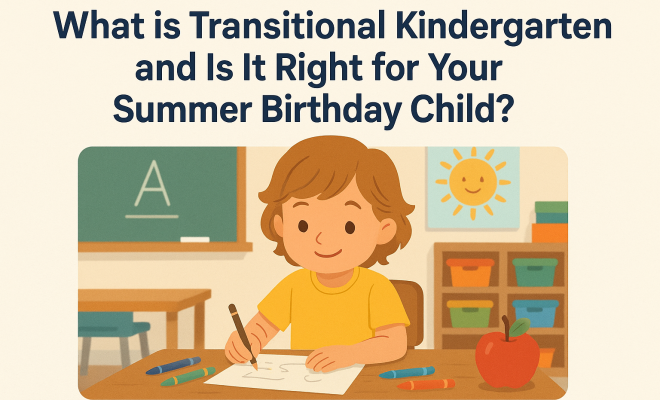
“What is Transitional Kindergarten and Is It Right for Your Summer Birthday Child?”
“`html
As parents, choosing the right educational path for your child can be both exciting and daunting, especially when it comes to making decisions about early education. One option that has gained traction in recent years is transitional kindergarten. If your child has a summer birthday, you may be wondering whether this program is the best fit. Let’s explore the concept of transitional kindergarten, its benefits, and whether it suits your child.
What is Transitional Kindergarten?
Transitional kindergarten, often abbreviated as TK, is an educational program designed for children who are not quite ready for traditional kindergarten but are too old for preschool. Typically, it serves to bridge the gap between preschool and kindergarten, providing younger children with an additional year of developmentally appropriate learning experiences.
Unlike preschool, which focuses primarily on play-based learning, transitional kindergarten emphasizes a more structured curriculum aligned with kindergarten standards while still incorporating play. This approach allows children to develop the necessary social, emotional, and academic skills at their own pace.
The Structure of Transitional Kindergarten
Each transitional kindergarten program can vary based on the school district, but generally, the class sizes are smaller than traditional kindergarten classrooms. This smaller setting allows for more individualized attention and instruction, giving teachers the opportunity to cater to the unique needs of each child.
Transitional kindergarten usually follows a modified school schedule similar to that of kindergarten. Classes may run for a full day or half-day, and the curriculum often incorporates elements such as literacy, numeracy, social studies, science, and physical education. Additionally, transitional kindergarten focuses heavily on social-emotional learning, ensuring that children learn how to interact with peers and manage their emotions effectively.
The Age Factor: Why Summer Birthdays Matter
When considering transitional kindergarten, one significant factor is your child’s birthday, particularly if they fall in the summer months (June, July, or August). In many states, children must turn five by a specific cutoff date (often September 1) to enroll in kindergarten. This often leaves summer birthday children at a disadvantage, as they may be among the youngest in their class.
For these children, transitional kindergarten can provide a valuable opportunity to develop their social and academic skills in a nurturing environment, which can lead to greater success when they eventually transition into kindergarten.
Benefits of Transitional Kindergarten
There are numerous advantages to enrolling your child in a transitional kindergarten program:
- Developmentally Appropriate Curriculum: Transitional kindergarten programs are designed specifically for children who are not quite ready for traditional kindergarten. The curriculum often focuses on play-based and hands-on learning, allowing children to explore concepts in a way that resonates with their developmental stage.
- Smaller Class Sizes: With smaller class sizes, teachers can provide individualized attention, ensuring that each child receives the support they need to thrive academically and socially.
- Enhanced Social Skills: Transitional kindergarten emphasizes social-emotional development, helping children build their self-esteem, develop friendships, and learn conflict resolution skills.
- Better Transition to Kindergarten: By giving children an additional year to grow and develop, transitional kindergarten can lead to a smoother transition into kindergarten, increasing the likelihood of long-term academic success.
- Parental Peace of Mind: Knowing that your child is in a program specifically designed to meet their needs can relieve some of the anxiety parents may feel about sending their child off to school.
How to Determine if Transitional Kindergarten is Right for Your Child
Deciding whether transitional kindergarten is the best option for your child involves considering several factors: (See: U.S. Department of Education on early learning.)
- Child’s Developmental Readiness: Assess your child’s social, emotional, and academic readiness for kindergarten. Are they able to follow directions, express their thoughts, and interact well with peers? If not, TK may be a great fit.
- Social Skills: If your child struggles with social interactions or managing emotions, transitional kindergarten can provide a supportive environment for growth.
- Family Preference: Consider your family’s values and educational goals. Do you believe in the importance of a play-based educational approach? If so, transitional kindergarten aligns well with those beliefs.
Common Misconceptions About Transitional Kindergarten
As with any educational program, misconceptions can cloud the decision-making process. Here are a few common myths about transitional kindergarten:
- It’s Just Another Year of Preschool: While TK may share some similarities with preschool, it is designed to align more closely with kindergarten standards, with a focus on kindergarten readiness.
- It’s Only for Children with Summer Birthdays: While many parents of summer birthday children opt for TK, it can also benefit children born in other months who may not be ready for traditional kindergarten.
- It’s Only for Struggling Students: Transitional kindergarten is not just for children who are behind; it can also benefit those who are ahead but could use a bit more time to grow socially and emotionally.
Expert Opinions on Transitional Kindergarten
Many educators and child development experts advocate for transitional kindergarten as an effective solution for young learners. Dr. Ellen Galinsky, a renowned child development expert and author of “Mind in the Making,” emphasizes the importance of age-appropriate education. She argues that children develop at different rates, and a program like TK can help prepare them for future academic success.
Furthermore, research conducted by the National Institute for Early Education Research (NIEER) shows that children who participate in transitional kindergarten programs demonstrate improved social-emotional skills and academic outcomes compared to their peers who do not participate. These findings highlight the significance of providing children with the right environment at the right time.
Alternatives to Transitional Kindergarten
If you decide that transitional kindergarten may not be the best fit for your child, there are alternatives worth exploring:
- Traditional Kindergarten: If your child meets the age requirements and demonstrates readiness, enrolling them in a traditional kindergarten program might be appropriate.
- Preschool Programs: High-quality preschool programs can still provide a strong foundation for young children, incorporating play-based learning and social-emotional development.
- Delayed Entry: Some parents opt to keep their children out of kindergarten for a year, allowing them to mature before attending school.
Making the Final Decision
Ultimately, the decision to enroll your child in transitional kindergarten should be made based on a combination of your child’s unique needs and your family’s educational philosophy. Take the time to observe your child’s behavior and interactions, and consider seeking advice from early childhood educators or child development specialists.
It’s also vital to visit local transitional kindergarten programs, meet with teachers, and ask questions about the curriculum and teaching methods to ensure that it aligns with your child’s needs.
Comparing Transitional Kindergarten to Other Early Education Options
Understanding the differences between transitional kindergarten and other early education options can help parents make informed decisions. Here’s a comparison:
Transitional Kindergarten vs. Traditional Kindergarten
While both transitional and traditional kindergarten aim to prepare children for first grade, transitional kindergarten offers an additional year for children who may benefit from a slower pace. For example, a child who struggles with fine motor skills may thrive in TK’s play-based, supportive environment, where there is a heavier emphasis on developmental readiness rather than strict academic benchmarks.
Transitional Kindergarten vs. Preschool
Preschool often focuses on general readiness and social skills with an unstructured approach, while transitional kindergarten aligns more closely with kindergarten academic standards. In transitional kindergarten, children are exposed to early literacy and numeracy skills within a framework that prepares them for a more formal education. This difference can be crucial for children who may not yet be socially or emotionally ready for the rigors of kindergarten.
Transitional Kindergarten vs. Homeschooling
While homeschooling provides flexibility and a tailored learning experience, it also requires significant parental involvement and resources. Transitional kindergarten allows parents to benefit from professional educators and a structured curriculum while still giving their child time to mature. For some families, the social interaction that comes from being in a classroom setting is an invaluable aspect of early education that homeschooling may not provide. (See: NIH on early childhood education.)
Statistics Supporting Transitional Kindergarten
Statistics can provide insight into the impact of transitional kindergarten programs. According to the California Department of Education, children who attended transitional kindergarten scored an average of 15% higher in literacy and math assessments compared to their peers who skipped TK. Additionally, a study by the American Educational Research Association found that 90% of teachers reported improved readiness levels for children entering traditional kindergarten from TK programs.
Parent Perspectives on Transitional Kindergarten
Many parents who have chosen transitional kindergarten for their children report positive outcomes. Jane, a mother of a summer birthday child, shares, “Enrolling my son in transitional kindergarten was the best decision we made. He gained the confidence and social skills he needed to thrive in kindergarten.” This sentiment is echoed by many parents who appreciate the additional time their children have to develop essential skills in a nurturing environment.
Frequently Asked Questions about Transitional Kindergarten
What age should my child be to enroll in transitional kindergarten?
Generally, children should be four years old by the cutoff date set by your state or school district, which typically falls between July 1 and September 1. However, each district may have slightly different criteria, so it’s important to check locally.
How can I find a transitional kindergarten program near me?
Start by checking with your local school district’s website or contacting their early childhood education department. They will provide information on available programs, enrollment procedures, and any open houses where you can visit and learn more.
Is transitional kindergarten free?
Many public school districts offer transitional kindergarten at no cost, similar to traditional kindergarten. However, some private institutions may charge tuition, so it’s essential to understand the financial implications of your chosen program.
What should I look for in a transitional kindergarten program?
Look for programs that emphasize social-emotional learning, have qualified teachers with experience in early childhood education, and offer a curriculum rich in play and hands-on activities. It’s also beneficial to visit the classroom to observe the environment and how teachers interact with students.
Can my child switch to traditional kindergarten after attending transitional kindergarten?
Yes, most children who complete a transitional kindergarten program will transition to a traditional kindergarten program. This is often seen as a natural progression, and many children find themselves better prepared for the academic and social challenges of kindergarten after spending a year in TK.
Transitioning from Transitional Kindergarten to First Grade
One of the key concerns for parents considering transitional kindergarten is how the transition from TK to first grade will work. Many educators report that children who attend TK often enter first grade more confident and better prepared than their peers. Studies have shown that children who attend transitional kindergarten tend to have stronger foundational skills in reading and math, which are critical for success in higher grades.
Additionally, a report from the Education Trust indicates that children who participated in transitional kindergarten were less likely to be referred for special education services in later years. This suggests that an early intervention program like TK can help identify and address learning issues before they escalate, allowing children to thrive academically as they progress through school.
The Role of Play in Transitional Kindergarten
Play is a fundamental aspect of transitional kindergarten, serving not only as a method of learning but also as a means of developing crucial life skills. Through play, children learn problem-solving, collaboration, and communication. Activities such as group projects, interactive games, and role-playing scenarios are all common in TK classrooms and contribute to the holistic development of children.
For instance, a lesson on sharing might involve a simple game where children must work together to build a structure using blocks. Through this activity, they learn to negotiate roles, resolve conflicts, and celebrate each other’s contributions—all essential skills for socialization.
Statistics Around Success Rates
Research shows that transitional kindergarten significantly improves children’s academic outcomes. According to the National Center for Education Statistics, children who participated in early childhood education programs, including TK, had a 20% higher graduation rate from high school compared to their peers who did not. Additionally, a report from the U.S. Department of Education found that children from low-income families who attended transitional kindergarten were more likely to score above average on standardized tests by third grade.
Community Impact of Transitional Kindergarten
The benefits of transitional kindergarten extend beyond individual children. Schools that implement TK programs often see an overall improvement in school culture and community engagement. By providing a nurturing environment for young learners, schools can foster parental involvement and create supportive networks among families. This communal aspect of education can lead to a more engaged and invested community, ultimately benefiting all students.
Conclusion: A Supportive Step Forward
Transitional kindergarten can serve as a crucial stepping stone for children who may need a little extra time and support before entering traditional kindergarten. If your child has a summer birthday or falls on the younger side of the age spectrum, this program might be just what they need to flourish academically and socially. By offering a nurturing environment that encourages growth at their own pace, transitional kindergarten can empower young learners to embark on their educational journey with confidence.
“`
Trending Now
- the complete explanation
- our breakdown of “using bloom’s taxonomy to write better learning objectives for lesson plans”
- read the full story
- our breakdown of “piaget’s conservation tasks: simple activities to assess your preschooler’s cognitive development”
- this guide on “proprioception activities for kids: 25 sensory diet ideas to improve body awareness”
Frequently Asked Questions
What is the purpose of transitional kindergarten?
Transitional kindergarten is designed for children who are not ready for traditional kindergarten but are too old for preschool. It serves as a bridge, providing developmentally appropriate learning experiences that help children gain the necessary social, emotional, and academic skills in a structured environment.
How is transitional kindergarten different from preschool?
Unlike preschool, which focuses mainly on play-based learning, transitional kindergarten emphasizes a structured curriculum aligned with kindergarten standards while still incorporating play. This allows children to develop essential skills at their own pace in a more formal educational setting.
What are the benefits of transitional kindergarten for summer birthday children?
Transitional kindergarten can be particularly beneficial for summer birthday children as it provides them with an additional year to develop social, emotional, and academic skills. This extra time can help them feel more confident and prepared when they eventually enter traditional kindergarten.
What does a typical day look like in transitional kindergarten?
A typical day in transitional kindergarten may include a mix of literacy, numeracy, social studies, science, and physical education. Classes usually follow a modified school schedule, and the smaller class sizes allow for more individualized attention and targeted instruction.
Is transitional kindergarten right for my child?
Determining if transitional kindergarten is right for your child depends on their developmental readiness and social-emotional skills. If your child has a summer birthday and may benefit from an extra year of preparation before entering kindergarten, this program could be a great fit.
What’s your take on this? Share your thoughts in the comments below — we read every one.