Rogue SpaceX rocket crashed into the Moon, reports say
“`html
Baffling: A SpaceX Rocket Crashed Into The Moon — Here’s Why It Matters
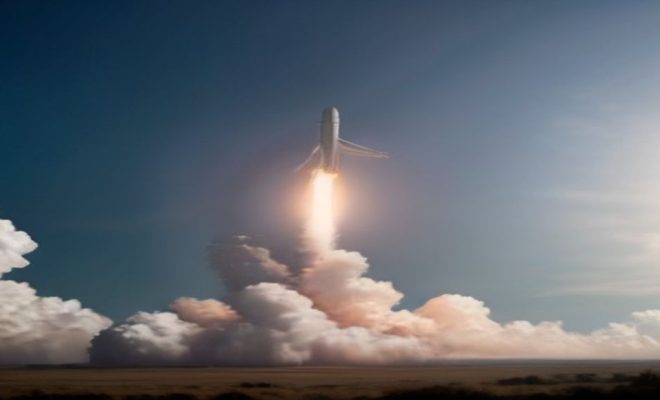
You might remember the buzz, or perhaps the slight alarm, when news broke about a rogue object hurtling towards the Moon. It wasn’t a meteor, nor some long-lost natural satellite. No, this was a piece of human ingenuity, or rather, what was left of it: a discarded second stage of a SpaceX Falcon 9 rocket. On August 5, 2026, this particular piece of space junk made an unscheduled, dramatic impact on the lunar surface. The incident, often referred to as the SpaceX rocket moon crash, wasn’t just a fleeting headline; it reignited a crucial, ongoing debate about orbital sustainability, the growing menace of space debris, and who, precisely, is responsible for tidying up our cosmic neighborhood.
It’s a story that encapsulates so much of our modern space age: incredible technological prowess, ambitious exploration, and an uncomfortable byproduct – an ever-increasing junkyard circling our planet and now, beyond. The image of a human-made object slamming into the Moon is certainly dramatic, but it’s also a powerful, tangible reminder of a much larger, more pervasive problem. For years, scientists and space agencies have been sounding the alarm about the sheer volume of debris in orbit. This isn’t just about aesthetics; it’s about the very future of space exploration and the critical services our satellites provide.
Think about it: every time you check the weather, use GPS, or stream a movie, you’re relying on satellites. These aren’t just expensive pieces of hardware; they’re vital infrastructure. And right now, they’re navigating a minefield. The SpaceX rocket moon crash, while happening far from Earth’s primary orbital highways, brought the issue into sharp focus, forcing us to confront the consequences of our actions in the final frontier. Related reading: the latest on rocket debris.
The Unseen Menace: A Growing Swarm of Space Debris
Let’s get down to brass tacks: how much stuff are we talking about? The numbers are genuinely startling. There are currently over 29,000 tracked objects in Earth’s orbit. And that’s just the stuff big enough to keep tabs on. Experts estimate there are millions more pieces, ranging from defunct satellites and spent rocket stages to tiny paint flakes and shards of shattered spacecraft. Even a fleck of paint, traveling at orbital velocities of thousands of miles per hour, can cause catastrophic damage to a functional satellite.
This isn’t just a theoretical problem; it’s a very real and present danger. We’ve already seen collisions. The most infamous was the 2009 crash between an active Iridium communications satellite and a defunct Russian Kosmos-2251 satellite. That single event created thousands of new pieces of debris, exacerbating the problem exponentially. Each collision begets more collisions, leading to a terrifying cascade effect known as the Kessler Syndrome, a scenario where the density of objects in low Earth orbit becomes so high that further spaceflight or even satellite operation becomes impossible. It’s the ultimate self-inflicted wound for our spacefaring ambitions.
The SpaceX rocket moon crash, though a different kind of event, still served as a potent symbol. It showed us that our waste isn’t just confined to Earth orbit; it can travel further, impacting celestial bodies we once thought pristine. It’s a wake-up call that our footprint in space is expanding rapidly, and with it, the need for a comprehensive, global strategy for environmental stewardship beyond our planet.
From Accidental Lunar Impact to Global Concern
The trajectory of the Falcon 9 second stage that ultimately impacted the Moon was a fascinating, if concerning, case study. This particular stage had launched in February 2015, deploying the Deep Space Climate Observatory (DSCOVR) satellite. After its mission, instead of performing a controlled deorbit or entering a stable graveyard orbit, it was left in a somewhat chaotic, high-energy orbit. Over the years, gravitational perturbations from the Earth, Moon, and Sun influenced its path, leading it on an unpredictable journey.
Astronomers and amateur trackers had been following its path for quite some time, initially misidentifying it as a different object before correctly attributing it to the SpaceX booster. This highlights another challenge: simply knowing what’s out there and where it’s going. The fact that an object launched in 2015 could wander for over a decade before its lunar rendezvous in 2026 underscores the long-term, unpredictable nature of space debris. It’s not just about what we launch today; it’s about the legacy of launches from years, even decades, past.
While the lunar impact itself didn’t pose a direct threat to Earth or active satellites, its symbolic weight was enormous. It highlighted the lack of international regulation for objects exiting Earth orbit and the general ‘out of sight, out of mind’ mentality that has, for too long, characterized our approach to space junk beyond Earth’s immediate vicinity. The event was a stark reminder that as we push further into the solar system, our responsibilities must extend with us.
The Burgeoning Market for Space Debris Removal
It’s not all doom and gloom, though. The urgency of the space debris problem has spurred significant innovation and investment. We’re seeing the rapid emergence of a dedicated space debris removal market, a sector projected to reach a staggering $1.2 billion in 2025 and potentially soaring to $2-3 billion by the early 2030s. This isn’t just an environmental initiative; it’s a burgeoning industry with serious commercial potential.
Companies are scrambling to develop and deploy active debris removal (ADR) technologies. These aren’t futuristic pipe dreams; they’re becoming tangible solutions. Imagine specialized spacecraft equipped with robotic arms designed to grapple defunct satellites and steer them towards a controlled burn in Earth’s atmosphere. Or consider ‘drag sails,’ which can be deployed from a dying satellite to increase its atmospheric drag, causing it to deorbit much faster than it would naturally. These aren’t just clever ideas; they’re the commercial engines driving this new frontier of space cleanup. (See: NASA on orbital debris management.)
The market is attracting significant investor interest, not just from traditional aerospace players but also from venture capitalists looking for the next big thing. The demand is clear, the technology is advancing, and the financial incentives are aligning. This intersection of environmental necessity and economic opportunity is precisely what’s needed to tackle a problem of this scale.
Pioneers in Orbital Cleanup: Astroscale and ClearSpace
When we talk about active debris removal, two names consistently rise to the top: Astroscale and ClearSpace. These companies are at the forefront, transforming the abstract concept of space cleanup into concrete engineering solutions.
Astroscale, a Japanese company with a strong international presence, is probably one of the most recognizable names in the field. They’re developing a range of innovative technologies, including magnetic capture systems and robotic arms, to safely remove debris from orbit. Their ELSA-d (End-of-Life Services by Astroscale-demonstration) mission was a groundbreaking step, successfully demonstrating the ability to locate, approach, and capture a simulated piece of debris using magnetic docking. This kind of in-orbit demonstration is absolutely critical, proving that these complex maneuvers are not just theoretical but achievable.
Then there’s ClearSpace, a Swiss startup that gained significant attention when it secured a contract from the European Space Agency (ESA) for the ClearSpace-1 mission. This mission, slated for the mid-2020s, aims to be the first to remove a piece of space debris from orbit. Their plan involves using a custom-built spacecraft equipped with four robotic arms to capture a Vespa (Vega Secondary Payload Adapter) upper stage, a defunct object left in orbit since 2013, and then deorbit it. This isn’t just a technical challenge; it’s a monumental organizational and diplomatic feat, paving the way for future commercial debris removal services. These companies aren’t just building robots; they’re building the future of sustainable space operations.
The Role of Space Domain Awareness (SDA) and AI
Before you can clean up space debris, you first need to know where it is and where it’s going. This is where Space Domain Awareness (SDA) comes into play, and it’s another area seeing massive investment and technological advancement. SDA involves tracking, cataloging, and predicting the trajectories of everything in orbit, from active satellites to the smallest fragments of junk.
Traditional SDA relies on ground-based radars and telescopes, but the sheer volume and unpredictable nature of debris mean we need more sophisticated tools. This is where artificial intelligence (AI) is proving to be a game-changer. Companies like Neuraspace are securing significant funding to expand their SDA platforms, leveraging AI and machine learning to process vast amounts of data, predict potential collisions with greater accuracy, and optimize avoidance maneuvers. Imagine AI algorithms constantly crunching numbers from a global network of sensors, identifying collision risks hours or even days in advance, giving satellite operators crucial time to react.
This isn’t just about preventing a SpaceX rocket moon crash type of event, or even a collision in Earth orbit. It’s about ensuring the safety and longevity of our critical space infrastructure. Accurate SDA is the foundation upon which all other debris mitigation and removal efforts are built. Without knowing the precise location and velocity of objects, any attempt at active removal would be like trying to catch a bullet in the dark. See also NASA's lunar plans explained.
The Commercial Intent: Investing in a Cleaner Cosmos
The space debris problem, while daunting, has opened up a fascinating array of commercial opportunities. This isn’t just about government contracts; it’s about a robust commercial ecosystem emerging around space sustainability. For investors, this translates into compelling opportunities in ‘space tech’ and ‘space sustainability investments.’
Think about it: who benefits from a cleaner, safer orbit? Everyone. Satellite operators need collision avoidance services. Insurance companies need to mitigate risk for their space assets. And governments need to ensure the long-term viability of their space programs. This creates a multi-faceted demand that transcends traditional aerospace. We’re seeing significant interest in ‘B2B SaaS’ (Software as a Service) for satellite tracking and collision avoidance, offering subscription-based services that provide critical data and predictive analytics to operators.
Beyond direct debris removal, the ecosystem includes companies developing new materials that are less prone to fragmentation, technologies for in-orbit servicing and refueling to extend satellite lifespans, and even ethical recycling solutions for objects that can be salvaged. The commercial intent is strong and diverse, appealing to a broad spectrum of investors and entrepreneurs looking to solve a critical global challenge while generating significant returns. The narrative of a ‘SpaceX rocket moon crash’ might sound like a problem, but for many, it’s a clear signal of an unmet need and a massive market waiting to be tapped.
Policy, Regulation, and the Future of Space Stewardship
While technology and commercial ventures are driving innovation, the ultimate solution to space debris will require a robust international framework of policy and regulation. Currently, the landscape is fragmented, with different nations having their own guidelines, but no universally enforceable laws governing debris mitigation or removal. This patchwork approach is insufficient for a problem that transcends national borders.
The United Nations Committee on the Peaceful Uses of Outer Space (COPUOS) has developed some guidelines, such as those recommending deorbiting satellites within 25 years of their end of life, but these are largely voluntary. The challenge lies in translating these guidelines into legally binding treaties and establishing clear accountability. Who pays for the removal of old, derelict satellites? Who is liable if a piece of debris from one nation damages a satellite from another? These are complex questions with no easy answers, often entangled in geopolitical considerations. (See: CDC's insights on space debris.)
The SpaceX rocket moon crash, though an isolated incident, underscored the need for broader discussions. If we can’t manage debris in Earth orbit, how will we manage it as humanity ventures further to the Moon, Mars, and beyond? The conversation needs to shift from mitigation to active remediation, and that will require a concerted effort from all spacefaring nations to establish common rules of the road and mechanisms for enforcement. The future of space stewardship hinges on our ability to cooperate on a global scale.
Preventing Future Orbital Mishaps and Lunar Impacts
So, what can be done to prevent more events like the SpaceX rocket moon crash? The answer lies in a multi-pronged approach that combines technological innovation, regulatory reform, and a shift in mindset across the global space community. First and foremost, stricter adherence to “design for demise” principles is crucial. This means designing satellites and rocket stages to burn up completely and safely upon re-entry, leaving no hazardous fragments behind.
Secondly, post-mission disposal strategies must become mandatory, not optional. This includes controlled deorbiting for low Earth orbit objects and moving higher-orbiting satellites into designated ‘graveyard orbits’ where they pose minimal collision risk. But even graveyard orbits aren’t perfect; they still require monitoring and are not a permanent solution for every object.
Beyond prevention, active removal technologies, as developed by companies like Astroscale and ClearSpace, are essential for tackling the existing backlog of debris. This isn’t just about the big, trackable objects; it’s also about developing strategies for smaller, more numerous pieces. Lastly, enhanced Space Domain Awareness, powered by AI and advanced sensors, is critical for predicting and preventing collisions, ensuring that operators have the most accurate and timely information possible.
The SpaceX rocket moon crash serves as a potent, if somewhat distant, reminder of our responsibilities in space. It’s a call to action, urging us to move beyond simply observing the problem to actively solving it. The good news is that the technology and the commercial will are there. What’s needed now is the collective global commitment to ensure that the final frontier remains a place of exploration and discovery, not a hazardous junkyard.
The Moon as a New Frontier: Why Lunar Impacts Matter More Now
While the SpaceX rocket moon crash was a wake-up call for general space debris, it carries particular weight given humanity’s renewed focus on lunar exploration. We’re not just thinking about Earth orbit anymore; the Moon is rapidly becoming the next major destination for both government agencies and private companies. Missions like NASA’s Artemis program, which aims to return humans to the lunar surface, and various commercial landers, are setting the stage for a permanent human presence. This means the Moon won’t remain a pristine, untouched celestial body for much longer.
The prospect of a growing lunar economy, with potential mining operations, scientific outposts, and even space tourism, means that safeguarding the lunar environment becomes just as critical as managing Earth orbit. A single rocket stage impacting the Moon might seem insignificant in the grand scheme, but it sets a precedent. What happens when dozens of discarded stages, defunct landers, or even accidental collisions occur around or on the Moon? The potential for creating a “Kessler Syndrome” equivalent for lunar orbit, or littering the lunar surface with hazardous debris, is a real concern. This isn’t just about preventing damage to future lunar infrastructure; it’s also about preserving potential scientific sites and the unique geological record of the Moon for generations to come. The SpaceX rocket moon crash, in this context, wasn’t just an accident; it was an early warning shot about our expanded responsibilities.
Expert Perspectives: Gravitational Dynamics and Long-Term Trajectories
Understanding how an object like the Falcon 9 second stage ended up crashing into the Moon requires a deeper dive into orbital mechanics, particularly the complex interplay of gravitational forces. Experts in astrodynamics often refer to this as a “chaotic” trajectory, meaning small initial uncertainties in position and velocity can lead to vastly different outcomes over long periods. Dr. Jonathan McDowell, an astrophysicist at the Harvard-Smithsonian Center for Astrophysics, was one of the key figures who tracked this particular piece of debris. He noted how the Earth-Moon system creates gravitational “sweet spots” and perturbing forces that can significantly alter an object’s path, sometimes over decades.
The Falcon 9 stage, after deploying DSCOVR, was left in a highly elliptical orbit that took it far beyond the Earth, almost halfway to the Moon. Over the years, the Sun’s gravity and repeated close approaches to the Moon exerted subtle tugs, slowly but surely altering its orbital parameters. Think of it like a pinball machine, where each gravitational interaction is a bumper, nudging the ball in a slightly different direction. Eventually, one of these nudges placed it on a collision course with the Moon. This highlights a critical point: objects in deep space are not static. Their paths are dynamic and influenced by all major celestial bodies, making long-term prediction and tracking an immense challenge. It underscores the need for continuous, sophisticated Space Domain Awareness that extends well beyond Earth’s immediate vicinity. cost reduction in rocket launches offers useful background here.
Comparing Approaches: Passive vs. Active Debris Mitigation
When discussing solutions to space debris, it’s helpful to differentiate between passive and active mitigation strategies. The SpaceX rocket moon crash scenario primarily falls under the passive mitigation umbrella, or rather, the lack thereof in its initial design. Passive mitigation focuses on preventing new debris from being created in the first place. (See: Research on space debris impacts.)
- Passive Mitigation Examples:
- Design for Demise: As mentioned, building spacecraft components that vaporize upon re-entry.
- Controlled Deorbit: Planning for rocket stages and satellites to re-enter Earth’s atmosphere in a controlled manner over unpopulated areas.
- Graveyard Orbits: Moving satellites that have completed their mission in geostationary orbit to a higher, less crowded orbit.
- Depressurization & Safing: Releasing residual propellants and shutting down batteries to prevent explosions of defunct spacecraft.
- Minimizing Release of Mission-Related Debris: Designing rockets and satellites to avoid releasing small objects like lens caps or fairing bolts.
- Active Mitigation Examples:
- Robotic Arms/Nets: Capturing larger pieces of debris and deorbiting them (e.g., ClearSpace-1).
- Magnetic Tethers: Using magnetic forces to grapple and deorbit objects (e.g., Astroscale’s concepts).
- Lasers: Theoretically, using ground-based or space-based lasers to nudge small debris into re-entry paths. (This is a more nascent and controversial technology due to potential weaponization concerns).
- Drag Sails: Deploying large, lightweight sails on defunct satellites to accelerate their atmospheric drag and deorbit.
The challenge, as the SpaceX rocket moon crash illustrates, is that passive measures for objects exiting Earth orbit are largely non-existent or ignored. Active removal becomes essential for the debris already out there, but prevention is always the first, and often most cost-effective, line of defense.
FAQ: Your Questions About the SpaceX Rocket Moon Crash Answered
Q1: Was the SpaceX rocket moon crash intentional?
No, the crash was entirely unintentional. The Falcon 9 second stage that impacted the Moon was a discarded piece of hardware from a 2015 mission. It was not guided or controlled to strike the Moon. Its trajectory was a result of complex gravitational interactions over many years, leading to an accidental collision.
Q2: What kind of damage did the crash cause to the Moon?
The impact created a new crater on the lunar surface. While the exact size and depth weren’t immediately known, it’s not expected to have caused any significant or widespread geological damage to the Moon itself. The Moon is constantly bombarded by small meteoroids, so while this was a human-made object, the Moon is accustomed to impacts.
Q3: Could this crash have affected Earth in any way?
No, there was no direct threat or effect on Earth. The impact happened on the Moon, hundreds of thousands of miles away. It did not create any debris that could return to Earth, nor did it alter the Moon’s orbit or stability in any measurable way.
Q4: Why wasn’t the rocket stage deorbited or put into a stable orbit?
When this particular Falcon 9 stage was launched in 2015, the standard operating procedures and regulatory expectations for the disposal of objects in high-energy, deep-space trajectories were less stringent than they are today. It was left in a chaotic, elliptical orbit after its primary mission. Modern practices aim for controlled deorbiting or placement into designated graveyard orbits for most missions, but there are still gaps in regulation for objects leaving Earth’s immediate orbital environment.
Q5: Is SpaceX responsible for cleaning up this kind of debris?
Legally, the launching state (in this case, the United States) is ultimately responsible for objects launched under its jurisdiction, according to international space law (the Outer Space Treaty). While SpaceX is the manufacturer and operator, the broader issue of cleaning up legacy debris, especially from deep space missions, is a complex international challenge with no clear single party held accountable for historical accidental impacts. The focus is shifting to preventing future incidents through better design and disposal protocols.
Q6: How does this incident relate to the Kessler Syndrome?
The Kessler Syndrome primarily describes a chain reaction of collisions in Earth’s low orbit, making space unusable. The SpaceX rocket moon crash, while not directly contributing to Kessler Syndrome in Earth orbit, is a symbolic warning. It highlights that uncontrolled space junk isn’t just an Earth-orbital problem; it can extend to other celestial bodies. If we don’t manage debris responsibly in Earth orbit, the same chaotic accumulation could eventually threaten future operations around the Moon or Mars.
Q7: What can be done to prevent similar incidents in the future?
Prevention involves several key strategies: stricter international regulations for post-mission disposal, mandatory “design for demise” principles for all spacecraft, implementing controlled deorbiting or stable graveyard orbits for all missions, and enhancing Space Domain Awareness to better track objects in deep space. Active debris removal technologies are also crucial for existing junk.
“`
Trending Now
- our breakdown of the ai literacy revolution: why microlearning might be the only way forward
- read the full story
- our breakdown of mastering ai: how microlearning can transform your workforce
- our breakdown of the ai revolution isn’t coming, it’s here: 5 reasons your workforce needs ai literacy training now
- the complete explanation
Frequently Asked Questions
What happened to the SpaceX rocket that crashed into the Moon?
A discarded second stage of a SpaceX Falcon 9 rocket crashed into the Moon on August 5, 2026. This incident, referred to as the SpaceX rocket moon crash, has raised concerns about space debris and the responsibilities of space agencies in maintaining orbital sustainability.
Why is the SpaceX rocket crash on the Moon significant?
The crash is significant as it highlights the growing problem of space debris and its implications for future space exploration. It serves as a reminder of the potential dangers posed by human-made objects in space and the urgent need for solutions to manage orbital sustainability.
How does space debris affect satellites?
Space debris poses a collision risk to satellites, which are crucial for services like GPS, weather forecasting, and communication. As the volume of debris increases, satellites must navigate a more hazardous environment, potentially jeopardizing their functionality and the critical services they provide.
What are the consequences of increased space debris?
Increased space debris can lead to a higher likelihood of collisions, which can create even more debris, threatening both current and future satellites. This poses risks to vital infrastructure and could hinder advancements in space exploration and technology.
What actions are being taken to address space debris?
Various space agencies and organizations are exploring solutions to mitigate space debris, including developing technologies for debris removal, enforcing regulations on satellite launches, and promoting best practices for sustainable space operations to safeguard the orbital environment.
Agree or disagree? Drop a comment and tell us what you think.