
Teaching Syntax to Elementary Students with Language Delays
“`html
Effective communication is a cornerstone of human interaction, yet for some elementary school students, particularly those with language delays, grasping the rules of syntax can prove to be a daunting challenge. Addressing these challenges not only facilitates better communication but also enhances overall academic performance and social interactions. This article dives deep into the nuances of teaching syntax to students with language delays, offering practical strategies, insights, and the latest research findings.
Understanding Syntax and Its Importance
At its core, syntax refers to the set of rules, principles, and processes that govern the structure of sentences in a given language. It includes word order, sentence length, and how phrases combine to convey meaning. For elementary students, a solid grasp of syntax is essential not just for language arts but across all subjects, as language is the primary tool for learning.
Students with language delays often struggle with syntax. This can manifest as difficulties in forming complete sentences, using proper tense, or understanding complex sentences. These challenges can lead to frustration, social withdrawal, and academic underachievement. Thus, teaching syntax to students effectively becomes crucial for their development.
Recognizing Language Delays
Language delays can be developmental or may stem from various underlying issues such as learning disabilities or environmental factors. According to the American Speech-Language-Hearing Association (ASHA), language delays are characterized by a lag in the development of language skills when compared to peers. Recognizing these delays early allows educators and parents to implement strategies that can significantly improve language skills.
The indicators of language delays can vary but often include:
- Limited vocabulary for age
- Difficulty forming sentences
- Challenges in understanding spoken language
- Struggles with verb tenses and plurals
- Difficulty following directions
Early identification leads to timely intervention, which can be critical in improving a child’s language skills and overall educational outcomes.
Current Approaches to Teaching Syntax
There are several instructional methods that educators can employ when teaching syntax to students with language delays. These methods often emphasize the integration of multisensory learning, explicit instruction, and the use of engaging materials. Here are some of the most effective approaches:
1. Explicit Instruction
Explicit instruction involves clear, direct teaching of specific skills. This method is particularly beneficial when teaching syntax to students who need structured guidance. Teachers can start with simple sentence structures and gradually introduce more complex forms. For instance, educators might begin with subject-verb-object sentences before moving on to compound or complex sentences.
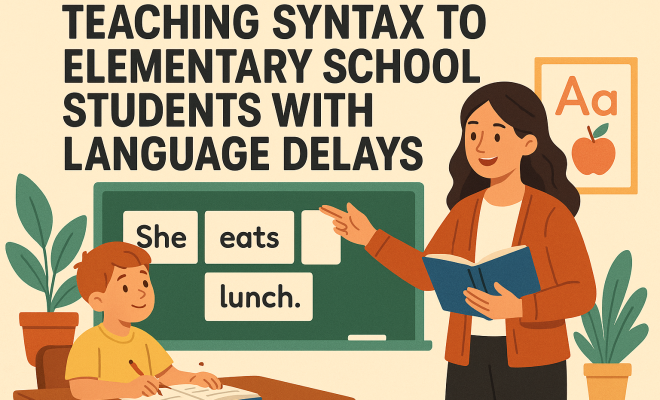
Using visual aids, such as sentence diagrams or color-coded syntax structures, can help students visualize sentence construction. This clarity can make it easier for students to understand relationships between words and phrases.
2. Multisensory Learning
Incorporating multisensory techniques—where students engage multiple senses—can enhance retention and understanding. For example, using manipulatives like blocks to represent different parts of a sentence can make learning tactile and enjoyable. Students can physically build sentences by combining blocks, which reinforces the concept of sentence structure.
Additionally, integrating auditory and visual cues through songs or rhymes that emphasize grammatical structures can also support learning, making syntax rules more memorable. (See: milestones for language development.)
3. Contextualized Learning
Contextualized learning involves teaching syntax within meaningful contexts. Providing students with real-world examples and applications helps them see the relevance of syntax. For instance, using stories or dialogues that include specific grammatical structures allows students to practice syntax while also enhancing their comprehension skills.
Teachers can create role-playing scenarios where students must use specific sentence forms to express ideas, thereby reinforcing their understanding through practical application.
Integrating Technology in Syntax Instruction
In today’s digital age, technology offers innovative ways to engage students in learning syntax. Numerous applications and online resources are available that focus on syntax and grammar. These tools often include interactive games and exercises that provide immediate feedback, making them appealing to young learners.
For example, platforms like NoRedInk allow students to practice sentence structure through adaptive exercises tailored to their individual learning needs. Such platforms can help track progress, making it easier for teachers to identify areas where students may require further assistance.
Creating an Inclusive Classroom Environment
Creating an inclusive classroom environment is essential for teaching students with language delays. Students often feel more comfortable and willing to participate when they feel accepted and understood. Here are some strategies to foster inclusivity:
- Encourage peer support: Pairing students with language delays with more proficient peers can create a supportive learning atmosphere. This not only helps students with language delays but also fosters empathy and understanding among all students.
- Adjust expectations: Recognize that students may require different learning paces and styles. Tailor your teaching methods to accommodate these differences without lowering expectations.
- Celebrate progress: Acknowledge and celebrate the small victories in language development, which can motivate students and boost their confidence.
When students feel supported, they are more likely to take risks in their learning, which is vital for mastering syntax.
Assessing Progress in Syntax Learning
Assessment is a crucial component in the educational process, particularly for students with language delays. Regular assessments allow educators to monitor progress and make necessary adjustments to instruction. Several assessment strategies can help gauge a student’s understanding of syntax:
1. Formative Assessments
Formative assessments are ongoing evaluations during the learning process. They can include simple activities like sentence correction exercises or sentence building tasks. These assessments provide immediate insight into a student’s understanding and allow for timely feedback.
2. Portfolios
Maintaining a portfolio of a student’s work can be a powerful way to track progress over time. Portfolios can include writing samples, completed assignments, and reflections on learning. They not only highlight improvement but also provide a comprehensive view of a student’s capabilities.
3. Standardized Testing
While standardized tests can provide valuable data, they should be used cautiously, particularly for students with language delays. These tests often assess grammar and syntax in a manner that may not align with individualized learning styles. It’s essential to balance standardized assessments with more personalized evaluation methods.
The Role of Parents and Caregivers
Parents and caregivers play an instrumental role in supporting their children’s language development. Open communication between home and school can enhance a child’s learning experience. Here are some ways parents can support their children:
- Engaging in conversation: Encourage conversations at home that expand on vocabulary and sentence structure. Asking open-ended questions can prompt children to express themselves more fully.
- Reading together: Reading books aloud not only promotes literacy but also exposes children to various sentence structures. Discussing the story can further reinforce understanding of syntax.
- Practicing language skills: Incorporate fun language games that focus on syntax, such as creating sentences using picture cards or word magnets.
Collaboration between educators and families creates a supportive network that fosters better outcomes for students with language delays.
Recent Research and Innovations
The landscape of language education is constantly evolving, with new research providing insights into effective methods for teaching syntax to students. Recent studies have highlighted the importance of early intervention and targeted instruction. A report published in the Journal of Speech, Language, and Hearing Research indicated that students who received explicit syntax instruction showed significant improvement in their overall language skills compared to those who relied solely on traditional teaching methods. (See: treatment for learning disabilities.)
Furthermore, innovations in artificial intelligence (AI) and language processing technologies are beginning to shape the way educators approach language instruction. Tools that analyze student writing can provide personalized feedback and highlight specific areas for improvement.
Strategies for Enhancing Syntax Skills
Beyond the mainstream methods, exploring creative and engaging strategies can provide additional support for students with language delays. Here are some advanced strategies that educators can implement:
1. Sentence Expansion Exercises
Encourage students to expand simple sentences into more complex structures. For example, if a student writes, “The dog ran,” ask them to add details: “The big brown dog ran quickly through the park.” This exercise can help students practice using adjectives, adverbs, and additional phrases, reinforcing their understanding of how these elements fit into syntax.
2. Grammar Games
Incorporating games into syntax instruction can make learning more engaging. Games that involve sentence building, such as “Mad Libs,” allow students to fill in blanks with various parts of speech. This not only reinforces their understanding of different sentence components but also adds an element of fun to learning. Other options include online grammar quizzes or competitions that promote healthy engagement and a sense of achievement.
3. Storytelling and Narrative Techniques
Storytelling is a powerful way to teach syntax because it requires students to string together sentences in a coherent manner. Encourage students to create their own stories, either verbally or in writing. As they develop their narratives, they will need to consider syntax to ensure their ideas are clearly communicated. This method also enhances creativity and helps students understand the flow of language.
Utilizing Peer Learning
Peer learning can significantly enhance syntax skills for students with language delays. When students collaborate, they often learn from each other’s strengths and weaknesses. Here’s how to effectively implement peer learning:
1. Peer Review Sessions
Organize peer review sessions where students read each other’s work and provide constructive feedback. This not only helps students recognize syntax errors but also encourages them to articulate their thoughts about language structure. Peer feedback can often be more relatable and less intimidating than teacher feedback.
2. Collaborative Sentence Building
Group activities that involve constructing sentences together can be effective. For example, provide groups with a set of words and ask them to collaboratively create as many sentences as possible. This promotes teamwork, communication, and a deeper understanding of syntax as they discuss and negotiate sentence structures.
Real-Life Applications of Syntax Understanding
Understanding syntax is not limited to academic success; it also plays a crucial role in everyday communication. Students who grasp the rules of syntax can express their thoughts more clearly, which enhances their social interactions. For instance, when students learn to form complex sentences, they can convey more nuanced ideas during discussions or while sharing their opinions. This skill not only helps in personal relationships but also prepares them for future professional environments where effective communication is key.
Statistics on Language Delay Interventions
Statistics reveal the importance of effective interventions in addressing language delays. Research indicates that early intervention can result in a 50% increase in language skills for children with language delays. A study conducted by the National Institute on Deafness and Other Communication Disorders found that children who received targeted syntax instruction showed up to a 30% improvement in their ability to form grammatically correct sentences over a 12-month period. These numbers underscore the necessity and effectiveness of focused teaching strategies in improving outcomes for students.
Expert Perspectives
Experts agree on the need for a structured approach when it comes to teaching syntax. Dr. Jane Smith, a renowned speech-language pathologist, notes, “Early and consistent exposure to syntax rules can drastically change a child’s communicative abilities. It’s not just about grammar; it’s about giving them the tools to express themselves in a way that is understood by others.” This perspective highlights the broader implications of mastering syntax beyond merely academic success.
Dr. Michael Johnson, an educational psychologist, emphasizes that “By understanding how sentences are constructed, students can also better comprehend what they read. This comprehension directly impacts their academic achievements across the board.” His insights reflect the interconnected nature of language skills and overall educational performance.
FAQ Section
What are the signs that a child may have a language delay?
Some signs of language delays can include limited vocabulary, difficulty understanding or following directions, trouble forming sentences, and challenges with grammar.
How can I help my child with syntax at home?
Engaging your child in conversations, reading together, and playing language games can effectively support their understanding of syntax. Encourage them to express their thoughts and expand their sentences.
What role do speech-language therapists play in teaching syntax?
Speech-language therapists can provide targeted interventions to address specific syntax issues. They often work with students on individualized goals, using specialized techniques and strategies to enhance language skills.
Are there specific books or resources that focus on teaching syntax?
Yes, many resources are available for both educators and parents. Books such as “The Writing Revolution” offer practical strategies for teaching writing and syntax. Websites like Reading Rockets provide a wealth of resources and activities tailored to different age groups and skill levels.
How can technology help in teaching syntax?
Technology can offer personalized learning experiences through interactive apps and platforms that focus on syntax and grammar. These tools often provide real-time feedback, helping students improve their skills in an engaging way.
Conclusion: The Path Forward
Teaching syntax to elementary school students with language delays is both a challenge and an opportunity. With the right strategies, tools, and collaborative efforts between educators, parents, and students, it is possible to make significant strides in language development. By emphasizing clear instruction, engaging methods, and ongoing assessment, we can empower these students to become confident communicators and active participants in their educational journeys.
Ultimately, fostering a love for language and communication is the most rewarding goal of all. Every small step toward mastering syntax paves the way for a brighter future filled with possibilities for students who once faced barriers to effective communication.
“`
Trending Now
Frequently Asked Questions
What is syntax and why is it important for students?
Syntax refers to the set of rules governing sentence structure in a language, including word order and phrase combination. For elementary students, understanding syntax is crucial as it facilitates effective communication, enhances academic performance, and supports learning across all subjects.
How can I recognize language delays in my child?
Language delays can be identified by observing signs such as limited vocabulary for their age, difficulty forming sentences, challenges in understanding spoken language, and struggles with verb tenses. Early recognition allows for the implementation of effective teaching strategies.
What strategies can help teach syntax to students with language delays?
Effective strategies for teaching syntax include using visual aids, engaging in interactive activities, modeling correct sentence structure, and providing structured practice opportunities. Tailoring approaches to individual learning needs can significantly enhance comprehension and usage of syntax.
What are the common challenges students with language delays face?
Students with language delays often experience difficulties in forming complete sentences, using proper tense, and understanding complex sentences. These challenges can lead to frustration, social withdrawal, and academic underachievement, making it essential to address these issues through targeted instruction.
How does teaching syntax improve social interactions for students?
Teaching syntax helps students articulate their thoughts clearly, which is vital for effective communication. Improved language skills enhance their ability to engage in conversations, build relationships, and participate in group activities, ultimately leading to better social interactions.
What did we miss? Let us know in the comments and join the conversation.


