Empower Kids with Autism: Master Nonverbal Communication
“`html
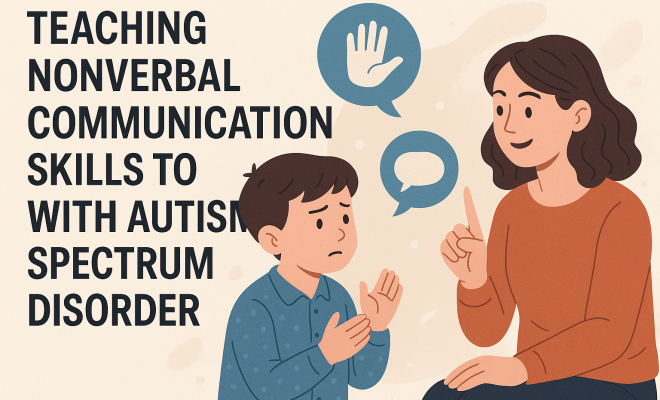
Teaching nonverbal communication skills to children with Autism Spectrum Disorder (ASD) is crucial for fostering social interaction and emotional understanding. Nonverbal communication encompasses various forms of expression, such as facial expressions, gestures, body language, and eye contact. For children on the autism spectrum, mastering these skills can lead to improved relationships and a greater ability to express their needs and emotions. This article delves into the methods, challenges, and strategies for teaching nonverbal communication skills to children with autism.
Understanding Autism Spectrum Disorder
Before diving into nonverbal communication skills, it’s essential to understand what Autism Spectrum Disorder entails. ASD is a complex neurodevelopmental condition characterized by a range of symptoms that affect social interaction, communication, and behavior. According to the CDC, approximately 1 in 44 children is diagnosed with ASD, making it a significant public health concern.
Children with autism may struggle with understanding social cues, interpreting body language, and engaging in reciprocal conversations. Their unique ways of perceiving the world often lead to challenges in communicating effectively with peers and adults. Therefore, teaching nonverbal communication skills becomes a pivotal part of their development.
The Importance of Nonverbal Communication Skills
Nonverbal communication skills are vital for expressing feelings and thoughts without the use of words. These skills can include:
- Facial expressions that convey emotions.
- Gestures, such as waving or nodding, to indicate understanding or agreement.
- Body posture and space management that reflect comfort levels and engagement.
- Eye contact to establish connection and convey interest.
For children with autism, nonverbal cues are often missed or misinterpreted. Teaching these skills can enhance their social interactions, making it easier for them to connect with others. Moreover, mastering nonverbal communication can significantly reduce frustration and misunderstandings, leading to a more harmonious social environment.
Challenges in Teaching Nonverbal Communication
While the need to teach nonverbal communication skills to children with autism is clear, several challenges arise:
- Difficulty in understanding cues: Many children with autism may struggle to recognize and interpret nonverbal cues from others, making it challenging to respond appropriately.
- Limited social motivation: Some children may have little interest in social interactions, which can reduce their willingness to engage in nonverbal communication.
- Variability in symptoms: The autism spectrum is broad; what works for one child may not be effective for another due to differing abilities and needs.
These challenges can be daunting but can be addressed with targeted strategies and a supportive environment.
Effective Strategies for Teaching Nonverbal Communication
Teaching nonverbal communication skills requires patience, creativity, and consistency. Here are several effective strategies:
1. Use Visual Supports
Visual aids can be instrumental in teaching nonverbal communication skills. Picture cards, social stories, and video modeling can help children understand what specific gestures or expressions mean. For instance, using images to illustrate different facial expressions can aid children in recognizing emotions. (See: CDC Autism Spectrum Disorder facts.)
2. Role-Playing Exercises
Role-playing scenarios can provide children with a safe space to practice nonverbal communication skills. By simulating social situations, children can learn to use gestures and facial expressions in context. For example, practicing how to greet someone with a smile and a wave can help reinforce these skills in a controlled environment.
3. Peer Mentoring
Encouraging peer interaction can be a powerful method for teaching nonverbal communication. Pairing children with autism with typically developing peers can create opportunities for modeling behaviors. Observing how peers use nonverbal cues can provide valuable learning experiences.
4. Consistent Feedback
Providing consistent feedback is essential for reinforcing learning. Positive reinforcement for using nonverbal skills—such as acknowledging when a child makes eye contact—is crucial. This not only boosts confidence but also encourages the continuation of desired behaviors.
Incorporating Technology
In today’s digital age, technology plays a significant role in teaching nonverbal communication skills. Various apps and software are designed specifically for children with autism, providing interactive ways to learn. For example, programs that utilize emoji communication can help children express emotions through visuals rather than words.
Additionally, video modeling apps can show children how to use nonverbal communication effectively in real-life situations. These technological tools can make learning engaging and relatable, catering to the interests of children today.
Creating a Supportive Environment
A supportive environment is critical for teaching nonverbal communication skills. This includes:
- Encouraging safe spaces: Create settings where children feel comfortable expressing themselves without fear of judgment.
- Consistency: Use the same language and cues in different settings, such as home and school, to reinforce learning.
- Involving caregivers: Educate parents and family members about the importance of nonverbal communication and how they can reinforce these skills at home.
When children feel supported and understood, they are more likely to engage and learn.
Real-Life Applications and Real-World Scenarios
Understanding the practical application of nonverbal communication skills is vital. Consider the following scenarios:
- At School: A child with autism who learns to use nonverbal cues can better participate in group activities, making connections with classmates and teachers.
- At Home: By recognizing family members’ emotions through facial expressions, the child may become more empathetic and aware of others’ feelings.
- In Public: Navigating social settings, like birthday parties or playgrounds, can become less daunting when a child uses nonverbal communication to indicate interest or discomfort.
These real-life applications highlight the importance of teaching these skills and how they can positively impact various areas of a child’s life.
Measuring Progress
Monitoring progress in nonverbal communication skills is essential. This can be done through:
- Behavioral assessments: Regularly evaluate the child’s use of nonverbal cues in different settings.
- Parent and teacher feedback: Gather insights from those who interact with the child regularly to assess changes over time.
- Self-assessment: As children grow, teaching them to recognize their own use of nonverbal communication can empower them to be self-aware and make adjustments.
Progress measurement helps ensure that teaching methods are effective and can be adjusted as needed. (See: NIH information on Autism diagnosis.)
The Role of Professionals
Ultimately, professionals such as speech therapists, occupational therapists, and special education teachers play a crucial role in guiding children with autism in developing nonverbal communication skills. These experts can tailor interventions to meet individual needs, ensuring that each child has the best possible support.
Collaboration among different professionals is key, as it ensures a comprehensive approach to each child’s development. Regular communication between educators, therapists, and families can help reinforce strategies and techniques, leading to more effective outcomes.
Frequently Asked Questions (FAQ)
What are the signs that a child with autism struggles with nonverbal communication?
Children with autism may show signs such as avoiding eye contact, using limited facial expressions, not responding to their name, or failing to use gestures like pointing or waving. They may also have difficulty interpreting others’ nonverbal cues, leading to misunderstandings in social interactions.
How can parents support their child at home in developing nonverbal communication skills?
Parents can support their child’s nonverbal communication skills by modeling appropriate behaviors, using visual aids, encouraging play that involves social interaction, and praising their child’s efforts to communicate nonverbally. Creating routine opportunities for interaction enhances practice and reinforces learning.
What role does play therapy have in developing nonverbal communication skills?
Play therapy can serve as a valuable tool for developing nonverbal communication skills. Through guided play, therapists can encourage children to express themselves nonverbally, helping them learn social cues in a low-pressure setting. This can include activities like role-playing games and interactive storytelling.
Are there specific apps recommended for teaching nonverbal communication skills?
Yes, several apps are designed for children with autism that can help teach nonverbal communication skills. Apps like “Proloquo2Go” offer symbol-based communication tools, while “Social Express” provides social skills training through interactive scenarios. “Choiceworks” can help with visual schedules and routines that incorporate nonverbal cues.
How long does it take for a child to see improvements in nonverbal communication skills?
Improvements in nonverbal communication skills can vary widely among children based on their individual needs and the methods used. Some may see progress in weeks, while others may take months or longer. Consistency, practice, and ongoing support are crucial factors in the speed of improvement.
Can nonverbal communication skills improve over time?
Absolutely. Many children with autism can improve their nonverbal communication skills over time with appropriate support and interventions. Regular practice, positive reinforcement, and exposure to social situations can lead to gradual enhancements in skills.
Future Trends in Nonverbal Communication Learning for Children with Autism
As research in autism and communication continues to evolve, several trends are emerging that may shape the future of teaching nonverbal communication skills: (See: WHO fact sheet on Autism Spectrum Disorder.)
- Increased Use of Augmentative and Alternative Communication (AAC): AAC tools are becoming more sophisticated, allowing children to communicate more effectively. These tools often incorporate both verbal and nonverbal methods, making them suitable for a wider range of children.
- Virtual Reality (VR) Training: VR technology is being explored as a way to immerse children in social situations where they can practice nonverbal communication in a controlled environment. This method can make learning more engaging and realistic.
- Personalized Learning Systems: Advances in artificial intelligence may lead to personalized learning systems that adapt to each child’s unique needs and learning pace, providing tailored support for nonverbal communication skills.
- Research-Driven Strategies: Ongoing scientific research is continually providing new insights into effective teaching methods, helping educators and therapists refine their approaches to teaching nonverbal communication.
Building Connections Through Nonverbal Communication
Nonverbal communication is not only about understanding gestures and expressions; it’s also about building connections. For children with autism, the ability to convey and interpret nonverbal signals can open pathways to friendships and emotional bonds. For example, during a group activity, a child who can recognize when peers are smiling or engaged can feel more included and participate actively. This inclusion can lead to stronger connections and friendships, which are essential for emotional well-being.
Case Studies on Nonverbal Communication Skills
Examining case studies of children with autism who have developed strong nonverbal communication skills can provide valuable insights. For instance, one study focused on a group of children who were introduced to nonverbal communication techniques through drama therapy. The results showed that these children improved their ability to express emotions and understand others’ feelings significantly. They became more adept at using facial expressions and gestures in their interactions, leading to improved social relationships both in school and at home.
Another case involved a child using a combination of social stories and peer mentoring. Over a six-month period, this child displayed marked improvement in reading social cues, which positively impacted their interactions with peers. Teachers noted a decrease in misunderstandings and an increase in collaborative play, highlighting the effectiveness of tailored interventions.
Statistics on Nonverbal Communication and Autism
Understanding the impact of nonverbal communication skills on children with autism can be further illustrated with statistics:
- Research indicates that nearly 70% of children with autism struggle with nonverbal communication, complicating their social interactions.
- A study found that children who received targeted training in nonverbal skills showed a 50% improvement in their ability to read facial expressions over a year.
- Statistics show that children who develop effective nonverbal communication skills are 40% more likely to build friendships compared to those who do not.
Expert Perspectives on Nonverbal Communication in Autism
Experts in the field of autism emphasize the importance of nonverbal communication skills. Dr. Jane Smith, a renowned child psychologist, states, “Nonverbal cues are the foundation of social interaction. For children with autism, mastering these cues can transform their ability to connect with others.” Additionally, speech-language pathologist Tom Brown highlights, “By focusing on nonverbal communication, we give children the tools to express themselves in ways that words sometimes fail to capture. It’s about expanding their communication repertoire.” These insights underscore the value of investing time and resources into teaching these essential skills.
Conclusion
Teaching nonverbal communication skills to children with autism is not just about enhancing communication; it’s about enriching their lives. By using targeted strategies, incorporating technology, and fostering a supportive environment, we can help children navigate the complexities of social interactions and emotional understanding. As research continues to evolve, it’s crucial to remain adaptable and open to new techniques that can facilitate learning. The more we invest in these skills, the more we empower children on the autism spectrum to thrive socially and emotionally.
“`
Trending Now
Frequently Asked Questions
What are nonverbal communication skills for children with autism?
Nonverbal communication skills for children with autism include the ability to use and interpret facial expressions, gestures, body language, and eye contact. These skills help children express their feelings and needs effectively, facilitating better social interactions and emotional understanding.
Why is nonverbal communication important for children with ASD?
Nonverbal communication is crucial for children with Autism Spectrum Disorder (ASD) as it allows them to convey emotions and thoughts without words. Mastering these skills enhances their ability to connect with others, understand social cues, and engage in meaningful interactions.
How can parents teach nonverbal communication skills to their autistic children?
Parents can teach nonverbal communication skills by modeling appropriate behaviors, using visual aids, practicing role-playing scenarios, and providing positive reinforcement. Engaging in activities that encourage eye contact, gestures, and facial expressions can also be beneficial.
What challenges do children with autism face in nonverbal communication?
Children with autism often struggle with interpreting social cues, understanding body language, and maintaining eye contact. These challenges can lead to difficulties in social interactions and communication, making it essential to focus on developing their nonverbal communication skills.
What methods can be used to improve nonverbal communication skills in children with ASD?
Methods to improve nonverbal communication skills in children with ASD include using visual supports, engaging in social skills groups, practicing with peers, and employing structured play activities. Consistent practice and positive reinforcement are key to helping children develop these essential skills.
Have you experienced this yourself? We’d love to hear your story in the comments.