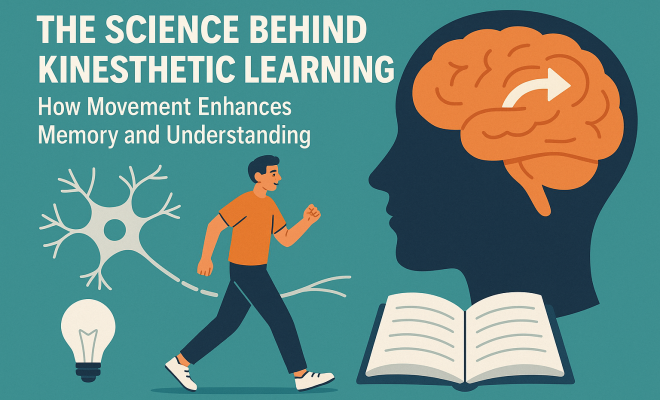
“The Science Behind Kinesthetic Learning: How Movement Enhances Memory and Understanding”
“`html
Picture a student struggling to grasp a complex mathematical concept or a young child learning to spell. They sit at their desks, surrounded by books and worksheets, trying to absorb information through traditional methods. Now, imagine a different approach—one that involves movement, interaction, and hands-on activities. This is the essence of kinesthetic learning, a style that emphasizes physical engagement and has been shown to significantly enhance memory and understanding. In this article, we’ll explore the science behind kinesthetic learning, its applications, and practical insights into how movement can transform the educational experience.
Understanding Kinesthetic Learning
At its core, kinesthetic learning is a style of education where individuals learn best through physical activities. Unlike visual or auditory learning, kinesthetic learners thrive when they can touch, manipulate, and experience concepts actively. This method is often associated with hands-on learning and is particularly effective in subjects like science, math, and even language acquisition.
The term ‘kinesthetic’ comes from the Greek word ‘kinesis’, meaning movement. Kinesthetic learners often find it challenging to sit still and absorb information passively. Instead, they engage deeply with their learning environment, using their bodies to process and understand new concepts. Understanding the principles of kinesthetic learning is paramount for educators, parents, and students alike, as it lays the groundwork for creating more effective learning experiences.
The Science of Movement and Learning
Numerous studies have shown that movement impacts cognitive function and memory. When students engage in physical activities, their brains become more active, which can lead to better retention of information. According to a study published in the journal Frontiers in Psychology, movement can enhance learning by increasing blood flow to the brain, improving neural connectivity, and stimulating the release of neurotransmitters that support learning and memory.
Furthermore, the connection between kinesthetic learning and memory is well-established. When students physically engage with material, they create stronger neural pathways. This process, known as ’embodied cognition’, suggests that our bodily experiences significantly influence our cognitive processes. In simpler terms, when students move, they are not just learning with their minds; they are learning with their bodies, making the information more memorable.
The Role of Play in Kinesthetic Learning
Play is a crucial element of kinesthetic learning, especially in early childhood education. Young children often learn best through play-based activities that encourage them to explore and interact with their surroundings. For instance, using building blocks to teach math concepts allows children to physically manipulate objects while understanding spatial relationships and measurements.
Research from the American Educational Research Journal highlights that children who engage in play-based learning environments demonstrate greater academic achievement compared to their peers in traditional settings. By incorporating movement and play into the learning process, educators can create a more dynamic environment that fosters creativity, critical thinking, and collaboration.
Kinesthetic Learning Strategies in the Classroom
Integrating kinesthetic learning into the classroom doesn’t have to be complicated. Below are several effective strategies that educators can employ to enhance the learning experience:
- Movement Breaks: Implement brief physical activity breaks throughout lessons to help students regain focus and energy.
- Hands-On Activities: Use experiments, models, and projects that require students to manipulate materials and engage in physical tasks.
- Role-Playing: Incorporate drama and role-play into lessons to allow students to embody characters or scenarios, enhancing comprehension.
- Interactive Learning Stations: Set up different stations in the classroom where students can rotate through activities that involve movement and physical interaction.
- Incorporate Technology: Utilize apps and tools that require students to engage in physical activities while learning, such as virtual reality or interactive games.
By implementing these strategies, teachers can create a more engaging classroom environment that caters to kinesthetic learners while benefiting all students.
Kinesthetic Learning Beyond the Classroom
While kinesthetic learning is often associated with traditional educational settings, its principles can be applied in various contexts, such as at home and within the community. Parents can encourage kinesthetic learning by incorporating movement into everyday activities. For example, cooking together can teach math and science concepts, while gardening provides lessons in biology and environmental studies.
Additionally, extracurricular activities like dance, sports, and theater provide excellent opportunities for kinesthetic learning. These activities not only improve physical health but also encourage teamwork, discipline, and time management—all essential skills for lifelong learning.
The Impact of Technology on Kinesthetic Learning
In today’s digital age, technology is reshaping the landscape of education, including kinesthetic learning. Interactive tools, educational games, and virtual reality environments are increasingly being utilized to create immersive learning experiences that engage students physically and cognitively.
For instance, augmented reality apps allow students to visualize complex concepts in 3D space, encouraging them to explore and interact with virtual objects. Similarly, motion-sensing technology, like that found in gaming consoles, can promote physical activity while teaching subjects in an engaging way. As technology continues to evolve, educators must find innovative ways to incorporate kinesthetic elements into their teaching strategies to keep students engaged and motivated.
Challenges of Kinesthetic Learning
Despite the clear benefits of kinesthetic learning, it’s not without its challenges. One significant hurdle is the conventional structure of education, which often prioritizes standardized testing and traditional teaching methods. This can leave little room for teachers to incorporate movement-based activities into their curriculum.
Moreover, some educators may lack training or resources to effectively implement kinesthetic learning strategies. This gap can lead to frustration for both teachers and students as kinesthetic learners may struggle in environments that do not support their learning style. To address these challenges, it’s essential for schools to invest in professional development and resources that promote kinesthetic pedagogy.
Success Stories: Kinesthetic Learning in Action
Several schools and educational programs have successfully integrated kinesthetic learning principles into their curriculum, demonstrating the positive impact on student engagement and achievement. For example, the Chalkboard Project in Oregon focuses on hands-on, experiential learning, allowing students to explore various subjects through physical activity and real-world applications.
Similarly, the Movement and Learning Project in Australia has shown that integrating movement into lessons can significantly improve students’ academic performance. These success stories highlight the importance of rethinking traditional education models to create more inclusive and effective learning environments for all students.
The Future of Kinesthetic Learning
As we look toward the future, the importance of kinesthetic learning is poised to grow even further. With the rise of personalized learning approaches and an increased understanding of diverse learning styles, educators are beginning to appreciate the value of movement in the learning process. The ongoing integration of technology will likely play a crucial role in shaping how kinesthetic learning evolves, making it more accessible and engaging for students around the globe.
In addition, as educational institutions increasingly prioritize mental health and well-being, the benefits of kinesthetic learning—which promotes active engagement and reduces stress—will continue to gain traction. By embracing movement as a fundamental aspect of education, we can create environments that foster better learning outcomes, emotional resilience, and lifelong learners.
Exploring Different Kinesthetic Learning Activities
There are countless activities that can support kinesthetic learning in different subjects, making learning more dynamic and fun. Here are some examples:
- Science Experiments: Allow students to conduct simple science experiments, such as mixing vinegar and baking soda to create a volcanic eruption. This not only teaches chemical reactions but also engages students physically as they measure and mix ingredients.
- Outdoor Math: Use outdoor spaces for math games that involve measuring distances or calculating the area of a playground. This encourages students to apply math in real-world contexts.
- Interactive Storytelling: In language arts, students can act out stories or poems. This activity enhances comprehension and retention by allowing them to physically embody the characters and plot.
- Historical Reenactments: In social studies, students can recreate historical events or debates. This immersion helps them understand history from different perspectives and remember key moments more vividly.
Real-World Applications of Kinesthetic Learning
Kinesthetic learning has moved beyond traditional classrooms into various professional fields. Many careers now emphasize the importance of hands-on experience and physical engagement. Fields such as healthcare, engineering, and the arts often require individuals to learn and apply skills through active participation.
For instance, medical students benefit from simulation labs where they practice procedures on mannequins before interacting with real patients. This kinesthetic approach ensures they develop both the confidence and competence to perform in high-stakes environments. Similarly, engineering students frequently engage in building prototypes to understand theories and principles better.
Moreover, the arts—whether theater, dance, or visual arts—are inherently kinesthetic. Artists often learn techniques through practice, moving their bodies and materials to express their creativity. This hands-on approach not only enhances skill development but also fosters emotional expression and personal growth.
Kinesthetic Learning in Adult Education
While much of the focus on kinesthetic learning has centered around children, it’s equally important for adult learners. Many adults engaged in continuing education, vocational training, or professional development find that interactive, hands-on experiences enhance their understanding and retention of new information.
For instance, workshops that incorporate physical activities—like building something or practicing a new skill—tend to engage adult learners more effectively than traditional lecture formats. This is particularly true in fields such as culinary arts, craftsmanship, and technology, where practical application is vital.
Studies have shown that adults who participate in kinesthetic learning environments report greater satisfaction and higher success rates in developing new skills compared to those who only engage in passive learning. This trend highlights the need for educational institutions to adapt their methodologies to cater to diverse learning styles at all ages.
Frequently Asked Questions about Kinesthetic Learning
1. What are the characteristics of kinesthetic learners?
Kinesthetic learners often exhibit a preference for learning through movement and touch. They may struggle with traditional learning methods that require sitting still for long periods. Characteristics include fidgeting, using gestures while speaking, and a strong sense of spatial awareness.
2. How can parents support kinesthetic learning at home?
Parents can support kinesthetic learning by incorporating movement into daily routines. Simple activities like cooking, gardening, or playing active games can reinforce learning while keeping children physically engaged.
3. Are there specific subjects that benefit more from kinesthetic learning?
While kinesthetic learning can benefit all subjects, it tends to be particularly effective in science, math, language arts, and physical education. These subjects often involve concepts that can be better understood through hands-on activities.
4. Can kinesthetic learning be effective for children with learning disabilities?
Yes, many children with learning disabilities respond well to kinesthetic learning because it allows them to engage with material in a way that suits their individual needs. Movement can help these students focus and retain information more effectively.
5. How can teachers assess kinesthetic learners?
Teachers can assess kinesthetic learners through observations of their engagement during hands-on activities, group projects, and performance-based assessments. Creating opportunities for physical interaction with the material can provide insights into their understanding.
The Benefits of Kinesthetic Learning
Kinesthetic learning offers numerous advantages that extend beyond academic achievement. Here are some key benefits:
- Improved Memory Retention: Engaging in physical activities helps students remember what they’ve learned. The combination of movement and cognitive engagement reinforces memory pathways, making recall easier.
- Enhanced Focus: Movement breaks can improve concentration, particularly in children who have difficulty focusing in traditional learning environments. Physical activity can energize and refresh students, allowing them to return to their tasks with renewed attention.
- Developing Fine and Gross Motor Skills: Kinesthetic learning activities often involve using fine and gross motor skills, which are crucial for overall physical development. Skills like coordination and balance are cultivated through active engagement.
- Promoting Healthy Lifestyles: By incorporating movement into learning, students develop an appreciation for physical activity. This can lead to healthier lifestyle choices as they grow older.
- Building Social Skills: Many kinesthetic activities require collaboration and teamwork, helping students develop important social skills. They learn to communicate, negotiate, and work with others towards a common goal.
Comparing Kinesthetic Learning with Other Learning Styles
Understanding how kinesthetic learning compares with other learning styles can help educators create more balanced and effective teaching strategies. Below is a brief comparison with visual and auditory learning:
Visual Learning
Visual learners prefer to learn through images, diagrams, and written instructions. They often excel with charts, graphs, and visual aids. While kinesthetic learners benefit from tactile experiences, visual learners may find their strength in visual representations of concepts. Educators can support both styles by combining visuals with hands-on activities.
Auditory Learning
Auditory learners thrive on listening and speaking. They grasp concepts better when information is conveyed through lectures, discussions, and audio materials. Kinesthetic learners, on the other hand, require active engagement. To accommodate different learning styles, teachers can integrate discussions and verbal explanations alongside kinesthetic activities, allowing both auditory and kinesthetic learners to benefit.
Combining Learning Styles
Recognizing the diversity of learning styles is crucial. A blended approach that incorporates elements from each style can enhance the learning experience for all students. For example, a science lesson might involve watching a video (visual), discussing the concepts (auditory), and conducting a hands-on experiment (kinesthetic). This comprehensive approach ensures that each student’s preferences are considered, fostering a more inclusive and effective learning environment.
Conclusion: Embracing Kinesthetic Learning
Kinesthetic learning is more than just a buzzword; it represents a fundamental shift in how we approach education. By understanding the science behind movement and its impact on memory and understanding, educators, parents, and students can harness the power of active learning to enhance the educational experience. Whether through play, hands-on activities, or technology, incorporating movement into learning can lead to meaningful engagement and deeper understanding. As we continue to explore and expand upon the principles of kinesthetic learning, the potential to transform education for the better is within our reach.
“`
Trending Now
- our breakdown of what they forgot to include in my education degree
- our breakdown of “the three core considerations of dap: age, individual, and cultural appropriateness”
- read the full story
- this guide on “how to teach to different learning preferences without limiting student growth”
- the complete explanation
Frequently Asked Questions
What is kinesthetic learning?
Kinesthetic learning is an educational style where individuals learn best through physical activities and hands-on experiences. This approach emphasizes movement and interaction, allowing learners to engage with concepts actively rather than passively absorbing information.
How does movement enhance memory?
Movement enhances memory by increasing blood flow to the brain, which boosts cognitive function. Studies indicate that engaging in physical activities can lead to improved retention of information and deeper understanding of concepts.
What are the benefits of kinesthetic learning?
Kinesthetic learning offers several benefits, including improved memory retention, greater engagement, and a deeper understanding of complex concepts. It is particularly effective in subjects like science and math, where hands-on activities facilitate learning.
Who benefits from kinesthetic learning?
Kinesthetic learning benefits individuals who struggle with traditional learning methods, particularly those who find it challenging to sit still. This style is effective for students of all ages, especially in active learning environments.
How can educators implement kinesthetic learning in the classroom?
Educators can implement kinesthetic learning by incorporating physical activities, hands-on experiments, and interactive tasks into their lessons. This approach encourages movement and engagement, making learning more effective for kinesthetic learners.
What did we miss? Let us know in the comments and join the conversation.