US Blocks Frontier AI Export: A Historic 2026 Decision
“`html
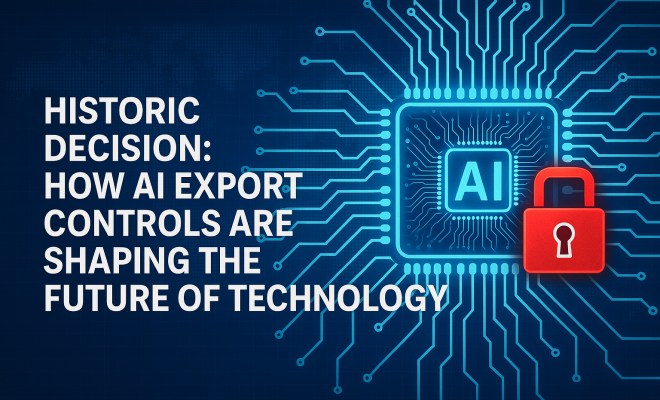
On June 12, 2026, a pivotal moment in the realm of artificial intelligence occurred when the U.S. Secretary of Commerce ordered a frontier AI model to be blocked from export. This decision marks the first instance in history where a frontier AI model was subjected to such stringent AI export controls. The implications of this move reverberate across not only the tech industry but also national security, geopolitics, and the future landscape of innovation.
The Context of AI Export Controls
Before unpacking this historic decision, it’s essential to understand the concept of AI export controls. Traditionally, export controls target military and dual-use technologies that could threaten national security or be used in ways detrimental to public safety. As AI technologies become increasingly advanced, they are being scrutinized through this same lens.
The rise of AI has been meteoric, and frontier models—characterized by their large scale and transformative capabilities—are at the forefront of this revolution. These models are capable of tasks that can significantly impact multiple sectors, from healthcare to defense. The growing power of AI has led policymakers to reevaluate how these technologies are managed on a global scale.
The Decision: A Major Shift
The June 12 directive represents a significant shift in how the U.S. governs its AI landscape. Historically, technology export controls were primarily focused on traditional industries. However, the global proliferation of AI and its potential misuse has prompted a rethinking of these policies. By restricting access to a frontier AI model, the U.S. is sending a clear message: AI is now on par with other strategic technologies.
This decision could change the dynamics of international AI development. Countries with less robust regulations could potentially benefit from this U.S. ban, creating a competitive landscape where innovation might flourish elsewhere while the U.S. holds back.
National Security vs. Innovation
One of the most contentious aspects of the decision revolves around the balance between national security and innovation. Proponents argue that AI export controls are necessary to prevent potentially dangerous technologies from falling into the wrong hands. For instance, advanced AI models could be exploited for malicious purposes, including cyber warfare and surveillance.
On the flip side, critics contend that such measures could stifle innovation and collaboration. The field of AI thrives on open-source contributions and international partnerships. By imposing restrictive export controls, the U.S. could hinder its own researchers and businesses, ultimately losing ground to countries that encourage AI development.
The Global AI Landscape
As nations grapple with the implications of AI technologies, the global landscape is becoming increasingly polarized. Countries like China and Russia are rapidly advancing their AI capabilities, often without the same regulatory scrutiny found in the U.S. The U.S. export controls could inadvertently foster a more competitive environment for these nations, allowing them to lead advancements in AI.
The implications of this shift are significant; if the U.S. continues to tighten its grip on AI technologies, it risks isolating itself from a crucial global partnership. Many experts believe that collaboration is essential for solving global challenges such as climate change and public health crises, where AI can play a transformative role.
Historical Precedents
To appreciate the gravity of the June decision, it’s worthwhile to look back at historical precedents involving export controls. The U.S. has a long history of implementing similar measures for military technology, especially during the Cold War. The rationale was straightforward: preventing adversaries from gaining access to advanced weaponry.
However, this model of export control has not always proven effective in curbing the spread of technology. For instance, despite stringent controls, dual-use technologies still found their way into the hands of rogue states. This history begs the question: will the same fate befall AI, or can effective governance mechanisms be established to protect national interests?
The Role of Industry and Academia
The June decision has elicited strong responses from both industry leaders and academics. Many in tech circles are expressing concern that AI export controls will slow down essential research. Companies like Google and OpenAI have invested heavily in frontier AI, and restrictions could disrupt ongoing projects, stifling innovation.
Academics are also weighing in, arguing that restricting access to advanced AI technologies will limit educational opportunities for students and researchers. The collaborative nature of AI research, which thrives on the exchange of ideas and open datasets, risks being undermined by such policies. (See: AI export controls in the news.)
Public Sentiment and Ethical Considerations
Public opinion on the matter is deeply divided. Some citizens see the potential dangers of unregulated AI development and support measures to curb its spread. Others view AI export controls as a form of overreach, fearing that it may prioritize government interests over innovation and societal benefit.
The ethical considerations surrounding AI are also paramount. As AI systems increasingly impact decision-making in critical areas such as healthcare, law enforcement, and finance, the ethical implications of restricting access become more pronounced. Who gets to decide which technologies are safe, and how are those decisions made?
Future Directions and Policy Recommendations
The question of how to regulate AI effectively is still very much up for debate. Policymakers will need to tread carefully to ensure that national security concerns do not stifle innovation. Here are a few recommendations moving forward:
- Collaborative Governance: Establishing international frameworks for AI governance could help manage potential risks while promoting innovation.
- Sector-Specific Regulations: Rather than blanket export controls, a more nuanced approach tailored to specific industries could be more effective.
- Public Engagement: Involving the public in discussions about AI policies could help address ethical concerns and promote transparency.
The Economic Implications
Beyond the immediate political and ethical ramifications, the economic impact of AI export controls cannot be understated. The AI sector is projected to contribute trillions of dollars to the global economy in the coming years. Limiting exports could jeopardize the U.S. position as a leader in the tech industry, especially if other countries capitalize on the opportunity.
Companies may begin to shift their focus to more permissive environments, leading to a brain drain where talent migrates to regions with fewer restrictions. The long-term economic consequences of these export controls could be significant, affecting everything from job creation to technological advancement.
Understanding AI Export Controls
To comprehend the scope of AI export controls, it’s worth exploring the types of technologies typically subject to such regulations. In the past, items like military-grade drones, advanced semiconductors, and cryptographic software have been focal points. AI has now joined this pantheon of sensitive technologies.
Specific AI applications, especially those that could facilitate autonomous weapons systems or enhance surveillance capabilities, are likely to be at the forefront of export control discussions. The challenge lies in defining which AI technologies warrant regulation and how to implement those controls effectively.
International Reactions
The U.S. decision has sparked varied reactions internationally. Countries like Canada and the EU have been closely monitoring the implications of these export controls, considering their own regulatory frameworks for AI. Some nations may see the U.S. move as an opportunity to position themselves as more favorable environments for AI development, while others might align with the U.S. to promote a unified stance against certain risks associated with AI technologies.
Case Studies of AI Export Controls
Looking at case studies can shed light on the effectiveness of AI export controls. For instance, the regulation of encryption technology has had mixed results. During the 1990s, the U.S. government tightly controlled the export of strong encryption, fearing it could fall into the hands of adversaries. Over time, the industry adapted by developing alternative solutions and pushing for broader accessibility, often outpacing regulatory measures.
A similar pattern might emerge in AI. Companies and researchers could find innovative ways to circumvent restrictions, thus blurring the lines established by export controls. This underscores the importance of establishing a robust dialogue among stakeholders to ensure that regulations keep pace with technological advancements.
Expert Perspectives on AI Export Controls
Industry experts have expressed mixed feelings regarding the U.S. export controls. Some believe they could lead to a more cautious and responsible deployment of AI technologies. Others argue that it might drive innovation underground, where developments could proceed without oversight, potentially leading to more significant risks in the long run.
Prominent voices in technology, such as Dr. Fei-Fei Li and Andrew Ng, have highlighted the importance of ethical AI development and the necessity of balancing regulation with innovation. Their insights emphasize the need for policies that encourage safe development practices while fostering an environment where creativity can thrive.
Building a Framework for Responsible AI Development
Establishing a comprehensive framework for AI governance could address many of the concerns surrounding AI export controls. Such a framework would involve multiple stakeholders, including governments, industry leaders, and academic institutions. Here are some key components:
- Ethical Guidelines: Developing clear and enforceable ethical guidelines for AI research and application could help mitigate risks associated with the technology.
- Accountability Structures: Implementing accountability measures for organizations developing AI can ensure compliance with ethical standards and regulations.
- Cross-Border Collaboration: Encouraging international cooperation on AI governance can lead to shared standards and best practices, creating a more secure global AI ecosystem.
FAQ about AI Export Controls
What are AI export controls?
AI export controls refer to regulations that restrict the export of artificial intelligence technologies, particularly those deemed sensitive or potentially harmful if accessed by unauthorized entities. (See: Impact of AI on national security.)
Why did the U.S. impose AI export controls?
The U.S. imposed these controls to safeguard national security, prevent the misuse of advanced AI technologies, and maintain leadership in the global tech landscape.
How do AI export controls affect innovation?
AI export controls can limit collaboration and access to cutting-edge research, potentially stifling innovation and driving talent to countries with fewer restrictions.
Which AI technologies are likely to be subject to export controls?
Technologies used in autonomous weaponry, surveillance systems, or any application that poses significant national security risks are most likely to attract export controls.
What are the potential consequences of tightening AI export controls?
Consequences may include a brain drain, increased competition from other nations, and the possibility of innovative developments moving underground or outside regulatory oversight.
How can policymakers balance national security with innovation?
Policymakers can achieve this balance by establishing collaborative governance frameworks, engaging the public in discussions, and creating sector-specific regulations that address unique challenges posed by AI technologies.
The Path Ahead
As we look toward the future, the implications of the June 12 decision will likely shape discussions around AI and technology for years to come. It raises crucial questions about how to balance national interests with the need for innovation in an increasingly interconnected world.
Ultimately, the challenge will be to craft policies that protect societal interests without stifling technological advancement. The ongoing dialogue surrounding AI export controls will be critical as we navigate these uncharted waters, ensuring that the benefits of AI can be harnessed while minimizing potential risks.
Final Thoughts
The decision to impose export controls on a frontier AI model is a watershed moment in the tech and policy landscape. As governments grapple with how to manage the complexities of AI, the stakes are high. While safeguarding national security is vital, we must also consider the broader implications for innovation, collaboration, and ethical governance.
This situation will evolve, and as it does, the discourse surrounding AI export controls will undoubtedly become more critical. It’s essential for all stakeholders—government, industry, and the public—to engage in these discussions. The future of AI isn’t just about technology; it’s about ensuring that it serves humanity as a whole, rather than the interests of a select few.
Emerging Trends in AI Export Controls
As governments adapt to the rapidly changing landscape of AI technology, several emerging trends in export controls are becoming apparent. Understanding these trends can help stakeholders prepare for what lies ahead.
One notable trend is the rise of multilateral agreements among countries. Nations are increasingly recognizing that unilateral export controls may not be sufficient to manage the complexities of AI technology. Initiatives like the Global Partnership on Artificial Intelligence (GPAI) aim to create collaborative frameworks for responsible AI development and governance. Such frameworks can help standardize regulations across borders, reducing the loopholes that often arise from disparate national policies.
Another trend is the increasing role of standards and certifications. As countries seek to impose controls, they are also looking at how to set clear benchmarks for what constitutes safe and responsible AI. This includes the development of technical standards for AI systems that could be subject to export controls, providing clarity for developers and regulators alike. (See: U.S. Commerce Department AI regulations.)
Challenges in Implementing AI Export Controls
Implementing effective AI export controls is fraught with challenges. These challenges stem from the nature of AI technology itself, which is inherently adaptive and often decentralized. For instance, AI algorithms can be easily modified, making it difficult to classify them under existing export control regimes.
Moreover, the borderless nature of the internet complicates enforcement. Once an AI model is released into the digital ecosystem, controlling its distribution and adaptation becomes nearly impossible. This has led some experts to argue for a reevaluation of traditional export control mechanisms, suggesting that a new paradigm is needed that accounts for the fluidity of digital technology.
The Role of Private Sector Advocacy
As export controls evolve, the role of the private sector in advocating for balanced regulations will be crucial. Companies that operate in the AI space are beginning to recognize the importance of engaging with policymakers to shape regulations that are both effective and conducive to innovation. This includes forming industry coalitions that can present a united front to government agencies, ensuring that the voices of tech companies are heard in the regulatory process.
Furthermore, private sector leaders are also investing in research and development efforts aimed at creating transparent and ethical AI systems. By demonstrating a commitment to responsible AI practices, these companies can help build trust with regulators and the public, potentially easing the path for more favorable export policies.
Future Scenarios for AI Export Controls
Several potential scenarios could unfold in the coming years as AI export controls continue to evolve. One possibility is the establishment of a comprehensive international treaty governing AI technology. Such a treaty could set global standards for AI development, deployment, and export, reducing the fragmentation seen in current regulations.
Alternatively, we could see a proliferation of nationalistic policies, where countries prioritize their own technological sovereignty over global cooperation. This could lead to a divided world of AI capabilities, where nations with strict export controls fall behind those with more permissive environments, creating a competitive disadvantage for innovation.
Another scenario involves the rise of ‘open-source’ AI initiatives, which could challenge traditional export control frameworks. As more researchers and developers turn to open-source platforms to share their work, it may become increasingly difficult for governments to control the flow of AI technology effectively. This could prompt a reevaluation of how export controls are applied to ensure they remain relevant in an open-source environment.
Conclusion: Navigating Uncertainties
As we stand at this crossroads of technological advancement and regulatory oversight, navigating the uncertainties surrounding AI export controls will be paramount. The balance between securing national interests and fostering innovation is delicate and complex. Engaging in ongoing dialogue among all stakeholders—governments, industry leaders, researchers, and the public—will be essential to crafting policies that not only protect society but also promote the growth of AI technology for the benefit of all.
The future of AI is not just a matter of technology; it’s a question of how we choose to regulate and govern that technology in a way that aligns with our values and societal goals. The coming years will be critical in shaping the trajectory of AI development, and the decisions made today will resonate for generations to come.
“`
Trending Now
Frequently Asked Questions
What are AI export controls?
AI export controls are regulations that restrict the export of artificial intelligence technologies, particularly those with military or dual-use potential. These controls aim to prevent the misuse of advanced AI models that could threaten national security or public safety, ensuring that powerful technologies are managed responsibly on a global scale.
Why did the U.S. impose AI export controls?
The U.S. imposed AI export controls to address the rapid advancement and potential misuse of frontier AI models. By restricting access to these technologies, the government aims to safeguard national security and maintain a competitive edge in the global technology landscape, reflecting AI's growing importance alongside traditional strategic technologies.
What impact do AI export controls have on technology development?
AI export controls can significantly impact technology development by limiting access to advanced AI models. While they aim to prevent misuse, such restrictions may also hinder innovation within the U.S., potentially allowing countries with less stringent regulations to advance their AI capabilities more rapidly.
How do AI export controls affect international relations?
AI export controls can alter international relations by creating disparities in technology access. Countries that face U.S. restrictions may seek alternative routes for AI development, leading to a competitive landscape where innovation flourishes in less regulated environments, potentially reshaping global alliances and tech dynamics.
What is a frontier AI model?
A frontier AI model refers to advanced artificial intelligence systems characterized by their large scale and transformative capabilities. These models are capable of performing complex tasks across multiple sectors, making them highly influential in areas such as healthcare, defense, and technology innovation.
What’s your take on this? Share your thoughts in the comments below — we read every one.