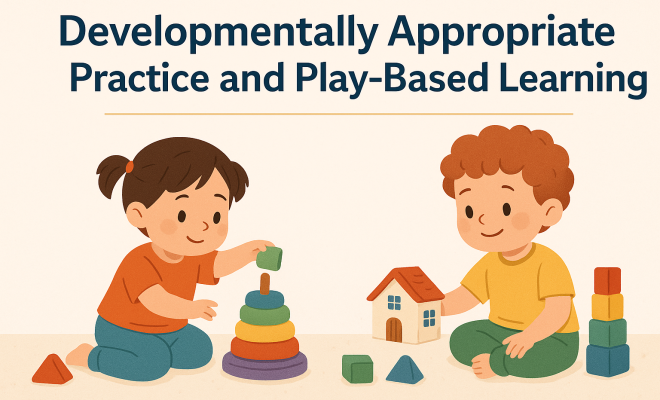
Developmentally Appropriate Practice and Play-Based Learning
“`html
When it comes to early childhood education, play-based learning isn’t just a buzzword; it’s a fundamental approach that shapes the way young children learn, develop, and grow. This method, rooted in the principles of developmentally appropriate practice (DAP), emphasizes the importance of play in facilitating cognitive, emotional, and social development in preschoolers. In this article, we’ll explore the essential aspects of play-based learning and its relevance in today’s educational landscape, providing insights for educators, parents, and policymakers.
Understanding Developmentally Appropriate Practice
Developmentally appropriate practice (DAP) is a framework developed by the National Association for the Education of Young Children (NAEYC). It guides educators in creating effective learning environments that respect and respond to the unique developmental stages of young children. DAP is based on three core considerations:
- Knowing the child: Effective education begins with an understanding of individual children’s strengths, interests, and needs.
- Knowing the age group: Educators must be familiar with the developmental milestones typical for various age groups, ensuring that activities align with children’s abilities.
- Social and cultural context: Recognizing the diverse backgrounds of children guides educators in creating inclusive environments that respect various cultures and experiences.
The Role of Play in Learning
Play is often referred to as a child’s “work.” It’s through play that children explore their environment, experiment with new ideas, and interact with others. Research consistently shows that children learn best when engaged in play-based activities. Here’s why play is so crucial:
- Cognitive Development: Through play, children develop critical thinking, problem-solving skills, and creativity. For instance, when children engage in block play, they not only work on their motor skills but also learn about balance, symmetry, and spatial awareness.
- Social Skills: Play often involves interaction with peers, allowing children to practice social skills such as sharing, negotiation, and empathy.
- Emotional Growth: Through imaginative play, children express their feelings and work through complex emotions, which fosters emotional intelligence.
Components of Play-Based Learning
In the framework of play-based learning, certain components are essential for maximizing the developmental benefits:
- Child-Led Activities: Children should have the freedom to choose their activities. When they lead their play, they engage more deeply and meaningfully.
- Structured Play: While child-led exploration is crucial, structured play—guided by educators—can also help children learn specific skills. This balance ensures that children benefit from both free exploration and targeted learning.
- Variety of Play Types: Incorporating different types of play (e.g., solitary, parallel, cooperative) caters to various developmental needs and encourages diverse interactions.
- Reflection and Discussion: Engaging children in conversations about their play experiences helps them articulate their thoughts, enhancing language skills and critical thinking.
Creating a Play-Based Learning Environment
To effectively implement play-based learning, educators must create environments that encourage exploration and discovery. Here are some strategies for fostering an ideal play-based atmosphere:
- Safe and Inviting Spaces: Classrooms should be designed to be safe, welcoming, and stimulating. Learning centers can be established for art, science, dramatic play, and literacy to encourage exploration.
- Accessible Materials: Materials should be diverse and readily available. Natural objects, open-ended toys, and art supplies allow for creativity and imagination.
- Flexible Routines: Allowing flexibility in daily routines enables children to engage in deep play without constant interruptions, maximizing their learning experiences.
Integrating Play-Based Learning with Curriculum Standards
One common concern among educators is how to integrate play-based learning with existing curriculum standards. Fortunately, play-based learning can align with educational standards while maintaining its intrinsic value. Here’s how:
- Aligning Objectives: Educators can develop learning objectives that reflect both play experiences and curriculum standards. For example, if the standard is to understand basic math concepts, educators can incorporate counting and sorting games into play activities.
- Documentation of Learning: Keeping track of children’s play activities provides valuable insights into their learning progress. Portfolios, anecdotal records, and photographs can showcase how play aligns with learning outcomes.
- Collaboration with Families: Engaging families in the learning process ensures that play-based learning extends beyond the classroom. Educators can offer workshops to help parents understand the benefits of play and provide fun activities to reinforce learning at home.
Challenges in Implementing Play-Based Learning
While the benefits of play-based learning are well documented, implementing it effectively can be challenging. Here are some common hurdles educators face:
- Standardized Testing Pressure: Many educational systems emphasize standardized testing, which can lead to a focus on rote learning rather than play. Educators must advocate for the value of play in meeting learning objectives.
- Misunderstanding of Play: Some educators, parents, or administrators may underestimate the significance of play in learning. Training and professional development can help shift perspectives on the importance of play-based approaches.
- Resource Limitations: In some cases, schools may lack the necessary resources or space to create an effective play-based environment. Advocacy for funding and community support is essential to alleviate these limitations.
The Role of Educators in Play-Based Learning
Educators play a pivotal role in facilitating play-based learning. Their responsibilities include: (See: CDC on Child Development.)
- Observation: By closely observing children during play, educators can assess developmental progress and identify areas where support is needed.
- Guidance: Educators must balance allowing free play with providing guidance. They can introduce new concepts during play, ask open-ended questions, and encourage collaboration among children.
- Creating a Community of Learners: Building a community where children feel safe and supported fosters a positive learning environment. Educators should promote respect and cooperation, ensuring every child feels valued.
Current Trends in Play-Based Learning
In recent years, play-based learning has gained recognition and momentum in educational settings. Some noteworthy trends include:
- STEM Play: Integrating science, technology, engineering, and mathematics (STEM) into play activities helps children develop critical skills through hands-on exploration.
- Mindfulness and Play: Incorporating mindfulness practices into play can enhance emotional regulation and focus, helping children manage stress and anxiety.
- Technology in Play: While screen time raises concerns, educational technology can be utilized effectively in play-based learning, offering interactive experiences that complement traditional play.
The Impact of Play-Based Learning on Long-Term Development
Studies have shown that children who engage in play-based learning are more likely to develop strong academic skills and social competencies that last into their later years. For example, a study by the University of Minnesota found that children who participated in high-quality play-based programs were more likely to excel academically by the time they reached third grade. They also demonstrated better emotional regulation and social skills compared to their peers who experienced more traditional educational methods.
Play-Based Learning Around the World
While play-based learning is gaining traction in many countries, its implementation varies significantly worldwide. In Scandinavian countries, for instance, early childhood education heavily emphasizes play. Children often spend most of their school day outdoors, engaging in unstructured play that fosters their natural curiosity and promotes social skills. Conversely, more traditional systems, like those in parts of Asia, often prioritize academic achievement with less emphasis on play.
The importance of cultural context cannot be overstated. In cultures where play is seen strictly as a leisure activity, it may be difficult to convince educators and parents of its educational value. Thus, advocacy and education about play-based principles must be tailored to fit local beliefs and values.
The Importance of Outdoor Play
Outdoor play is a vital component of play-based learning. It allows children to interact with nature, which has numerous benefits. Studies show that children who play outdoors demonstrate improved physical health, enhanced attention spans, and increased creativity. Nature-based learning encourages exploration and risk-taking, both essential for cognitive development.
Schools can enhance outdoor play by incorporating natural elements into their playgrounds or facilitating outdoor classrooms. For example, a program called Nature Explore provides outdoor classroom resources to encourage educators to take learning outside, which can significantly benefit children’s development and understanding of the world around them.
Statistics Supporting Play-Based Learning
Data supporting the efficacy of play-based learning is compelling. According to a report from the American Institutes for Research, children who engage in play-based learning are 50% more likely to meet or exceed literacy and math benchmarks by the end of kindergarten compared to their peers in traditional learning environments. Furthermore, the National Institute for Early Education Research highlights that children in play-based settings show greater enthusiasm for learning, leading to higher rates of attendance and lower dropout rates in later years.
Expert Perspectives on Play-Based Learning
Experts in child development and education advocate for the incorporation of play-based learning in early childhood settings. Dr. Stuart Brown, a renowned play researcher, emphasizes that play is essential for cognitive, social, and emotional development. He states, “Play is not an option; it is a necessity.” Similarly, Dr. Kathy Hirsh-Pasek from Temple University asserts that play is critical for brain development and contributes to lifelong success. Their insights underscore the growing consensus among experts that play should be at the heart of early childhood education.
Frequently Asked Questions About Play-Based Learning
What age group is play-based learning most effective for?
Play-based learning is particularly effective for children from birth to age 8, as this is the period when they are rapidly developing cognitive, social, and emotional skills. However, the principles of play can be beneficial for learners of all ages, adapting to their developmental stages.
How can parents support play-based learning at home?
Parents can support play-based learning by providing a variety of materials for open-ended play, such as blocks, art supplies, and natural objects. Encouraging imaginative play, setting aside time for free exploration, and participating in play together can enhance the learning experience.
Is play-based learning compatible with academic standards?
Absolutely! Play-based learning can align with academic standards by embedding educational objectives within play activities. For example, counting games during play can reinforce math concepts while still allowing children to learn through play.
What are some examples of play-based learning activities?
Examples of play-based learning activities include role-playing in a pretend kitchen, building structures with blocks, engaging in sensory play with sand or water, and storytelling through puppetry. These activities foster exploration and learning in a natural, engaging way.
Can play-based learning be implemented in a home setting?
Yes, play-based learning can be easily implemented at home. Parents can create play zones with various materials, encourage outdoor exploration, and set up playdates to facilitate social interactions among children.
Innovative Approaches to Play-Based Learning
As educators and researchers continue to explore the depths of play-based learning, innovative approaches are emerging to enhance its effectiveness. Here are a few notable trends:
- Interdisciplinary Play: Combining various subjects within play activities, such as incorporating art with science, can create deeper learning experiences. For example, children can explore the concept of gravity by building and testing different types of playground structures while painting them.
- Playful Assessment: Instead of traditional assessments, educators are using playful methods to gauge children’s understanding and skills. For instance, using games or role-playing scenarios to assess a child’s ability to solve math problems or demonstrate language skills can yield more insightful results.
- Community Engagement: Schools are increasingly involving the community in play-based learning initiatives. Collaborations with local artists, scientists, and parents can enhance the richness of play experiences and provide children with diverse perspectives.
The Neuroscience of Play
Recent research in neuroscience has shed light on the significant impact of play on brain development. Play has been shown to stimulate the release of neurotransmitters such as dopamine, which are crucial for motivation and learning. The act of engaging in play can lead to the creation of new neural connections, enhancing cognitive flexibility and problem-solving abilities.
Play also encourages children to take risks and navigate challenges in a safe environment, which is vital for developing resilience and adaptability. These skills are essential not only for academic success but also for lifelong personal and professional growth.
Parental Involvement in Play-Based Learning
Parental involvement plays a crucial role in the effectiveness of play-based learning. When parents actively engage in their children’s play experiences, it enhances the learning process. Here are some ways parents can contribute:
- Join in Play: Parents should take the time to participate in play with their children. Whether it’s building a fort or playing pretend, this participation deepens the connection and makes play more meaningful.
- Encourage Exploration: Parents can create opportunities for exploration by providing varied materials and experiences. Visits to museums, nature walks, or simply allowing children to explore their surroundings can spark curiosity and enhance learning.
- Discuss Play Experiences: After play sessions, parents can ask open-ended questions about what their children did, what they learned, and how they felt. This helps children develop reflective thinking and communication skills.
The Future of Play-Based Learning
The future of play-based learning looks promising as more educational systems recognize its value. With ongoing research and advocacy, we can expect to see a shift towards incorporating play more fundamentally into curriculums. This includes efforts to train educators in play-based methodologies, develop resources, and advocate for policies that prioritize play in education.
Additionally, as technology evolves, there may be innovative tools and resources that support play in education. For example, virtual reality experiences that allow children to immerse themselves in different environments while playing can enhance their learning. Balancing the use of technology with traditional play can create rich educational experiences.
Conclusion: The Future of Play-Based Learning
As we continue to understand the profound impact of play-based learning on early childhood development, it’s clear that this approach is not just beneficial but essential. The future of education should prioritize play as a vital component of the learning process. By advocating for play-based practices, creating supportive environments, and integrating play with educational standards, we can foster a generation of learners who are not only knowledgeable but also curious, creative, and compassionate.
“`
Trending Now
Frequently Asked Questions
What is developmentally appropriate practice in early childhood education?
Developmentally appropriate practice (DAP) is a framework by the NAEYC that helps educators create effective learning environments tailored to the developmental stages of young children. It focuses on understanding individual children's strengths, age-related milestones, and the social and cultural contexts that influence learning.
How does play-based learning benefit children?
Play-based learning benefits children by facilitating cognitive, emotional, and social development. Through play, children enhance critical thinking, problem-solving skills, and creativity while exploring their environment and interacting with peers, making learning more engaging and effective.
Why is play important for preschoolers?
Play is crucial for preschoolers as it allows them to explore, experiment, and learn in a natural setting. It aids in cognitive development, supports social skills, and helps children make sense of the world around them, reinforcing their learning through hands-on experiences.
What are the key principles of play-based learning?
Key principles of play-based learning include child-centered activities, the integration of play into the curriculum, and the recognition of play as a vital component of learning. This approach fosters creativity, encourages exploration, and respects children's individual interests and developmental stages.
How can educators implement developmentally appropriate practices?
Educators can implement developmentally appropriate practices by knowing their students' individual needs, understanding the typical developmental milestones for various age groups, and creating inclusive environments that respect diverse cultural backgrounds. Tailoring activities to these considerations enhances learning effectiveness.
Agree or disagree? Drop a comment and tell us what you think.