The AI Job Market for Graduates: Why This One Thing Is Leaving Them Behind
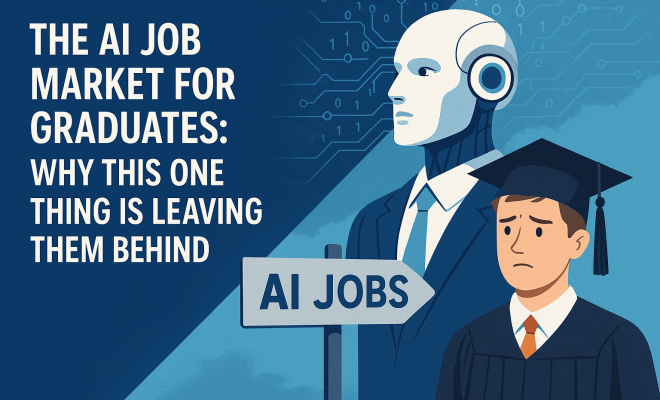
There’s a palpable tension in the air for recent college graduates, a feeling that something fundamental has shifted under their feet. It’s not just the usual post-graduation jitters; it’s a deeper, more systemic anxiety fueled by the rapid acceleration of artificial intelligence into nearly every corner of the professional world. We’re witnessing a seismic shift in the higher education job market, and unfortunately, many new grads are finding themselves in a particularly tough spot.
I saw a striking example of this recently at a University of Central Florida graduation ceremony. A real estate executive, speaking to a sea of hopeful faces, boldly declared AI the “next industrial revolution.” You might expect polite applause, maybe even enthusiastic agreement. Instead, the crowd booed him. That’s right, booed. It wasn’t just a few disgruntled students; it was a widespread, visceral reaction that perfectly encapsulated the widespread anxiety among new graduates. Folks like Anthony Zarczynski, a digital media major who just walked across that stage, are grappling with a challenging entry-level job market that looks vastly different than it did just a few years ago. The AI job market for graduates is, frankly, a minefield for the unprepared.
1. The Unsettling Unemployment Numbers: A Stark Reality for New Grads
Let’s talk numbers, because they paint a pretty clear, and frankly, unsettling picture. While the national unemployment rate for all workers hovers around 4.2%, recent college graduates are facing a significantly tougher climb. We’re looking at a national unemployment rate of 5.6% for these new degree holders. That 1.4 percentage point difference might not sound like a chasm, but when you’re talking about hundreds of thousands of individuals trying to kickstart their careers, it’s a significant disparity. It means a lot more bright, eager minds are sitting at home, sending out applications into what feels like a black hole, rather than contributing their skills to the economy.
This isn’t just a blip; it’s a trend that’s been building. The traditional pathways from university to employment are being disrupted, and AI is undoubtedly a major player in that disruption. It’s not just about jobs disappearing; it’s about the very nature of entry-level work changing, and graduates needing a different set of tools to succeed. The psychological toll of this higher unemployment rate on individuals, combined with the broader societal implications of underutilized talent, is something we can’t afford to ignore. There’s a fuller look at impact of AI on jobs.
2. Professors’ Concerns About AI Overreliance: Are Students Truly Prepared?
It’s not just the students feeling the pressure; their educators are seeing it too. A 2026 Cengage report dropped a pretty concerning statistic: 70% of professors believe that an overreliance on AI is making students less prepared for the workforce. Think about that for a second. The very people tasked with equipping the next generation with knowledge and skills are seeing a significant erosion of readiness, and they’re pointing the finger squarely at AI.
This isn’t to say AI is inherently bad, but rather that its integration into the learning process, particularly without proper guidance, can be detrimental. Are students using AI as a crutch instead of a tool? Are they bypassing critical thinking, problem-solving, and fundamental research skills by letting AI do the heavy lifting? If so, they’re entering an AI job market for graduates ill-equipped for the demands of real-world employment, where critical thinking and independent problem-solving are paramount, even when augmented by AI. This trend necessitates a serious re-evaluation of how we teach and how students learn in the age of AI.
3. The Staggering Shift in Employer Expectations: AI Skills Are No Longer Optional
If you want to understand why new grads are struggling, you absolutely have to look at what employers are now demanding. The landscape has shifted dramatically, almost overnight. A 2026 American University study revealed a truly eye-popping statistic: 42.6% of employers are now inquiring about AI skills during the hiring process. Let me put that into perspective for you: that’s a 285% increase in just two years! Two years! It’s not a subtle nudge; it’s a full-blown transformation of what constitutes a desirable candidate.
This isn’t just about tech companies either. We’re talking about roles across industries – marketing, human resources, finance, operations – where a basic understanding of AI tools, data analysis, and automation capabilities is becoming a baseline expectation. If you’re a recent graduate applying for jobs without at least a foundational grasp of how AI functions and how to leverage it, you’re already at a significant disadvantage. The AI job market for graduates has become a competitive arena where AI literacy is increasingly a non-negotiable asset.
4. AI as a Leading Cause for Job Cuts: The Cold Reality of Automation
While the focus often falls on new job creation, we also have to acknowledge the other side of the coin: job displacement. And here, the numbers are equally stark. In March 2026 alone, AI was cited as the leading cause for job cuts, accounting for a staggering 15,341 positions. This isn’t theoretical; these are real people who lost their livelihoods because an algorithm or an automated system could perform their tasks more efficiently or cost-effectively. (See: impact of AI on job market.)
This reality adds another layer of complexity to the AI job market for graduates. Not only do they need to demonstrate AI proficiency, but they also need to understand which roles are most susceptible to automation and how to future-proof their careers. It’s a constant race to acquire skills that complement AI, rather than compete directly with it. This trend creates a sense of urgency for both institutions and students to adapt rapidly, fostering skills that AI cannot easily replicate, such as creativity, critical thinking, emotional intelligence, and complex problem-solving.
5. The Viral Potential of Graduate Anxiety: A Shared Experience
The story of graduates facing an uncertain future in the wake of AI’s rise isn’t just a news item; it’s a deeply emotional and universally resonant narrative. It has all the ingredients for going viral. Think about it: young people, fresh out of college, carrying the weight of student debt and the hopes of their families, suddenly confronted with a job market that feels like it’s been pulled out from under them. The UCF graduation booing incident? That’s viral gold, encapsulating the raw frustration and fear. For more context, see AI Investment Scams You Can't Afford to Ignore.
This isn’t just about economic data; it’s about human stories. It’s about the dreams deferred, the anxieties amplified, and the feeling of betrayal many graduates might feel after investing years and significant money into an education that now feels less relevant. The debate surrounding AI’s role – job displacement versus augmentation – is highly controversial and evokes strong opinions on both sides. This emotional resonance, combined with the widespread impact, makes this topic inherently shareable and discussion-worthy across social media and traditional news outlets alike. Everyone knows someone, or is someone, affected by this.
6. Monetization Opportunities in the AI Upskilling Ecosystem: A Silver Lining?
While the challenges are significant, it’s also important to recognize the emerging opportunities, particularly in the realm of education and career development. The very uncertainty around the AI job market for graduates creates a massive demand for solutions. This translates into significant monetization opportunities for online education platforms, career guidance services, and B2B SaaS companies specializing in AI upskilling and certification programs.
Think about it: if graduates and existing professionals need to rapidly acquire AI skills, there’s a huge market for courses, bootcamps, workshops, and accredited certifications. Companies that can effectively bridge the skills gap, offering practical, relevant training in areas like machine learning fundamentals, prompt engineering, AI ethics, and data science, are poised for substantial growth. Furthermore, career guidance services that can help individuals navigate this new landscape, identify in-demand roles, and tailor their resumes and interview skills for an AI-centric world will be invaluable. This isn’t just about fixing a problem; it’s about building an entirely new educational infrastructure to support the AI economy.
7. Navigating the AI Job Market for Graduates: Strategies for Success
So, what’s a new graduate to do? Throw up your hands in despair? Absolutely not. While the landscape has changed, it’s not insurmountable. The key is adaptation and proactive learning. First and foremost, you need to recognize that AI literacy is no longer a niche skill; it’s becoming a fundamental requirement for many roles. This means actively seeking out opportunities to learn about AI, even if it wasn’t a core part of your degree. Online courses, certifications from platforms like Coursera, edX, or even specific vendor certifications (like Google’s AI courses or Microsoft’s Azure AI certifications) can make a huge difference.
Beyond technical skills, focus on developing what I call ‘AI-resistant’ skills: critical thinking, complex problem-solving, creativity, emotional intelligence, communication, and adaptability. These are the human skills that AI struggles to replicate and, in fact, often enhances. When AI handles the repetitive tasks, these uniquely human capabilities become even more valuable. Show employers you can collaborate with AI, not just compete against it. Highlight projects where you’ve used AI tools to augment your work, demonstrating a forward-thinking, adaptive mindset. The AI job market for graduates demands a new kind of professional, one who sees AI as a powerful partner rather than a daunting adversary.
The Imperative for Higher Education Reform
This isn’t just a student problem; it’s a systemic challenge for higher education. Universities must rapidly adapt their curricula to reflect the demands of the modern workforce. We can’t keep teaching as if AI doesn’t exist. This means integrating AI literacy across all disciplines, not just computer science. It means fostering critical thinking about AI’s ethical implications, its biases, and its societal impact. It also means preparing students to work alongside AI, to understand its capabilities and limitations, and to leverage it as a tool for innovation.
The Cengage report’s finding that 70% of professors believe students are less prepared due to AI overreliance should be a wake-up call. We need to teach students how to use AI responsibly and effectively, not just to rely on it. This might involve new pedagogical approaches, such as project-based learning that incorporates AI tools under guided supervision, or ethical AI discussions built into every course. The future success of our graduates hinges on our ability to evolve our educational models.
Redefining Entry-Level Roles in the AI Era
The concept of an ‘entry-level’ job is also undergoing a profound transformation. Many tasks traditionally assigned to new hires are now being automated or significantly augmented by AI. This means that true entry-level positions often require a higher baseline of skills and a greater capacity for complex problem-solving than before. Employers aren’t just looking for someone who can perform basic tasks; they’re looking for someone who can understand systems, analyze data, and contribute to strategic thinking, even at the junior level. (See: AI's role in workforce changes.)
For graduates, this necessitates a shift in how they view their initial career steps. It might mean more internships that focus on AI integration, or entry-level roles that are explicitly designed to leverage AI tools. It also means developing a portfolio that showcases not just what you’ve learned, but how you’ve applied that learning, particularly with modern technological tools. The AI job market for graduates isn’t eliminating entry-level jobs entirely, but it’s certainly redefining what those jobs entail and what skills are required to secure them.
The Role of Government and Industry in Bridging the Gap
Solving this challenge isn’t solely on the shoulders of students and universities. Government and industry also have crucial roles to play. Governments can invest in reskilling and upskilling programs, provide incentives for companies to train workers in AI, and establish clear guidelines for AI ethics and responsible deployment. They can also fund research into the future of work and help forecast skills gaps before they become crises. For more context, see Senate AI Bill Could Unleash a Legal Storm.
Industry, on its part, needs to be more transparent about the skills it truly needs and collaborate more closely with educational institutions to shape curricula. Companies can also invest in internal training programs to help their existing workforce adapt to AI, and establish mentorship programs for new graduates. When industry, government, and academia work in concert, we can create a more robust and responsive ecosystem that ensures graduates are not left in the lurch, but rather are empowered to thrive in the evolving AI job market for graduates.
The booing at UCF wasn’t just a sign of frustration; it was a desperate plea for clarity and a call to action. We have a responsibility to ensure that the next generation of talent isn’t just prepared for the jobs of today, but for the jobs of tomorrow, whatever they may be. That means embracing AI, yes, but doing so thoughtfully, ethically, and with a keen eye on human flourishing.
8. The Ethical Dimension of AI in Employment: More Than Just Code
Beyond the immediate concerns of job skills and displacement, there’s a profound ethical dimension to AI’s integration into the workforce that graduates need to understand. It’s not enough to know how to use an AI tool; you also need to understand its potential biases, its limitations, and the ethical implications of its deployment. Are the algorithms used in hiring processes fair and equitable? Are the AI systems used in customer service truly improving human experience, or just cutting costs at the expense of genuine interaction? These aren’t abstract philosophical questions; they’re real-world challenges that today’s professionals will face daily.
For instance, consider AI-powered resume screening tools. While they can streamline the hiring process, they can also inadvertently perpetuate biases present in the training data, potentially disadvantaging certain demographic groups. Graduates entering HR, management, or even product development roles need to be equipped to identify and mitigate such issues. This requires not just technical prowess, but a strong ethical compass and a commitment to responsible AI deployment. Universities have a duty to instill this ethical framework, making sure students understand that technology is a tool, and like any tool, it can be used for good or ill. The AI job market for graduates isn’t just about technical know-how; it’s about moral responsibility.
9. The Rise of ‘Prompt Engineering’ and AI-Human Collaboration: New Skill Sets Emerge
One of the most interesting developments in the AI job market for graduates is the emergence of entirely new skill sets, like “prompt engineering.” This isn’t about writing complex code; it’s about learning how to effectively communicate with AI models to get the best possible output. Think of it as a new form of literacy – understanding the nuances of language and logic to guide an AI. This skill is becoming incredibly valuable across various fields, from marketing content creation to software development and data analysis.
But it goes deeper than just prompts. We’re seeing a shift towards roles that emphasize AI-human collaboration. Instead of AI replacing humans, it’s augmenting their capabilities. A graphic designer might use AI to generate multiple design concepts quickly, then apply their human creativity and judgment to refine the best options. A financial analyst might use AI to crunch vast datasets, then apply their market insight to interpret the findings and make strategic recommendations. Graduates who can master this collaborative dance – understanding both what AI excels at and where human intervention is critical – will be highly sought after. They’ll be the ones who can truly unlock AI’s potential, making the AI job market for graduates less about competition and more about synergy.
10. Global Perspectives on AI and Employment: A Worldwide Challenge
It’s easy to focus on the situation here in the US, but the AI job market for graduates is a global phenomenon. Different countries are experiencing and responding to this shift in unique ways, offering valuable insights. For example, some nations are investing heavily in national AI strategies, focusing on public education and retraining programs to prepare their workforces. Others are seeing a faster adoption of automation in manufacturing, leading to different challenges for their labor markets. (See: AI transforming the job landscape.)
In places like China, the rapid integration of AI into various sectors means that graduates are entering a highly competitive landscape where AI proficiency is often assumed. In European countries, there’s often a stronger emphasis on regulatory frameworks and ethical guidelines for AI, shaping the types of skills employers prioritize. Understanding these global variations can provide graduates with a broader perspective and even open doors to international career opportunities where their unique blend of skills might be in higher demand. The challenge of preparing graduates for the AI era isn’t confined to any single border; it’s a universal imperative that requires shared learning and adaptation.
Frequently Asked Questions About the AI Job Market for Graduates
Q1: Is my degree now useless because of AI?
No, absolutely not! While AI is changing the job market, it doesn’t make your degree useless. What it does mean is that you need to adapt. Your degree provides foundational knowledge and critical thinking skills. The key is to augment that with AI literacy and ‘AI-resistant’ skills like creativity and emotional intelligence. Think of AI as a powerful tool you need to learn to wield, not a replacement for your core education.
Q2: What are the most in-demand AI skills for new graduates?
Beyond highly specialized AI research roles, employers are increasingly looking for practical AI skills. This includes a foundational understanding of machine learning concepts, data analysis, prompt engineering (how to effectively communicate with AI models), and familiarity with common AI tools and platforms (like ChatGPT, Google Bard, or specific industry-focused AI software). Also crucial are soft skills like adaptability, critical thinking, and problem-solving in an AI-augmented environment.
Q3: Should I pursue a master’s degree in AI if I’m worried about finding a job?
A master’s in AI can be incredibly valuable, especially if you’re aiming for highly technical roles in AI development, research, or data science. However, it’s not the only path. Many online certifications, bootcamps, and even self-taught projects can provide practical AI skills that employers value. Evaluate your career goals and financial situation. For many roles, demonstrating practical application of AI tools might be more important than another degree.
Q4: How can I demonstrate AI skills on my resume and during interviews?
Don’t just list “AI knowledge.” Instead, highlight specific projects where you’ve used AI tools, even if they were academic or personal. Describe the AI tools you used, what problem you solved, and what the outcome was. During interviews, talk about how you envision using AI to enhance your work, demonstrate your understanding of ethical AI use, and show your willingness to continuously learn and adapt to new technologies. Show them you’re a collaborator, not a competitor, to AI.
Q5: Are there any industries that are relatively “safe” from AI displacement for graduates?
No industry is entirely “safe,” but some roles are less susceptible to full automation than others. Roles requiring high levels of emotional intelligence (like counseling, nursing, or certain aspects of HR), complex problem-solving without clear algorithms (strategic consulting, scientific research), creativity (art, advanced design), or interpersonal communication (sales, teaching, leadership) are generally more AI-resistant. AI will augment these roles, making human workers even more effective, rather than replacing them outright.
Trending Now
Frequently Asked Questions
Why are recent graduates struggling to find jobs in the AI job market?
Recent graduates are facing a challenging job market largely due to the rapid integration of artificial intelligence across industries. This shift has created a disparity in employment opportunities, leaving many new degree holders unprepared for the evolving demands of employers.
What is the unemployment rate for recent college graduates?
The unemployment rate for recent college graduates currently stands at 5.6%, which is significantly higher than the national average of 4.2%. This difference highlights the difficulties new grads face when entering a workforce increasingly influenced by AI.
How is AI affecting the job market for new graduates?
AI is transforming the job market by automating tasks and changing the skillsets required by employers. Many recent graduates find themselves at a disadvantage if they lack the necessary technical skills or adaptability to thrive in this new environment.
What can new graduates do to prepare for the AI-driven job market?
New graduates can enhance their employability by acquiring skills in AI, data analysis, and other relevant technologies. Pursuing internships, networking, and continuous learning will also help them adapt to the evolving job landscape.
What are the key challenges facing new graduates today?
Key challenges for new graduates include a higher unemployment rate, the need for advanced technical skills, and the pressure to adapt quickly to a job market increasingly influenced by AI and automation.
What's your take on this? Share your thoughts in the comments below — we read every one. (AI's role in education disruption)