This Crucial Shift in AI Skills vs Traditional Skills for Jobs Could Make or Break Your Career
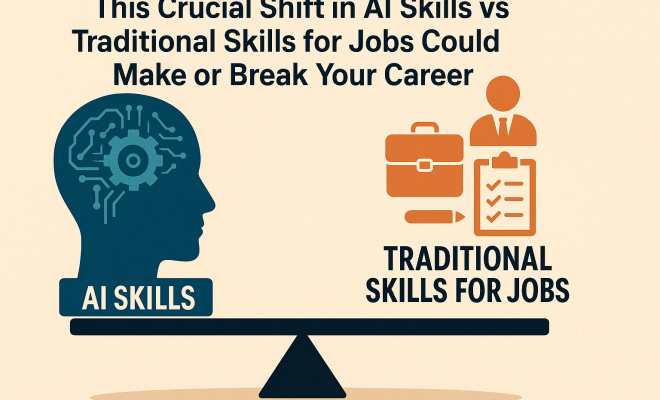
We’re living through a truly transformative period, aren’t we? It feels like every other day there’s a new headline about artificial intelligence, and honestly, it can be a little unsettling. Many folks are rightly concerned about what AI means for their careers, wondering if their hard-earned traditional skills are suddenly obsolete. But here’s the thing: it’s not as simple as AI taking over everything. What we’re actually seeing is a profound reshaping of the job market, a dynamic where the interplay between AI skills vs traditional skills for jobs is becoming the ultimate differentiator. It’s about adapting, evolving, and understanding where the real value lies in this new landscape.
Take a look at what’s happening at places like MSU Denver, for instance. They’re not just talking about AI; they’re actively integrating AI literacy into their curricula, making sure students across all majors get a handle on “AI Fundamentals.” This isn’t just some niche tech trend anymore; it’s a foundational skill for pretty much every field. The old playbook for career readiness? It’s being rewritten right before our eyes, and if you’re not paying attention, you could get left behind. It’s not about competing against AI; it’s about learning to work with it, to leverage its power, and to understand where human intelligence still reigns supreme. That’s the real challenge, and the real opportunity, for all of us.
1. The Shifting Sands of Entry-Level Employment: How AI is Redefining the Starting Line
For years, entry-level jobs were often synonymous with administrative tasks, data entry, and other routine, repetitive work. These roles were seen as stepping stones, a way to get your foot in the door and learn the ropes. But guess what? AI is systematically chipping away at these very tasks. A recent report highlighted something truly fascinating: senior talent leaders are nearly three times more likely to predict an increase in entry-level hiring because of AI, not a decrease. Now, before you start thinking this is a paradox, let me explain.
What’s actually happening is a redefinition of what an entry-level position entails. Instead of spending their days on mundane administrative duties, new hires are increasingly being tasked with more analytical responsibilities. This means the grunt work is being offloaded to AI, freeing up human talent to engage in higher-order thinking, problem-solving, and strategic contributions right from the start. So, while the number of entry-level positions might actually grow, the skills required to land and succeed in them are fundamentally different. It’s a clear shift in the balance of AI skills vs traditional skills for jobs, demanding a new breed of graduate.
2. From Routine to Reasoning: The New Demand for Analytical Prowess
If AI is taking over the routine, then what’s left for us? The answer, unequivocally, is reasoning. Employers are no longer just looking for someone who can follow instructions or process information; they need individuals who can analyze data, interpret complex outputs from AI systems, identify patterns, and make informed decisions. This is where your brainpower truly shines, and it’s a critical component of the evolving AI skills vs traditional skills for jobs debate.
Think about it: an AI can sift through millions of data points in seconds, but it still often needs a human to understand the ‘why’ behind the ‘what,’ to apply ethical considerations, or to contextualize those findings within a broader business strategy. This demand for analytical prowess isn’t just for data scientists anymore; it’s becoming a baseline expectation across roles from marketing to operations to human resources. If you can’t think critically about the information AI presents, you’re missing a huge piece of the puzzle.
3. The Rise of AI Literacy: A Universal Skill for the Modern Workforce
Remember when knowing how to use Microsoft Office was considered a key skill? Well, AI literacy is quickly becoming its 21st-century equivalent. It’s no longer just for the tech gurus in the server room; understanding the fundamentals of AI, its capabilities, and its limitations is becoming essential for everyone, regardless of their major or profession. Educational institutions are catching on, integrating “AI Fundamentals” into core curricula.
This isn’t about teaching everyone to code complex algorithms. It’s about empowering individuals to confidently interact with AI tools, understand how AI impacts their field, and recognize the ethical implications of its use. Whether you’re a teacher using AI to personalize learning, a marketer leveraging AI for campaign optimization, or a healthcare professional interpreting AI-assisted diagnostics, a basic grasp of AI literacy is paramount. It bridges the gap between traditional domain knowledge and the new technological frontier, making the conversation around AI skills vs traditional skills for jobs less about competition and more about synergy.
4. Beyond the Keyboard: Why Soft Skills Are More Critical Than Ever
Paradoxically, as technology becomes more advanced, the so-called ‘soft skills’ become even more critical. When AI handles the data crunching and routine tasks, what’s left for humans are the uniquely human capabilities: empathy, creativity, critical thinking, communication, and collaboration. These aren’t just nice-to-haves anymore; they are foundational to navigating a world infused with AI.
Consider a team where AI provides incredible insights. Who builds consensus? Who motivates the team? Who translates complex technical findings into actionable strategies for non-technical stakeholders? That’s where human soft skills come into play. They enable us to leverage AI effectively, to innovate beyond what algorithms can conceive, and to maintain the human connection that drives successful organizations. The balance of AI skills vs traditional skills for jobs isn’t just about technical know-how; it’s about leveraging technology to amplify our distinctly human strengths. (See: AI's impact on the job market.)
5. Navigating Ethical AI: A Moral Compass for the Digital Age
As AI becomes more powerful and pervasive, the ethical considerations surrounding its use grow exponentially. This isn’t just about compliance or legal frameworks; it’s about developing a moral compass for the digital age. Who is responsible when an AI makes a biased decision? How do we ensure fairness and transparency in AI systems? These aren’t questions AI can answer on its own.
Professionals who can understand, articulate, and address the ethical implications of AI will be incredibly valuable. This requires a blend of critical thinking, philosophical understanding, and an awareness of societal impact – traditional skills, if you will, applied to a cutting-edge technological context. The ability to work with ethical AI isn’t just a niche skill; it’s a fundamental responsibility that will shape the future of every industry. It’s a prime example of how AI skills vs traditional skills for jobs aren’t mutually exclusive but rather deeply intertwined. For more context, see AI Investment Scams You Can't Afford to Ignore.
6. The Opportunity for Edtech: Bridging the Skills Gap with Specialized Training
This massive shift in employer expectations creates an enormous opportunity for Edtech. Traditional educational models, while adapting, often struggle to keep pace with the rapid evolution of AI. This is where specialized training programs, certifications, and upskilling courses offered by Edtech platforms become indispensable. Individuals and businesses are actively searching for ways to acquire the necessary AI skills to stay competitive.
Think about the demand for courses in AI integration, machine learning fundamentals, prompt engineering, or ethical AI use. Platforms that can deliver high-quality, accessible, and practical training in these areas will flourish. They’re not just selling courses; they’re providing career pathways and future-proofing individuals and workforces. It’s a direct response to the urgent need for new skills in the AI skills vs traditional skills for jobs equation, making Edtech a crucial player in this transition.
7. From Competition to Collaboration: Working With AI, Not Against It
One of the biggest misunderstandings about AI is the idea that it’s here to replace us entirely. While some jobs will certainly evolve or become obsolete, the overarching trend is a shift towards collaboration between humans and AI. The demand is for professionals who can effectively work alongside AI, leveraging its strengths to amplify human capabilities. This isn’t a zero-sum game.
Imagine an architect using AI to generate countless design iterations in minutes, then applying their human creativity and aesthetic judgment to refine the best options. Or a doctor using AI to analyze patient data for potential diagnoses, then applying their clinical experience and empathy to communicate with the patient and devise a treatment plan. The most successful professionals in the coming decades won’t be those who ignore AI, but those who master the art of human-AI collaboration. This synergistic approach is at the heart of understanding the true value of AI skills vs traditional skills for jobs.
8. Continuous Learning: The Only Constant in an AI-Driven World
If there’s one skill that transcends all others in the age of AI, it’s the ability and willingness to engage in continuous learning. The pace of technological change is relentless, and what’s cutting-edge today might be commonplace tomorrow. Resting on your laurels, even with a strong foundation of traditional skills, is no longer an option. You’ve got to be a lifelong learner, always curious, always seeking to understand the next big thing. Related reading: youth skill development insights.
This means actively seeking out new knowledge, whether through formal courses, online tutorials, industry conferences, or simply experimenting with new AI tools. It’s about cultivating a growth mindset, recognizing that your education doesn’t end with a degree. The most valuable asset you can bring to the table in a world defined by AI skills vs traditional skills for jobs is an insatiable appetite for learning and adapting. This ongoing personal development is what will keep you relevant and thriving.
9. Resilience and Adaptability: The Ultimate Survival Traits
Finally, let’s talk about resilience and adaptability. The world of work is going to throw curveballs, and AI is just one of them. The ability to bounce back from setbacks, to pivot when your industry changes, and to embrace uncertainty as an opportunity will be paramount. This isn’t a skill you learn from a textbook; it’s a mindset forged through experience and a conscious effort to remain flexible.
Those who can adapt their existing traditional skills to new AI-driven environments, or who can quickly acquire the necessary AI skills, will be the ones who not only survive but truly thrive. It’s about seeing change not as a threat, but as an invitation to grow. This dynamic interplay of AI skills vs traditional skills for jobs isn’t just about what you know, but how readily you can learn, unlearn, and relearn. It’s a testament to the human spirit’s capacity for innovation in the face of unprecedented technological advancement.
10. The Economic Impact: A Look at AI’s Effect on Global Labor Markets
Let’s zoom out a bit and consider the broader economic picture. The integration of AI isn’t just changing individual job descriptions; it’s reshaping entire labor markets on a global scale. We’re talking about a significant shift in productivity, potentially driving economic growth but also creating new challenges for workforce development. Reports from organizations like the World Economic Forum consistently highlight that while AI will displace some jobs, it will also create many new ones, often requiring a different blend of skills. (See: AI in the workplace and safety.)
For instance, a study by PwC estimated that AI could contribute up to $15.7 trillion to the global economy by 2030. That’s a huge number, and it comes with implications for employment across sectors. We’re seeing a bifurcation: jobs requiring routine cognitive and manual tasks are most susceptible to automation, while those demanding creativity, complex problem-solving, and social intelligence are seeing increased demand. This isn’t just anecdotal anymore; it’s backed by macroeconomic data showing shifts in labor force composition and wage differentials based on AI adoption. Governments, educators, and businesses are all grappling with how to manage this transition effectively, ensuring that the benefits of AI are widely shared and that workers aren’t left behind.
11. Specific Industry Spotlights: How AI is Transforming Key Sectors
It’s one thing to talk generally about AI, but it really hits home when you look at specific industries. Let’s take healthcare, for example. AI is revolutionizing diagnostics, drug discovery, and personalized treatment plans. Doctors and nurses don’t become obsolete; instead, they become more efficient and effective, using AI tools to analyze vast amounts of patient data, identify subtle patterns, and predict disease progression. The traditional medical skills of empathy and direct patient care become even more important as AI handles the data crunching. For more context, see Senate AI Bill Could Unleash a Legal Storm.
Or consider finance. AI algorithms are now used for fraud detection, algorithmic trading, and personalized financial advice. Financial analysts aren’t replaced, but their roles evolve to focus on interpreting AI-generated insights, managing complex portfolios, and building client relationships. Even in creative fields, AI isn’t just generating art or music; it’s serving as a powerful co-creator, allowing artists and designers to experiment with ideas at an unprecedented pace. The core human skills of aesthetic judgment and emotional expression remain paramount. These examples clearly demonstrate that the question of AI skills vs traditional skills for jobs isn’t about one replacing the other, but about how they complement and elevate each other within sector-specific contexts.
12. The Role of Government and Policy: Shaping the Future of Work
This monumental shift isn’t happening in a vacuum; governments and policymakers have a crucial role to play in shaping how AI impacts the workforce. We’re seeing discussions about universal basic income, retraining programs, and new regulatory frameworks for AI. The aim is often to mitigate potential job displacement while maximizing the economic and social benefits of AI.
For instance, some countries are investing heavily in national AI strategies, which include funding for research, development, and, importantly, education and workforce reskilling initiatives. Policies around data privacy, algorithmic transparency, and ethical AI development also directly influence the types of jobs created and the skills required. Without thoughtful policy and robust public-private partnerships, the transition could be much bumpier. It’s a complex dance between innovation and regulation, all aimed at ensuring a fair and prosperous future for workers in an AI-driven economy.
13. Understanding Prompt Engineering: A New Core Skill
Here’s a practical example of a new AI skill that’s rapidly becoming invaluable: prompt engineering. If you’ve ever interacted with a generative AI like ChatGPT, you know that the quality of the output depends heavily on the quality of your input. “Prompt engineering” is the art and science of crafting effective prompts to guide AI models to produce desired results. It’s not coding, but it requires a deep understanding of how these models work, what their capabilities are, and how to structure requests clearly and precisely.
This skill is bridging the gap between human intent and AI execution. A marketer might use prompt engineering to generate compelling ad copy, a developer to debug code, or a writer to brainstorm story ideas. It demands clear communication, critical thinking to anticipate AI responses, and iterative refinement – all traditional skills applied in a new technological context. It’s a prime illustration of how AI isn’t just about building the models, but about effectively communicating with them, turning a technical tool into a powerful extension of human thought. Mastery of prompt engineering will be a significant differentiator in the AI skills vs traditional skills for jobs landscape.
14. The Value of Domain Expertise in an AI World
While AI can process vast amounts of information, it often lacks true domain expertise – the deep, nuanced understanding of a specific field that comes from years of human experience. This is where traditional skills truly shine and become even more valuable. An AI can diagnose a medical condition, but a seasoned doctor uses their years of experience to consider the patient’s unique history, lifestyle, and emotional state, making a holistic decision that an algorithm can’t replicate.
In law, AI can sift through legal precedents, but a veteran lawyer understands the subtle implications of case law, the human element of jury persuasion, and the strategic thinking required in negotiations. Your deep understanding of your industry, its unspoken rules, its history, and its human dynamics is something AI can’t easily replicate. This traditional domain expertise becomes the foundation upon which AI tools are effectively applied, making humans the ultimate curators and strategists in an AI-assisted world. It’s not just about understanding AI; it’s about understanding your field so well that you know exactly how and when to best deploy AI to enhance your work, solidifying the importance of traditional knowledge in the AI skills vs traditional skills for jobs equation. (See: Harvard's approach to AI education.)
Frequently Asked Questions About AI Skills vs Traditional Skills for Jobs
Q1: Are traditional jobs completely disappearing because of AI?
No, not entirely. While some routine, repetitive tasks within traditional jobs are being automated by AI, many roles are evolving rather than disappearing. AI is often taking over the mundane, allowing humans to focus on higher-value, more complex, and creative aspects of their work. Think of it less as replacement and more as a redefinition of job responsibilities. The core traditional skills like critical thinking, problem-solving, and communication are becoming even more important.
Q2: What are some examples of “AI skills” that are in high demand?
Beyond highly technical roles like AI developer or machine learning engineer, in-demand AI skills for the broader workforce include AI literacy (understanding AI’s capabilities and limitations), prompt engineering (effectively communicating with AI models), data interpretation (making sense of AI-generated insights), ethical AI understanding, and the ability to integrate AI tools into existing workflows. It’s about being an effective user and collaborator with AI, not necessarily a builder of AI.
Q3: How can I acquire new AI skills if I’m already in my career?
There are many pathways! Online courses from platforms like Coursera, edX, or even specialized Edtech providers offer certifications and micro-credentials in AI fundamentals, prompt engineering, and specific AI tool usage. Many companies are also providing internal training programs. Attending industry webinars, workshops, and even just experimenting with publicly available AI tools can also be incredibly beneficial. The key is continuous learning and a proactive approach.
Q4: Will I need to learn to code to stay relevant in an AI-driven world?
Not necessarily for everyone. While coding skills are vital for those developing AI, many roles only require AI literacy and the ability to effectively use AI tools. Think of it like this: you don’t need to be a car mechanic to drive a car. However, having a basic understanding of how AI works can certainly enhance your ability to leverage it effectively and communicate with technical teams. For many, prompt engineering and understanding AI principles will be more crucial than coding.
Q5: Which traditional skills are becoming more important because of AI?
The human-centric skills are gaining immense value. These include critical thinking, complex problem-solving, creativity, emotional intelligence, empathy, communication, collaboration, and ethical reasoning. When AI handles the data and the routine, humans are left to excel at the uniquely human aspects of work: innovation, strategic decision-making, relationship building, and navigating ambiguity. Domain expertise in your specific field also becomes more critical than ever, as it provides the context for AI’s insights.
Q6: How can businesses prepare their workforce for the AI era?
Businesses need to invest heavily in upskilling and reskilling programs. This means identifying the AI skills vs traditional skills for jobs gaps within their organization and offering targeted training. Fostering a culture of continuous learning, encouraging experimentation with AI tools, and redesigning workflows to integrate AI effectively are also crucial steps. Leadership needs to communicate a clear vision for AI adoption that emphasizes human-AI collaboration rather than displacement.
Q7: What are the ethical considerations I should be aware of when using AI?
Ethical considerations are paramount. You should be aware of potential biases in AI systems (which can arise from biased training data), issues of data privacy and security, the risk of misinformation or deepfakes, and questions of accountability when AI makes critical decisions. Understanding these issues allows you to use AI responsibly, ensure fairness, and protect user trust. Professionals with a strong ethical compass will be highly valued.
Trending Now
Frequently Asked Questions
How is AI changing job skills requirements?
AI is reshaping job skills requirements by emphasizing the need for AI literacy alongside traditional skills. Employers are increasingly looking for candidates who can leverage AI tools, making it essential to adapt and evolve skill sets to remain competitive in the job market.
What traditional skills are still relevant in an AI-driven job market?
While AI is automating many tasks, traditional skills like critical thinking, creativity, and emotional intelligence remain highly relevant. These human-centric skills complement AI capabilities, allowing workers to excel in roles that require nuanced decision-making and interpersonal interactions.
What is AI literacy and why is it important?
AI literacy refers to understanding AI fundamentals and its applications across various fields. It is important because it equips individuals with the knowledge to work alongside AI technologies, enhancing their employability and ensuring they can adapt to the evolving job landscape.
Will AI replace entry-level jobs?
AI is transforming entry-level jobs by automating routine tasks, but it is also creating new opportunities. Many employers predict an increase in entry-level hiring as AI takes over simpler tasks, allowing new hires to focus on more complex and value-added responsibilities.
How can I prepare for a career in an AI-influenced job market?
To prepare for a career in an AI-influenced job market, focus on developing both AI skills and traditional competencies. Seek out educational programs that integrate AI literacy, stay updated on technological advancements, and cultivate soft skills that complement AI capabilities.
Agree or disagree? Drop a comment and tell us what you think. See also new program in Philadelphia.