Conservation and Logical Thinking in Middle School Students
“`html
As students transition through middle school, they encounter a critical period of cognitive development where logical thinking and conservation skills become essential. These two concepts are not just educational buzzwords; they represent fundamental cognitive milestones that can profoundly affect a student’s academic and personal development. Understanding the intersection of conservation in middle school students and their logical reasoning abilities can unlock avenues for educators and parents alike, leading to more effective teaching strategies and a deeper understanding of student capabilities.
Understanding Conservation in Cognitive Development
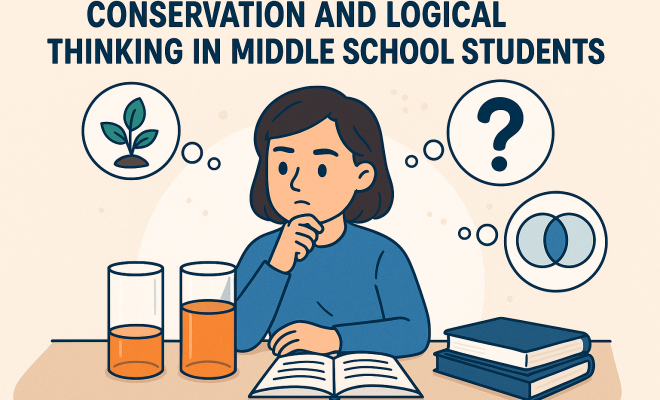
Conservation is a concept introduced by developmental psychologist Jean Piaget, referring to a child’s ability to understand that certain properties of objects remain the same despite changes in their form or appearance. For example, when water is poured from a short, wide cup into a tall, thin one, a child who has not yet grasped conservation might think that the taller cup holds more water, while an older child would recognize that the amount remains unchanged.
In middle school students, this concept evolves. They begin to apply this understanding to more complex scenarios, which is crucial for subjects like mathematics and science. As students learn about conservation, they also develop critical thinking skills that enable them to analyze situations, compare outcomes, and make reasoned decisions.
The Importance of Logical Thinking in Middle School
Logical thinking is another critical component of cognitive development during the middle school years. This stage of education is marked by the ability to think abstractly and systematically. Students begin to understand relationships between concepts and can engage in deductive reasoning, which allows them to draw conclusions from premises.
For educators, stimulating logical thinking can enhance problem-solving skills, creativity, and analytical abilities. These skills are essential not only for academic success but also for navigating real-world challenges. Middle school is often when students start to grapple with more challenging subjects, making strong logical thinking skills all the more vital.
Connections Between Conservation and Logical Thinking
Research indicates that there is a strong correlation between conservation abilities and logical thinking in middle school students. As students master conservation concepts, they enhance their logical reasoning skills. This interconnectedness can be attributed to several factors:
- Problem Solving: Understanding conservation allows students to approach problems more effectively. For example, when faced with a math problem involving volume or area, students can apply their knowledge of conservation to find solutions.
- Abstract Thinking: The concept of conservation requires students to grasp abstract ideas—such as the permanence of quantities—that are crucial for logical reasoning.
- Application of Knowledge: Logical thinking often involves applying previously learned concepts to new situations. Mastering conservation equips students with the ability to adapt their thinking to varied problems.
Practical Insights for Educators
Recognizing the importance of conservation in middle school students can inform teaching practices. Here are some practical insights for educators:
1. Use Hands-On Activities
Engage students with hands-on activities that illustrate conservation principles. For example, using measuring cups to demonstrate how the same volume of liquid occupies different shapes can effectively illustrate this concept. When students physically manipulate objects, they create a stronger mental connection to the idea of conservation.
2. Integrate Logical Games
Incorporating logic games and puzzles into the curriculum can improve students’ logical thinking skills. Games such as Sudoku, chess, or logic-based escape rooms can challenge students and promote critical thinking while still being enjoyable.
3. Encourage Discussion and Debate
Encouraging discussion and debate around various topics can foster logical reasoning. Allowing students to express their thoughts and engage with different perspectives helps them sharpen their reasoning skills and approach problems from multiple angles.
Current Relevance of Conservation and Logical Thinking
In today’s rapidly changing educational landscape, the relevance of conservation in middle school students and their subsequent logical thinking skills cannot be overstated. With an emphasis on STEM (Science, Technology, Engineering, and Mathematics) education, understanding these cognitive skills becomes essential for future academic success.
Moreover, as students increasingly face complex global issues such as climate change and social injustice, strong logical thinking skills are imperative. Educators have a responsibility to equip students with the tools they need to analyze these issues critically and develop thoughtful solutions.
Case Studies Highlighting Successful Approaches
Several schools and educational programs have implemented strategies focused on enhancing conservation and logical thinking skills among middle school students. Let’s take a look at some successful case studies: (See: Conservation in psychology.)
1. Project-Based Learning (PBL)
Many educational institutions have adopted project-based learning methods that emphasize real-world applications of conservation concepts. Schools that implement PBL encourage students to work on projects that address environmental issues, requiring them to apply logical reasoning throughout the process. For instance, a project might involve designing a model of a sustainable ecosystem, fostering both conservation awareness and logical thinking.
2. Nature-Based Education Programs
Nature-based education programs have shown positive outcomes for middle school students in developing both conservation skills and logical thinking. Programs that involve outdoor activities, such as measuring and analyzing local ecosystems, allow students to apply theoretical knowledge in practical contexts. This hands-on experience reinforces their understanding of conservation and promotes critical thinking.
Challenges in Teaching Conservation and Logical Thinking
Despite the clear benefits, educators face several challenges when teaching conservation and logical thinking to middle school students:
1. Diverse Learning Styles
Every student learns differently. Some may grasp abstract concepts quickly, while others may need more concrete experiences. This diversity can make it difficult to engage all students effectively. Educators need to be adaptable and find multiple ways to present information.
2. Standardized Testing Pressure
The emphasis on standardized testing can sometimes overshadow teaching methods that foster conservation and logical thinking. Educators may feel pressured to focus on rote memorization rather than encouraging critical thinking and exploration of concepts.
Strategies for Overcoming Challenges
To surmount these challenges, teachers can adopt several strategies:
1. Differentiated Instruction
Differentiated instruction involves tailoring teaching methods to meet the varied needs of students. By offering multiple approaches to learning, educators can ensure that all students are engaged and able to grasp conservation concepts while developing logical thinking skills.
2. Integrate with Curricular Standards
Aligning conservation and logical thinking lessons with curricular standards can help educators justify these teaching methods. By weaving these concepts into existing subjects, teachers can prove their relevance without sacrificing core curriculum requirements.
Parental Involvement and Its Impact
Parental involvement plays a vital role in reinforcing conservation skills and logical thinking at home. When parents engage in discussions about conservation, whether through recycling practices or outdoor activities, they help solidify these concepts for their children. Here are some ways parents can foster these skills:
1. Encourage Curiosity
Parents should encourage their children to ask questions about the world around them. By fostering curiosity, they promote logical thinking and a desire to understand conservation principles.
2. Model Critical Thinking
Demonstrating logical reasoning in everyday life can significantly impact a child’s development. Parents who engage in problem-solving discussions or decision-making processes provide a practical example for their children to follow.
Future Directions for Conservation Education
As we look toward the future, it’s clear that teaching conservation in middle school students and enhancing their logical thinking will play a critical role in their development. Education systems may need to adapt further to meet these needs, integrating technology and innovative teaching methods that resonate with today’s learners.
For instance, utilizing digital platforms can allow students to explore conservation through virtual simulations, enhancing their logical reasoning in a dynamic manner. Additionally, interdisciplinary approaches that blend science, mathematics, and humanities can create a more holistic understanding of conservation issues.
Additional Examples and Real-World Applications
To further illustrate the intersection of conservation and logical thinking, consider the following examples from real-world situations where these skills are applied: (See: Mental health in middle school students.)
1. Environmental Science Projects
Students can engage in projects that analyze the impact of human activities on local ecosystems. For example, they might study how pollutants affect water quality in a nearby river. By collecting data, analyzing results, and proposing solutions, students practice conservation principles and logical reasoning.
2. Community Involvement
Schools can partner with local environmental organizations to offer students opportunities to participate in community clean-up days or tree planting events. These activities not only build awareness of conservation but also require students to think critically about resource management and environmental impact.
Statistics and Research Findings
Recent studies illustrate the importance of conservation education and logical reasoning among middle school students:
- A survey conducted by the National Education Association found that 82% of educators believe that integrating environmental education into the curriculum improves students’ critical thinking skills.
- Research from the Journal of Educational Psychology revealed that students who participated in conservation-related projects showed a 25% increase in logical reasoning scores on standardized tests.
- A report from the American Institute of Physics highlighted that students involved in hands-on conservation efforts scored significantly higher in science assessments, emphasizing the link between experiential learning and academic performance.
Expert Perspectives on Conservation in Middle School Students
Insights from educational experts provide valuable context for understanding the significance of conservation and logical thinking:
Dr. Sarah Thompson, Educational Psychologist
“Conservation education plays a critical role in developing logical reasoning in students. When children understand conservation, they can apply those principles to solve real-world problems. This fosters a sense of responsibility and equips them with the skills needed to tackle future challenges.”
Professor John Lee, Environmental Education Advocate
“Integrating conservation into middle school curricula not only enhances students’ understanding of science but also encourages them to think critically about their choices. The younger we start teaching these concepts, the more likely they are to carry them into adulthood.”
Frequently Asked Questions
1. Why is conservation important for middle school students?
Conservation is important for middle school students because it teaches them to value natural resources and understand their impact on the environment. This age is crucial for instilling sustainable habits that can last a lifetime.
2. How can parents reinforce conservation education at home?
Parents can reinforce conservation education at home by involving their children in activities such as gardening, recycling, and energy-saving practices. Discussing environmental issues and solutions can also spark interest and critical thinking.
3. What are effective methods for teaching logical thinking skills?
Effective methods for teaching logical thinking skills include using puzzles, engaging in debate, and applying real-life problem-solving scenarios. Encouraging students to explain their reasoning also helps to solidify these skills.
4. How does logical thinking contribute to students’ success in future careers?
Logical thinking is essential in almost every career, especially in STEM fields. It enables individuals to analyze situations, make informed decisions, and solve complex problems efficiently. Developing these skills in middle school lays the groundwork for future success.
5. Are there any online resources for teachers to improve conservation and logical thinking skills?
Yes, there are numerous online resources for educators, including interactive websites and digital platforms focused on environmental education. Websites such as Project Learning Tree and National Geographic Education offer materials and lesson plans tailored to these concepts.
The Role of Technology in Enhancing Conservation Education
Technology is rapidly changing the landscape of education, offering innovative ways to teach conservation and logical thinking to middle school students. Through various digital tools, educators can engage students more effectively, making learning both interactive and impactful.
1. Interactive Learning Platforms
Interactive learning platforms like Nearpod and Kahoot! allow teachers to create engaging lessons that incorporate quizzes, polls, and interactive simulations. For instance, using a simulation of an ecosystem, students can visualize the effects of different environmental changes and understand conservation principles more deeply. (See: Learning and cognitive development.)
2. Virtual Reality Experiences
Virtual reality (VR) can provide immersive experiences that bring conservation topics to life. Programs that allow students to explore rainforests, coral reefs, or endangered species habitats can foster a deep emotional connection to conservation, enhancing both empathy and logical reasoning regarding environmental issues.
Collaboration and Group Learning
Collaborative learning is another effective strategy for enhancing conservation education and logical thinking. Group projects encourage students to share ideas and perspectives, helping them to learn from one another.
1. Peer Teaching
Peer teaching can be an effective way for students to solidify their understanding of conservation concepts. When tasked with explaining a topic to a classmate, students must clarify their thoughts and engage in logical reasoning to convey their knowledge accurately.
2. Cooperative Problem Solving
Cooperative problem-solving activities can be designed around conservation challenges. For example, students might work together to design a sustainable community plan. This not only fosters teamwork but also requires them to apply logical thinking and conservation principles to produce viable solutions.
The Impact of Extracurricular Activities
Extracurricular activities also play a vital role in reinforcing conservation and logical thinking skills among middle school students. Clubs focused on environmental issues or science can provide additional opportunities for learning beyond the classroom.
1. Environmental Clubs
Environmental clubs engage students in projects that promote sustainability, like school gardens or recycling initiatives. These clubs can serve as platforms for discussing conservation while applying logical reasoning to solve challenges faced by their projects.
2. Science Fairs and Competitions
Participating in science fairs or competitions allows students to explore conservation topics creatively. Presenting their findings requires logical thinking, and it encourages them to investigate real-world problems, further embedding these concepts in their understanding.
Final Thoughts on Conservation and Logical Thinking in Education
The integration of conservation principles and logical thinking skills in middle school education is not merely an academic concern; it’s a life skill that prepares students for the complexities of the world ahead. By fostering these critical skills, educators and parents can help shape a generation that values sustainability and approaches challenges with a reasoned mindset.
As we move forward, it’s essential to continuously adapt teaching methods to meet the needs of our students, ensuring that they receive a well-rounded education that emphasizes both conservation and logical thinking.
“`
Trending Now
Frequently Asked Questions
What is conservation in cognitive development?
Conservation in cognitive development refers to a child's understanding that certain properties of objects, such as volume or number, remain constant despite changes in their form or appearance. This concept, introduced by Jean Piaget, becomes crucial as students progress through middle school, impacting their learning in subjects like mathematics and science.
How does logical thinking develop in middle school students?
During middle school, students enhance their logical thinking abilities by learning to think abstractly and systematically. They start to understand relationships between concepts and engage in deductive reasoning, which enables them to draw conclusions from given premises, thus improving their problem-solving and analytical skills.
Why is conservation important for middle school students?
Conservation is essential for middle school students as it lays the foundation for critical thinking and problem-solving in academic subjects. Understanding conservation helps students analyze complex scenarios and make reasoned decisions, which are vital skills for their educational and personal development.
What are the cognitive milestones for middle school students?
Key cognitive milestones for middle school students include the development of logical thinking and conservation skills. These milestones allow students to think abstractly, understand complex relationships, and apply critical thinking in academic contexts, which significantly influences their learning and personal growth.
How can educators enhance logical thinking in students?
Educators can enhance logical thinking in students by incorporating activities that promote problem-solving, analytical reasoning, and creativity. Engaging students in discussions, hands-on experiments, and real-world applications of concepts can stimulate their logical reasoning and deepen their understanding of various subjects.
Agree or disagree? Drop a comment and tell us what you think.