How to Teach Conservation Concepts in Kindergarten Math
“`html
Teaching kindergarten math conservation concepts is an essential part of early childhood education. These foundational ideas equip young learners with the skills they need to understand quantities, numbers, and how they relate. In this article, we’ll explore effective methods and strategies to teach these critical concepts to kindergarteners, ensuring they grasp basic mathematical principles while having fun.
1. Understanding Conservation Concepts
Before diving into teaching methods, it’s vital to understand what conservation concepts are. These are principles that help children understand that certain properties of objects, such as volume, mass, and number, remain the same even when their appearance changes. For example, if you pour water from a short, wide glass into a tall, skinny glass, children who grasp conservation concepts will understand that the amount of water remains constant despite the change in shape.
Jean Piaget, a renowned developmental psychologist, emphasized the importance of these concepts in early learning. He argued that children progress through stages of cognitive development, with conservation emerging around the ages of 7 to 11. However, introducing these ideas in kindergarten can lay a strong foundation for later mathematical understanding. Engaging children in hands-on activities that illustrate these principles can make learning both effective and enjoyable.
2. Utilizing Manipulatives for Hands-On Learning
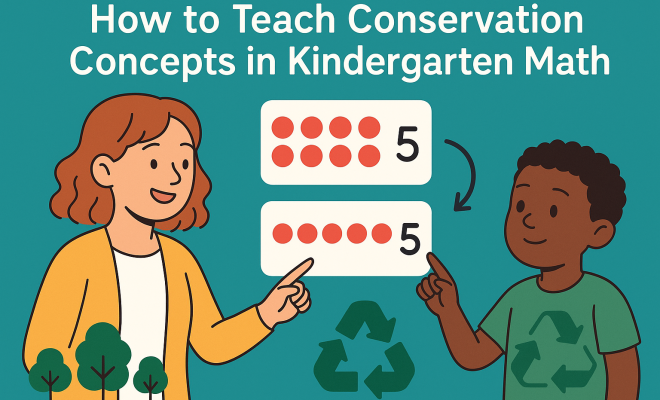
One of the most effective ways to teach kindergarten math conservation concepts is through manipulatives—tangible objects that children can handle. Items like blocks, counters, and even everyday objects (like buttons or coins) can help children visualize and understand mathematical ideas. For instance, when teaching number conservation, you might present a scenario where students have a set of blocks. You can demonstrate how rearranging the blocks does not change the quantity, reinforcing the concept of quantity permanence.
Additionally, manipulatives can be used to explore measurement conservation. For example, if you have two equal piles of blocks and ask a child to spread them out into a long line, they might think one pile has more blocks because it looks longer. This is a perfect moment to discuss how the total number remains unchanged despite their appearance, further solidifying their understanding of conservation.
3. Incorporating Storytelling and Real-Life Contexts
Children relate well to stories, making storytelling an excellent tool for teaching conservation concepts. By creating narratives that involve characters facing mathematical dilemmas related to conservation, educators can engage their students in a relatable way. For example, consider a story about a rabbit who needs to share carrots with friends. As the rabbit divides the carrots, the children can discuss whether the number of carrots changes as they are distributed among friends.
Real-life contexts can also enhance understanding. You might take students on a nature walk to collect leaves or stones and later ask them to group or compare these items. By placing math in familiar situations, children can grasp conservation concepts more intuitively and see their relevance beyond the classroom.
4. Interactive Games and Activities
Games are a fantastic way to teach kindergarten math conservation concepts while keeping children engaged. Activities like “The Conservation Relay” can be both fun and educational. In this game, children can relay items from one side of the room to another while counting how many they have at each stage, reinforcing their understanding that the total remains the same regardless of their arrangement.
Digital games can also be effective in reinforcing these concepts. Many educational apps focus on conservation, allowing children to explore mathematical relationships in a playful environment. These interactive elements cater to different learning styles, ensuring that every child can engage with the material effectively.
5. Visual Aids and Charts
Visual aids are another powerful tool in teaching kindergarten math conservation concepts. Charts, diagrams, and pictorial representations can help illustrate ideas that may be abstract for young learners. For example, a number line can visually demonstrate how numbers relate to each other, showing that the quantity doesn’t change just because the positioning does.
Using visuals alongside manipulatives can deepen comprehension. Imagine showing a chart with three different shapes of the same volume of liquid. By visualizing the shapes, children can understand that despite the different appearances, the quantity is constant. This combination of visual learning with hands-on experiences can solidify their understanding and retention of conservation concepts. (See: NIH on learning and development.)
6. Encouraging Peer Interaction and Discussion
Peer interactions can foster a deeper understanding of kindergarten math conservation concepts. Encouraging children to work in pairs or small groups allows them to verbalize their thoughts and reasoning. For instance, while working with manipulatives, one child might notice that another has arranged their blocks differently and discuss whether they think they have the same number of blocks. This dialogue helps them articulate their understanding and consider alternative perspectives.
Facilitating discussions around their thought processes also encourages critical thinking. Teachers can prompt students with open-ended questions that encourage them to explain their reasoning, such as, “Why do you think there are still five blocks if we spread them out?” These discussions not only reinforce conservation concepts but also build essential communication skills in young learners.
7. Creating a Rich Mathematical Environment
To effectively teach kindergarten math conservation concepts, it’s crucial to create a mathematical environment rich with opportunities for exploration. This includes setting up learning centers that focus on different mathematical principles. For instance, a center dedicated to measurement might allow children to explore different containers and pour liquids from one to another, discussing how the volume remains unchanged.
In addition, incorporating math-related resources like books, puzzles, and games can help immerse children in a world of mathematics. By surrounding students with engaging materials and activities, educators can stimulate curiosity and exploration of conservation concepts organically.
8. Using Assessment for Understanding
Assessing children’s understanding of conservation concepts doesn’t have to be formal. Observational assessments can be incredibly effective, allowing teachers to gauge students’ grasp of the concepts through their interactions and play. For example, during a group activity, a teacher might observe whether students can successfully count and compare groups of objects, noting their understanding of the conservation principle.
Additionally, formative assessments, like student reflections or simple quizzes, can help track progress over time. This information can guide instruction, ensuring that educators can provide targeted support where necessary. Regular assessment allows teachers to adapt their methods and materials, enhancing the overall learning experience.
9. Incorporating Technology for Enhanced Learning
In today’s digital age, technology can play a pivotal role in teaching kindergarten math conservation concepts. Interactive applications and online resources offer various engaging platforms for students to explore mathematical ideas. For instance, many educational apps provide games that challenge children to solve problems related to conservation, making learning fun and interactive.
Moreover, utilizing online platforms for virtual lessons can reach students who may benefit from additional support at home. Parents can engage with their children in these activities, promoting a collaborative approach to learning that reinforces the principles taught in the classroom. Technology can enhance traditional teaching methods, providing a multifaceted approach to grasping these vital concepts.
10. Continuous Professional Development for Educators
Finally, it’s essential for educators to engage in continuous professional development to stay updated on best practices for teaching kindergarten math conservation concepts. Workshops, courses, and collaborative learning opportunities with peers can provide fresh insights and strategies that can enhance teaching methods.
Participating in professional communities can also be beneficial, allowing educators to share experiences and resources that have proven effective in their classrooms. By committing to ongoing learning, teachers can adapt their approaches and ensure they are providing the best possible education for their students.
11. Practical Applications of Conservation Concepts
Understanding conservation concepts goes beyond the classroom, and applying these principles in everyday life can help solidify children’s knowledge. For instance, during cooking activities, children see how ingredients measure the same regardless of the container’s shape. When making a fruit salad, you can ask them how many cups of apples they used, regardless of the bowl’s size, emphasizing that the total amount doesn’t change with the bowl.
Parents can also reinforce these concepts at home by involving children in setting the table. By discussing how the number of plates and utensils remains the same whether they’re arranged in a straight line or stacked, kids can practice conservation in a relatable context.
12. Statistics on Early Math Learning
Research shows that early exposure to math concepts can significantly benefit a child’s cognitive development. According to a study by the National Council of Teachers of Mathematics, children who engage in math-focused activities during preschool are more likely to develop strong mathematical skills as they progress through school. Notably, studies indicate that children who understand conservation concepts tend to perform better in standardized tests later.
Furthermore, the National Association for the Education of Young Children (NAEYC) emphasizes that early mathematics education contributes to better overall academic performance. Statistics reveal that students who received quality early math education had an average of 20% higher test scores in math by the time they reached the third grade compared to their peers who did not receive such exposure.
13. Expert Perspectives on Teaching Math Conservation
Experts in early childhood education stress the importance of establishing a strong foundation in math during the kindergarten years. Dr. Susan B. Neuman, an authority on early literacy and mathematics, suggests that children learn best when they can explore and manipulate objects. She advocates for play-based learning environments where children can experiment with conservation concepts.
Another expert, Dr. Robert Siegler, a prominent developmental psychologist, emphasizes that children construct their understanding of math through experiences. He recommends integrating storytelling and real-life scenarios into lessons to help children relate to abstract concepts more tangibly. His research shows that when children see math in their daily lives, they’re more likely to retain and understand these principles.
14. Common Misconceptions about Conservation
Despite education efforts, several misconceptions about conservation concepts persist among young learners. One common misunderstanding is that quantity changes with arrangement. For example, children may believe that a taller glass has more liquid than a shorter one, even if the volume is the same. Educators can address these misconceptions by providing consistent practice with manipulatives and visual aids that demonstrate quantity remains unchanged.
Another misconception is the idea that larger objects always hold more than smaller ones. To combat this, teachers can use various objects to challenge this notion, such as comparing different containers’ capacities and discussing the outcomes. Addressing these misconceptions early is crucial to helping children build a robust mathematical foundation.
15. Frequently Asked Questions (FAQ)
What age should children start learning conservation concepts?
While formal understanding may develop later, introducing conservation concepts in kindergarten is beneficial. Children can begin exploring these ideas through play and hands-on activities as early as 4 or 5 years old.
How can parents support their child’s understanding of conservation at home?
Parents can reinforce conservation concepts by engaging in everyday activities that involve counting and measuring, such as cooking, shopping, or gardening. Discussing quantities and encouraging children to express their understanding can also help.
What are some simple games to teach conservation concepts at home?
Games like “Find the Same” where children compare groups of objects, or “Number Hunt” where they search for items in the house to count, can make learning fun and interactive. These activities encourage kids to think about quantity in a playful way.
Are digital resources effective for teaching math conservation concepts?
Yes, many apps and online games are designed to reinforce conservation concepts in engaging ways. These resources can provide varied scenarios that help children practice and apply their understanding through interactive play.
How can teachers assess children’s understanding of conservation concepts effectively?
Teachers can use observational assessments during group activities, informal quizzes, and discussions to assess understanding. Additionally, incorporating fun challenges or games that require children to demonstrate their knowledge can be a great way to evaluate comprehension.
16. Introducing Advanced Concepts Gradually
As children grow and their understanding solidifies, it can be beneficial to introduce more complex conservation concepts gradually. For instance, once they grasp basic number conservation, teachers can introduce ideas like conservation of mass and volume in simple experiments. An example is using playdough to show how the same amount of dough can take various shapes, reinforcing that quantity remains unchanged regardless of form.
Doing these activities not only solidifies their current knowledge but also prepares them for future mathematical concepts. Introducing these ideas in a playful and engaging manner will help children embrace more challenging aspects of mathematics as they advance in their education.
17. Encouraging Critical Thinking
Another important aspect of teaching kindergarten math conservation concepts is fostering critical thinking skills. You can do this by posing hypothetical scenarios that challenge students to think about conservation in new ways. For example, you might ask, “If we add two more blocks to one side of our equal group, do we still have the same number?” These kinds of questions promote analytical thinking and allow children to explore their understanding of conservation further.
Additionally, using real-world problems that require them to apply conservation concepts helps in enhancing their problem-solving skills. You can set up scenarios where they need to use their knowledge to figure out how many items are needed for a game or project, providing an opportunity to practice critical thinking in a fun context.
18. Creating a Positive Learning Environment
Creating a positive learning environment is essential for teaching kindergarten math conservation concepts effectively. Children thrive in spaces where they feel safe and encouraged to express their thoughts and ideas. By fostering a classroom climate that celebrates mistakes as learning opportunities, children can be more willing to explore and engage with challenging concepts.
Using positive reinforcement to acknowledge their efforts can also motivate children. For instance, when a child demonstrates understanding through a hands-on activity, verbal praise or small rewards can reinforce their learning. Building their confidence in these foundational skills not only supports their current learning but also encourages a lifelong love for mathematics.
19. Engaging Parents in the Learning Process
Engaging parents in their children’s learning journey can significantly enhance the understanding of conservation concepts. Providing resources, such as newsletters or workshops, can help parents understand what conservation concepts are and how they can support their children at home. Simple activities or challenges that parents can do with their children can strengthen their skills and reinforce classroom learning.
For example, providing a monthly “math challenge” that families can complete together can encourage them to explore math concepts in their daily lives. This partnership helps create a seamless learning experience between school and home, further solidifying essential math foundations.
20. Conclusion
Teaching kindergarten math conservation concepts is a multi-faceted endeavor that requires creativity, patience, and a deep understanding of child development. By employing diverse strategies—from manipulatives to storytelling and technology—educators can help young learners build a solid mathematical foundation that will serve them well in their future educational journeys.
“`
Trending Now
Frequently Asked Questions
What are conservation concepts in math?
Conservation concepts in math refer to the understanding that certain properties of objects, such as volume, mass, and number, remain unchanged despite changes in their appearance. For example, children learn that pouring water from one container to another does not alter the actual amount of water, highlighting the principle of conservation.
Why are conservation concepts important for kindergarteners?
Teaching conservation concepts to kindergarteners is crucial as it lays the foundation for their mathematical understanding. These concepts help children grasp essential ideas about quantities and relationships, which are vital for their cognitive development and future learning in math.
How can manipulatives help teach math conservation?
Manipulatives are effective tools for teaching math conservation as they provide tangible objects for children to explore. By handling items like blocks or counters, children can visually and physically engage with mathematical concepts, reinforcing their understanding of how quantity remains constant despite rearrangement.
At what age do children typically understand conservation concepts?
According to developmental psychologist Jean Piaget, children typically begin to understand conservation concepts between the ages of 7 to 11. However, introducing these ideas in kindergarten can help establish a strong foundation for their future mathematical learning.
What activities can teach conservation concepts in kindergarten?
Activities that involve hands-on learning, such as using manipulatives like blocks, counters, or everyday objects, are effective for teaching conservation concepts. For instance, rearranging blocks to demonstrate that quantity remains the same helps children visualize and understand these important mathematical principles.
Agree or disagree? Drop a comment and tell us what you think.