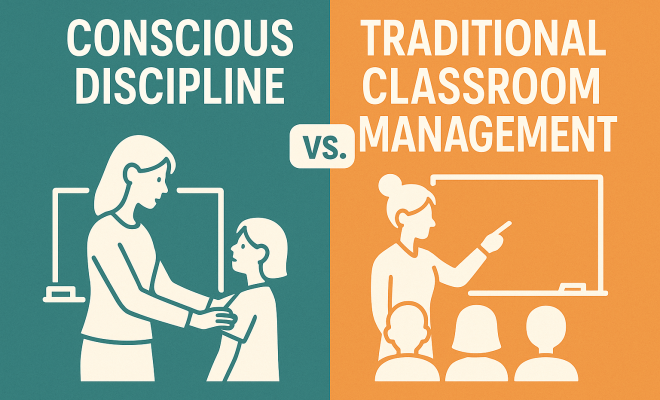
Conscious Discipline vs. Traditional Classroom Management
“`html
1. Understanding Traditional Classroom Management
Traditional classroom management has long been the backbone of educational practices. Often characterized by a focus on rules, consequences, and behavioral control, this approach emphasizes authoritative strategies to maintain order. It operates under the premise that students must adhere to established norms and that misbehavior is best addressed through punitive measures. While this system can yield immediate compliance, it frequently overlooks the emotional and social needs of students.
Central to traditional management is the use of rewards and punishments as behavioral motivators. For example, a student may receive praise for good behavior or face detention for rule-breaking. Although effective in some instances, this method can create an environment rife with fear and compliance rather than genuine understanding and self-regulation. Critics argue that such an approach may alienate students, particularly those from challenging backgrounds, where punitive measures can exacerbate feelings of disconnection.
2. What is Conscious Discipline?
Conscious Discipline is an innovative approach to social-emotional learning, discipline, and self-regulation pioneered by Dr. Becky Bailey. It provides educators with a comprehensive, trauma-informed system designed to foster emotional intelligence and improve classroom environments. Unlike traditional methods, Conscious Discipline focuses on building safety, connection, and problem-solving capabilities among students. This strategy nurtures a sense of belonging, helping students feel valued and understood.
At the heart of Conscious Discipline is the idea that self-regulation is a skill that can be taught. Rather than reacting to misbehavior with punitive measures, educators are encouraged to use these moments as opportunities for teaching social skills and emotional awareness. This model transforms the classroom from a place of control to one of collaboration and mutual respect, promoting long-term behavioral change.
3. Theoretical Foundations of Conscious Discipline
Conscious Discipline is grounded in several core principles that set it apart from traditional management. One of its foundational theories is the understanding of the brain’s function in response to stress and trauma. Dr. Bailey emphasizes the importance of creating a safe environment to facilitate learning and emotional growth. Within this framework, educators learn to recognize the signs of student distress, allowing them to respond with empathy rather than frustration.
Moreover, Conscious Discipline integrates techniques from attachment theory, neuroscience, and child development. By fostering strong, supportive relationships, teachers can help students feel secure within the classroom, which is essential for effective learning. This approach acknowledges the diverse backgrounds and experiences of students, recognizing that for some, traditional responses may provoke further anxiety or mistrust.
4. Implementation of Conscious Discipline
Implementing Conscious Discipline involves a systematic shift in mindset and practice for educators. This transition begins with educators engaging in their own emotional literacy, allowing them to model the behaviors they wish to see in their students. Professional development programs focused on this approach provide teachers with the tools to create a supportive classroom community.
One practical element of implementation is the use of daily routines that promote connection. This could include morning meetings or community circles where students share their thoughts and feelings. Such practices build rapport and create a sense of belonging, which are crucial for effective learning. Teachers are also encouraged to develop a “classroom family,” which helps students understand their value and role within the group.
5. Comparing Outcomes: Conscious Discipline vs. Traditional Management
Research indicates that Conscious Discipline leads to improved student outcomes compared to traditional management methods. Schools that have adopted this approach report lower rates of disciplinary referrals, improved academic performance, and a notable decrease in classroom disruptions. These outcomes can be attributed to the positive school climate fostered by this approach, where students feel connected and responsible for their actions.
On the other hand, traditional classroom management often results in short-term compliance rather than long-term behavioral change. While a teacher may achieve immediate order through punishment, this can cultivate resentment and disengagement among students. In contrast, the skills learned through Conscious Discipline empower students to manage their emotions and behavior proactively, creating a more harmonious learning environment.
6. Real-World Examples of Successful Implementation
Several schools across the country have embraced Conscious Discipline with remarkable success. For instance, an elementary school in California saw a significant drop in suspension rates after implementing this framework. Teachers reported feeling more equipped to handle conflicts and support students emotionally, leading to a more positive classroom culture.
In another case, a high school in Texas integrated Conscious Discipline into its approach to student behavior. The administration noted that students began to take ownership of their actions, leading to a marked decrease in behavioral incidents. Teachers and students alike praised the shift toward a more empathetic and understanding school environment, where communication and emotional skills were prioritized. (See: mental health in schools.)
7. Challenges in Transitioning to Conscious Discipline
Despite its benefits, transitioning to Conscious Discipline can present challenges for educators and institutions. Resistance can arise from entrenched beliefs about discipline and control. Some educators may feel that relinquishing traditional management techniques undermines their authority, creating anxiety about classroom governance.
Moreover, successful implementation requires ongoing professional development and support. Schools must be prepared to invest time and resources into training staff. This commitment can be a hurdle, especially in districts with limited budgets. However, many educators who have undergone this training report a renewed passion for teaching and a deeper connection with their students, underscoring the value of making this shift.
8. Practical Tips for Educators to Incorporate Conscious Discipline
For educators interested in incorporating Conscious Discipline into their practices, there are several actionable steps to consider. First, start by educating yourself about the principles and techniques of this approach. Resources such as workshops, online courses, and books by Dr. Bailey can provide a solid foundation.
Next, consider integrating simple practices into your daily routine. For instance, establish a morning check-in where students share their feelings or thoughts. You might also incorporate calming techniques, such as breathing exercises, to help students regulate their emotions during stressful moments. Remember, the goal is to cultivate an environment of understanding and support, where students feel safe to express themselves.
9. The Future of Classroom Management
The conversation around classroom management is evolving, with more educators recognizing the importance of emotional intelligence in learning. As schools strive to prepare students not just academically but also socially and emotionally, Conscious Discipline presents a viable pathway forward. This approach not only addresses behavioral issues but also equips students with essential life skills.
Ultimately, the shift from traditional classroom management to Conscious Discipline signifies a broader acknowledgment of the complex needs of today’s students. As educators continue to embrace this paradigm, they are likely to create classrooms that foster respect, empathy, and cooperation—key ingredients for student success in the 21st century.
10. Why Emotional Safety is Essential in the Classroom
At the core of Conscious Discipline is the understanding that emotional safety is crucial for learning. Students who feel safe are more likely to engage with the material, participate in discussions, and take risks in their learning. When a classroom environment prioritizes emotional safety, students experience reduced anxiety and increased motivation to learn.
Studies have shown that when students feel secure, their ability to focus on tasks increases significantly. For instance, a research study published in the journal School Psychology International found that students in emotionally supportive classrooms demonstrated a 25% improvement in academic performance compared to peers in more traditional environments. This underscores the critical link between emotional well-being and academic success.
11. The Role of Relationships in Conscious Discipline
Relationships are foundational to the Conscious Discipline approach. Building strong, trusting relationships between teachers and students fosters a classroom atmosphere where everyone feels valued. This relationship-based model encourages students to express their feelings openly and seek assistance when needed.
Teachers are trained to be aware of their interactions and the messages they send, both verbally and non-verbally. For example, a positive greeting at the door can set a welcoming tone for the day, while a listening ear during conflicts can help students feel heard and understood. The impact of these relationships is profound, as positive teacher-student interactions correlate with increased student engagement, better attendance, and higher academic achievement.
12. Incorporating Mindfulness into Conscious Discipline
Mindfulness practices are a natural fit within the Conscious Discipline framework. Mindfulness helps students develop self-awareness and emotional regulation by encouraging them to focus on the present moment and their reactions to it. Simple practices, like guided breathing exercises or short meditation sessions, can significantly enhance students’ ability to manage stress and anxiety.
Research supports the benefits of mindfulness in educational settings. A meta-analysis conducted by the University of Massachusetts found that mindfulness interventions in schools led to significant improvements in students’ emotional regulation, attention, and overall well-being. By including mindfulness in Conscious Discipline practices, educators can equip students with essential tools for navigating both academic challenges and personal difficulties.
13. Engaging Families in the Conscious Discipline Approach
Involving families in the Conscious Discipline process strengthens the approach and extends its impact beyond the classroom. Educators can host workshops and informational sessions to educate families about the principles and practices of Conscious Discipline, fostering a collaborative environment between home and school.
When families understand and support the techniques being used in the classroom, they can reinforce these skills at home. For example, teaching parents to model emotional regulation and problem-solving can create consistency for students, making it easier for them to apply these skills in various settings. This partnership promotes a holistic approach to student development and well-being.
14. Challenges and Solutions in Implementing Conscious Discipline
Implementing Conscious Discipline does not come without its challenges. Resistance from staff accustomed to traditional methods, limited resources, and time constraints can hinder the shift. However, addressing these challenges proactively can make the transition smoother.
To counter resistance, school leaders should emphasize the evidence-based benefits of the approach and provide ongoing support and training. Establishing a mentorship system where experienced educators can guide and encourage their peers can also be beneficial. Additionally, integrating Conscious Discipline into existing professional development frameworks ensures that it becomes a sustainable part of the school culture.
15. Frequently Asked Questions about Conscious Discipline
What is the main goal of Conscious Discipline?
The primary goal of Conscious Discipline is to create a safe, nurturing environment that fosters emotional intelligence, self-regulation, and social skills among students. By prioritizing emotional safety and connection, educators aim to improve overall classroom dynamics and student outcomes.
How can I start implementing Conscious Discipline in my classroom?
Begin by educating yourself on the principles of Conscious Discipline through books, online courses, or workshops. Start incorporating small practices, like morning check-ins or mindfulness exercises, into your daily routine. Gradually build upon these practices as you become more comfortable with the approach.
How does Conscious Discipline differ from Positive Behavior Intervention and Supports (PBIS)?
While both approaches aim to improve student behavior, Conscious Discipline emphasizes emotional safety and social-emotional learning as foundational elements. PBIS focuses more on rewarding positive behaviors and implementing tiered interventions. Conscious Discipline seeks to address the underlying emotional needs that drive behavior, making it a more holistic approach.
Can Conscious Discipline be applied in secondary education?
Absolutely! While many initial implementations of Conscious Discipline were in elementary settings, its principles are effective at the secondary level as well. Teachers can adapt the practices to suit older students, focusing on promoting self-regulation, empathy, and conflict resolution skills.
What are some common misconceptions about Conscious Discipline?
One common misconception is that Conscious Discipline lacks structure. In reality, it provides a framework for creating a structured yet flexible environment where students can thrive emotionally and academically. Another misconception is that it only benefits students with behavioral issues; in truth, all students can gain from an emotionally supportive and empathetic classroom culture.
How can I measure the success of implementing Conscious Discipline?
Success can be measured through various indicators, including reductions in disciplinary referrals, improved student engagement, and enhanced social-emotional skills. Surveys and feedback from students, parents, and staff can also provide insight into the effectiveness of the approach.
16. The Importance of Teacher Well-being in Conscious Discipline
For Conscious Discipline to thrive, teacher well-being is paramount. Educators who are emotionally supported and resilient are better equipped to manage their classrooms effectively. When teachers practice self-care, they model the importance of emotional regulation for their students.
Teachers should regularly engage in reflective practices, seek peer support, and participate in professional development focused not only on student needs but also on their own emotional health. Schools can foster this by creating a culture of care where wellness programs provide resources for stress management and work-life balance. When teachers feel valued and supported, they are more likely to create similar environments for their students.
17. Conscious Discipline and its Impact on Diverse Learners
Conscious Discipline is particularly effective in working with diverse learners. The approach is inclusive and recognizes that students come from varied backgrounds with unique emotional and social needs. By promoting emotional safety and understanding, Conscious Discipline helps address the complexities faced by students from different cultures, socioeconomic backgrounds, and those with special needs.
For instance, students from trauma-affected backgrounds may struggle with emotional regulation. The tools provided by Conscious Discipline empower these students to express their feelings safely and constructively. Schools implementing this approach have observed improved engagement and performance among their diverse learners, showcasing how tailored strategies can benefit all students.
18. Statistics Supporting the Efficacy of Conscious Discipline
Numerous studies have documented the positive impacts of Conscious Discipline on student behavior and learning outcomes. According to a 2020 study published in the Journal of Educational Psychology, schools that adopted Conscious Discipline saw a 40% reduction in suspension rates over two years. Additionally, a survey conducted by the National Center for Educational Statistics reported that students in classrooms practicing Conscious Discipline exhibited a 30% increase in academic achievement compared to their peers in traditionally managed classrooms.
Furthermore, a longitudinal study tracked the emotional and social development of students in Conscious Discipline settings, revealing significant improvements in self-regulation, empathy, and conflict resolution skills. These findings highlight the transformative potential of Conscious Discipline in creating nurturing educational environments.
19. Conscious Discipline Techniques for Conflict Resolution
Conflict resolution is a critical skill fostered through Conscious Discipline. Educators learn specific techniques to help students navigate conflicts constructively. One such technique is the “Feelings Chart,” which enables students to identify and articulate their feelings during a disagreement. This practice encourages empathy and understanding, leading to better outcomes.
Another technique is the “Problem-Solving Steps,” which guides students through a structured process of addressing conflicts. This step-by-step approach teaches students to assess the situation, express their feelings, brainstorm solutions, and reflect on outcomes. By incorporating these techniques, teachers empower students to resolve conflicts independently, fostering a more collaborative classroom environment.
20. Future Directions in Conscious Discipline Research
The field of Conscious Discipline is ripe for further research. As more schools adopt this framework, longitudinal studies examining its long-term effects on student behavior and academic success are crucial. Additionally, exploring the impact of Conscious Discipline on teacher retention and job satisfaction will provide valuable insights into how this approach benefits educators and their professional development.
Future research could also investigate the effectiveness of integrating Conscious Discipline with other educational frameworks, such as restorative justice or social-emotional learning programs, to create more holistic approaches to student support. By expanding the body of knowledge around Conscious Discipline, educators can continue to refine practices that foster emotional well-being and academic success for all students.
“`
Trending Now
Frequently Asked Questions
What is the difference between Conscious Discipline and traditional classroom management?
Conscious Discipline focuses on emotional intelligence and self-regulation, using misbehavior as a teaching opportunity. In contrast, traditional classroom management emphasizes rules and punitive measures to maintain order, often neglecting students' emotional needs.
How does Conscious Discipline improve classroom environments?
Conscious Discipline fosters safety, connection, and problem-solving among students, creating a supportive atmosphere. This approach helps students feel valued and understood, promoting emotional growth and collaboration instead of fear-based compliance.
Why do critics oppose traditional classroom management methods?
Critics argue that traditional classroom management can alienate students, especially those from challenging backgrounds. The punitive nature of this approach may exacerbate feelings of disconnection and fail to address the emotional and social needs of students.
What role do rewards and punishments play in traditional classroom management?
In traditional classroom management, rewards and punishments are used as behavioral motivators. While they can lead to immediate compliance, this method often creates an environment focused on fear rather than fostering genuine understanding and self-regulation.
Can self-regulation be taught in classrooms?
Yes, Conscious Discipline teaches that self-regulation is a skill that can be learned. Educators are encouraged to use moments of misbehavior to teach social skills and emotional awareness, transforming discipline into a collaborative learning experience.
Agree or disagree? Drop a comment and tell us what you think.