Teaching Phonemic Awareness to English Language Learners
“`html
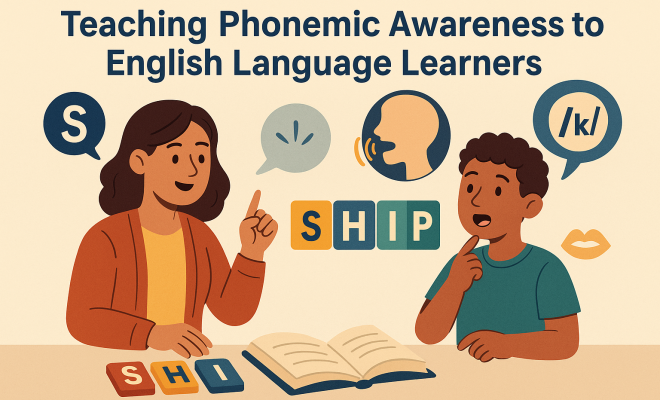
Teaching phonemic awareness for English language learners (ELLs) is a vital part of their literacy development. Understanding sounds in speech not only facilitates reading but also enhances overall language acquisition. This article explores the essentials of phonemic awareness, its significance for ELLs, effective teaching strategies, and practical activities to incorporate in the classroom.
Understanding Phonemic Awareness
Phonemic awareness refers to the ability to recognize and manipulate individual sounds, or phonemes, in spoken words. It is a foundational skill in learning to read, as it directly correlates with a student’s ability to decode written text. For ELLs, who may be navigating a new language while also mastering reading skills, phonemic awareness can be particularly challenging yet crucial.
Research indicates that strong phonemic awareness can significantly impact a learner’s ability to understand and engage with the English language. According to the National Reading Panel, phonemic awareness is a better predictor of a child’s reading success than socioeconomic status or parental education levels. Therefore, it’s essential to prioritize this skill in ELL education.
The Importance of Phonemic Awareness for ELLs
Phonemic awareness is especially important for ELLs for several reasons. First, many ELLs come from linguistic backgrounds that differ significantly from English. For instance, languages such as Mandarin or Arabic have sounds that do not directly translate to English phonemes, which can create hurdles in pronunciation and comprehension.
Moreover, ELLs often face additional challenges, including limited exposure to English outside the classroom and varying levels of familiarity with the school environment. Thus, fostering phonemic awareness not only supports reading proficiency but also aids in building confidence and fluency for ELLs.
Key Components of Effective Phonemic Awareness Instruction
Effective instruction in phonemic awareness for English language learners encompasses several key components:
- Explicit Teaching: Direct instruction in phonemic awareness should be clear and structured. Teachers must model phoneme manipulation and provide guided practice.
- Multisensory Approaches: Utilizing visual, auditory, and kinesthetic techniques can enhance learning. For example, using letter tiles or sound charts helps reinforce sound-letter associations.
- Engaging Activities: Incorporating games and interactive activities ensures that learning phonemic awareness is both fun and impactful. Activities like rhyming games or sound sorting can make complex concepts more approachable.
- Scaffolded Support: Gradual release of responsibility is crucial. Start with highly structured activities and progressively allow more independence as students gain proficiency.
Practical Strategies for Teaching Phonemic Awareness
Implementing effective strategies can significantly enhance phonemic awareness for English language learners. Here are some practical approaches:
1. Sound Isolation
Sound isolation involves helping students identify individual sounds in words. For instance, when presented with the word “cat,” students should be able to recognize the initial sound /k/. This can be practiced through simple activities where students listen to words and identify the first, middle, or last sound.
2. Sound Blending
Sound blending requires students to combine individual sounds to form words. For example, if you say /b/, /a/, and /t/, students should be able to blend these sounds to say “bat.” Blending can be practiced through games where students are given sounds and must guess the corresponding word.
3. Sound Segmentation
Sound segmentation helps students break down words into their constituent sounds. Start with simple three-phoneme words, and encourage students to clap for each sound they hear. This helps in visualizing and hearing the different phonemes that make up a word.
4. Rhyming Activities
Rhyming plays an integral role in phonemic awareness and can be an enjoyable way to practice. Engaging students with songs, poems, or rhyming books can help them recognize sound patterns and develop phonemic skills. Consider having a rhyming word competition to make it exciting!
Incorporating Technology in Phonemic Awareness Instruction
In today’s digital age, technology can provide innovative avenues for teaching phonemic awareness to English language learners. Various apps and online resources focus on phonics and phonemic skills, making learning interactive and engaging.
For example, programs like Starfall and ABCmouse offer structured phonemic awareness exercises that can be tailored to individual learning levels. Incorporating such resources into your curriculum not only captivates students’ attention but also reinforces the skills they are developing in a modern context. (See: Teaching reading skills effectively.)
Challenges in Teaching Phonemic Awareness to ELLs
While teaching phonemic awareness is essential, it comes with its own set of challenges. One of the primary hurdles is the disparity in phonemic recognition across different languages. Some ELLs may struggle with phonemes that do not exist in their native languages, which can lead to mispronunciation and difficulties in decoding.
Additionally, ELLs might lack the vocabulary needed to express their understanding of sounds, making it harder for them to engage with phonemic activities. Teachers should anticipate these challenges and be prepared to offer additional support and alternative strategies.
Creating a Supportive Learning Environment
Creating a welcoming and supportive classroom environment is crucial for the success of ELLs in developing phonemic awareness. Establishing a culture of respect, encouragement, and patience helps students feel safe to take risks and make mistakes in their learning journey.
Incorporate diverse cultural materials that resonate with your students’ backgrounds. By doing so, you not only validate their identities but also enhance their engagement in phonemic awareness activities. Celebrate their progress, no matter how small, to build their confidence and foster a growth mindset.
Assessment and Progress Monitoring
Assessment plays a critical role in understanding each student’s phonemic awareness abilities and tailoring instruction accordingly. Utilize a mix of formal and informal assessments to gauge progress and identify areas that require additional focus.
- Informal Observations: Take note of how students respond to phonemic awareness activities during classroom instruction. Observe their participation and engagement levels to adjust your teaching strategies.
- Progress Monitoring Tools: Utilize tools such as phoneme segmentation assessments or sound recognition tests to quantitatively measure students’ abilities over time.
- Feedback Sessions: Regularly engage in one-on-one feedback sessions with students to discuss their progress, set goals, and encourage self-reflection on their learning journey.
Building Family and Community Connections
Involving families in the process of developing phonemic awareness can create a supportive network for English language learners. Communicate with parents about the importance of phonemic skills and provide them with strategies to reinforce learning at home.
Consider hosting workshops for families to learn phonemic activities they can do with their children. This not only strengthens family ties but also empowers parents to take an active role in their child’s education. Additionally, leveraging community resources, such as libraries or cultural centers, can provide further support and materials for at-home practice.
Current Research and Future Directions
The field of literacy education, particularly concerning phonemic awareness for English language learners, is ever-evolving. Recent research emphasizes the need for culturally responsive teaching methods that recognize the diversity of ELL backgrounds. Educators are encouraged to adapt their instructional practices to meet the unique needs of their students.
Incorporating research-backed strategies and utilizing technology will become increasingly important. Future studies may focus on the long-term effects of phonemic awareness interventions on ELLs’ overall literacy development and language proficiency. Keeping abreast of current trends and findings can help educators refine their approaches and enhance student outcomes.
Exploring the Impact of Phonemic Awareness on Academic Success
Phonemic awareness isn’t just crucial for reading; it plays a significant role in overall academic success for ELLs. Studies have shown that students with strong phonemic awareness skills tend to perform better across subjects due to improved comprehension and communication abilities.
For example, a 2019 study indicated that ELLs who engaged in regular phonemic awareness activities saw a 30% increase in their reading fluency scores over a six-month period. These improvements often translate to better performance in writing and oral communication as well, as students become more adept at manipulating sounds and understanding word structures.
Moreover, phonemic awareness has been linked to enhanced vocabulary acquisition. As students develop a better understanding of how sounds form words, they are more likely to experiment with new vocabulary, leading to richer language use in both spoken and written forms.
Engaging Activities to Foster Phonemic Awareness
To make phonemic awareness instruction effective and enjoyable, consider these engaging classroom activities:
1. Sound Scavenger Hunt
Organize a scavenger hunt where students listen for specific sounds in the environment or in words around the classroom. You can give them a checklist of sounds to find, such as /s/, /m/, or /t/. This not only reinforces sound recognition but also keeps students actively engaged. (See: Phonemic awareness and reading success.)
2. Phoneme Bingo
Create bingo cards with various phonemes or words that contain specific sounds. As you call out sounds, students will cover the corresponding squares. This game encourages quick thinking and reinforces sound identification in a fun format.
3. Puppet Show Phonemic Exercises
Incorporating puppets can make phonemic instruction more engaging. Have students create puppet shows where they must incorporate words that begin with a certain sound. This encourages creativity while also focusing on sound manipulation.
4. Interactive Storytime
During storytime, pause to emphasize phonemes within the text. Ask students to identify certain sounds or to predict words that may come next based on their phonemic understanding. This reinforces listening skills and comprehension.
Adapting Phonemic Awareness Instruction for Diverse Learners
Every student is unique, and this is especially true for ELLs who come from diverse linguistic and cultural backgrounds. To ensure that phonemic awareness instruction is effective for all learners, consider these adaptation strategies:
- Visual Supports: Use images and gestures to illustrate sounds and words. Visual aids can help bridge the gap for students who may not yet have strong English vocabulary.
- Peer Support: Pair ELLs with fluent English speakers during activities. Peer interactions can provide modeling and support, making it easier for ELLs to engage with phonemic tasks.
- Language Transfer Techniques: Help students identify similarities and differences between their native languages and English. This can aid phonemic recognition and reduce confusion around similar sounds.
- Flexible Grouping: Group students based on their phonemic skills and progression rather than age or grade level. This allows for targeted instruction that meets the needs of each group.
FAQs About Phonemic Awareness for English Language Learners
1. What is phonemic awareness, and why is it important for ELLs?
Phonemic awareness is the ability to hear, identify, and manipulate individual sounds in spoken words. It’s crucial for ELLs because it lays the groundwork for reading and writing in English, helping them decode words and understand language structures.
2. How can I assess phonemic awareness in my ELL students?
You can assess phonemic awareness through informal observations, phoneme segmentation tests, and sound recognition activities. Regularly monitoring their progress will help tailor your instruction to their needs.
3. Are there specific phonemic awareness activities for different age groups?
Yes, activities can be adapted based on age. Younger students may benefit from more playful, tactile activities, while older students may engage better with games that challenge their critical thinking and sound manipulation skills.
4. What role does culture play in phonemic awareness instruction for ELLs?
Culture significantly influences how students perceive and produce sounds. Understanding the cultural backgrounds of your ELLs can help you tailor your instruction to address language differences and build on their existing knowledge.
5. How can I involve parents in supporting phonemic awareness at home?
Engage parents by providing them with simple activities and resources they can use at home. Workshops or newsletters that explain the importance of phonemic awareness and share strategies can empower families to support their children’s learning.
Exploring Common Misconceptions
When discussing phonemic awareness, it’s important to clarify common misconceptions that might hinder effective teaching. Here are a few:
1. Phonemic Awareness is the Same as Phonics
While phonemic awareness is a crucial component of phonics, they are not interchangeable. Phonemic awareness focuses solely on sounds in spoken language, whereas phonics involves the relationship between sounds and their corresponding letters in written language. Understanding this difference can help educators implement effective strategies for teaching both aspects.
2. Phonemic Awareness Only Benefits Early Readers
Many believe that phonemic awareness is only beneficial for young children. However, ELLs of all ages can benefit from phonemic awareness instruction, particularly those who are struggling with reading or are new to the English language. This skill can be targeted at any age to aid comprehension and fluency.
3. Phonemic Awareness is Only Necessary for Reading
Some educators think phonemic awareness is only crucial for developing reading skills. In reality, strong phonemic awareness also supports writing skills as students learn to manipulate sounds to form words. This interconnectedness is vital for overall literacy development.
Real-Life Success Stories
Hearing success stories can inspire educators and highlight the effectiveness of phonemic awareness instruction for ELLs. Here are a few examples:
1. Maria’s Journey
Maria, a 7-year-old ELL from Mexico, struggled with reading in her second-grade classroom. After implementing targeted phonemic awareness activities, such as sound blending and rhyming games, Maria’s confidence soared. Within three months, she not only improved her reading skills but also began to participate more actively in class discussions, showcasing her enhanced verbal skills.
2. Amir’s Transformation
Amir, a 9-year-old from Afghanistan, faced significant challenges with English phonemes that did not exist in his native language. With the help of structured phonemic awareness lessons that incorporated visual aids and technology, Amir showed remarkable growth. His reading fluency improved by over 50% within the school year, which had a positive effect on his overall academic performance and self-esteem.
Future Trends in Phonemic Awareness Instruction
As education continues to evolve, several trends are emerging in phonemic awareness instruction for ELLs:
1. Increased Use of Technology
With the rise of educational technology, there’s a growing trend to incorporate digital tools in phonemic awareness instruction. Interactive software and apps can provide engaging, individualized practice that adapts to each student’s level, ensuring that ELLs receive the support they need.
2. Culturally Responsive Teaching
There is a greater emphasis on culturally responsive pedagogy that recognizes and honors students’ linguistic backgrounds. Teachers are beginning to integrate culturally relevant examples and resources into their phonemic awareness lessons, making learning more relatable and effective for ELLs.
3. Collaborative Learning Environments
More educators are moving towards collaborative learning models, where ELLs work alongside peers to develop their phonemic skills. These group dynamics can encourage language use in social contexts, allowing students to practice phonemic awareness in a supportive environment.
Conclusion
Teaching phonemic awareness for English language learners is an essential aspect of literacy education that can significantly impact their reading success and overall language development. By understanding the unique challenges ELLs face and employing effective strategies, educators can create a rich learning environment that fosters phonemic skills. With commitment and creativity, teachers can equip their students with the foundational skills needed to thrive in English literacy.
“`
Trending Now
Frequently Asked Questions
What is phonemic awareness and why is it important for English language learners?
Phonemic awareness is the ability to recognize and manipulate individual sounds in spoken words. For English language learners (ELLs), this skill is crucial as it directly affects their reading ability and overall language acquisition, helping them decode written text more effectively.
How can phonemic awareness impact reading success in ELLs?
Research shows that strong phonemic awareness is a better predictor of reading success than factors like socioeconomic status. For ELLs, mastering phonemic awareness can significantly enhance their reading proficiency and comprehension in English.
What challenges do English language learners face with phonemic awareness?
ELLs often come from diverse linguistic backgrounds, which may include sounds not present in English. This can create difficulties in pronunciation and comprehension, making phonemic awareness particularly challenging yet essential for their literacy development.
What teaching strategies are effective for developing phonemic awareness in ELLs?
Effective strategies include using interactive activities that engage students in sound recognition, such as rhyming games, phoneme segmentation exercises, and visual aids that connect sounds to letters, all tailored to the unique needs of ELLs.
How can educators incorporate phonemic awareness activities in the classroom?
Educators can incorporate phonemic awareness through fun and engaging activities like sound matching games, storytelling with emphasis on sounds, and using songs or chants that highlight phonemes, ensuring that these activities are culturally relevant to ELLs.
What did we miss? Let us know in the comments and join the conversation.