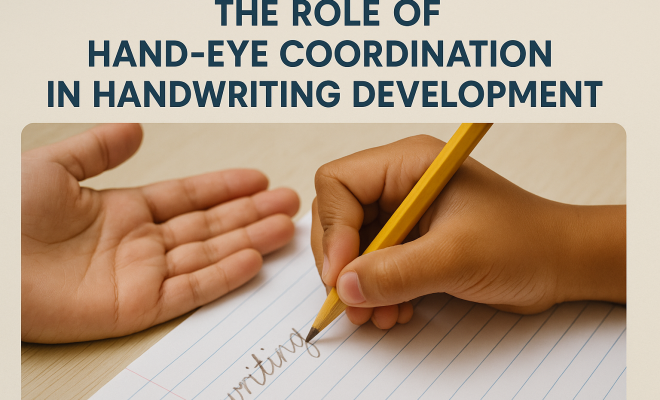
The Role of Hand-Eye Coordination in Handwriting Development
“`html
Handwriting may seem like a simple task, but behind every stroke lies a complex interplay of cognitive and physical skills. Among these skills, hand-eye coordination plays a pivotal role in developing legible and efficient handwriting. This article explores the intricate connection between hand-eye coordination and handwriting development, delving into the science, practical implications, and current relevance in educational settings.
Understanding Hand-Eye Coordination
Hand-eye coordination is the ability to synchronize visual input with motor actions. It involves the brain processing visual information and translating it into precise movements of the hands. This skill is fundamental not only for writing but also for a multitude of tasks, from playing sports to performing surgery.
The development of hand-eye coordination typically begins in infancy, as children learn to reach for objects, grasp them, and manipulate them. These early experiences lay the groundwork for more complex tasks, including writing. Research indicates that fine motor skills, which are closely linked to hand-eye coordination, are critical for children as they begin to learn how to write.
The Importance of Hand-Eye Coordination in Writing
When children start learning to write, they must coordinate their hand movements with their visual perception of letters and words. This coordination allows children to form letters accurately, space words correctly, and even align their writing on the page. Without strong hand-eye coordination skills, students can struggle with handwriting, leading to frustration and poor academic performance.
Numerous studies have shown that children with better hand-eye coordination exhibit improved handwriting skills. For instance, a study published in the journal Occupational Therapy in Mental Health found a direct correlation between hand-eye coordination and handwriting legibility in elementary school-aged children. This highlights the critical role that hand-eye coordination plays in literacy development.
Stages of Handwriting Development
Handwriting development can be broken down into several stages, each marked by increasing complexity of motor skills and hand-eye coordination:
- Pre-Writing Skills: Before children can write letters, they first engage in pre-writing activities. These include drawing lines, circles, and shapes, which help develop the hand muscles and improve hand-eye coordination.
- Letter Formation: Once children are comfortable with pre-writing skills, they begin learning to form letters. This stage requires them to translate visual information into physical movements, necessitating good hand-eye coordination.
- Word and Sentence Formation: As children progress, they learn to string letters together to form words and sentences. This stage demands even greater coordination as they must manage spacing, alignment, and size.
- Fluency and Speed: The final stage involves writing fluently and quickly. At this point, hand-eye coordination must be well-developed to maintain legibility while increasing writing speed.
Factors Influencing Hand-Eye Coordination Development
Several factors can influence the development of hand-eye coordination in children:
- Genetics: Some children may have a genetic predisposition that enhances their motor skills, making them naturally adept at tasks requiring hand-eye coordination.
- Environmental Factors: The environment plays a significant role in skill development. Children exposed to activities like sports, arts and crafts, and even video games often develop better hand-eye coordination.
- Practice and Repetition: Just like any other skill, hand-eye coordination improves with practice. Regular writing exercises and activities that require fine motor skills can significantly boost a child’s coordination.
- Tools and Materials: The writing instruments and surfaces used can also affect coordination. For example, using pencils instead of crayons can encourage better grip and control.
Practical Exercises to Improve Hand-Eye Coordination for Handwriting
Parents and educators can take proactive steps to enhance children’s hand-eye coordination, which will, in turn, support their handwriting development. Here are some practical exercises: (See: hand-eye coordination and child development.)
- Drawing and Coloring: Encourage children to draw shapes, patterns, and pictures. Coloring within the lines can boost control and precision.
- Puzzles and Manipulative Toys: Activities like puzzles, building blocks, and other manipulative toys help refine motor skills and improve coordination.
- Tracing Letters: Have children trace letters and numbers to develop muscle memory while focusing on coordination.
- Ball Games: Playing catch or engaging in sports that require hand-eye coordination can also enhance these skills in a fun way.
Technological Tools for Enhancing Hand-Eye Coordination
In our digital age, technology can also play a role in improving hand-eye coordination. Educational apps and programs that focus on writing skills can make learning engaging and interactive:
- Digital Writing Tools: Tablets and styluses can provide a platform for practice. Programs that require children to write letters or words while receiving immediate feedback can reinforce skills effectively.
- Games: Many video games are designed to enhance hand-eye coordination. While moderation is key, certain games that involve target practice can be beneficial.
- Online Tutorials: There are numerous resources available online that offer guided lessons for handwriting improvement, providing an interactive way for children to develop their skills.
The Current Relevance of Hand-Eye Coordination in Education
In recent years, there has been a growing awareness of the importance of handwriting skills in education. As technology becomes more prevalent, some schools have moved away from teaching cursive and handwriting altogether. However, studies indicate that handwriting skills are still crucial for cognitive development, particularly in young children.
Experts argue that writing by hand enhances memory retention and comprehension, making it essential for academic success. As such, the integration of hand-eye coordination activities into the curriculum is vital. Schools should prioritize exercises that develop both fine motor skills and handwriting abilities.
Challenges in Developing Hand-Eye Coordination for Handwriting
Despite the clear importance of hand-eye coordination, many children face challenges in developing these skills. Some common issues include:
- Developmental Delays: Children with developmental or learning disabilities may struggle with hand-eye coordination, making handwriting a daunting task.
- Lack of Exposure: Some children may not have access to activities that promote fine motor skills, resulting in delayed handwriting development.
- Over-Reliance on Technology: With the rise of technology, some children are less frequently engaged in activities that enhance their hand-eye coordination.
Educators and parents must recognize these challenges and create supportive environments that provide ample opportunities for developing hand-eye coordination.
Expert Perspectives on Hand-Eye Coordination and Handwriting
Incorporating expert opinions can provide further insights into the connection between hand-eye coordination and handwriting. Occupational therapists often emphasize the importance of these skills in their practice:
Dr. Susan McClure, an occupational therapist with over 20 years of experience, states, “Handwriting is not just about forming letters; it’s a complex task that requires fine motor control and sensory processing. Improving hand-eye coordination can significantly enhance a child’s writing skills and overall academic performance.”
Furthermore, Dr. Mark Thompson, a child psychologist, notes, “Handwriting is an expression of a child’s cognitive and emotional development. It’s essential for educators to understand that difficulties with handwriting may stem from coordination issues rather than a lack of ability or motivation.” This perspective encourages a more empathetic approach to handwriting education.
Benefits of Improved Hand-Eye Coordination
Improving hand-eye coordination not only aids in handwriting but also presents a plethora of benefits across various domains of life. As children enhance their coordination skills, they often find improvements in other areas: (See: importance of fine motor skills.)
- Academic Performance: Children with strong hand-eye coordination tend to perform better in subjects requiring fine motor skills, such as art or science labs, where precision is crucial.
- Sports Participation: Improved coordination translates well into sports, providing children with better performance in activities like basketball, soccer, or gymnastics.
- Increased Self-Esteem: Mastering handwriting and engaging in various activities can boost a child’s confidence, encouraging them to tackle new challenges with a positive mindset.
- Social Skills: As children engage in games or activities that require coordination, they also improve their teamwork and social interaction skills, crucial for their emotional development.
Handwriting and Brain Development
Research has shown a strong link between handwriting and brain development. Writing by hand engages different parts of the brain than typing, as it requires more complex motor control and memory processes. When children practice handwriting, they not only improve their fine motor skills but also stimulate neural pathways crucial for learning and memory.
A study by the University of Washington found that students who wrote by hand showed increased brain activity in areas associated with reading and writing. These findings suggest that handwriting can foster cognitive development in a way that typing does not. This makes a compelling case for why hand-eye coordination in handwriting is essential, especially in the digital age where typing is often prioritized.
Common Handwriting Issues and Solutions
Some children encounter specific handwriting issues that can be traced back to poor hand-eye coordination. Understanding these problems and their solutions can significantly aid development:
- Illegible Handwriting: This may stem from a lack of control or understanding of letter formation. Solution: Focus on tracing and copying exercises to enhance familiarity with letters and improve muscle memory.
- Inconsistent Letter Size: Many children struggle with keeping letters uniform in size. Solution: Use lined paper and visual aids that guide letter height and spacing.
- Fatigue and Discomfort: Some children might experience discomfort while writing, leading to fatigue. Solution: Ensure that the child is using ergonomically designed writing tools that fit comfortably in their hand.
Frequently Asked Questions (FAQ)
What age should children start practicing handwriting?
Typically, children can begin practicing pre-writing skills as early as age 3. More formal handwriting instruction often starts in kindergarten, around ages 5-6.
How can I tell if my child has poor hand-eye coordination?
Signs include difficulty catching a ball, poor handwriting, trouble with puzzles, or struggles with tasks that require cutting or drawing. If you notice these signs, consider consulting a pediatric occupational therapist for an assessment.
Are there specific activities that can improve hand-eye coordination for handwriting?
Yes, activities like playing catch, engaging in arts and crafts, and using building toys can significantly improve hand-eye coordination. Tracing letters and drawing can also be very beneficial.
Is typing better than handwriting for children?
While typing is an essential skill in the digital age, handwriting offers unique cognitive benefits that typing does not provide. Handwriting enhances memory and comprehension, making it a vital skill for academic success.
How can teachers support students with handwriting difficulties?
Teachers can provide additional resources, such as specialized writing tools, extra time on writing assignments, and focused exercises that target fine motor skills and hand-eye coordination development.
The Role of Occupational Therapy in Handwriting Development
Occupational therapy can be a valuable resource for children struggling with handwriting due to poor hand-eye coordination. Occupational therapists work with children to develop fine motor skills and practice techniques that enhance coordination. They often use a variety of tools and strategies tailored to each child’s needs, including:
- Customized Exercises: Therapists might design specific exercises to target hand strength, grip, and dexterity, which contribute to improved coordination.
- Adaptive Equipment: Providing tools like pencil grips or weighted pens can help children maintain better control over their writing instruments.
- Play-Based Learning: Many therapists incorporate games and playful activities to make the learning process enjoyable, which can lead to better engagement and retention of skills.
This professional support can make a significant difference for children who find handwriting challenging, allowing them to gain confidence and improve their skills effectively.
Parent Involvement and Support
Parents play a crucial role in their child’s development of hand-eye coordination and handwriting. Here are some ways parents can support their children:
- Create a Writing Environment: Set up a designated space for writing and drawing that is free from distractions, allowing children to focus on their tasks.
- Encourage Daily Practice: Integrate writing into everyday activities, whether that’s writing grocery lists, making cards for family members, or keeping a journal.
- Be Patient and Positive: Celebrate small achievements and provide encouragement. A positive mindset goes a long way in motivating children to improve their skills.
- Model Handwriting: Show your child how you write notes or letters. This not only demonstrates the skill but also provides an opportunity for them to ask questions and learn from your technique.
Conclusion: The Path Forward
Understanding the role of hand-eye coordination in handwriting development is crucial for educators, parents, and policymakers. By recognizing the link between these skills, stakeholders can implement targeted strategies to enhance children’s handwriting abilities. Through practical exercises, technology integration, and supportive environments, we can help children develop the hand-eye coordination necessary for successful handwriting.
As handwriting remains a fundamental aspect of communication and learning, fostering these skills will benefit children not just academically but also in their future endeavors. Let’s embrace the importance of hand-eye coordination in handwriting development and ensure that every child has the opportunity to write with confidence and clarity.
“`
Trending Now
- the complete explanation
- this guide on fine motor skills milestones: what to expect at each age
- this guide on how to develop the pincer grasp in toddlers and preschoolers
- Fine Motor Skills Activities for Preschool: Preparing for Kindergarten
- Dyspraxia and Proprioception: Understanding the Sensory Connection
Frequently Asked Questions
What is the connection between hand-eye coordination and handwriting?
Hand-eye coordination is essential for handwriting as it enables children to synchronize their visual perception with hand movements. This skill helps them form letters accurately, space words correctly, and maintain alignment on the page, ultimately impacting the legibility and efficiency of their writing.
How does hand-eye coordination develop in children?
Hand-eye coordination begins developing in infancy when children learn to reach for and manipulate objects. Early experiences with grasping and moving items lay the groundwork for more complex skills, including those needed for handwriting, as children progress in their fine motor skills.
Why is hand-eye coordination important for writing?
Hand-eye coordination is crucial for writing because it allows children to accurately translate visual information into precise hand movements. Strong coordination skills enable them to write letters and words legibly, which can prevent frustration and enhance academic performance.
What are the effects of poor hand-eye coordination on handwriting?
Children with poor hand-eye coordination often struggle with handwriting, leading to difficulties in forming letters, spacing words, and maintaining alignment. This can result in legibility issues and contribute to lower academic performance and increased frustration in learning environments.
Are there studies linking hand-eye coordination to handwriting skills?
Yes, research indicates a direct correlation between hand-eye coordination and handwriting legibility. Studies, such as one published in the journal Occupational Therapy in Mental Health, have shown that children with better coordination tend to exhibit improved handwriting skills in educational settings.
What did we miss? Let us know in the comments and join the conversation.