Peek-a-Boo: Unlocking Object Permanence in Infant Development
“`html
Introduction: The Fascination of Peek-a-Boo
Peek-a-boo is often seen as a simple game, played between parents and their infants. It brings spontaneous joy, laughter, and a sense of connection. But what if I told you that this delightful pastime serves a deeper purpose? At its core, peek-a-boo is a fundamental exercise in understanding object permanence, a concept that is crucial for cognitive development. This article dives into the science of object permanence, its significance in child development, and how what seems like mere playtime is rich with learning opportunities.
What is Object Permanence?
Object permanence is the understanding that objects continue to exist even when they cannot be seen, heard, or touched. This cognitive development milestone typically emerges in infants around 4 to 7 months of age. Jean Piaget, a Swiss psychologist, was among the first to articulate this concept in the mid-20th century. He defined it as a key component of a child’s cognitive development, indicating the ability to form mental representations of objects.
The realization that objects have permanence is a critical shift in an infant’s understanding of reality. Before this understanding develops, when a toy is hidden, a baby may believe it has vanished entirely. The ability to grasp that the toy still exists—even when out of sight—marks a significant cognitive leap.
The Developmental Stages of Object Permanence
Understanding object permanence is not an overnight process; it unfolds in stages:
- Stage 1 (0-4 months): Babies respond to the world primarily through their senses. They do not search for objects that are hidden.
- Stage 2 (4-8 months): Infants begin to look for partially hidden objects, indicating an early understanding of permanence.
- Stage 3 (8-12 months): Babies will search for fully hidden objects, demonstrating a clearer grasp of object permanence.
- Stage 4 (12-18 months): Children begin to understand that objects continue to exist even when they are not visible, which is solidified through more complex interactions.
These stages illustrate the gradual development of understanding, culminating in a more complex awareness of how the world works.
The Role of Peek-a-Boo in Developing Object Permanence
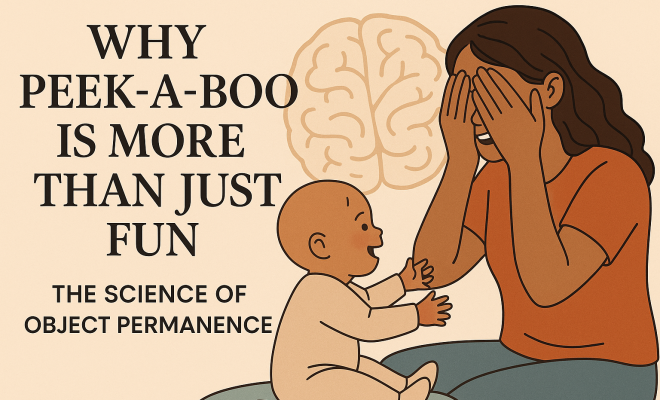
Peek-a-boo is more than just a game; it’s a crucial exercise in developing object permanence. When an adult covers their face and then reveals it, the baby experiences a mini-object permanence lesson. Initially, the child might be startled when the adult disappears behind their hands. However, as the game continues, infants start to anticipate the adult’s reappearance. This anticipation signifies that they are beginning to understand that the adult (or object) still exists even when not in sight.
Studies have shown that when infants play peek-a-boo, their brain activity reflects increased engagement when they successfully anticipate the reappearance of an object or person. This cognitive engagement is vital—it’s not just about the joy of the game but also about the neural connections forming in the child’s developing brain.
Research Findings: The Science Behind the Game
Research into object permanence has undergone extensive investigation, with various studies confirming its significance in cognitive development. A well-known study led by developmental psychologist, Judy DeLoache, demonstrated that children who played peek-a-boo showed a greater understanding of object permanence compared to those who did not engage in such games.
In her research, DeLoache used “scale models” to test children’s understanding of object permanence. Her findings suggested that children who participated in interactive games like peek-a-boo were more capable of understanding that objects could exist outside of their immediate perception. The joy that children express during the game signals a deeper cognitive process at work. (See: Wikipedia article on object permanence.)
Practical Insights for Parents and Educators
Understanding the role of peek-a-boo in developing object permanence opens the door to practical applications for parents and educators. Here are some actionable insights:
- Incorporate Play: Use peek-a-boo and similar games in everyday interactions with infants. Not only does it enhance bonding, but it also fosters cognitive development.
- Encourage Exploration: Provide safe spaces for children to explore objects and their permanence. Hiding toys and encouraging children to find them can reinforce their understanding.
- Use Varied Objects: Introduce different objects and textures during play. This variety can help deepen their understanding of permanence.
- Limit Screen Time: While digital devices offer entertainment, they do not engage children in the same way as physical play does. Prioritize hands-on activities.
The Current Relevance of Object Permanence
In today’s world, where screens dominate attention and physical play may take a backseat, the importance of concepts like object permanence cannot be overstated. As children grow, the foundation laid during their early comprehension of object permanence impacts their ability to navigate social situations, understand relationships, and develop problem-solving skills.
Moreover, the decline in face-to-face interactions due to digital distractions raises concerns about children’s social development. Engaging in games like peek-a-boo can bridge this gap, promoting interactive play that is vital for mental and emotional growth.
Object Permanence in Different Cultures
Interestingly, the concept of object permanence isn’t just a Western construct; it exists across cultures. While the age at which children develop this understanding may vary due to environmental factors and parenting styles, the underlying cognitive process remains consistent. Anthropologists have studied diverse cultures and found that games similar to peek-a-boo exist globally, affirming that the principles of object permanence are universal.
For example, in certain Indigenous cultures, communal storytelling often involves elements of surprise and reveal that mimic peek-a-boo dynamics. These games not only entertain but also teach children about presence and absence, a reflection of their cultural values.
Challenges and Misconceptions
Despite its significance, misconceptions about object permanence can lead to misunderstandings regarding child development. Some believe that a lack of interest in peek-a-boo or similar games indicates developmental delays. However, every child develops at their own pace. Some may show less interest in such games yet excel in other cognitive areas.
It’s essential for parents to recognize that individual differences exist and that a one-size-fits-all approach doesn’t apply to child development. Engaging children in various activities, monitoring their progress, and seeking professional guidance if concerned are vital steps in supporting their growth.
Deepening the Understanding of Object Permanence
Object permanence does not simply stop evolving after the first year; it continues to develop and manifest throughout childhood. As children grow older, they begin to understand more complex concepts related to object permanence. For instance, older toddlers can recognize that objects can change states. They comprehend that a toy hidden behind a curtain still exists, but they also understand that it can be moved and relocated. This highlights a shift from a basic understanding of permanence to a more nuanced grasp of existence, location, and condition.
Beyond Peek-a-Boo: Other Activities to Foster Object Permanence
While peek-a-boo is a classic game, there are numerous other activities that can help reinforce the understanding of object permanence in children: (See: NIH article on cognitive development milestones.)
- Hide and Seek: This game is not just for older children but can be adapted for younger ones. You can hide an object and ask your child to find it, reinforcing the idea that it still exists even when not visible.
- Object Hiding Games: Take a favorite toy and hide it under a blanket or in a box. Allow your child to search for it, encouraging them to look in various places.
- Box Exploration: Use boxes of different sizes. Place objects in and out of boxes, allowing your child to observe the transitions and understand that the objects still exist even when covered.
- Storytelling with Surprises: Utilize books or storytelling that involves elements of hiding and revealing, allowing children to anticipate outcomes and understand object continuity in narratives.
Statistics on Cognitive Development Related to Object Permanence
A variety of studies have explored the developmental timeline for children regarding object permanence. According to research published in the Journal of Experimental Child Psychology, over 85% of children exhibit a solid understanding of object permanence by the time they reach 18 months. This statistic highlights the significance of engaging infants in activities that promote understanding during this critical stage.
Furthermore, longitudinal studies indicate that children who have frequent interactive play with caregivers tend to score higher on cognitive assessments later in childhood. This connection emphasizes the long-term benefits of early play-based learning experiences that foster critical cognitive skills, including object permanence.
Expert Perspectives on Object Permanence
Experts in child psychology and early childhood education frequently discuss the importance of object permanence in nurturing cognitive development. Dr. Sarah L. Kagan, a renowned psychologist, states, “Understanding that objects persist in time and space allows children to effectively navigate their environment, build relationships, and ultimately develop critical thinking skills.” Her research underscores that the grasp of object permanence is foundational for more complex cognitive tasks that children will encounter as they grow.
Another expert, Dr. James H. McMillan, emphasizes the role of social interactions in developing object permanence. He notes, “Children learn best when they are actively engaged with adults in meaningful play. Games like peek-a-boo are not only enjoyable; they are instrumental in honing essential cognitive skills.”
Common FAQs About Object Permanence
What age do babies understand object permanence?
Most infants begin to show signs of understanding object permanence between 4 to 7 months of age. By around 12 months, most children have a solid grasp of the concept.
How can I help my baby develop object permanence?
Engage in simple games like peek-a-boo, hide and seek, or object-hiding activities. Providing consistent interactions and encouraging exploration of hidden objects can also reinforce their understanding.
Are there signs that my child is struggling with object permanence?
While every child develops at their own pace, signs may include excessive frustration during play that involves hidden objects or a noticeable lack of interest in seeking out hidden toys. If you have concerns, consult a pediatrician or child development specialist.
Does object permanence impact social skills?
Yes, understanding object permanence is linked to developing social skills. Once children grasp that people and objects exist independently of their sight, they can engage in more complex social interactions and understand relationships better.
Can object permanence be learned through digital play?
While digital games can introduce concepts of object permanence, they often lack the interactive and tactile engagement that physical play provides. Real-world interactions are more beneficial in helping children understand the nuances of object permanence.
The Lasting Importance of Object Permanence in Education
Recognizing the importance of object permanence goes beyond just cognitive milestones; it also informs educational practices. In early childhood education settings, teachers can incorporate play-based learning that emphasizes hands-on activities. By doing so, they create an environment that nurtures cognitive development while also making learning enjoyable.
Implementing curriculum that includes games reminiscent of peek-a-boo and other object permanence activities can deeply engage children, fostering their ability to think critically and problem-solve. For instance, when children are encouraged to work in small groups to find hidden objects, they not only practice object permanence but also enhance cooperation and communication skills.
The Link Between Object Permanence and Emotional Development
Interestingly, object permanence also has implications for emotional development. Infants who master this concept often find comfort in knowing that their caregivers are still present, even when they are not in sight. This understanding helps infants develop trust and security, key components of emotional health.
As children grow, this foundational understanding translates into relationships with peers and adults. A child who understands object permanence may cope better with separations, such as when a parent leaves the room or a friend goes home. They are more likely to engage in play that involves social negotiation and shared experiences, leading to healthier emotional development.
Conclusion: The Lasting Impact of Object Permanence
The understanding of object permanence is a crucial milestone that shapes how children perceive and interact with the world. Peek-a-boo, often brushed aside as simple fun, is a powerful tool in promoting this understanding. By engaging children through interactive play, parents and educators can lay a solid foundation for cognitive development. As we continue to recognize the importance of such developmental milestones, we can foster environments that support children’s growth in a meaningful way. Ultimately, the playful interactions we share today with children will echo in their social, emotional, and cognitive lives for years to come.
“`
Trending Now
Frequently Asked Questions
What is the significance of object permanence in child development?
Object permanence is crucial for cognitive development as it indicates a child's ability to understand that objects continue to exist even when out of sight. This milestone typically emerges between 4 to 7 months of age and is essential for forming mental representations, thereby influencing later learning and interactions.
At what age do babies understand object permanence?
Babies typically start to develop an understanding of object permanence between 4 to 7 months of age. Initially, they may only recognize partially hidden objects, but as they grow, they learn to search for fully hidden items, marking a significant cognitive milestone.
How does playing peek-a-boo help with cognitive development?
Playing peek-a-boo helps infants practice and reinforce their understanding of object permanence. The game encourages them to grasp that people and objects still exist even when they cannot be seen, fostering cognitive growth and enhancing their ability to form mental representations.
What are the stages of developing object permanence?
The stages of developing object permanence include: Stage 1 (0-4 months): No searching for hidden objects; Stage 2 (4-8 months): Searching for partially hidden objects; Stage 3 (8-12 months): Searching for fully hidden objects; Stage 4 (12-18 months): Understanding that objects continue to exist even when out of sight.
Why is peek-a-boo considered an important game for infants?
Peek-a-boo is considered important for infants because it not only entertains but also plays a vital role in cognitive development. It helps them learn about object permanence, promoting their understanding of reality and enhancing their social interactions with caregivers.
Agree or disagree? Drop a comment and tell us what you think.