Teaching Toddlers Conflict Resolution in Preschool
“`html
Preschool is a pivotal time in a child’s development, laying the foundation for their emotional and social skills. One crucial aspect of this early growth is learning how to resolve conflicts. Conflict resolution in preschool teaches toddlers essential problem-solving techniques that foster cooperation, empathy, and communication. This article delves into the importance of these skills and offers practical insights into how educators and parents can effectively teach conflict resolution to young children.
The Importance of Conflict Resolution Skills
Understanding how to resolve conflicts is vital for preschoolers as it directly influences their interactions with peers. Research shows that children who can effectively manage disputes are more likely to build lasting friendships and enjoy positive social experiences. According to developmental psychologist Dr. John Gottman, children who learn conflict resolution skills early on are better equipped to handle emotional challenges throughout their lives.
Moreover, fostering these skills in preschool can significantly reduce instances of aggression and bullying. A study conducted by the Collaborative for Academic, Social, and Emotional Learning (CASEL) revealed that social-emotional learning programs, which emphasize conflict resolution, can decrease behavioral issues by up to 25% in young children. This reduction not only benefits the individual child but creates a more harmonious classroom environment where learning can thrive.
Key Elements of Conflict Resolution in Preschool
Teaching conflict resolution in preschool involves several key elements that educators and caregivers should incorporate into their daily routines. These elements include:
- Empathy: Helping children understand and share the feelings of others.
- Communication: Teaching toddlers to express their thoughts and feelings clearly.
- Problem-Solving: Encouraging creative thinking to find mutually acceptable solutions.
- Negotiation: Guiding children on how to reach agreements through compromise.
- Self-Regulation: Teaching kids to manage their emotions effectively.
Each of these components plays a vital role in empowering children with the skills they need to resolve conflicts amicably.
Creating a Safe and Supportive Environment
To effectively teach conflict resolution in preschool, it’s crucial to create a safe and nurturing environment. Children must feel secure to express their emotions and opinions without fear of ridicule. Educators can establish ground rules that promote respect and kindness, ensuring that every child knows their feelings and thoughts are valid.
One practical method is to develop a classroom charter together with the students. By involving them in the creation of rules, such as “We listen when others are speaking” or “We use kind words,” children are more likely to adhere to these principles. Additionally, teachers should model these behaviors consistently, demonstrating through their actions how to handle conflicts and communicate effectively.
Role-Playing Scenarios
Role-playing is an engaging way to teach conflict resolution skills to preschoolers. By creating scenarios that reflect common conflicts children might encounter — such as sharing toys or playing turn-taking games — educators can provide a safe platform for children to practice resolving issues.
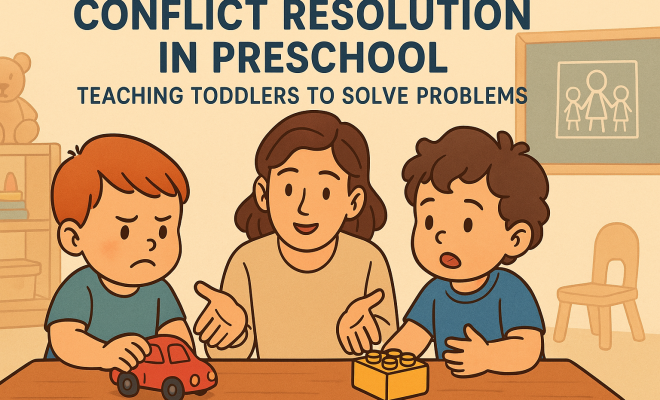
For example, a teacher might stage a situation where two children want to play with the same truck. The educator can guide them through a structured dialogue, prompting them with questions like, “How do you think your friend feels?” or “What could you both do to solve this?” This interactive approach allows toddlers to experience conflict resolution firsthand while also reinforcing empathy and communication.
Utilizing Storytelling and Literature
Storytelling is another powerful tool for teaching conflict resolution in preschool settings. By incorporating books that highlight themes of conflict and resolution, educators can spark discussions around emotions, choices, and consequences.
Books such as “The Rainbow Fish” by Marcus Pfister, which illustrates sharing and friendship, or “The Little Engine That Could” by Watty Piper, which demonstrates perseverance and teamwork, can serve as springboards for discussions. After reading, teachers can ask open-ended questions to encourage toddlers to reflect on the story’s events and relate them to their experiences. This method not only promotes literacy but also fosters critical thinking around resolving conflicts. (See: CDC on social-emotional learning.)
Visual Aids and Conflict Resolution Tools
Visual aids can greatly enhance conflict resolution strategies in preschool classrooms. Tools like emotion charts, conflict resolution steps, or picture cards can help children identify their feelings and visualize the steps needed to resolve a dispute.
For instance, an emotion chart displaying various facial expressions can assist a child in articulating how they feel during a disagreement. By recognizing emotions, they can better communicate their feelings to others. Additionally, presenting a simple visual guide on conflict resolution steps — such as “Stop, Think, Talk, and Solve” — can provide a straightforward framework for children to follow when faced with conflicts.
Encouraging Peer Mediation
Peer mediation is an effective strategy for promoting conflict resolution among preschoolers. This process involves training a small group of children to help their peers resolve disputes. Educators can introduce simple mediation techniques that enable children to facilitate conversations between conflicting parties.
For example, peer mediators can be taught to guide their classmates through the same steps they learned in role-playing scenarios, ensuring each child has the opportunity to express their views and feelings. This not only empowers mediators but also reinforces the importance of collaboration and understanding within the peer group.
Parental Involvement in Teaching Conflict Resolution
While educators play a crucial role in teaching conflict resolution skills, parental involvement is equally vital. Parents can reinforce these skills at home by modeling positive conflict resolution behaviors and encouraging open communication.
For instance, when disagreements arise between siblings or family members, parents can demonstrate how to express feelings calmly and work toward a solution. Role-playing similar scenarios at home can also be beneficial, allowing children to practice what they’ve learned in preschool. Additionally, parents should engage in discussions about their child’s experiences at school, asking about conflicts they’ve faced and exploring how they handled them. This dialogue helps reinforce lessons learned and validates the child’s efforts to apply conflict resolution strategies.
Measuring the Effectiveness of Conflict Resolution Strategies
To ensure that conflict resolution strategies are effective, educators should establish methods for measuring their impact. This can include observing children’s interactions during play and analyzing how they handle conflicts as they arise. Educators can track changes over time, noting improvements in children’s ability to communicate and resolve disputes independently.
Additionally, gathering feedback from parents regarding their children’s social interactions at home can provide valuable insights. Surveys or informal discussions can help determine whether the skills learned in preschool are being applied outside the classroom. By continuously assessing these strategies and adapting them based on feedback, educators can enhance the conflict resolution skills being imparted to preschoolers.
Current Relevance and Long-Term Benefits
In today’s society, the ability to resolve conflicts amicably is more important than ever. As children grow, they enter increasingly complex social environments that demand strong interpersonal skills. By teaching conflict resolution in preschool, we equip children with lifelong tools for managing relationships and navigating challenges.
Studies have shown that the benefits of early conflict resolution education extend well beyond preschool. Children who engage in conflict resolution practices are likely to develop better academic skills, improved emotional intelligence, and increased resilience as they transition to higher grades. Furthermore, these children are often more adept at handling stress and maintaining positive relationships throughout their lives.
In conclusion, conflict resolution in preschool is not just about teaching young children how to manage disputes; it’s about fostering a generation of empathetic, communicative, and resilient individuals. By incorporating practical strategies, creating a supportive environment, and involving parents, educators can significantly enhance preschoolers’ social skills, preparing them for a successful and harmonious future.
Additional Techniques for Teaching Conflict Resolution
Alongside the strategies already discussed, several other techniques can enhance the teaching of conflict resolution in preschool settings. These methods further solidify the skills children need to navigate social interactions effectively. (See: NIH on behavioral interventions.)
Use of Music and Movement
Incorporating music and movement can be an enjoyable way to reinforce conflict resolution skills. Songs about sharing, cooperation, and friendship can help children internalize the values of kindness and empathy. For example, singing songs that include actions can engage children physically and emotionally, reinforcing the lessons taught in a fun manner. Additionally, activities like group dances or cooperative games can foster teamwork and provide opportunities for children to practice negotiation and compromise.
Incorporating Art Projects
Art can be another medium through which conflict resolution is taught. Engaging children in collaborative art projects encourages teamwork and communication. When working together on a mural or group collage, children must express their ideas, listen to others, and negotiate roles. This experience mirrors real-life conflict resolution scenarios and teaches them the importance of collaboration. After completing an art project, educators can facilitate discussions about how the children worked together to overcome any disagreements that arose during the process.
Real-Life Applications and Examples
Understanding the practical applications of conflict resolution skills is essential for young children. Real-life examples resonate with preschoolers, helping them connect lessons learned in the classroom with their everyday experiences.
For instance, a child who has learned to express their feelings might share how they felt when a friend didn’t want to play the same game. By dissecting this scenario together, educators can guide children to explore healthy ways to address such situations. Engaging in these discussions helps validate their feelings and reinforces the importance of communication.
Statistics Supporting Conflict Resolution Education
Statistics underscore the importance of teaching conflict resolution in preschool. According to a study published in the Journal of Educational Psychology, children who participated in conflict resolution programs showed a 30% improvement in social skills compared to those who did not. Additionally, the National Association for the Education of Young Children (NAEYC) reported that classrooms integrating conflict resolution practices experienced a 40% decrease in incidents of aggression among children. These figures highlight the effectiveness of implementing structured conflict resolution education in early childhood settings.
Expert Perspectives on Conflict Resolution
Experts in child development emphasize the importance of conflict resolution skills in preschool education. Dr. Laura Berk, a developmental psychologist, notes that learning to resolve conflicts early on equips children with the tools they need for future interpersonal relationships. She states, “Conflict resolution is crucial because it not only helps children navigate social interactions but also builds their self-esteem and confidence in managing relationships.”
Furthermore, Dr. Roger Hart, known for his work in children’s participation, emphasizes that children who practice conflict resolution are likely to become more engaged citizens. He believes that these skills contribute to a child’s ability to advocate for themselves and others effectively, creating a more empathetic society in the long run.
Practical Tips for Parents
Parents play an essential role in reinforcing conflict resolution skills at home. Here are some practical tips to help parents support their children:
- Model Behavior: Parents should demonstrate conflict resolution in their interactions. Sharing how they resolve disagreements or navigate frustrations can serve as a powerful example for children.
- Encourage Role-Playing: Parents can create scenarios at home, encouraging their children to role-play different conflict situations. This practice can help children feel prepared when real conflicts arise.
- Discuss Feelings: Regularly engage in conversations about emotions. Ask questions like, “How did that make you feel?” and “What do you think you could do next time?” This practice helps children articulate their feelings and consider solutions.
- Engage in Family Meetings: Encourage open discussions about family conflicts during family meetings. Allowing children to voice their opinions and participate in decision-making fosters a sense of agency and responsibility.
Frequently Asked Questions
What age is appropriate to start teaching conflict resolution?
Teaching conflict resolution can begin as early as toddlerhood. However, preschool is an ideal stage because children are developing social skills and are more aware of their interactions with others.
How can I tell if my child is applying conflict resolution skills?
Observe your child during playdates or group activities. Notice if they can express their emotions, listen to others, and negotiate solutions. Improvement in social interactions and a decrease in conflicts can also indicate the application of these skills.
Can conflict resolution skills be taught at home?
Absolutely! Parents can incorporate conflict resolution discussions and role-playing into daily life. Encouraging open communication about feelings and demonstrating problem-solving can reinforce these skills outside a preschool setting.
What if my child struggles with conflict resolution?
If your child is having difficulties, it may take additional practice and encouragement. Consider working with educators for tailored strategies or seeking resources that offer specific techniques for conflict resolution.
Are there specific books or resources you recommend?
In addition to the mentioned books, consider “Duck and Rabbit” by Amy Krouse Rosenthal, which focuses on perspective-taking. Also, check out resources from CASEL, which provide activities and tools for teaching social-emotional skills, including conflict resolution.
Conflict Resolution in Diverse Contexts
Understanding the diverse contexts in which conflict resolution skills can apply is vital for preschoolers. Each child comes from a unique background, and their experiences can shape how they perceive and handle conflicts. Educators and parents should consider cultural differences in conflict resolution styles and encourage an inclusive approach. For instance, some cultures might emphasize collective harmony over individual expression, while others might encourage direct confrontation. By discussing these variations, children can learn to appreciate different perspectives and adapt their conflict resolution strategies accordingly.
Impact of Technology on Conflict Resolution Skills
With the increasing influence of technology in children’s lives, it’s important to address how it affects their conflict resolution skills. Online interactions, while providing new avenues for communication, can sometimes lead to misunderstandings or conflicts that children may not know how to handle. Educators can introduce lessons on digital communication, emphasizing the importance of tone, body language, and intent even in virtual settings. Teaching kids to navigate digital conflicts is essential in today’s tech-savvy world, preparing them for the challenges they may face as they grow older.
Long-Term Effects of Conflict Resolution Training
The long-term benefits of instilling conflict resolution skills in preschoolers cannot be overstated. Research indicates that individuals who have practiced conflict resolution from a young age tend to have higher emotional intelligence, better relationship satisfaction, and more successful careers. These skills carry into adolescence and adulthood, equipping individuals to handle personal and professional disputes with maturity. By fostering these abilities early on, we can significantly influence the future success and well-being of our children.
Conclusion
Conflict resolution skills are essential for preschoolers, providing them with tools for emotional growth and social interactions. The strategies discussed here, from role-playing to parental involvement, create a robust framework for teaching these necessary skills. By investing in conflict resolution education early, educators and parents can empower children to navigate their world with empathy, kindness, and resilience, ultimately shaping a more harmonious future.
“`
Trending Now
Frequently Asked Questions
Why is conflict resolution important in preschool?
Conflict resolution is crucial in preschool as it helps children develop essential social and emotional skills. Research indicates that children who learn to manage disputes effectively are more likely to form lasting friendships and experience positive interactions with peers, reducing aggression and bullying in the classroom.
What are the key elements of teaching conflict resolution to toddlers?
Key elements of teaching conflict resolution to toddlers include empathy, communication, problem-solving, and negotiation. These components help children understand others' feelings, express their own thoughts clearly, think creatively to find solutions, and negotiate outcomes that are acceptable to everyone involved.
How can parents teach conflict resolution skills to their children?
Parents can teach conflict resolution skills by modeling appropriate behavior, encouraging open communication, guiding children in expressing their feelings, and facilitating problem-solving discussions. Engaging in role-play scenarios can also help toddlers practice these skills in a safe environment.
What impact does social-emotional learning have on conflict resolution in preschool?
Social-emotional learning programs that emphasize conflict resolution can significantly reduce behavioral issues in preschoolers. Studies show these programs can decrease instances of aggression and bullying by up to 25%, fostering a more harmonious classroom environment conducive to learning.
How does conflict resolution influence a child's future relationships?
Learning conflict resolution skills in preschool equips children with tools to handle emotional challenges throughout their lives. Children who master these skills are better prepared to navigate relationships, manage disagreements, and build stronger, healthier connections with peers and adults.
Have you experienced this yourself? We’d love to hear your story in the comments.