“Fine Motor Activities Using Household Items: No Special Equipment Needed”
“`html
When thinking of ways to engage children at home, you might not immediately consider the power of fine motor activities. But these activities are not only essential for developing coordination; they also provide a fantastic opportunity for creative play using simple materials you likely have around the house. Fine motor activities at home can enhance your child’s dexterity, improve hand-eye coordination, and foster their creativity—all without the need for expensive equipment or overly complicated setups. In this article, we’ll explore ten ingenious fine motor activities that require nothing more than household items and a little imagination.
Understanding Fine Motor Skills
Before diving into the activities, it’s crucial to understand what fine motor skills are and why they matter. Fine motor skills involve the small muscles in the hands and fingers, which are essential for tasks such as writing, buttoning shirts, and using utensils. Children typically begin developing these skills from a young age, and the activities you provide can have a lasting impact on their physical development and everyday functioning.
Why Use Household Items?
Using household items for fine motor activities has several advantages:
- Accessibility: Most families have a variety of materials at home, eliminating the need for special purchases.
- Creativity: Household items encourage creative thinking, as children learn to use everyday objects in novel ways.
- Cost-Effective: These activities are budget-friendly and can be repeated many times without additional costs.
Incorporating household items into fine motor activities is not only practical but also sparks imagination and resourcefulness in kids.
1. DIY Bead Sorting
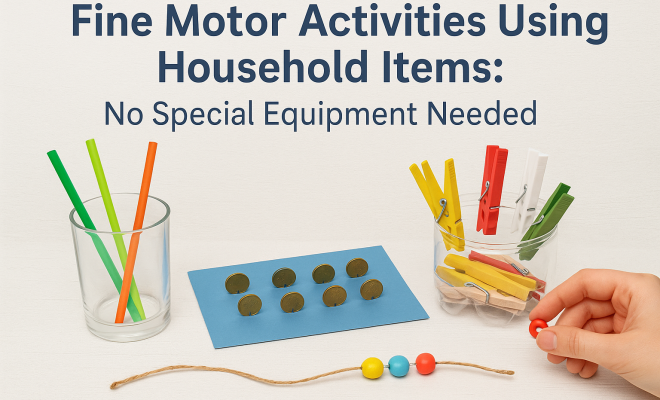
Gather an assortment of buttons, beads, or even pasta shapes from your pantry. Use a muffin tin or small bowls to sort the items by color, size, or shape. This activity strengthens pincer grip and enhances categorization skills. You can also add a sensory element by using materials with various textures, such as smooth buttons or rough pasta.
2. Clothespin Activities
Clothespins are fantastic tools for fine motor skills. Create a clothespin color-matching game by painting different colors on clips and corresponding containers. Children can clip the clothespins onto the correct color, improving their grip and precision. Alternatively, you can have them use clothespins to pick up small objects like pom-poms or cotton balls, which adds an element of challenge and fun.
3. Paper Tearing and Gluing
Give your child old magazines or scrap paper and let them tear pieces into small bits. This seemingly simple act is wonderful for building hand strength. Follow this up by providing glue and allowing them to create a collage with the torn pieces. The act of gluing requires a different type of grasp, further developing their dexterity.
4. DIY Playdough
Making homemade playdough is a fun and exciting way to engage your child’s senses. You can easily whip up a batch using flour, water, salt, and cream of tartar. Once the dough is ready, children can roll it, mold it, and create various shapes, which promotes gripping and squeezing motions that strengthen their hands.
5. Stringing Pasta or Beads
Using uncooked pasta or beads can be an excellent way to develop hand-eye coordination. Provide your child with a shoelace or a piece of yarn and let them thread the pasta or beads. This is not only a fine motor skill activity but also a great way to experiment with patterns and colors. You could encourage them to create necklaces or bracelets as a final product. (See: fine motor skills development.)
6. Water Play
On a warm day, fill a basin with water and provide various containers like cups, spoons, and small bottles. Children can practice pouring, scooping, and transferring water, which enhances their hand control. You can also add soap bubbles or sponges to the mix for extra sensory engagement. This activity is particularly beneficial as it encourages exploration, discovery, and fine motor skill development all at once.
7. Building with Blocks
Blocks come in all shapes and sizes, making them versatile for fine motor activities. Encourage your child to build towers, bridges, or even simple structures. This type of play requires precision and control, as they need to balance the blocks correctly. You can extend this activity by challenging them to use specific shapes or colors, which adds an educational component.
8. Sensory Bins
Create a sensory bin using rice, beans, or sand, and add small toys or tools like spoons and scoops. Children can dig, pour, and sift through the materials, which not only engages their senses but also helps improve their fine motor skills. To enhance the experience, hide small treasures in the bin for them to find, adding an element of adventure.
9. Scissor Skills
Using scissors is an excellent way to develop fine motor skills. Provide your child with old paper or magazines and let them practice cutting. Start with straight lines and gradually introduce curves and shapes. To make it more engaging, challenge them to cut out specific pictures or patterns, which adds a goal-oriented aspect to the activity.
10. Creative Drawing and Writing
Drawing isn’t just fun; it plays a significant role in developing fine motor skills. Provide various drawing tools—crayons, markers, or colored pencils—and encourage your child to express themselves. You can also incorporate writing activities, such as making lists or letters to family members. This not only hones their grip but also fosters creativity and self-expression.
Building a Routine of Fine Motor Activities at Home
To maximize the benefits of these fine motor activities at home, consider integrating them into your daily routine. Set aside a specific time each day for creative play, and rotate the activities to keep your child engaged. You can even create a chart to track their progress or new skills they learn, which provides a sense of accomplishment and motivation.
Expert Perspectives on Fine Motor Skill Development
Experts in child development emphasize the importance of fine motor skills in early childhood. According to Dr. Sarah Jane McGarry, a pediatric occupational therapist, “Fine motor skills are foundational for children’s independence in daily tasks. Activities that promote these skills can impact their confidence and overall development.” Encouraging your child to engage in daily fine motor activities can significantly influence their readiness for school and self-care tasks.
Current Relevance and the Future
As we continue to navigate a world filled with technology, the need for fine motor skills remains pivotal. With more children spending time on screens, it’s essential to balance this with activities that develop their physical capabilities. Engaging in fine motor activities at home not only prepares children for academic success but also cultivates essential life skills such as problem-solving and creativity.
Fine Motor Activities for Different Age Groups
While the activities already mentioned are suitable for a range of ages, it’s essential to tailor fine motor activities to suit the developmental stage of your child. Here’s a breakdown of activities based on age groups:
Infants (0-12 months)
Even the youngest children can benefit from fine motor activities. Simple tasks like grasping soft toys, reaching for items, or playing with textured surfaces can help develop their hand-eye coordination. At this stage, activities should focus on sensory exploration and basic gripping motions. (See: importance of fine motor skills.)
Toddlers (1-3 years)
Toddlers are naturally curious and enjoy exploring. More engaging activities include:
- Stacking and Nesting Toys: These toys are great for hand control and problem-solving.
- Finger Painting: A fun way for children to explore textures and colors while improving their grip.
- Simple Puzzles: Large-piece puzzles help with hand-eye coordination as kids learn to fit shapes together.
Preschoolers (3-5 years)
Preschoolers can handle more complex tasks. Consider:
- Cutting Shapes: Provide scissors and templates for them to cut along lines, enhancing precision.
- Bead Stringing: Offer different shapes and colors to improve both fine motor skills and color recognition.
- Playdough Activities: Encourage them to roll, cut, and create with playdough to enhance their dexterity further.
School-Aged Children (6+ years)
As children grow, they can engage in more intricate activities that challenge their fine motor skills and creativity:
- Origami: This art form requires precise folding and can significantly enhance fine motor dexterity.
- Building Models: Using kits or recycled materials to create models helps with planning, patience, and motor skills.
- Gardening: Planting seeds and nourishing them provides tactile experiences while teaching responsibility.
The Benefits Beyond Fine Motor Skills
While the primary focus of these activities is to cultivate fine motor skills, there are additional layers of development that these activities foster in children:
- Social Skills: Many of these activities can be done in groups, teaching children cooperation and communication.
- Emotional Development: Engaging in creative play allows children to express their feelings and thoughts, which is essential for emotional intelligence.
- Cognitive Growth: Problem-solving and critical thinking are nurtured during these activities as children learn to navigate challenges.
Frequently Asked Questions (FAQ)
Q: How often should we engage in fine motor activities at home?
A: It’s beneficial to incorporate these activities daily if possible. Even short sessions of 15 to 30 minutes can make a significant difference in skill development.
Q: Can fine motor activities be combined with other learning areas?
A: Absolutely! Fine motor activities can be integrated with literacy, math, and science. For instance, you can create a counting activity using beads, or have your child write letters while practicing their cutting skills.
Q: What if my child struggles with fine motor skills?
A: Every child develops at their own pace. If you notice your child has difficulty, consider breaking down tasks into smaller steps and provide encouragement. Sometimes, using adaptive tools can also help make activities easier.
Q: Are there safety concerns with fine motor activities?
A: Always supervise children during activities that involve small parts or tools, such as scissors. Ensure that the materials used are age-appropriate to prevent choking hazards or injuries.
Q: Can I adapt these activities for children with special needs?
A: Yes, many fine motor activities can be adapted for children with various needs. You can modify the complexity of tasks, use larger items for easier handling, or incorporate tactile elements to engage sensory exploration.
Engaging the Family: Fun Together
Fine motor activities don’t have to be limited to solo play. Engaging the entire family can transform these activities into bonding experiences. Here are some ideas:
- Family Art Night: Set aside a night where everyone works on a creative project together, maybe making collages or painting.
- Cooking Together: Involving children in the kitchen—measuring out ingredients, rolling dough, or decorating cookies—can be a delightful way to improve fine motor skills while making memories.
- Gardening: Involve the whole family in planting and caring for a garden. Children can dig, plant, and learn about nature together.
Technology and Fine Motor Skills
As technology becomes a bigger part of our lives, balancing screen time with physical activities is crucial. While digital devices can enhance learning, they often lack the tactile engagement that fine motor activities provide. Consider limiting screen time and integrating tech-free zones in your home where children can explore hands-on activities. Apps and games that promote hand-eye coordination do exist, but nothing beats the experience of manipulating physical objects.
Real-Life Examples of Fine Motor Activities
Seeing examples can spark ideas for how to implement fine motor activities at home. Here are some real-life suggestions from parents and educators:
- Play-Based Learning Centers: Many preschools create centers where children can freely engage in activities like sensory bins, art stations, or building blocks. You can replicate this at home by designating specific areas for different fine motor activities.
- Seasonal Crafts: Use holidays or seasons as a reason to create themed crafts. For example, during fall, children can collect leaves and use them in collages, which requires tearing, gluing, and arranging—great for fine motor skills!
- Nature Exploration: Encourage outdoor activities like collecting small stones, acorns, or pinecones, which can be used in various crafts. This not only promotes fine motor skills but also connects children with nature.
Evaluating Progress in Fine Motor Skills
Monitoring your child’s development can help you understand their strengths and areas needing improvement. Here are some ways to evaluate progress:
- Observation: Note how your child handles different tasks. Are they able to grasp smaller objects? Can they use scissors with control?
- Skill Checklists: Create a checklist of fine motor skills appropriate for your child’s age. Mark off completed skills and revisit those that need work.
- Feedback: Engage your child in conversations about their experiences. Ask them what they found challenging or enjoyable, which can provide insight into their progress and interests.
In a world where many families are looking for ways to connect and learn together, these activities provide an excellent opportunity to bond while developing crucial skills. So, gather those household items and start exploring the amazing potential of fine motor activities at home today!
“`
Trending Now
Frequently Asked Questions
What are some fine motor activities for kids using household items?
Fine motor activities using household items include DIY bead sorting, using buttons for counting, creating paper crafts, threading pasta, and more. These activities help develop coordination and dexterity while utilizing materials you likely already have at home.
Why are fine motor skills important for children?
Fine motor skills are crucial for children as they involve the small muscles in the hands and fingers. These skills are necessary for everyday tasks like writing, buttoning shirts, and using utensils, impacting a child’s physical development and independence.
How can I engage my child in creative play at home?
You can engage your child in creative play at home by using simple household items for activities like sorting, crafting, or building. Encouraging imaginative use of everyday objects fosters creativity and resourcefulness while developing fine motor skills.
What household items can I use for fine motor skill activities?
Common household items for fine motor skill activities include buttons, beads, pasta shapes, paper, and small containers. These items can be repurposed for sorting, threading, and crafting, making them accessible and cost-effective for engaging activities.
How can I improve my child's hand-eye coordination at home?
To improve your child's hand-eye coordination at home, engage them in activities like threading beads, playing with building blocks, or using scissors for cutting paper. These activities require precise movements that enhance coordination and fine motor skills.
Have you experienced this yourself? We’d love to hear your story in the comments.